Construction Contract For Work In Arizona
Description

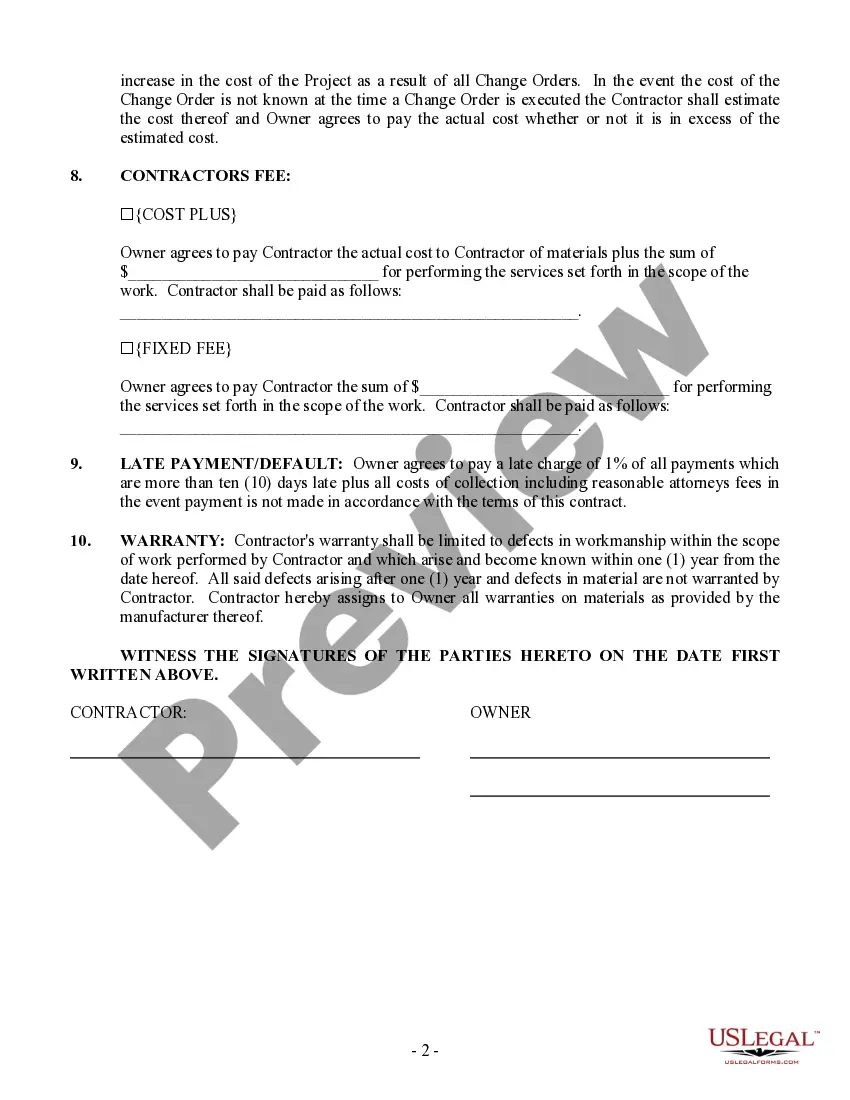
Get your form ready online
Our built-in tools help you complete, sign, share, and store your documents in one place.
Make edits, fill in missing information, and update formatting in US Legal Forms—just like you would in MS Word.
Download a copy, print it, send it by email, or mail it via USPS—whatever works best for your next step.
Sign and collect signatures with our SignNow integration. Send to multiple recipients, set reminders, and more. Go Premium to unlock E-Sign.
If this form requires notarization, complete it online through a secure video call—no need to meet a notary in person or wait for an appointment.
We protect your documents and personal data by following strict security and privacy standards.

Make edits, fill in missing information, and update formatting in US Legal Forms—just like you would in MS Word.

Download a copy, print it, send it by email, or mail it via USPS—whatever works best for your next step.

Sign and collect signatures with our SignNow integration. Send to multiple recipients, set reminders, and more. Go Premium to unlock E-Sign.

If this form requires notarization, complete it online through a secure video call—no need to meet a notary in person or wait for an appointment.

We protect your documents and personal data by following strict security and privacy standards.
Looking for another form?

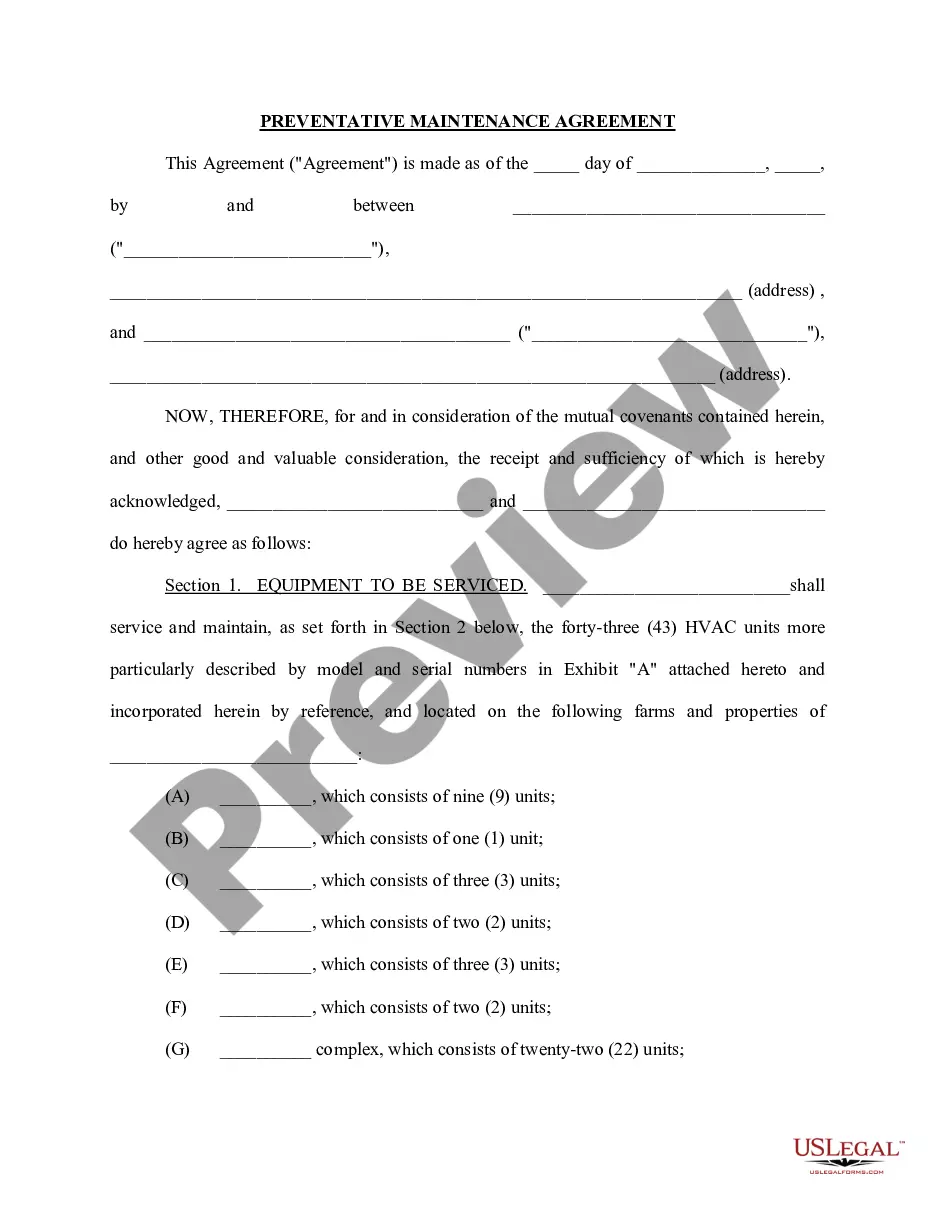

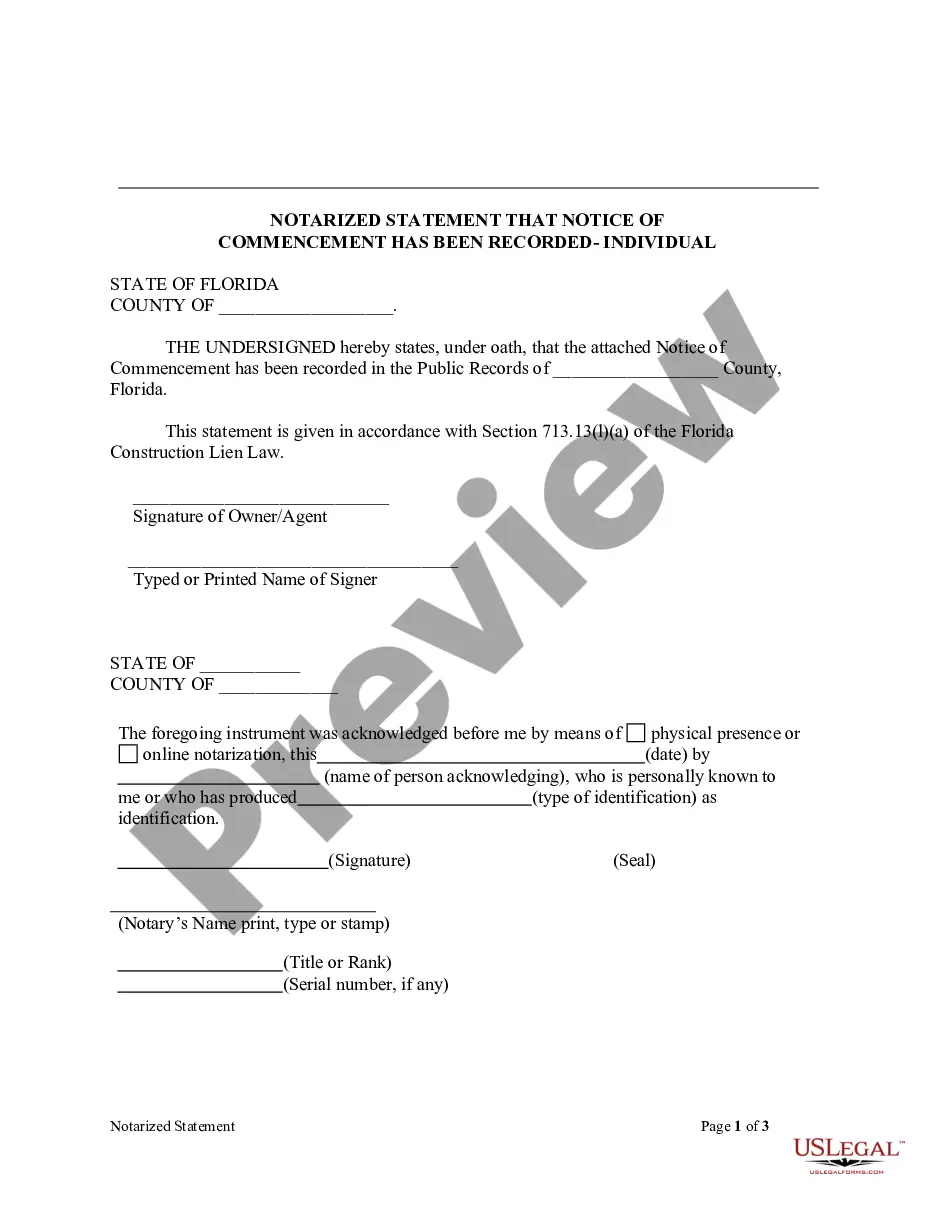





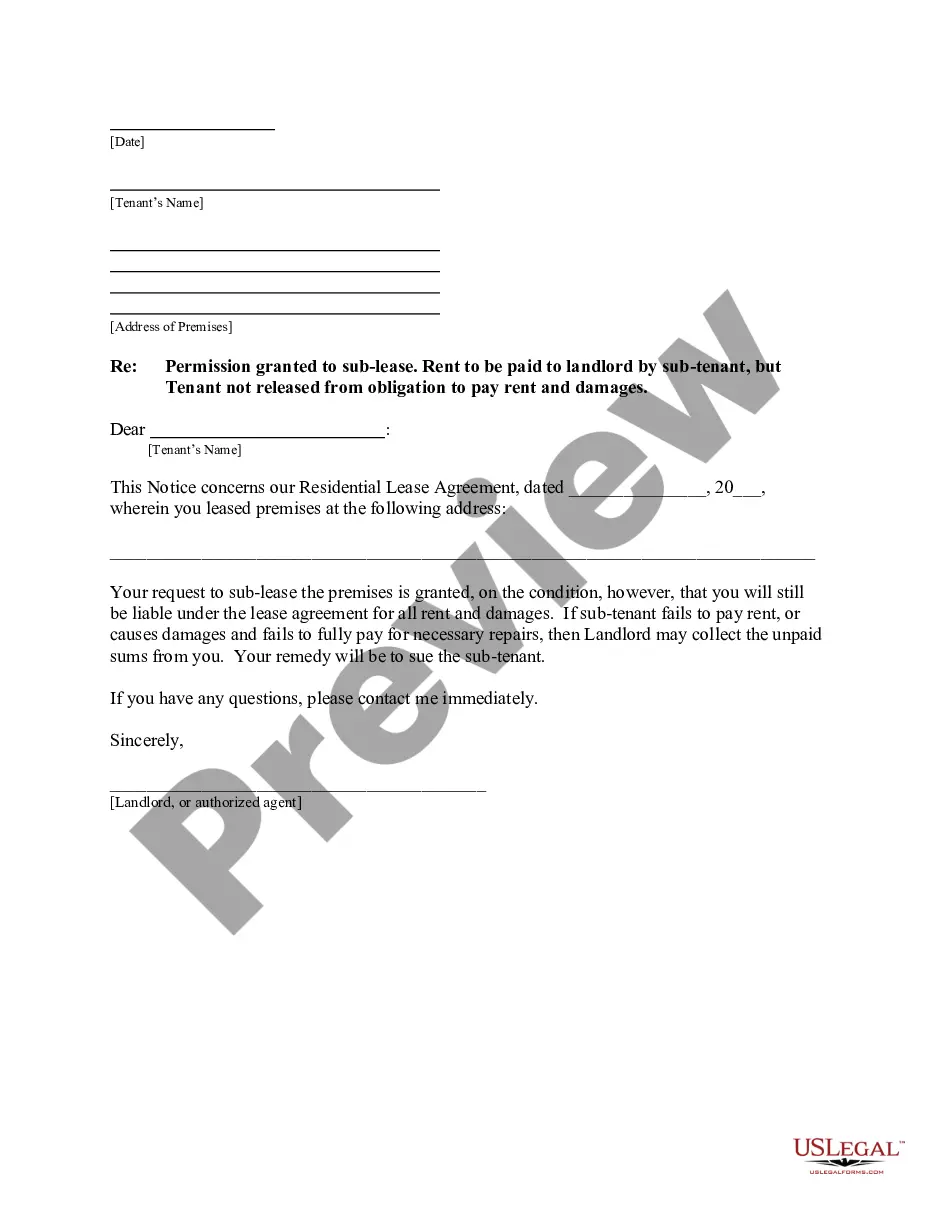
Form popularity
FAQ
How To Write A Construction Contract With 7 Steps Step 1: Define the Parties Involved. Step 2: Outline the Scope of Work. Step 3: Establish the Timeline. Step 4: Determine the Payment Terms. Step 5: Include Necessary Legal Clauses. Step 6: Address Change Orders and Modifications. Step 7: Sign and Execute the Contract.
50% up front is normal especially on smaller projects. On larger projects you should argue against 50% and instead set a calender of stages and payments.
How to get a contractor's license with no experience Proof of workers' compensation insurance. Proof of general liability insurance. Be either 18 or 21 years old. Submit criminal background checks. Surety bond. Federal Tax ID or Social Security number. Financial statements. Register your business with the state.
The qualifying party must possess at least four years of contracting experience and sit for two major trade examinations when applying for a general contractor license in Arizona. The state requires contractors to ace the AZ Statutes and Rules Training Course and Exam (SRE) and Trade exam in their specialty areas.
Contractors must be properly licensed before submitting bids. To whom is the license issued? A license may be issued to a sole proprietorship (individual), a partnership, limited liability company or a corporation.
When is a contract legally binding? Typically, a document that includes an offer, acceptance, and appropriate consideration will be considered legally binding. In most cases, a contract is binding in Arizona even if the parties signed it in another state.
All contractors are required to be licensed through the State of Arizona, unless work falls under the Handyman Exemption A.R.S. Sec. 32-1121A.
When writing a contract, you should include an introductory section that lists and defines all of the interested parties. A well-constructed contract will cover its duration and the specifics regarding the terms of the agreement between the parties. The tone of a contract should be formal and concise.
How to draft a contract in 13 simple steps Start with a contract template. Understand the purpose and requirements. Identify all parties involved. Outline key terms and conditions. Define deliverables and milestones. Establish payment terms. Add termination conditions. Incorporate dispute resolution.
