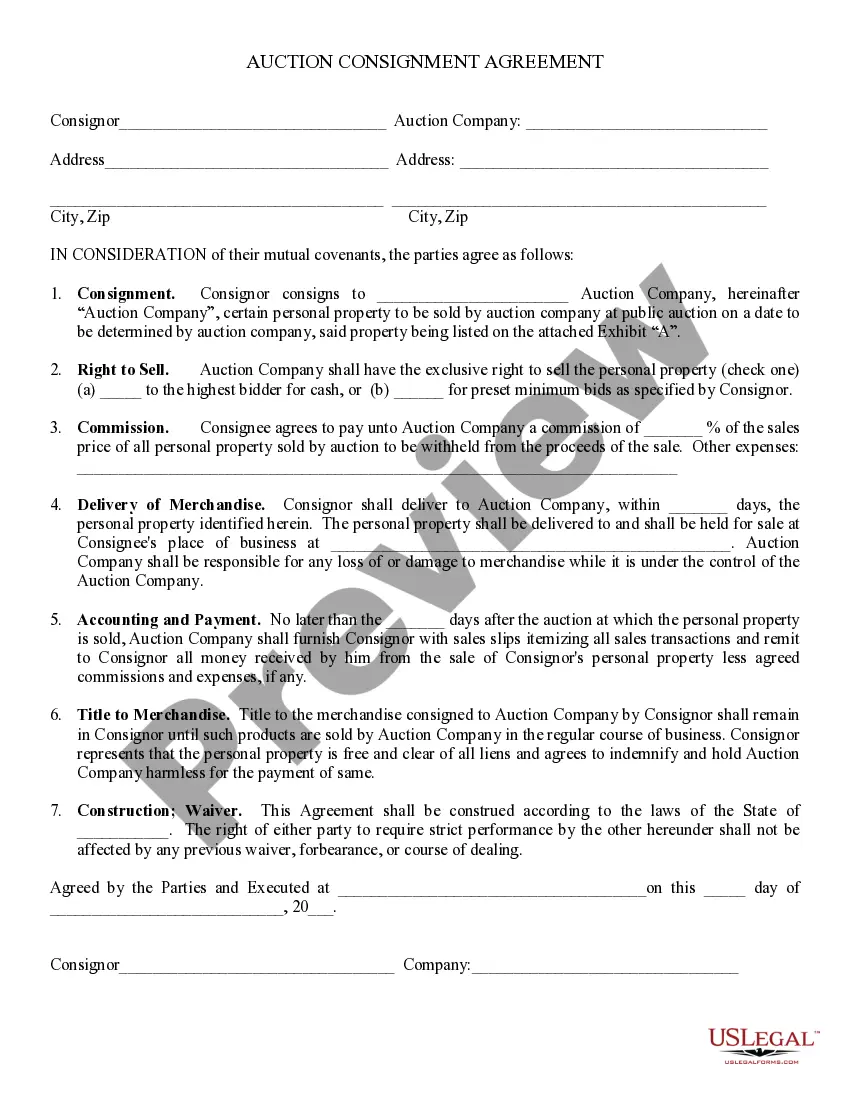
Consignment Form Template With Pictures In Salt Lake
Description

Get your form ready online
Our built-in tools help you complete, sign, share, and store your documents in one place.
Make edits, fill in missing information, and update formatting in US Legal Forms—just like you would in MS Word.
Download a copy, print it, send it by email, or mail it via USPS—whatever works best for your next step.
Sign and collect signatures with our SignNow integration. Send to multiple recipients, set reminders, and more. Go Premium to unlock E-Sign.
If this form requires notarization, complete it online through a secure video call—no need to meet a notary in person or wait for an appointment.
We protect your documents and personal data by following strict security and privacy standards.

Make edits, fill in missing information, and update formatting in US Legal Forms—just like you would in MS Word.

Download a copy, print it, send it by email, or mail it via USPS—whatever works best for your next step.

Sign and collect signatures with our SignNow integration. Send to multiple recipients, set reminders, and more. Go Premium to unlock E-Sign.

If this form requires notarization, complete it online through a secure video call—no need to meet a notary in person or wait for an appointment.

We protect your documents and personal data by following strict security and privacy standards.
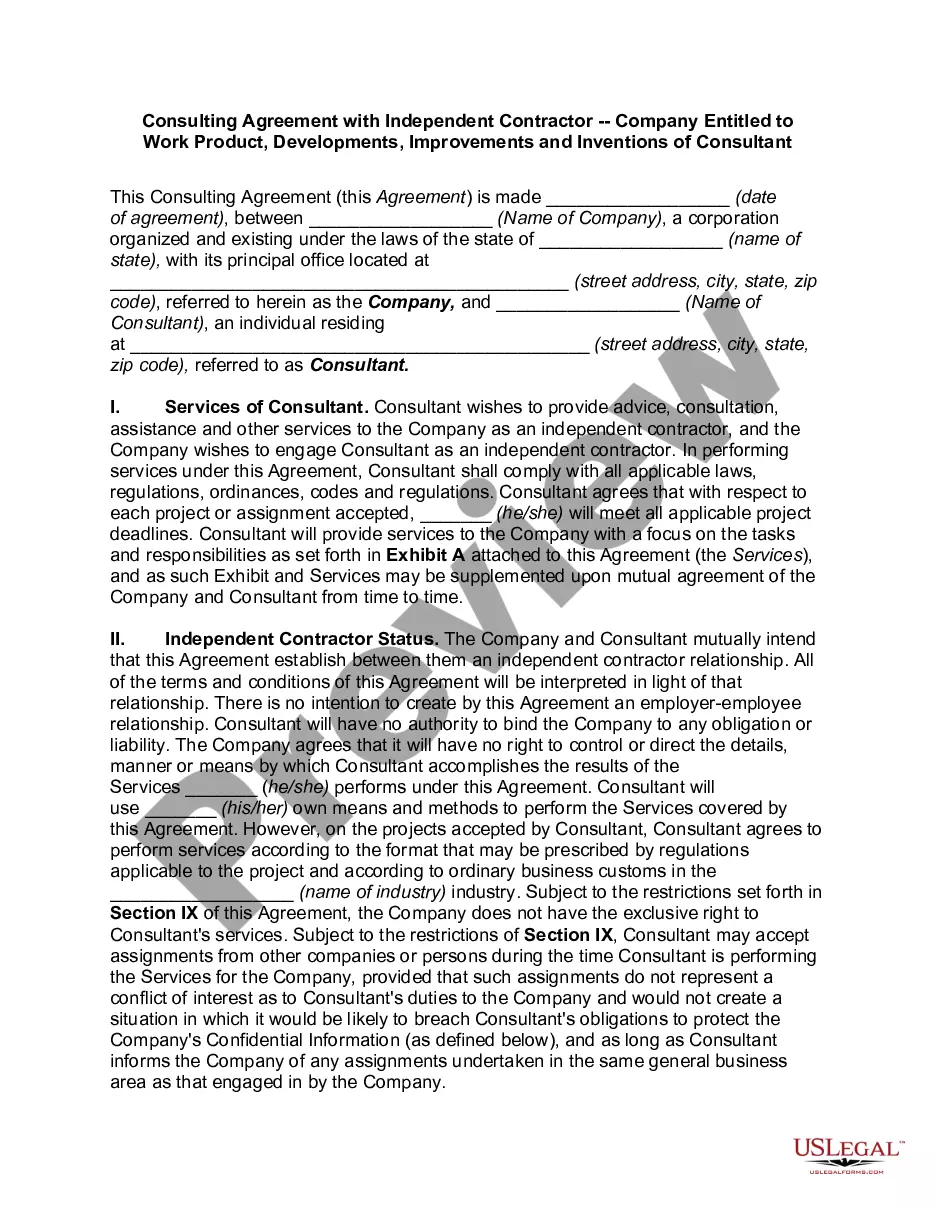
Looking for another form?








Form popularity
FAQ
Goods sent on Consignment Account is a real account. It is closed up by transferring its balances to trading accounting. It shall be shown on credit side of trading account. For each consignment these sets of accounts will be prepared separately.
Consignment Agreement. Consignment is a more accurate term than 'sale or return', because it makes dear to both sides that the artist does not intend to sell the works to the gallery at any stage, but merely intends to leave them for sale by the gallery as artist's agent or consignee on a commission basis.
Set up Consignment Sales item Go to Settings ⚙. Under Lists, select Products and services. Select New. In the Product/Service information panel, select the Service item. Enter information about the service in the appropriate fields. In the Income Account dropdown list, select Consignment Sales. Select Save and Close.
The journal entry accounts for the sales and expenses of the consignment inventory. No entry is made by the consignee. It's important to note that the import duty of 200 is debited to the consignment inventory account.
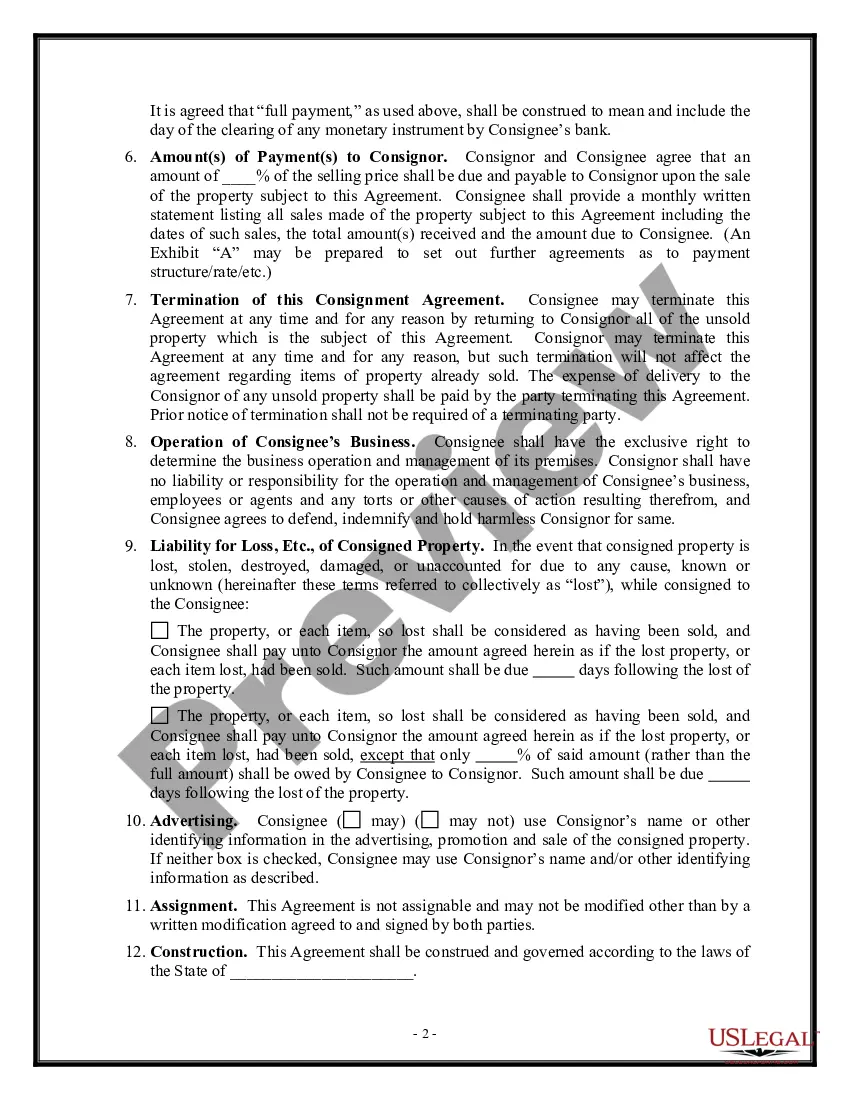
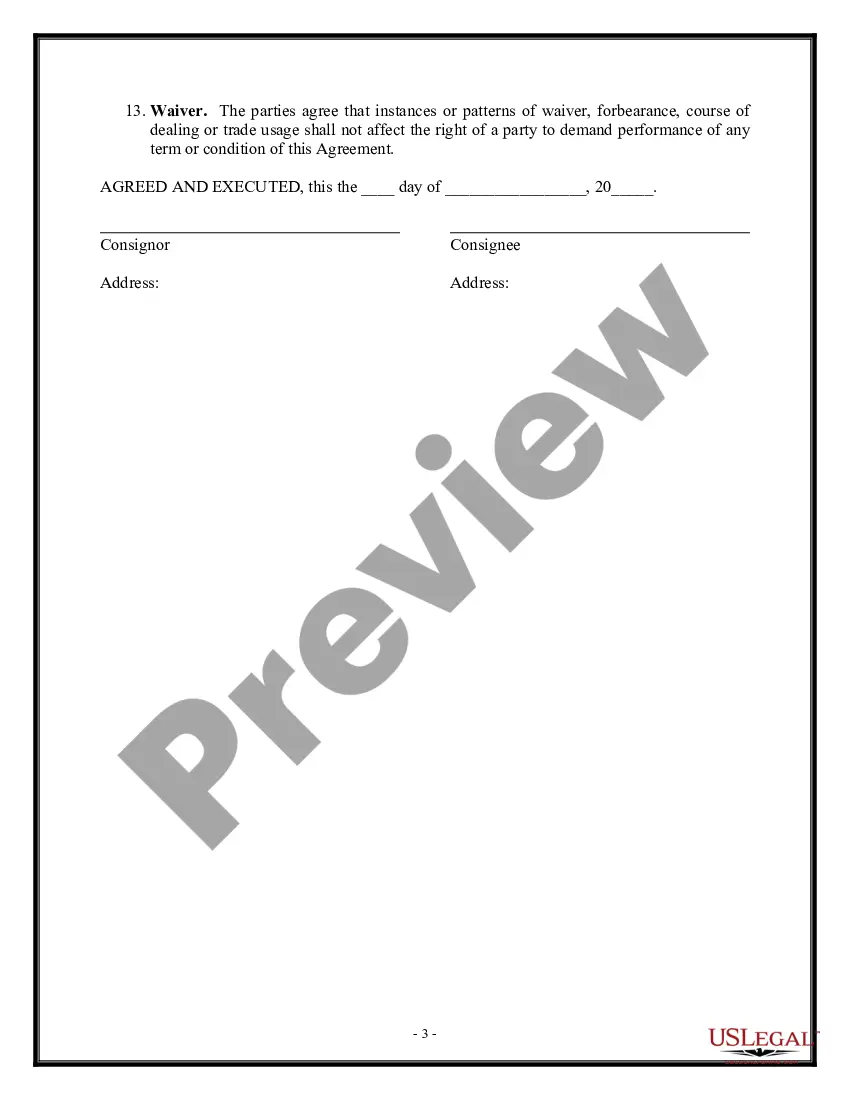
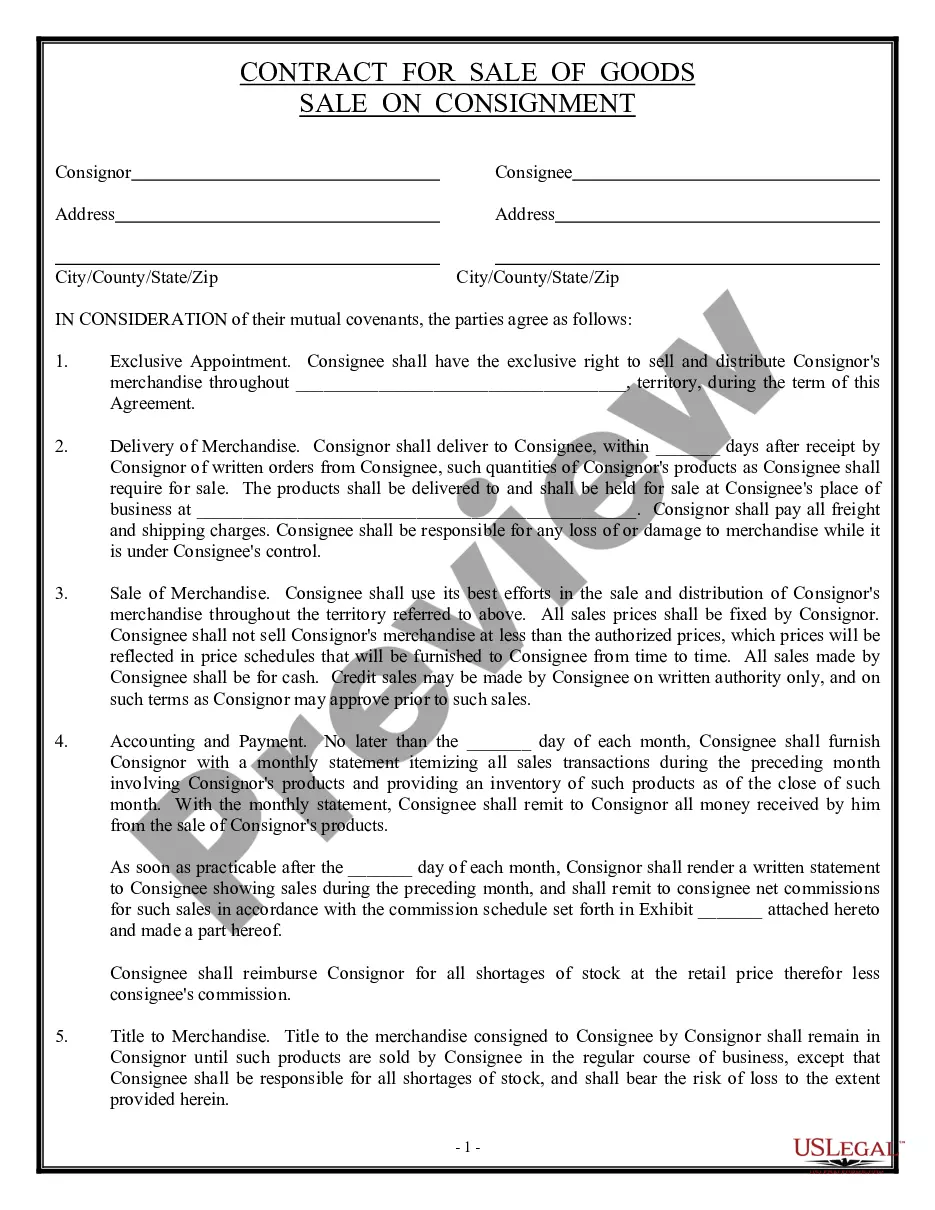
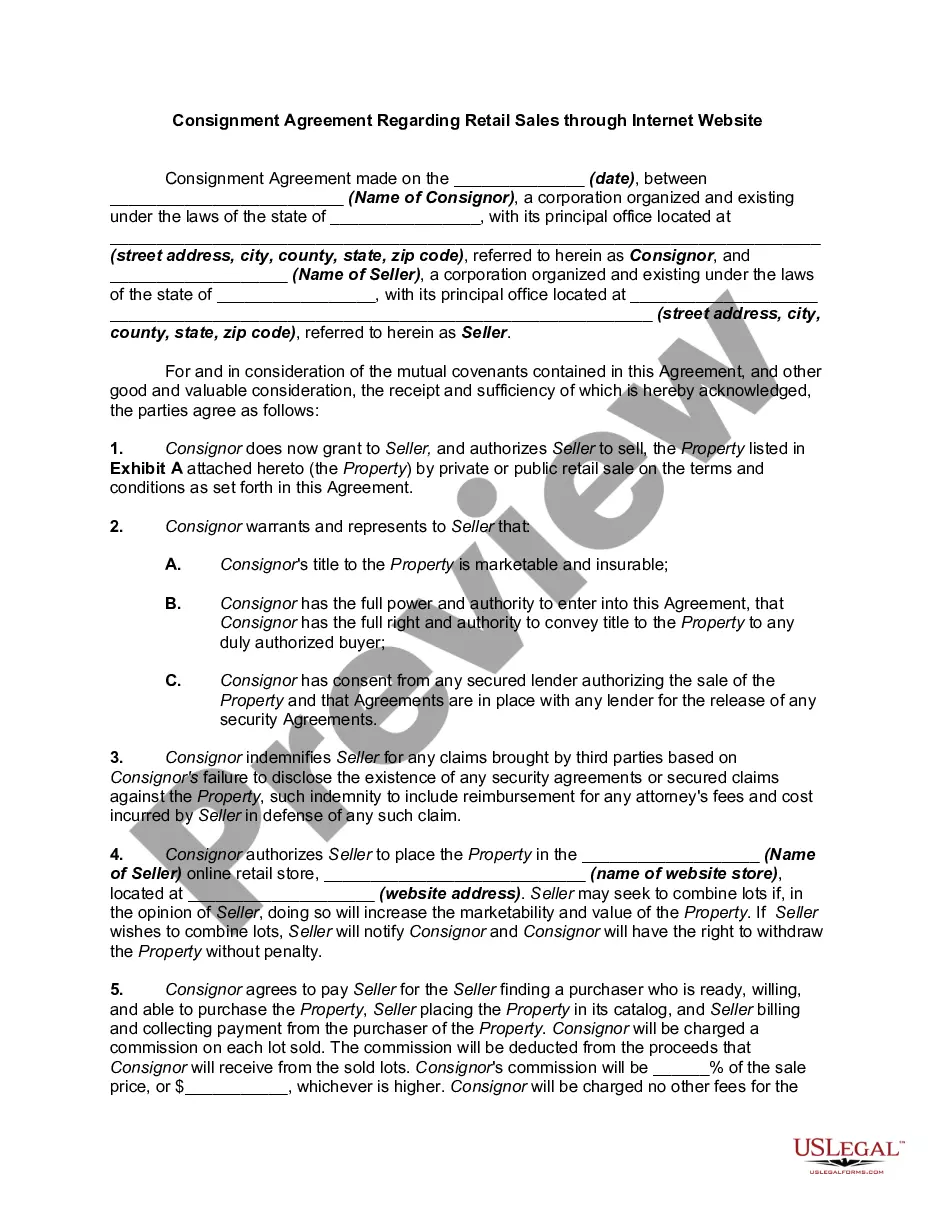
How to Write a Consignment Agreement Parties Involved: Names and contact information of the consignor and the consignee. Consigned Goods: Detailed description of the goods being consigned, including quantities and specifications. Consignment Period: Duration of the consignment arrangement.
Consignment accounting is a type of business arrangement in which one person send goods to another person for sale on his behalf and the person who sends goods is called consignor and another person who receives the goods is called consignee, where consignee sells the goods on behalf of consignor on consideration of ...
Art galleries are classic examples of consignment businesses. Artists (consignors) entrust their artwork to galleries (consignees). The galleries display the artwork, handle marketing and sales, and take a commission from each sale. The artist retains ownership of their work until it's sold.
Here are the essential components to include: Parties Involved: Names and contact information of the consignor and the consignee. Consigned Goods: Detailed description of the goods being consigned, including quantities and specifications. Consignment Period: Duration of the consignment arrangement.
Upon delivery, the recipient signs the CMR note, providing confirmation of receipt. A CMR note includes the names and addresses of both the sender and receiver, as well as details about the goods, such as their weight. Moreover, it clarifies who is responsible for insuring the goods during transit.
How to Write a Consignment Agreement Parties Involved: Names and contact information of the consignor and the consignee. Consigned Goods: Detailed description of the goods being consigned, including quantities and specifications. Consignment Period: Duration of the consignment arrangement.
