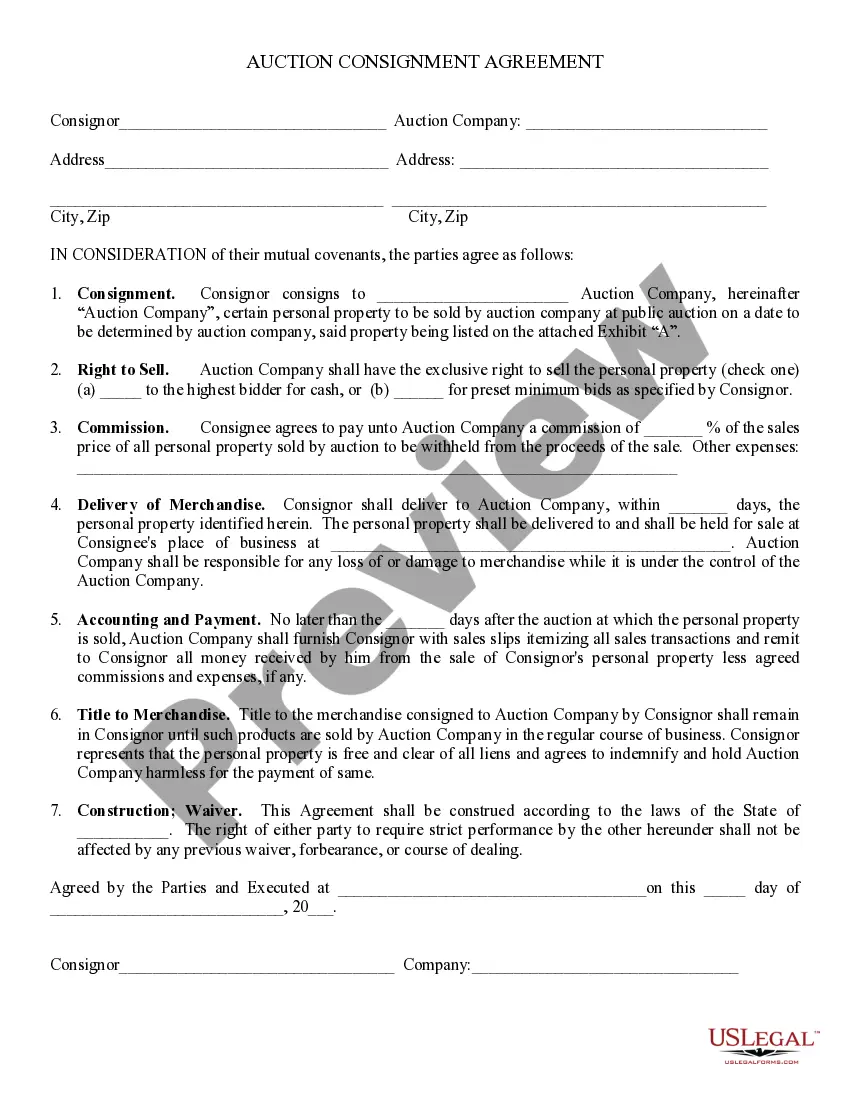
Consignment Form Template For Cars In Los Angeles
Description

Get your form ready online
Our built-in tools help you complete, sign, share, and store your documents in one place.
Make edits, fill in missing information, and update formatting in US Legal Forms—just like you would in MS Word.
Download a copy, print it, send it by email, or mail it via USPS—whatever works best for your next step.
Sign and collect signatures with our SignNow integration. Send to multiple recipients, set reminders, and more. Go Premium to unlock E-Sign.
If this form requires notarization, complete it online through a secure video call—no need to meet a notary in person or wait for an appointment.
We protect your documents and personal data by following strict security and privacy standards.

Make edits, fill in missing information, and update formatting in US Legal Forms—just like you would in MS Word.

Download a copy, print it, send it by email, or mail it via USPS—whatever works best for your next step.

Sign and collect signatures with our SignNow integration. Send to multiple recipients, set reminders, and more. Go Premium to unlock E-Sign.

If this form requires notarization, complete it online through a secure video call—no need to meet a notary in person or wait for an appointment.

We protect your documents and personal data by following strict security and privacy standards.
Looking for another form?




Form popularity
FAQ
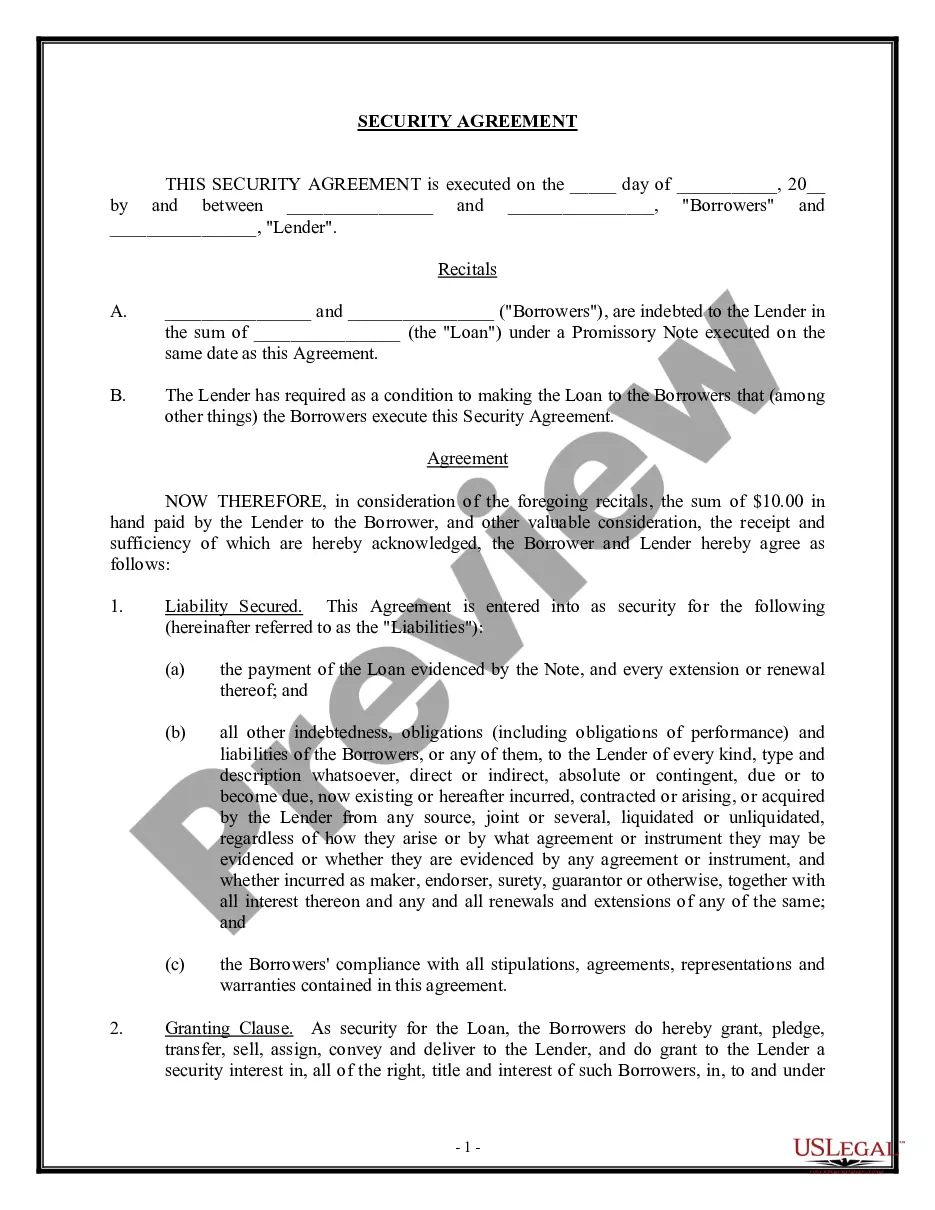
The Consignment Percentage While rates will vary from one consignment agreement to another, the industry average is around 60% for the product owner/maker and 40% for the shop owner. Keep in mind that it is possible for the consignor to negotiate even more favorable terms than those outlined above.
With consignment inventory, the manufacturer, wholesaler or supplier retains ownership of the goods until the retailer sells them to customers. The retailer then pays the supplier for the goods it sells and returns any items that go unsold.
After the sale, the consignee pays the consignor a certain amount of sale proceeds. The consignor is generally responsible for the freight charges for the shipment of the goods.
For example, you may own a jewelry store where you sell jewelry on consignment. Typically, the owner of the jewelry will bring it to you and sign an agreement that authorizes you to sell the item and transfer ownership to the buyer.
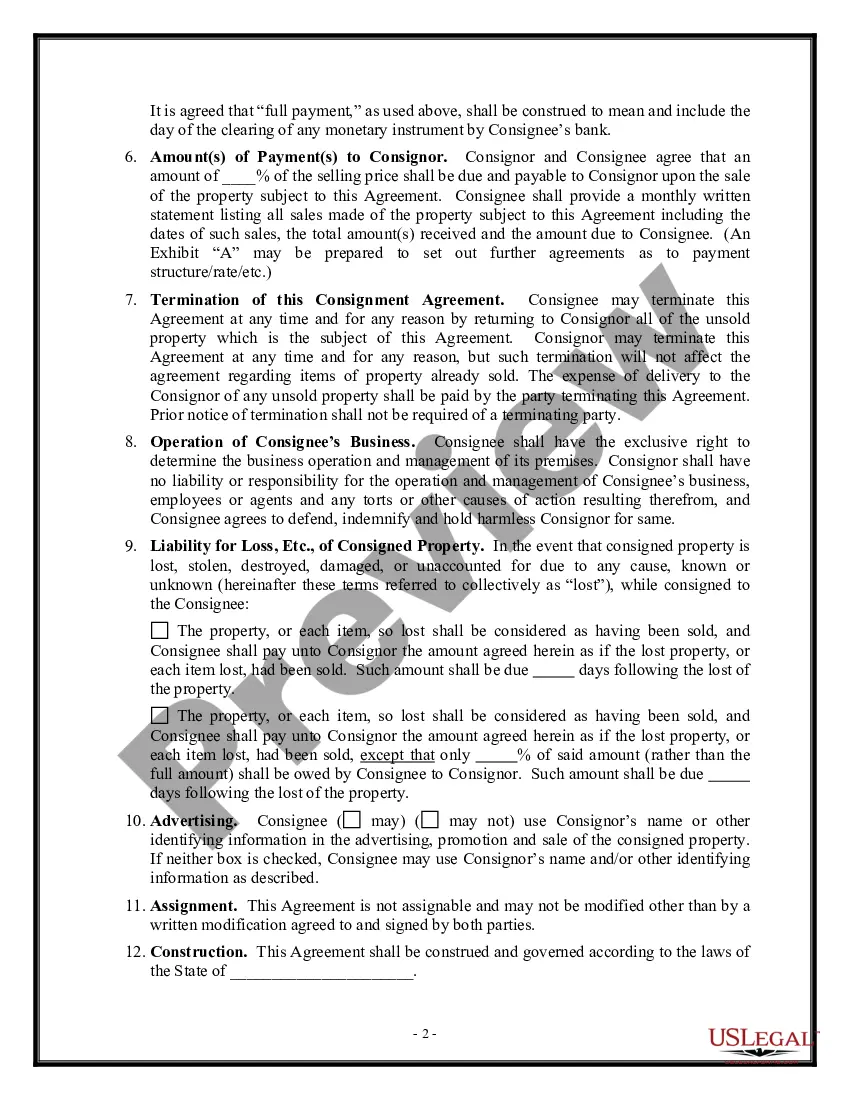
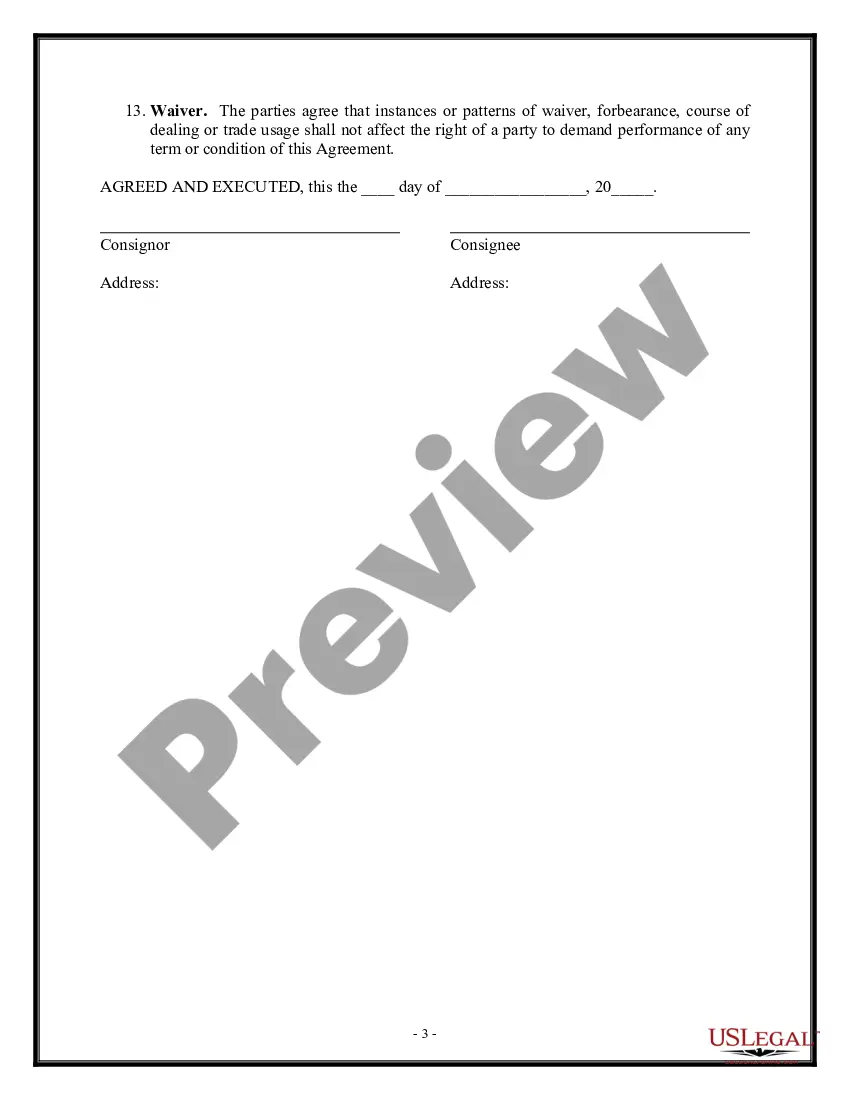
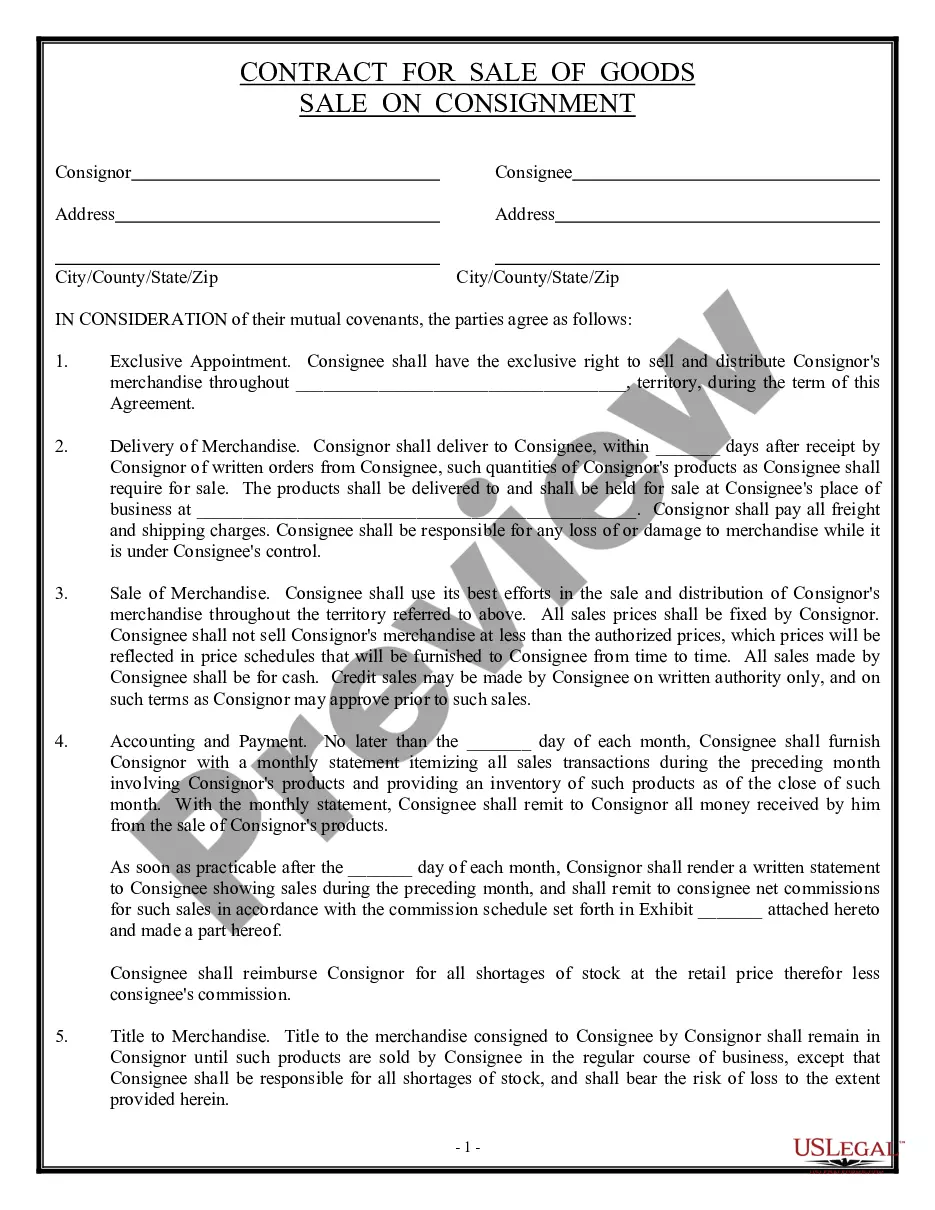
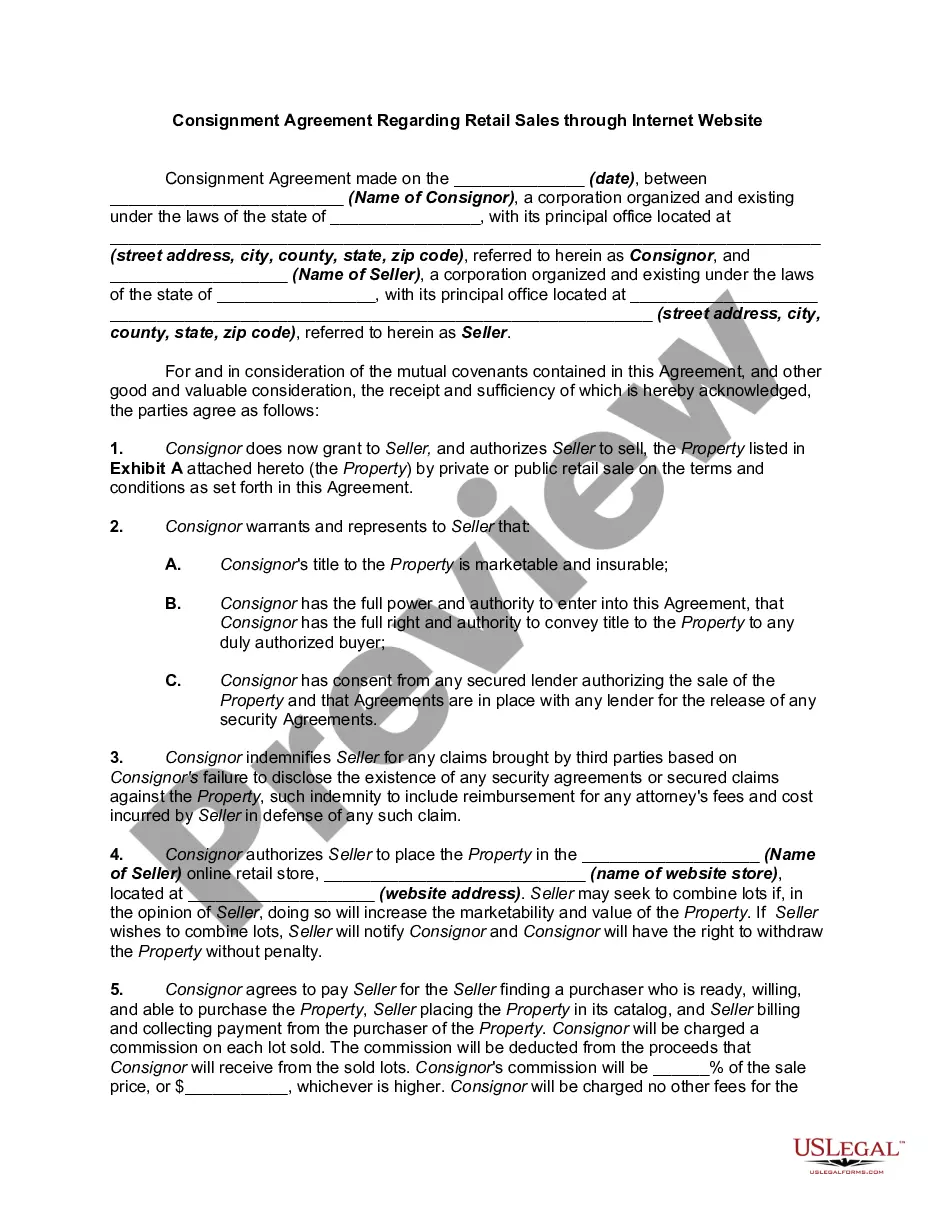
A consignment agreement is an agreement between a consignee and consignor for the storage, transfer, sale or resale and use of the commodity. The consignee may take goods from the consignment stock for use or resale subject to payment to the consignor agreeably to the terms bargained in the consignment agreement.
Consignment tends to be the best option for beginner or hobbyist sellers. If your product is new, use consignment as a market-testing method. You'll learn valuable information about your audience and product line. Wholesale can be the better option for serious or experienced sellers.
Bottom Line on Selling a Car Private sales typically have the highest profit through online marketplaces with a broad reach like Private Seller Exchange, but require some time, engagement, and negotiation.
Selling goods on consignment is described as a situation whereby goods are shipped to a dealer who pays you, the consignor, only for the merchandise which sells. The dealer, referred to as the consignee, has the right to return to you the merchandise which does not sell and without obligation.
