Consignment Contract Sample For Artists In Hennepin
Description

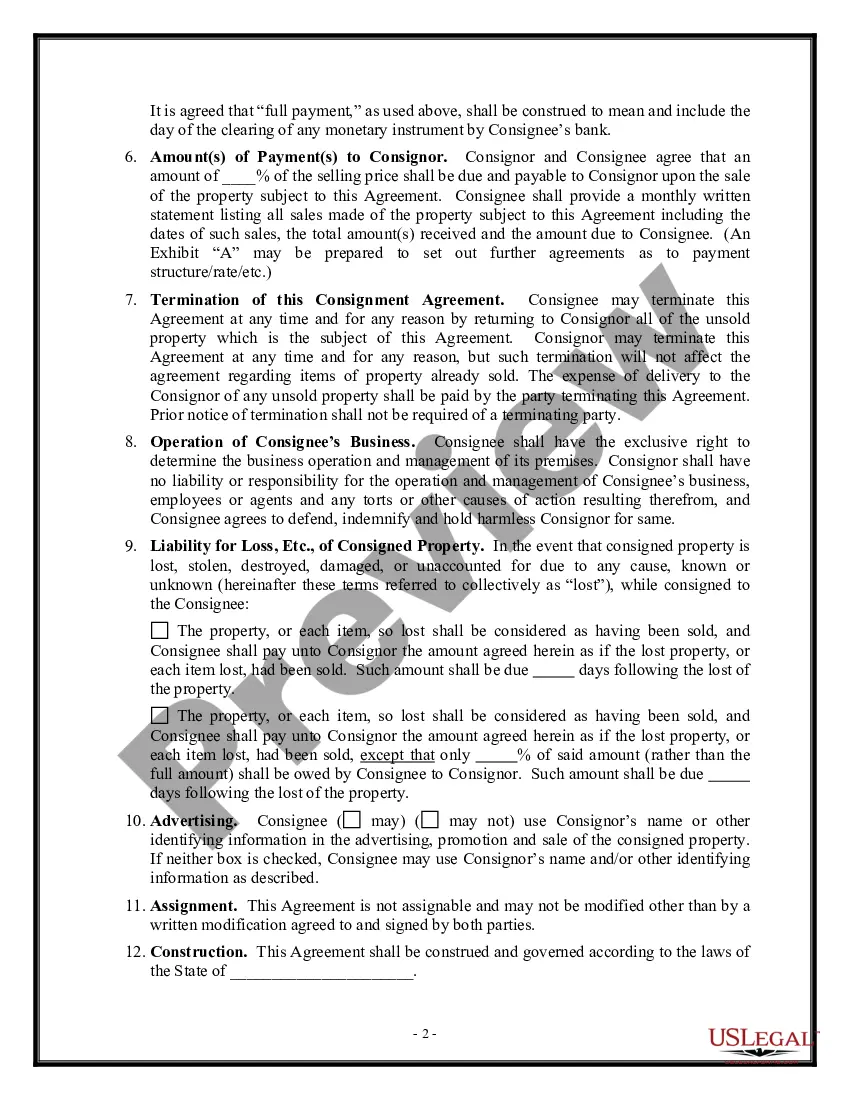
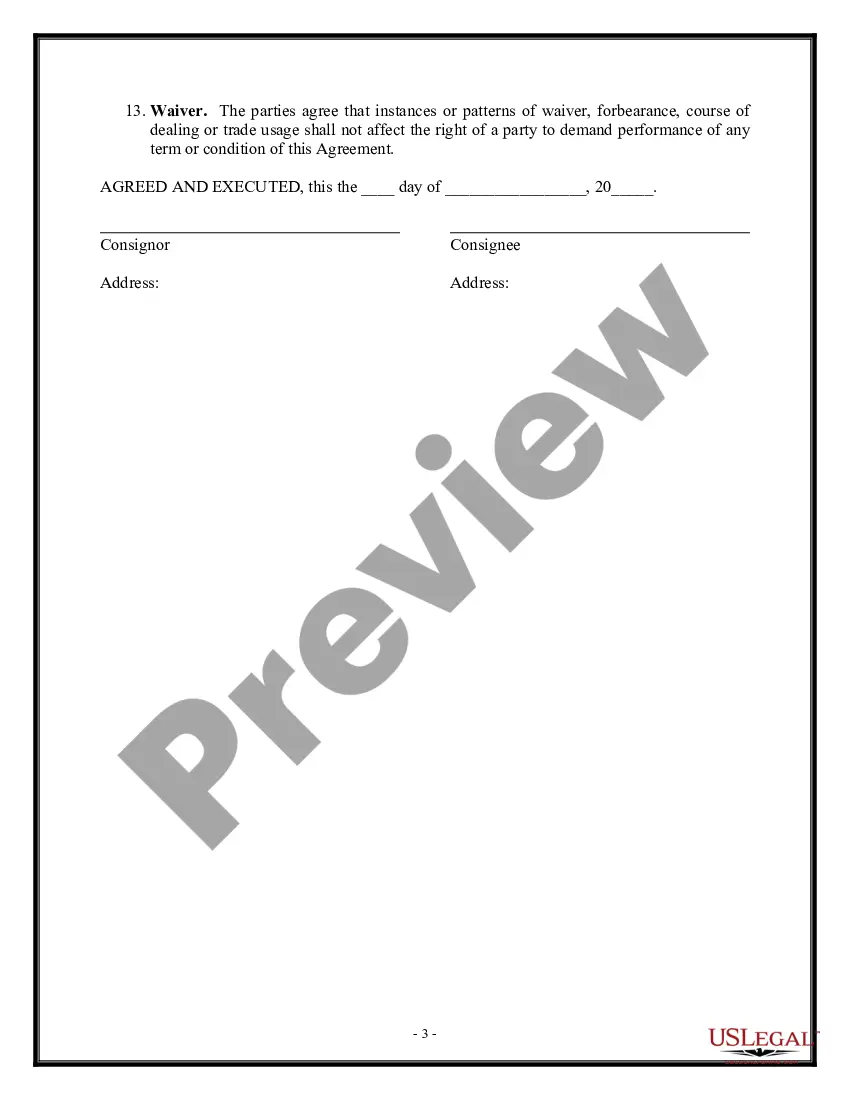
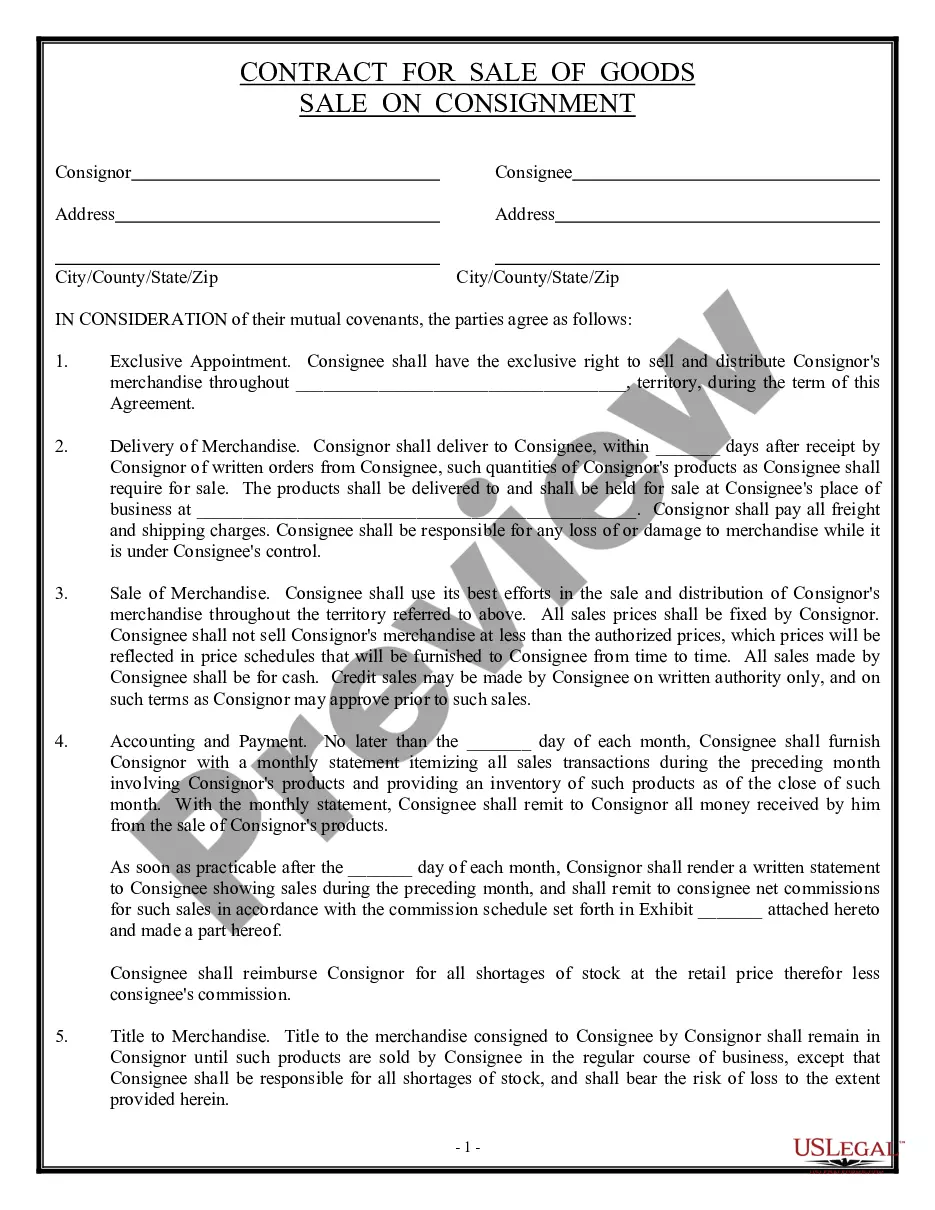
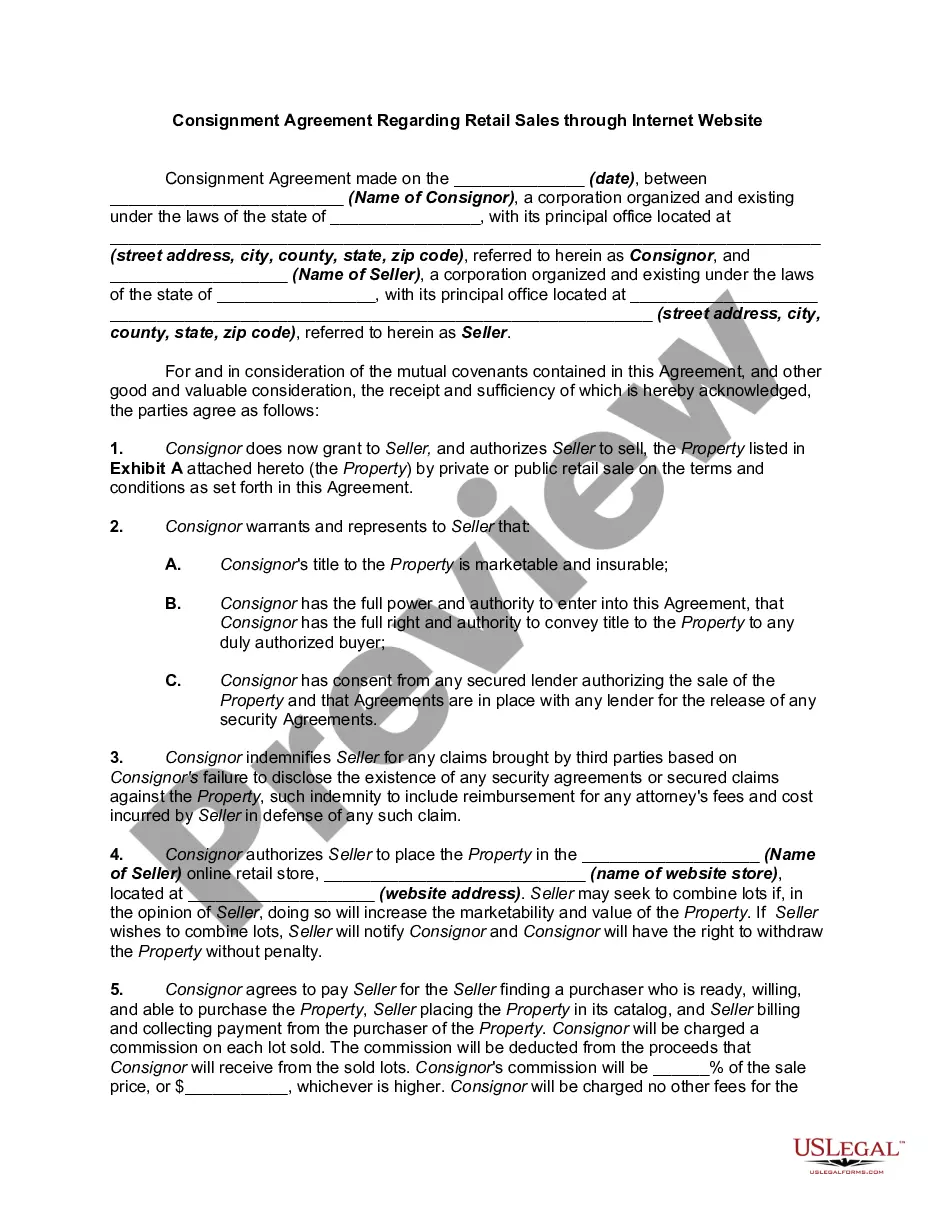
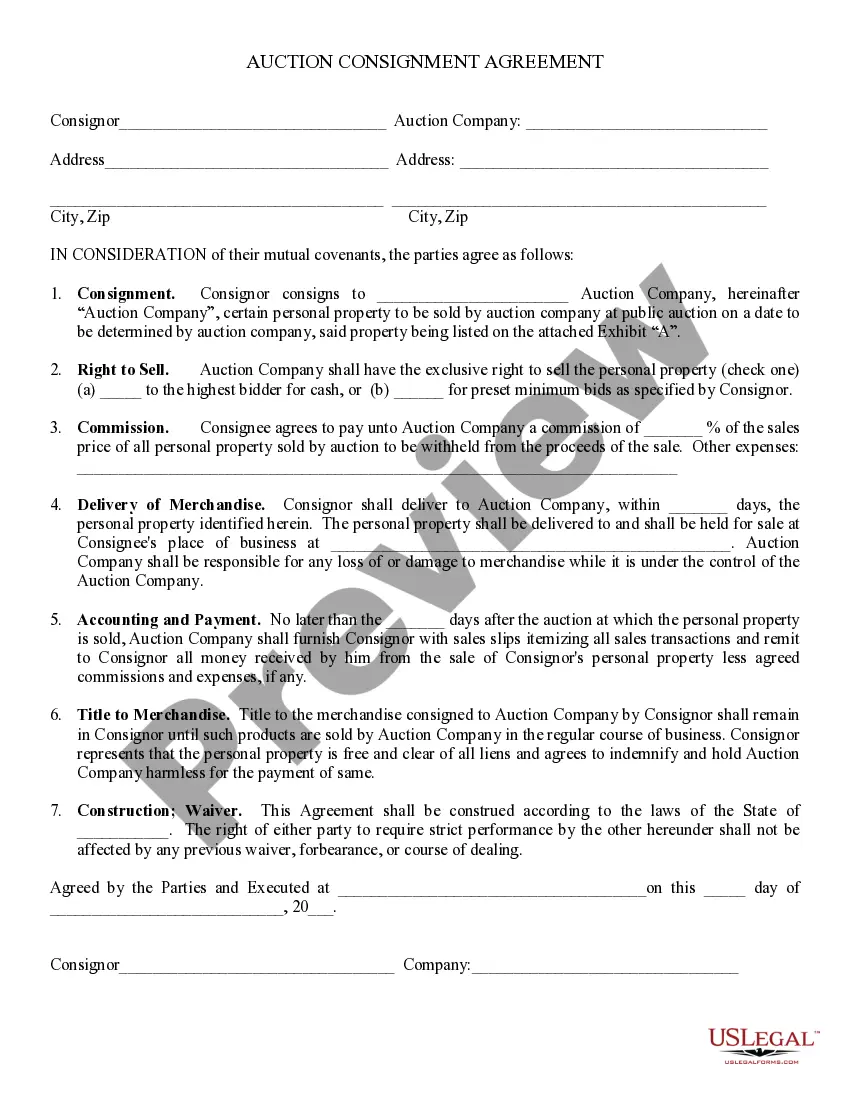
Get your form ready online
Our built-in tools help you complete, sign, share, and store your documents in one place.
Make edits, fill in missing information, and update formatting in US Legal Forms—just like you would in MS Word.
Download a copy, print it, send it by email, or mail it via USPS—whatever works best for your next step.
Sign and collect signatures with our SignNow integration. Send to multiple recipients, set reminders, and more. Go Premium to unlock E-Sign.
If this form requires notarization, complete it online through a secure video call—no need to meet a notary in person or wait for an appointment.
We protect your documents and personal data by following strict security and privacy standards.

Make edits, fill in missing information, and update formatting in US Legal Forms—just like you would in MS Word.

Download a copy, print it, send it by email, or mail it via USPS—whatever works best for your next step.

Sign and collect signatures with our SignNow integration. Send to multiple recipients, set reminders, and more. Go Premium to unlock E-Sign.

If this form requires notarization, complete it online through a secure video call—no need to meet a notary in person or wait for an appointment.

We protect your documents and personal data by following strict security and privacy standards.
Looking for another form?









Form popularity
FAQ
To help you get started, take a look at a few basic components to include in your contract so you can better protect your art business. Client Info. Project Info and Terms. Project Timeline. Costs and Payment Terms. Itemization. Artist's Rights. Cancellation Terms. Acceptance of Agreement.
It is very important to have all the documentation relating to your artwork to hand, including artist provenance, previous sales history and any exhibition history. Clear and complete records not only simplify the consignment process but also verify authenticity for potential buyers, a key factor in maximising value.
Art consignment: 13 important tips (and the right questions to ask) Attend a few sales. Before you enter a consignment agreement, document. Know the season you're selling in, and sell what's in demand. Choose an auction house: ask key questions. Follow drop-off rules. Ask about reserve prices.
Today, Artsper invites you to explore the 5 key factors which determine the monetary value of a painting. The notoriety of the artist. The painting's dimensions. The physical condition of a painting. The historical significance of the painting. The market's demand for the painting.
Writing an Artist's Statement? Start with These Questions What does your work look like? What are its physical properties? How does it exist in space? Where do we see it? Is your work temporal? How are you making this work? Why do you make this work? How do viewers experience your work?
A good artist contract sets forth the deliverables for the project being completed. This usually includes all details regarding project timeframes, the type of work being completed, the number of revisions expected, and the delivery dates.
How to draft a contract in 13 simple steps Start with a contract template. Understand the purpose and requirements. Identify all parties involved. Outline key terms and conditions. Define deliverables and milestones. Establish payment terms. Add termination conditions. Incorporate dispute resolution.
To “consign” a painting, ing to Merriam-Webster, is to send or address it to an agent to be cared for or sold. In the art world, the term is used when collectors, artists, and galleries entrust other galleries or auction houses with artworks, hoping to make a sale. Simple in definition, more complex in actuality.
Consignment is a process whereby a person gives permission to another party to take care of their property while retaining full ownership of the property until the item is sold to the final buyer.
