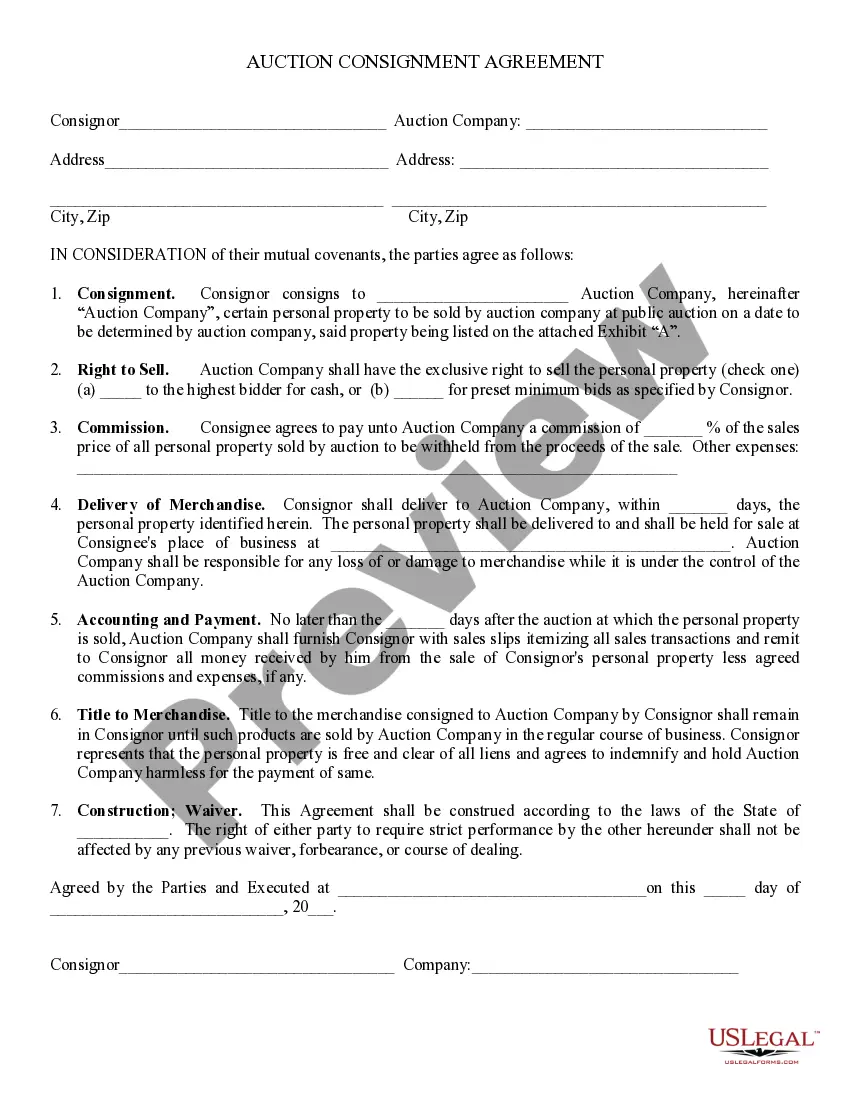
Examples Of Consignment Agreements
Description

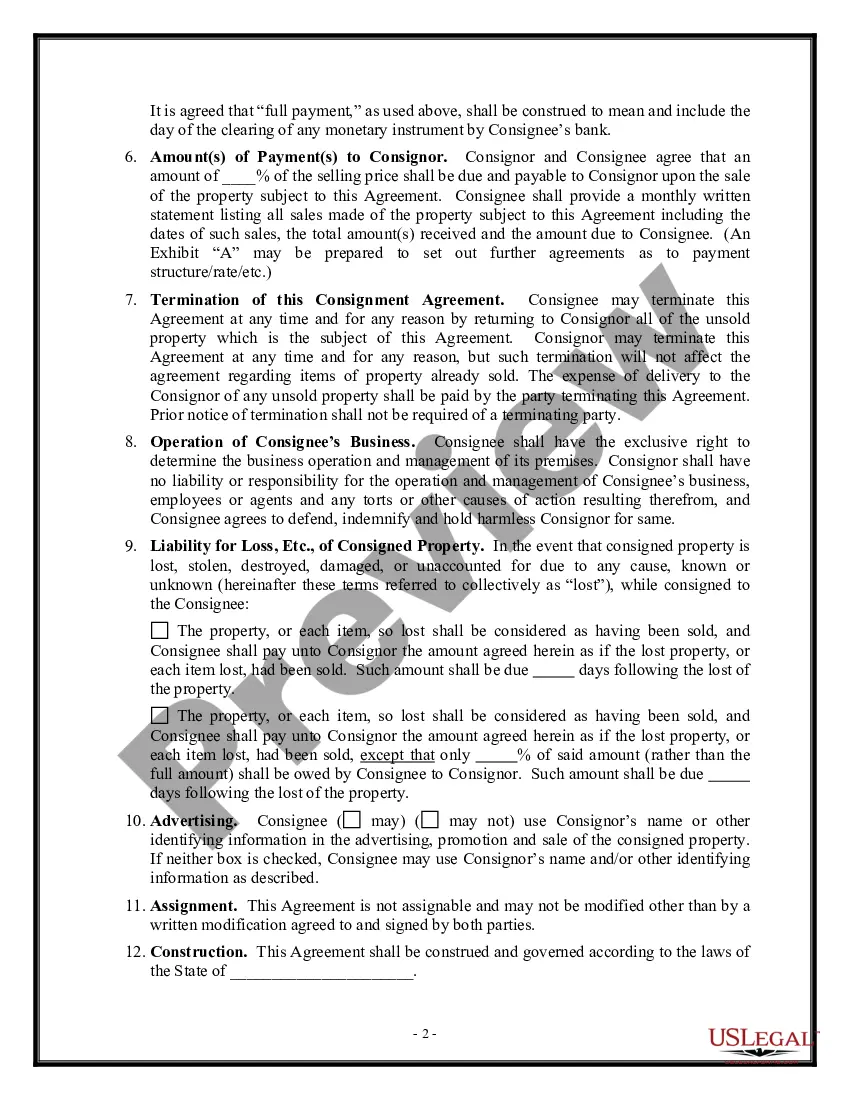
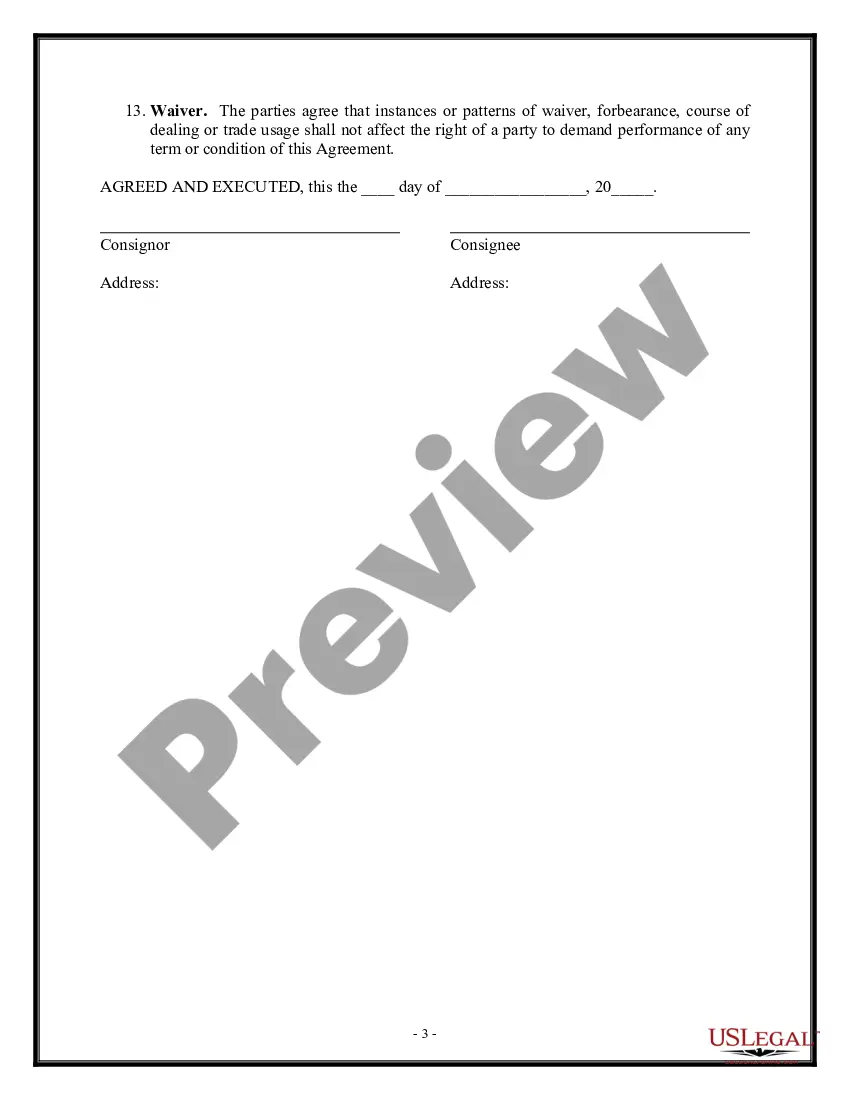
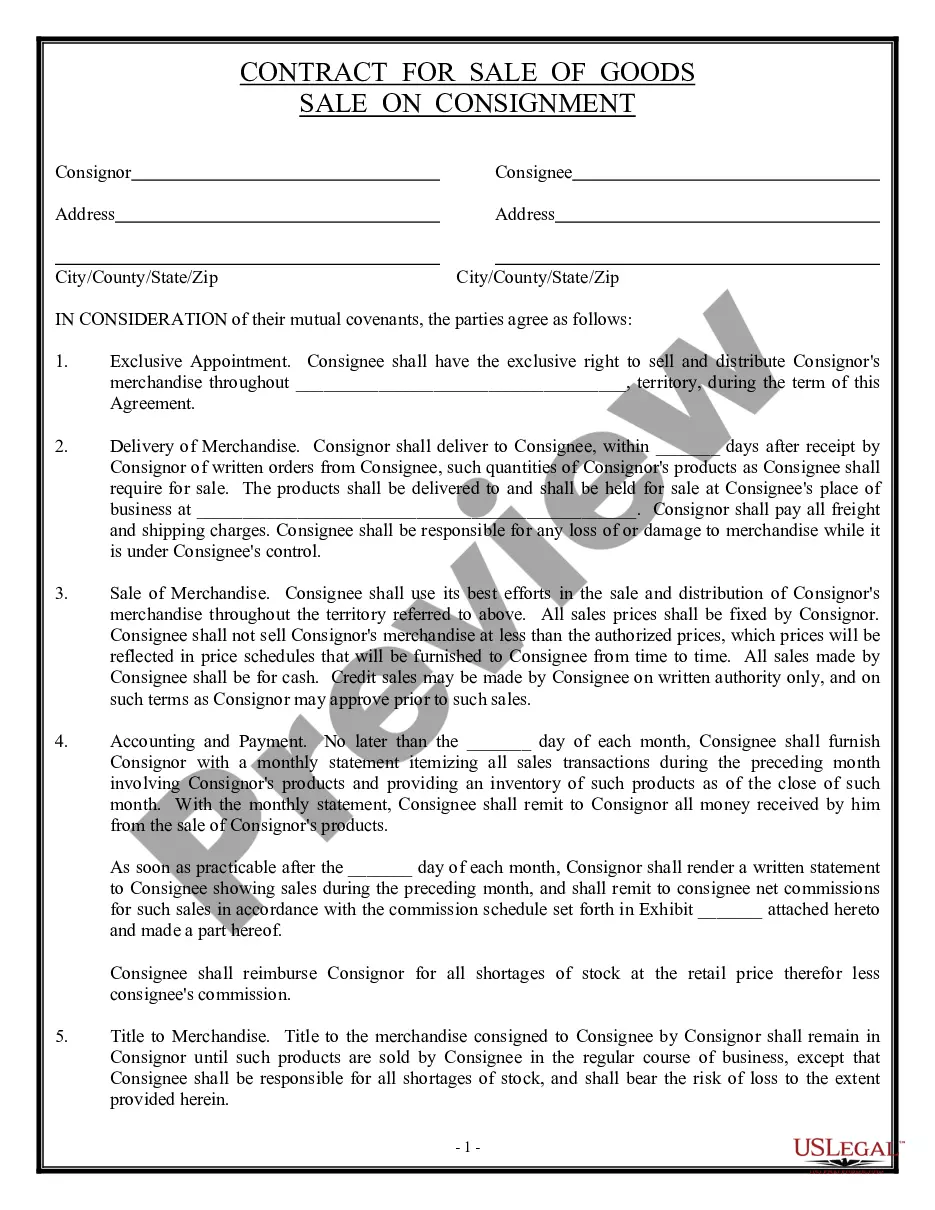
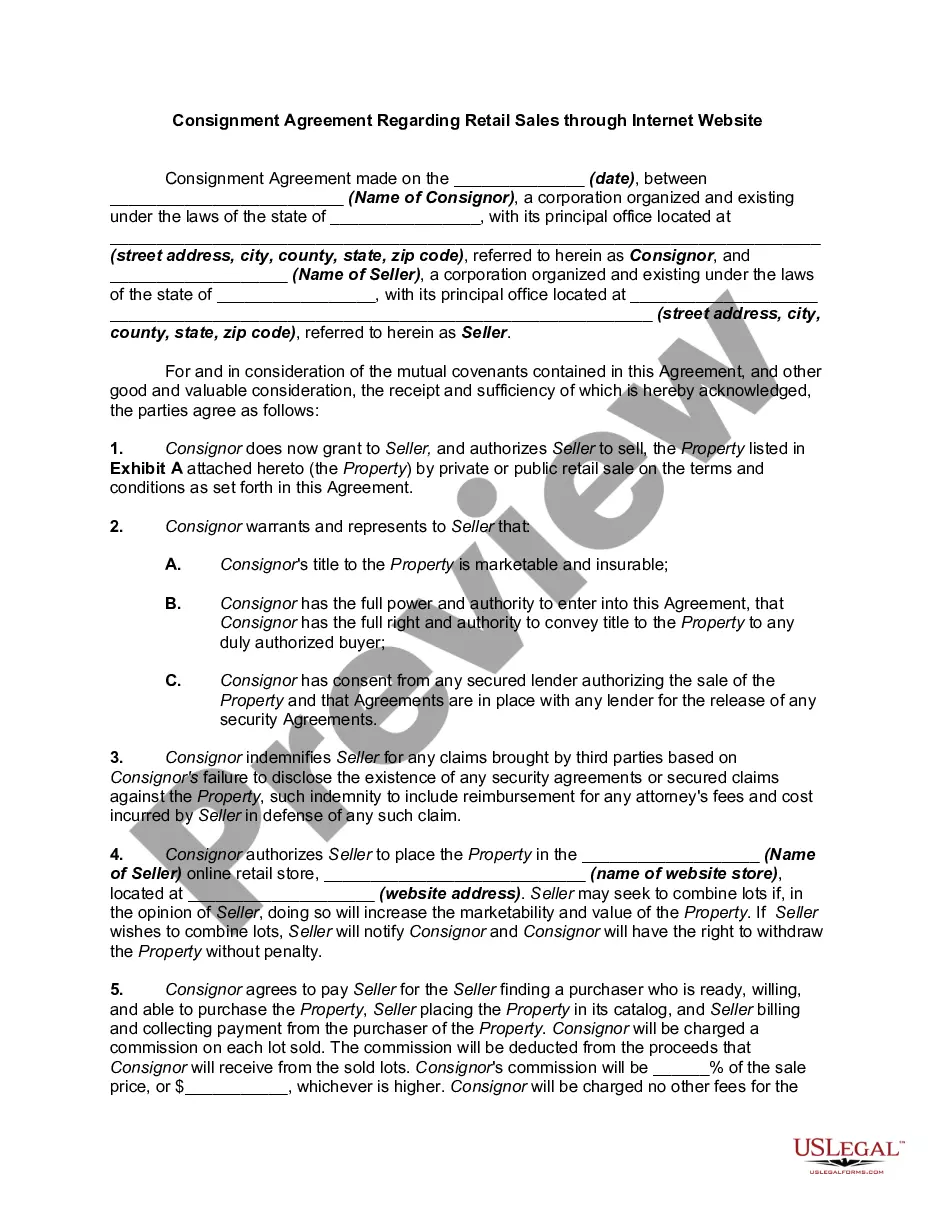
Get your form ready online
Our built-in tools help you complete, sign, share, and store your documents in one place.
Make edits, fill in missing information, and update formatting in US Legal Forms—just like you would in MS Word.
Download a copy, print it, send it by email, or mail it via USPS—whatever works best for your next step.
Sign and collect signatures with our SignNow integration. Send to multiple recipients, set reminders, and more. Go Premium to unlock E-Sign.
If this form requires notarization, complete it online through a secure video call—no need to meet a notary in person or wait for an appointment.
We protect your documents and personal data by following strict security and privacy standards.

Make edits, fill in missing information, and update formatting in US Legal Forms—just like you would in MS Word.

Download a copy, print it, send it by email, or mail it via USPS—whatever works best for your next step.

Sign and collect signatures with our SignNow integration. Send to multiple recipients, set reminders, and more. Go Premium to unlock E-Sign.

If this form requires notarization, complete it online through a secure video call—no need to meet a notary in person or wait for an appointment.

We protect your documents and personal data by following strict security and privacy standards.
Looking for another form?





How to fill out Consignment Agreement?
Creating legal documents from the ground up can frequently be somewhat daunting.
Certain situations may necessitate extensive research and significant financial expenditure.
If you’re looking for a simpler and more affordable method of drafting Examples Of Consignment Agreements or any other paperwork without the hassle, US Legal Forms is readily available.
Our online repository of over 85,000 current legal documents covers nearly every facet of your financial, legal, and personal affairs.
Examine the form preview and descriptions to ensure you have located the form you need. Confirm that the form you select meets your state and county's requirements. Choose the most suitable subscription plan to purchase the Examples Of Consignment Agreements. Download the document. Then fill it out, sign it, and print it. US Legal Forms has a strong reputation and over 25 years of expertise. Join us now and make document execution a straightforward and efficient process!
- With just a few clicks, you can swiftly obtain state- and county-specific forms carefully prepared by our legal experts.
- Utilize our platform whenever you require a trusted and dependable service through which you can quickly find and download the Examples Of Consignment Agreements.
- If you’re already familiar with our services and have made an account previously, simply Log In to your account, select the form, and download it or access it anytime later in the My documents section.
- Not registered yet? No worries. It requires minimal time to set up and browse the library.
- But before proceeding directly to downloading Examples Of Consignment Agreements, consider these suggestions.
Form popularity
FAQ
Consignment is an arrangement in which goods are left with a third party to sell. The party that sells the goods on consignment receives a portion of the profits, either as a flat rate fee or commission. Selling via a consignment arrangement can be a low-commission, low-time-investment way of selling items or services.
The contract normally states that the consignor is the actual owner of the item for sale and the consignee is responsible for its care and for any loss or damage to the item while in the consignee's possession. Insurance. The consignee is usually required to carry insurance that will cover the consigned item.
3. Consignment agreement instructions Introduction of Parties. Identifies the parties and the date of the agreement. ... Recitals. ... Section 1: Consigned property. ... Section 2: Delivery of goods. ... Section 3: Consignment period. ... Section 4: Efforts to sell. ... Section 5: Title to products. ... Section 6: Payment; commission.
For example, a consignment store might sell previously owned prom dresses by offering to pay a 20% revenue fee to anyone who wants to sell a dress through their store. Some examples of goods you may often see for sale using the consignment business model include: Antiques and collectibles. Magazines and newspapers.
Consignment is an arrangement in which goods are left with a third party to sell. The party that sells the goods on consignment receives a portion of the profits, either as a flat rate fee or commission. Selling via a consignment arrangement can be a low-commission, low-time-investment way of selling items or services.