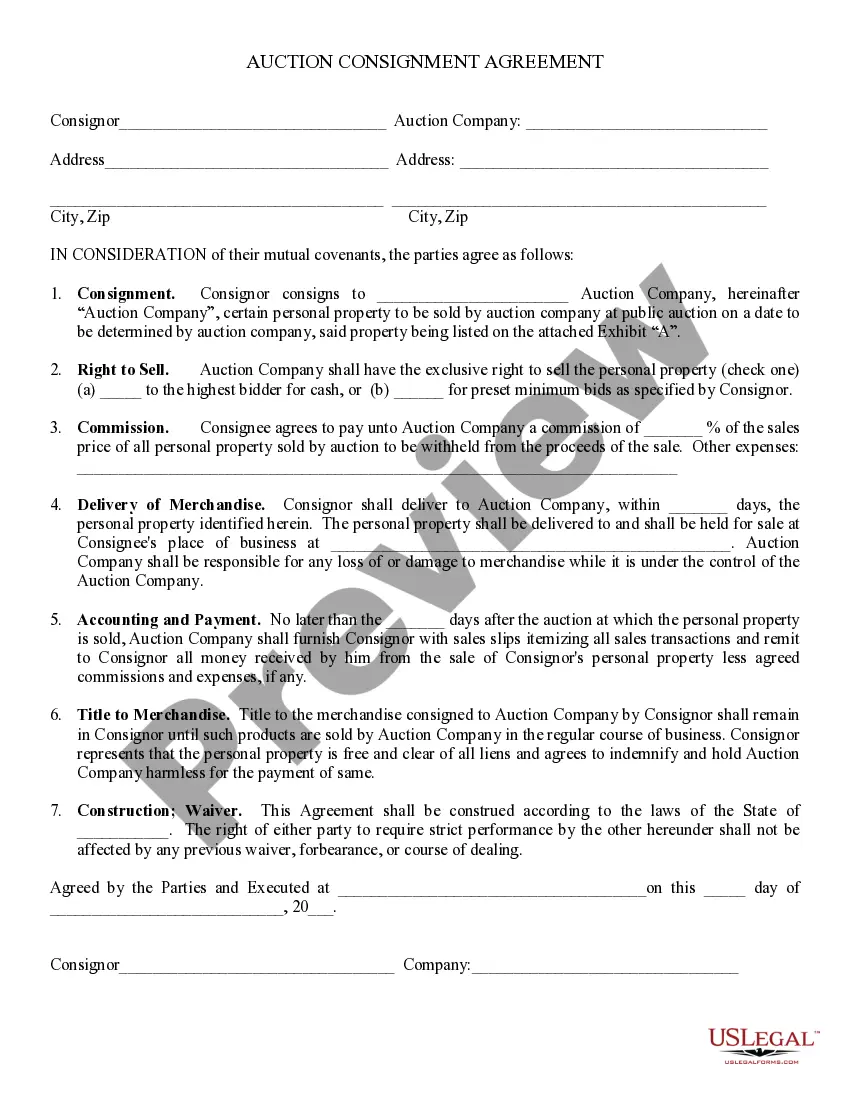
Consignment Form Template With Prices In Clark
Description

Get your form ready online
Our built-in tools help you complete, sign, share, and store your documents in one place.
Make edits, fill in missing information, and update formatting in US Legal Forms—just like you would in MS Word.
Download a copy, print it, send it by email, or mail it via USPS—whatever works best for your next step.
Sign and collect signatures with our SignNow integration. Send to multiple recipients, set reminders, and more. Go Premium to unlock E-Sign.
If this form requires notarization, complete it online through a secure video call—no need to meet a notary in person or wait for an appointment.
We protect your documents and personal data by following strict security and privacy standards.

Make edits, fill in missing information, and update formatting in US Legal Forms—just like you would in MS Word.

Download a copy, print it, send it by email, or mail it via USPS—whatever works best for your next step.

Sign and collect signatures with our SignNow integration. Send to multiple recipients, set reminders, and more. Go Premium to unlock E-Sign.

If this form requires notarization, complete it online through a secure video call—no need to meet a notary in person or wait for an appointment.

We protect your documents and personal data by following strict security and privacy standards.
Looking for another form?

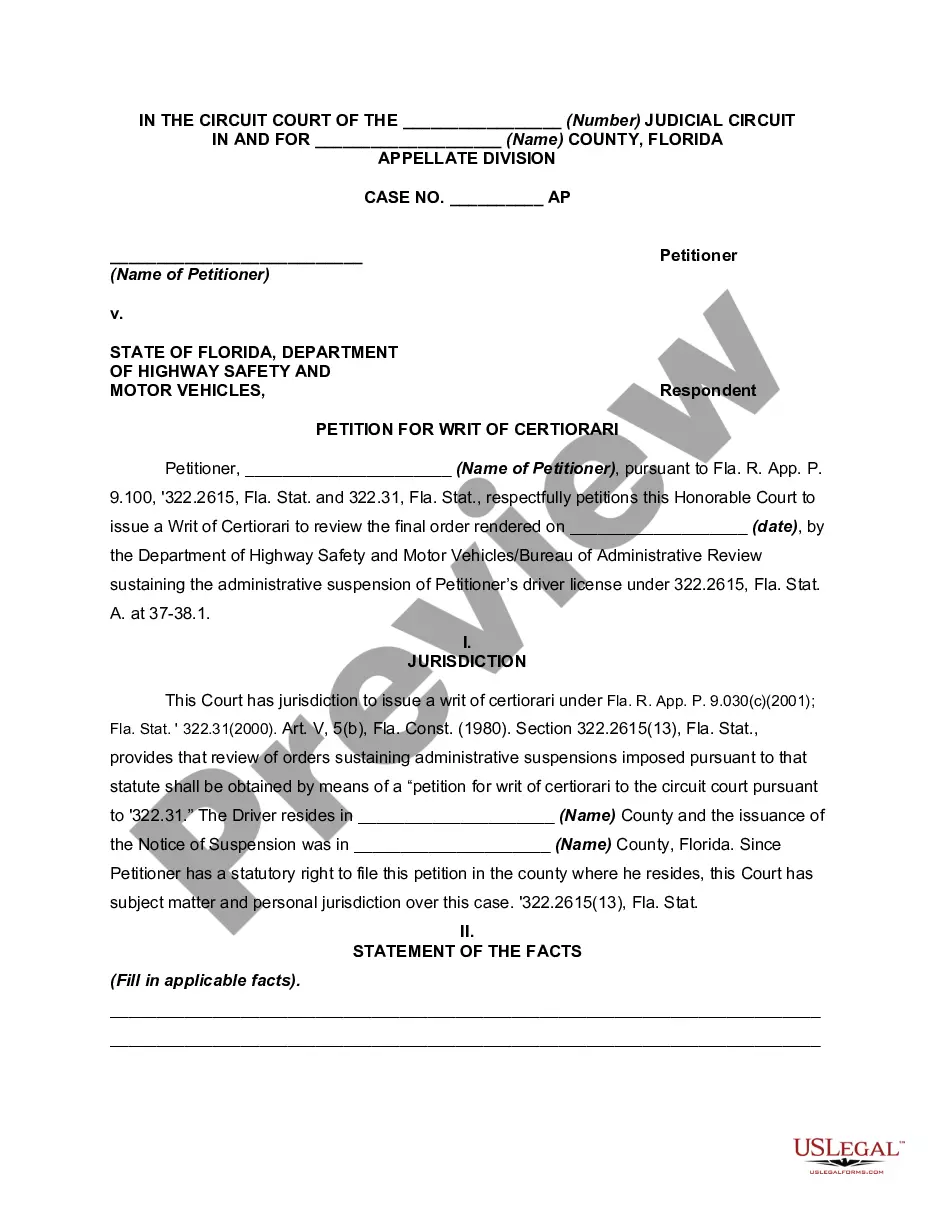






Form popularity
FAQ
Now that you know what consignment is, here's how to calculate consignment inventory. Step 1: Establish a Listing of Your Inventory of Consignment Products. Step 2: Subtract the Seller's or Shipper's Portion of the Consignment Product Sold. Step 3: Update the Inventory After the Sale.
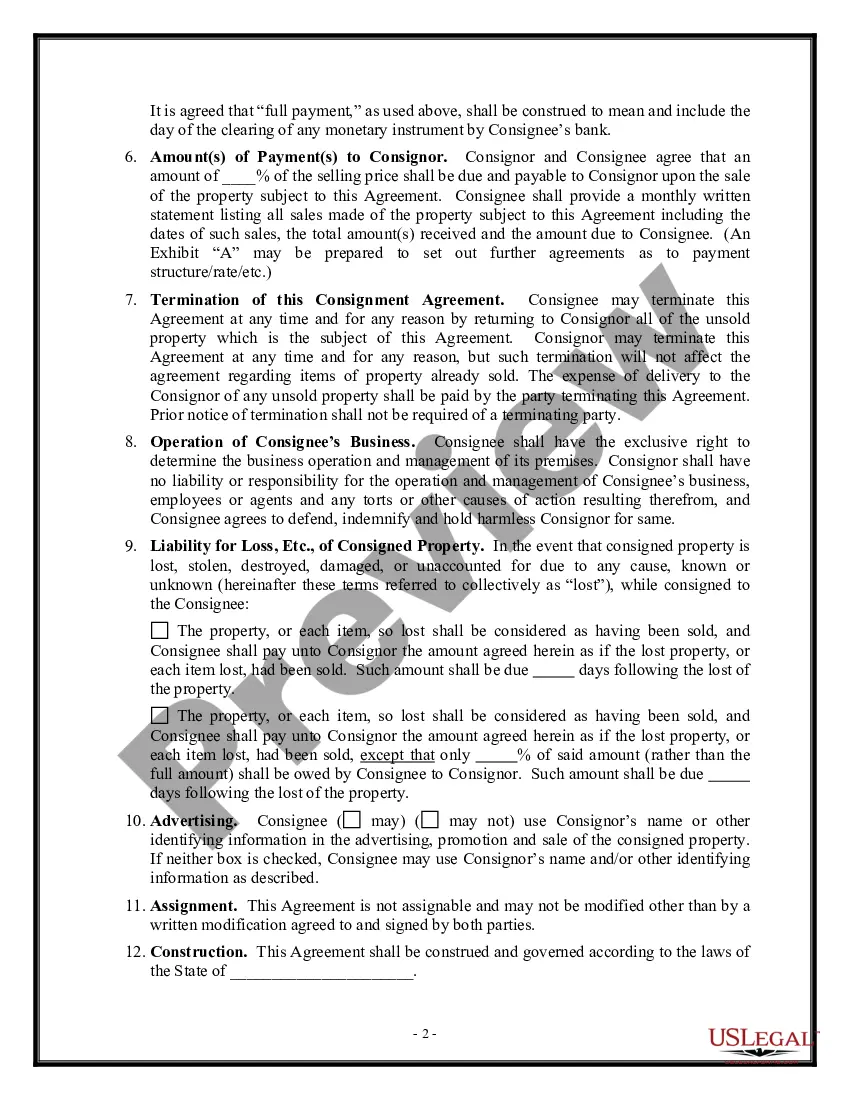
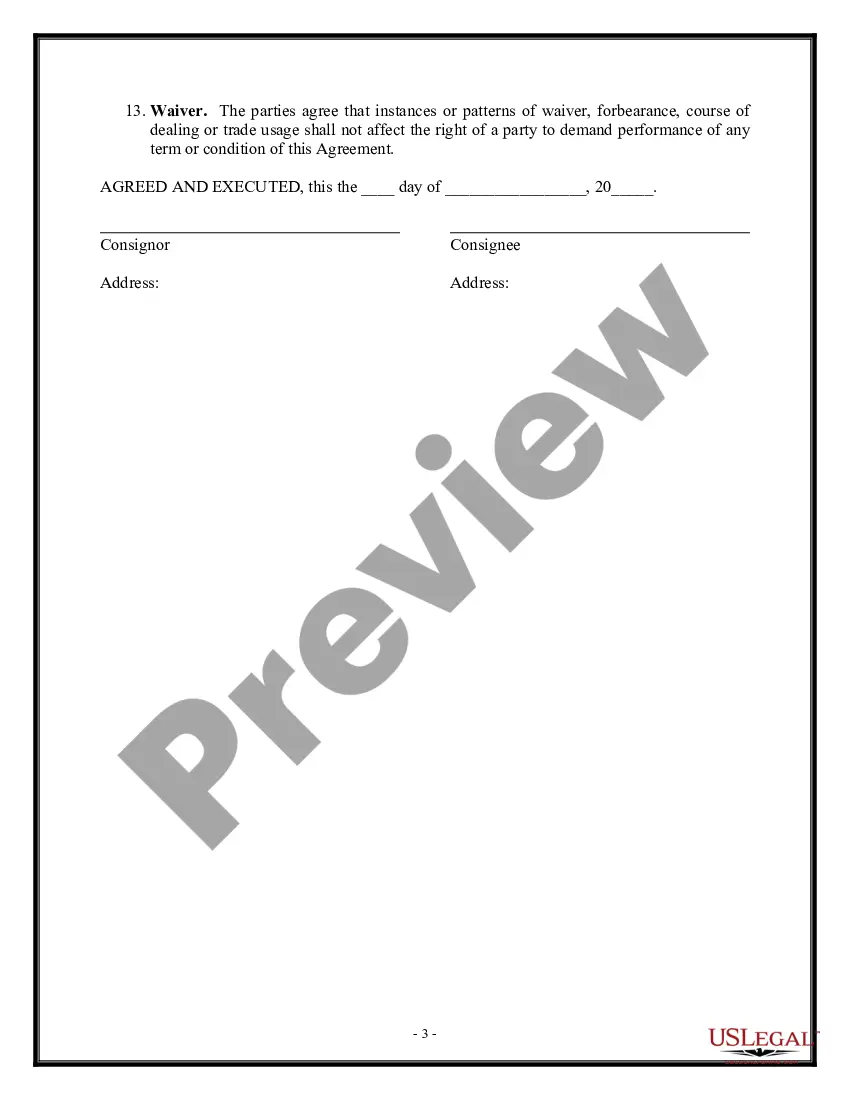
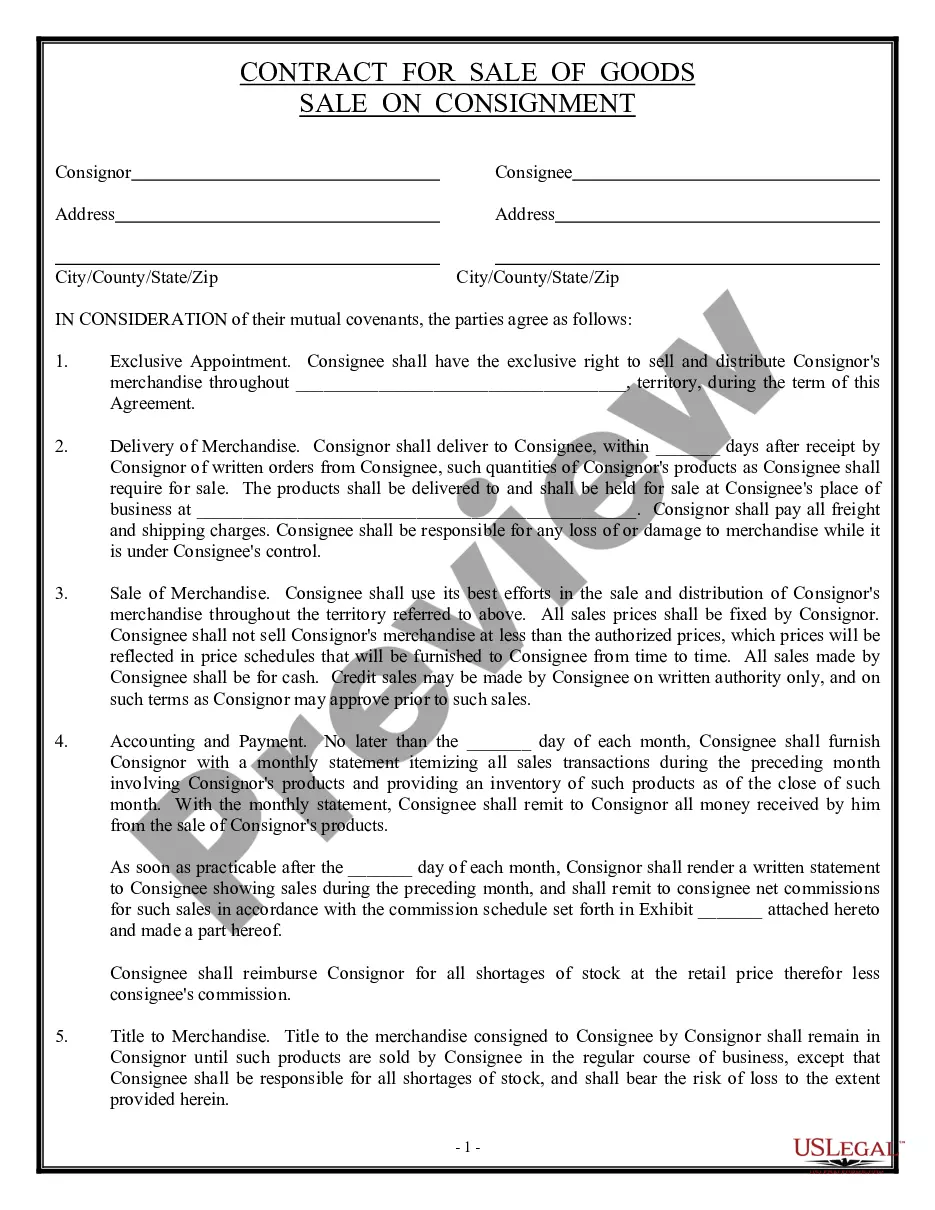
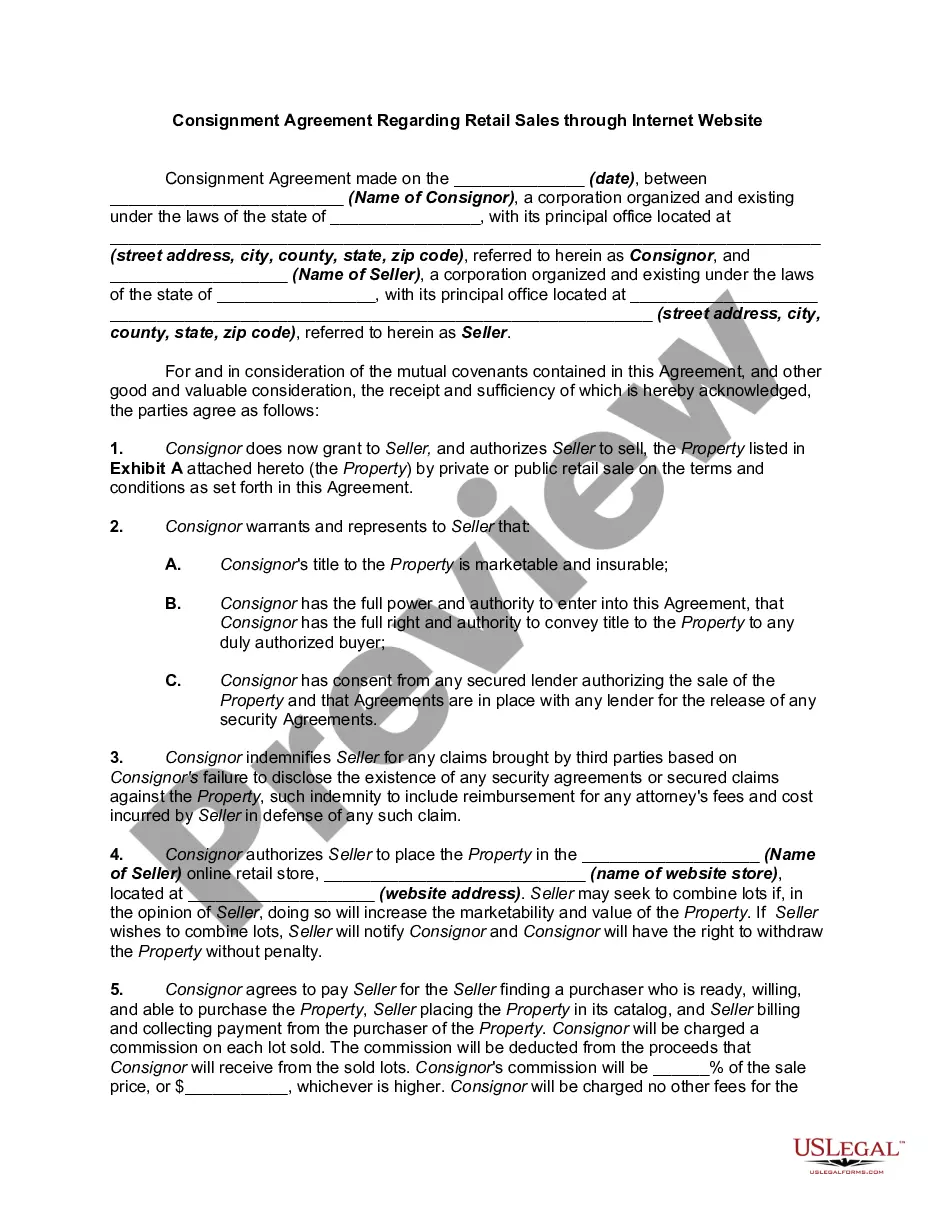
How to Write a Consignment Agreement Parties Involved: Names and contact information of the consignor and the consignee. Consigned Goods: Detailed description of the goods being consigned, including quantities and specifications. Consignment Period: Duration of the consignment arrangement.
The following instructions will help you understand the terms of your consignment agreement. Introduction of parties. Recitals. Consigned property. Delivery of goods. Consignment period. Efforts to sell. Title to products. Payment terms and commission.
Example of Consignment Inventory After some deliberations with the store owner, you both agree to start off with 50 pieces of jackets to be sold over 3 months. By the time the sales period ends, the store has sold 35 pieces, handing the rest to you. Everybody gets their cut, you shake hands – end of business.
Now that you know what consignment is, here's how to calculate consignment inventory. Step 1: Establish a Listing of Your Inventory of Consignment Products. Step 2: Subtract the Seller's or Shipper's Portion of the Consignment Product Sold. Step 3: Update the Inventory After the Sale.
Consignment inventory best practices Establish clear agreements. Clearly define terms, responsibilities, and expectations with your consignment partners. Implement robust tracking systems. Maintain effective communication. Optimize replenishment processes. Analyze and adjust strategies.
For example, you may own a jewelry store where you sell jewelry on consignment. Typically, the owner of the jewelry will bring it to you and sign an agreement that authorizes you to sell the item and transfer ownership to the buyer.
She takes the clothes to a thrift store to sell the clothes on consignment. Bethany and the thrift store come to an agreement that Bethany will receive 60% of the revenues from the items sold while the thrift store will receive the remaining 40%. This business model is used by many second-hand stores.
Now that you know what consignment is, here's how to calculate consignment inventory. Step 1: Establish a Listing of Your Inventory of Consignment Products. Step 2: Subtract the Seller's or Shipper's Portion of the Consignment Product Sold. Step 3: Update the Inventory After the Sale.