S Corporation With Two Shareholders In San Antonio
Description

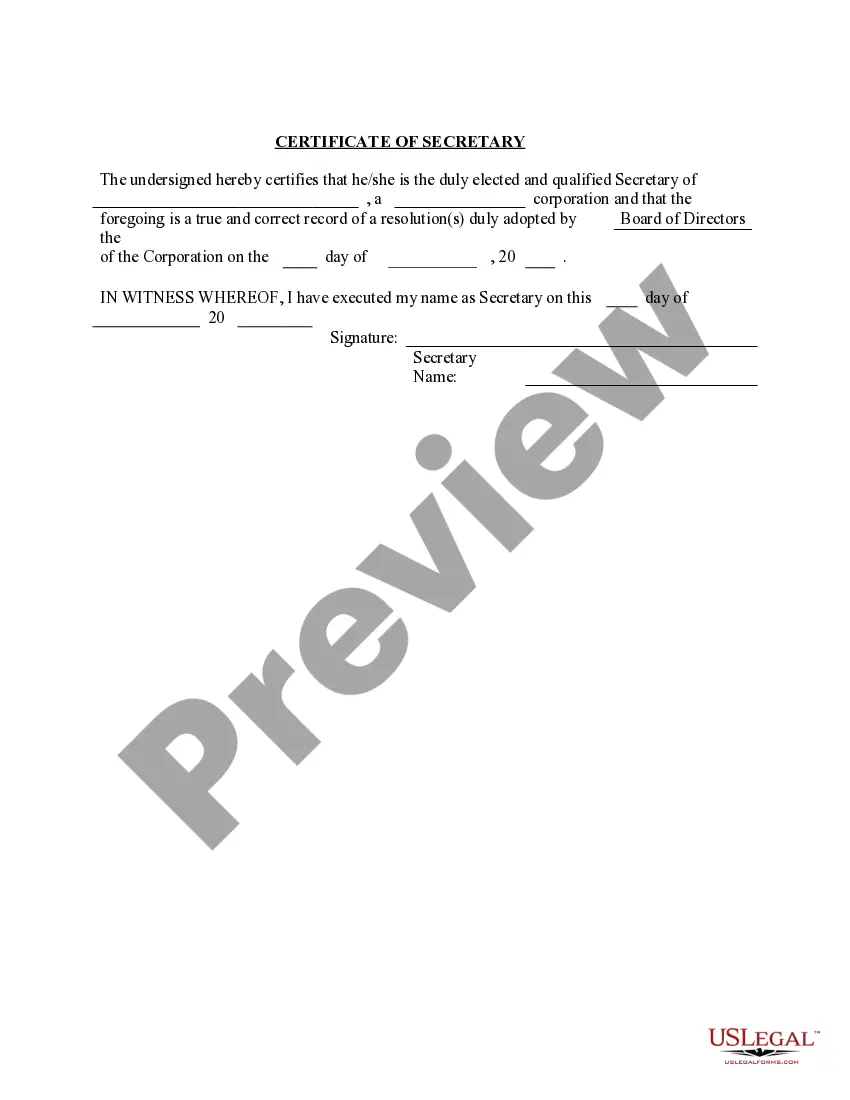

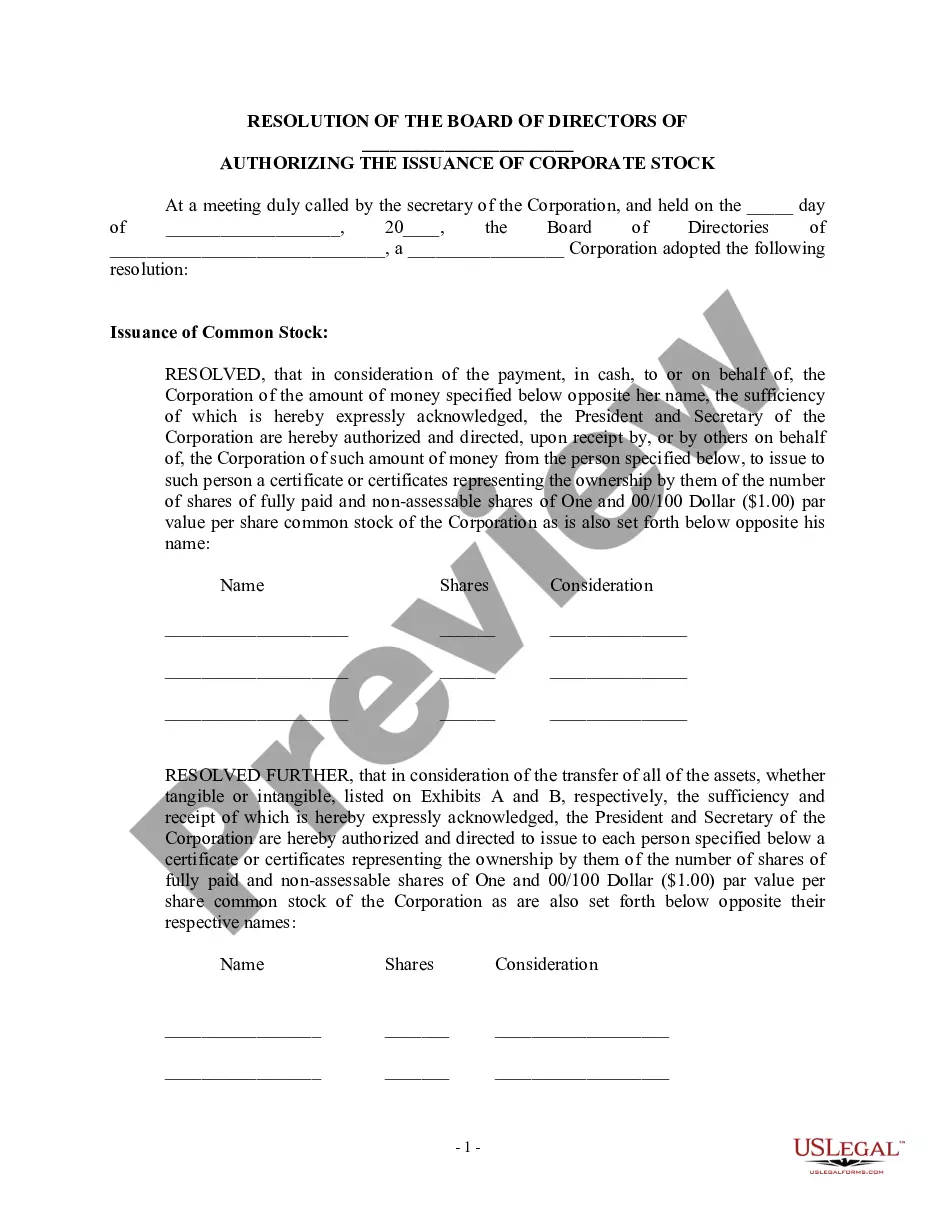
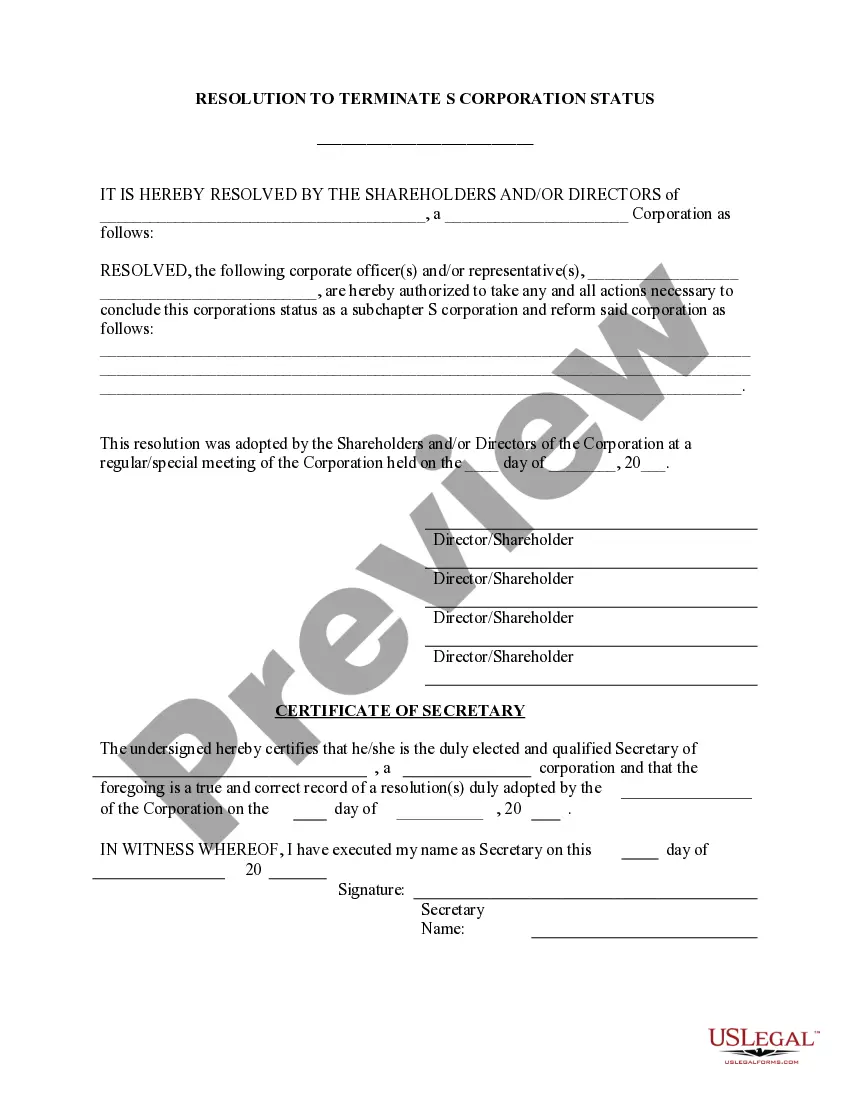
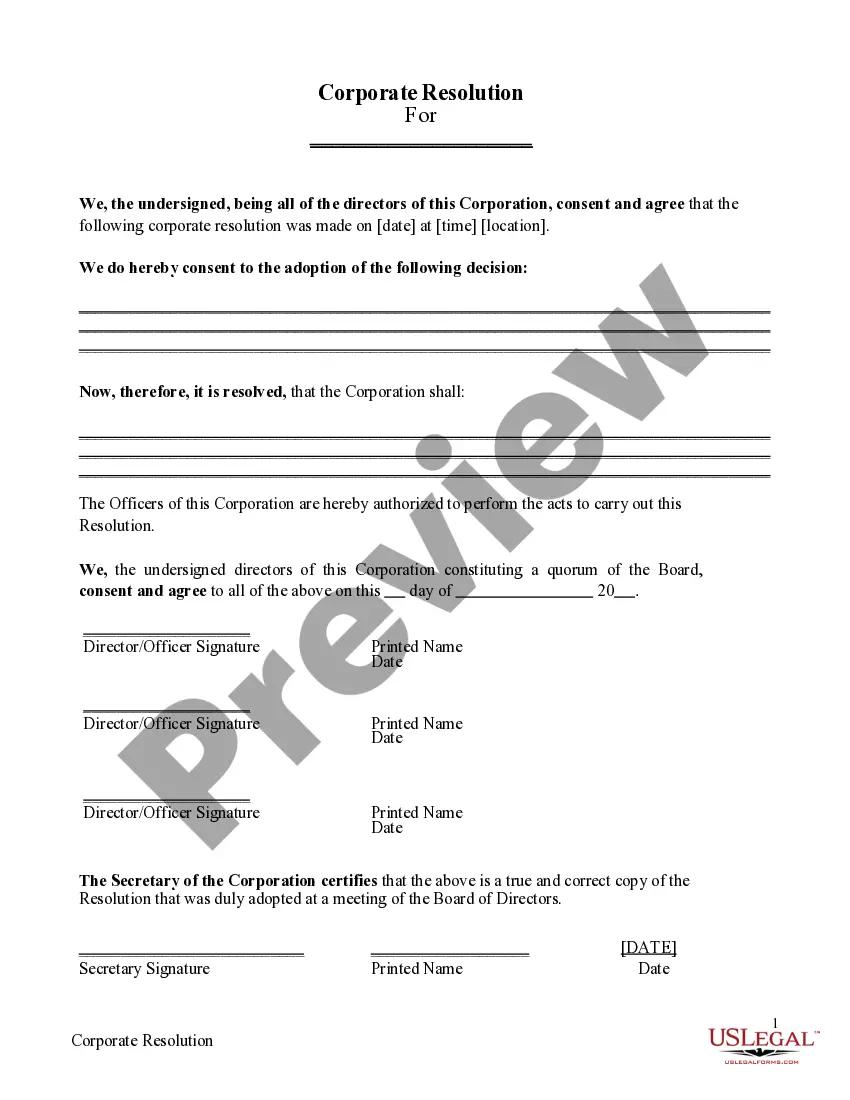
Get your form ready online
Our built-in tools help you complete, sign, share, and store your documents in one place.
Make edits, fill in missing information, and update formatting in US Legal Forms—just like you would in MS Word.
Download a copy, print it, send it by email, or mail it via USPS—whatever works best for your next step.
Sign and collect signatures with our SignNow integration. Send to multiple recipients, set reminders, and more. Go Premium to unlock E-Sign.
If this form requires notarization, complete it online through a secure video call—no need to meet a notary in person or wait for an appointment.
We protect your documents and personal data by following strict security and privacy standards.

Make edits, fill in missing information, and update formatting in US Legal Forms—just like you would in MS Word.

Download a copy, print it, send it by email, or mail it via USPS—whatever works best for your next step.

Sign and collect signatures with our SignNow integration. Send to multiple recipients, set reminders, and more. Go Premium to unlock E-Sign.

If this form requires notarization, complete it online through a secure video call—no need to meet a notary in person or wait for an appointment.

We protect your documents and personal data by following strict security and privacy standards.
Looking for another form?







Form popularity
FAQ
An S corporation can have only one class of stock, although it can have both voting and non-voting shares. Therefore, there can't be different classes of investors who are entitled to different dividends or distribution rights. Also, there cannot be more than 100 shareholders.
We recommend converting to a C-Corp if a company wants to issue qualified small business stock and plans on selling its business in no less than five years.
After conversion from a C corp, an S corporation can inherit income such as rent, interest, retained earnings, funds derived from stock sales, etc. Passive income that makes up more than 25% of an S corp's gross income is subject to tax.
An S corporation can have only one class of stock, although it can have both voting and non-voting shares. Therefore, there can't be different classes of investors who are entitled to different dividends or distribution rights. Also, there cannot be more than 100 shareholders.
Furthermore, it must be established by at least five individuals known as incorporators. A corporation's ownership is divided into stock shares.
General partnerships are businesses with two or more owners that share profits and personal liability for the business they own. A partnership does not require you to register your business with the state.
Partnerships are the simplest structure for two or more people to own a business together. There are two common kinds of partnerships: limited partnerships (LP) and limited liability partnerships (LLP).
Limited number of shareholders: An S corp cannot have more than 100 shareholders, meaning it can't go public and limiting its ability to raise capital from new investors.
Unlike sole proprietorships, a corporation can be owned by multiple people.
