S Corporation For Real Estate In Clark
Description


Get your form ready online
Our built-in tools help you complete, sign, share, and store your documents in one place.
Make edits, fill in missing information, and update formatting in US Legal Forms—just like you would in MS Word.
Download a copy, print it, send it by email, or mail it via USPS—whatever works best for your next step.
Sign and collect signatures with our SignNow integration. Send to multiple recipients, set reminders, and more. Go Premium to unlock E-Sign.
If this form requires notarization, complete it online through a secure video call—no need to meet a notary in person or wait for an appointment.
We protect your documents and personal data by following strict security and privacy standards.

Make edits, fill in missing information, and update formatting in US Legal Forms—just like you would in MS Word.

Download a copy, print it, send it by email, or mail it via USPS—whatever works best for your next step.

Sign and collect signatures with our SignNow integration. Send to multiple recipients, set reminders, and more. Go Premium to unlock E-Sign.

If this form requires notarization, complete it online through a secure video call—no need to meet a notary in person or wait for an appointment.

We protect your documents and personal data by following strict security and privacy standards.
Looking for another form?






Form popularity
FAQ
Corp Election teps for Corporations tep 1 Name Your Nevada Corporation. tep 2 Appoint Directors. tep 3 Choose a Nevada Registered Agent. tep 4 File the Nevada Articles of Incorporation. tep 5 Create Corporate Bylaws. tep 6 Draft a hareholder Agreement. tep 7 Issue hares of tock.
In general, rental property owners may receive the most benefit by making an LLC for each rental property. Individual LLCs limit liability to just the actual property each LLC possesses, along with any other assets the LLC owns.
Some of the disadvantages are slightly higher filing and business license fees than other states, and the commerce tax for business with over $4 million of Nevada gross revenue.
Pass-Through Taxation: Unlike C corporations, where the business itself is subject to taxation on its profits and shareholders are taxed again on dividends, S corps can avoid double taxation. Profits and losses “pass-through” to the individual shareholders, who report them on their personal income tax returns.
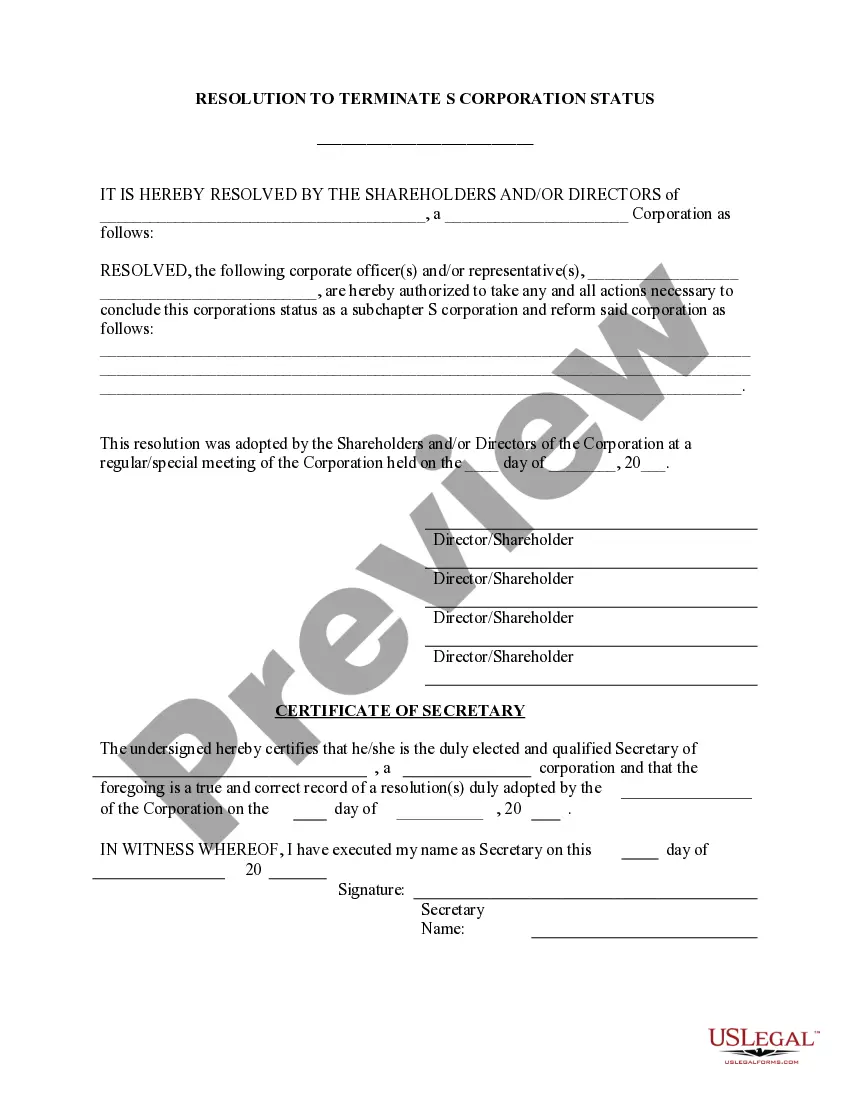
Choose a business name for your S corp. File articles of incorporation. Issue stock for your S corp. Elect a board of directors and appoint officers. Meet other S corp eligibility requirements. Obtain an employer identification number. Elect S corp status. Apply for state and local S corp business licenses.
The District of Columbia (DC) has a graduated individual income tax, with rates ranging from 4.00 percent to 10.75 percent. DC has an 8.25 percent corporate income tax rate. DC has a 6.00 percent sales tax rate.
Step 1: Choose a Unique Business Name and Complete a State Corporation Search. Step 2: Provide an Official Business Address for your Corporation. Step 3: Assign a Registered Agent. Step 4: File Your Articles of Incorporation with the Washington DC DCRA.
Corp Election teps for LLCs tep 1 Choose a Name. tep 2 Appoint a registered agent. tep 3 File a Washington Certificate of Formation. tep 4 Create an operating agreement. tep 5 Apply for an EIN. tep 6 Apply for Corp status with IR Form 2553.
FL, SD and WY are typically the best for no personal/business taxes. Nexus rules still apply to other states.
