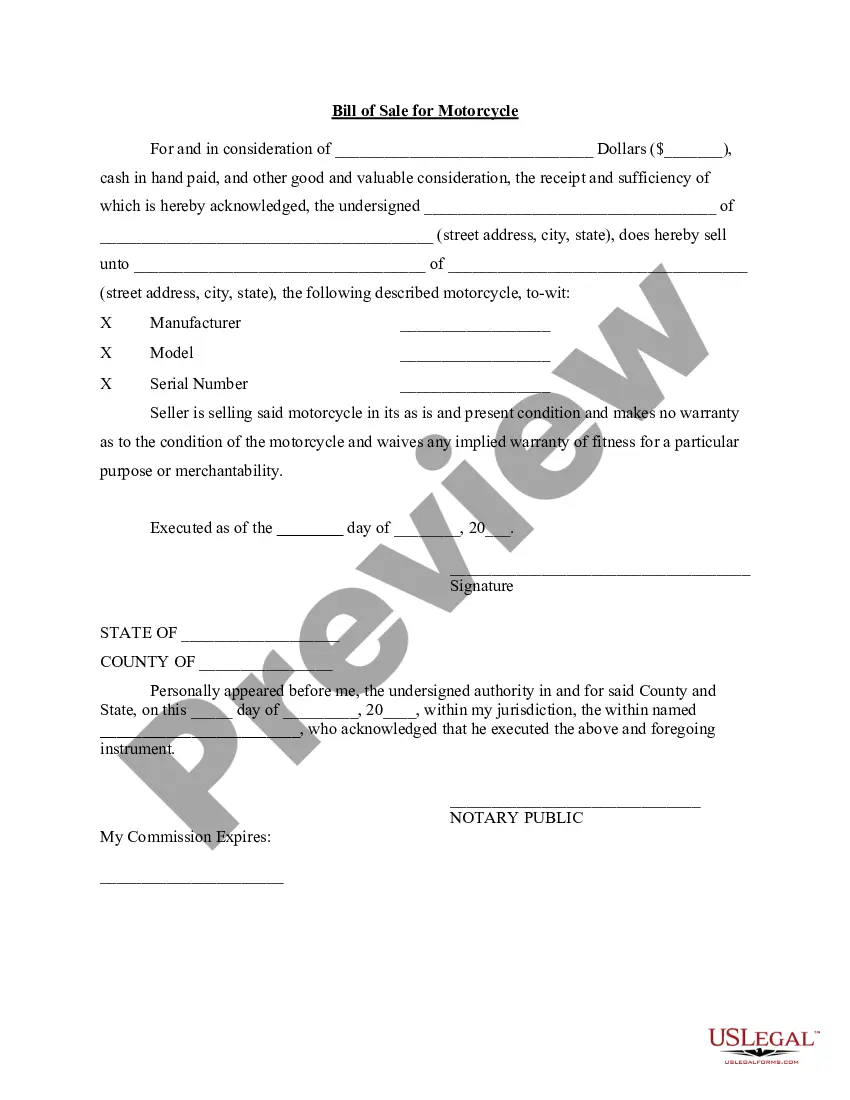
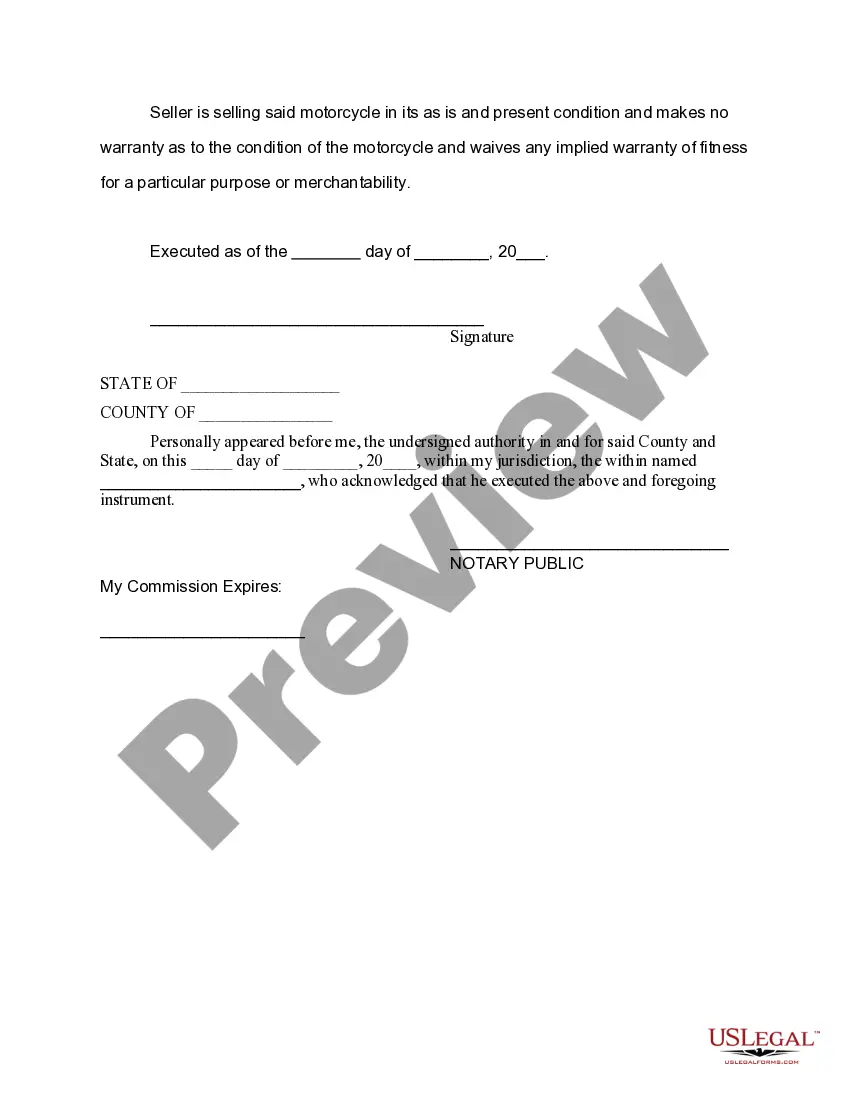
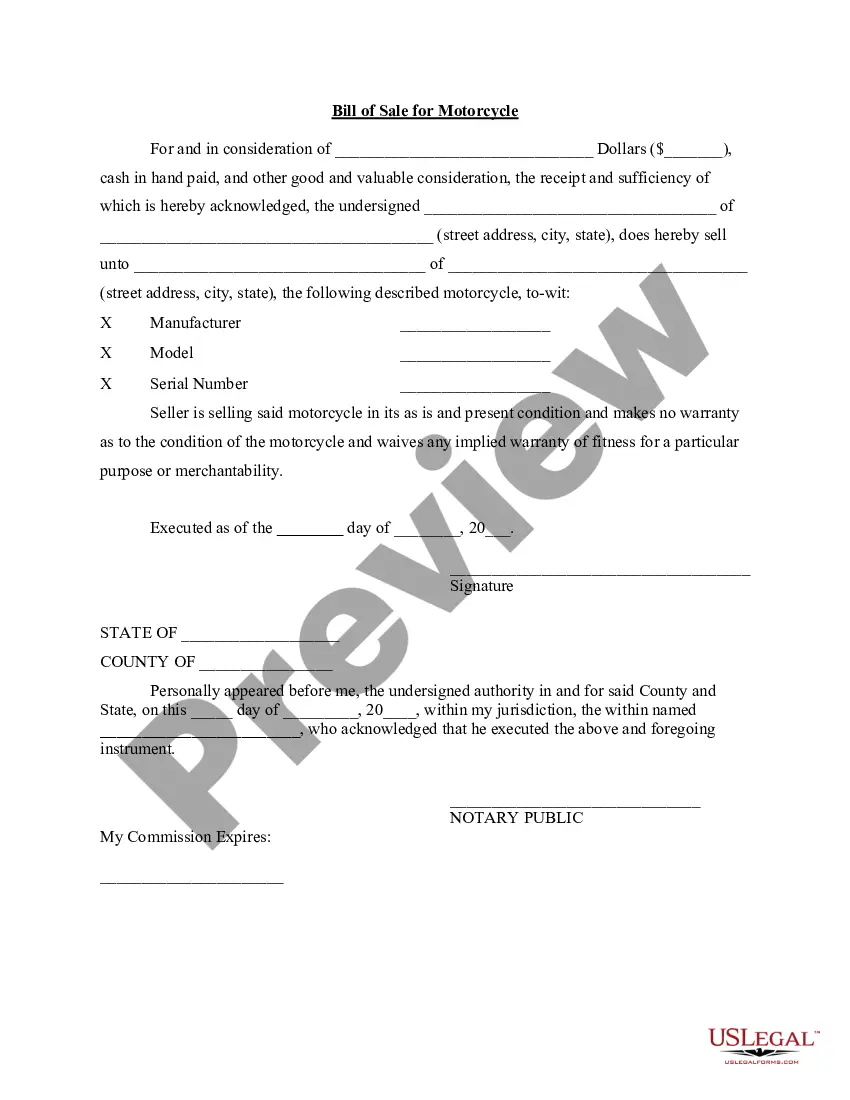
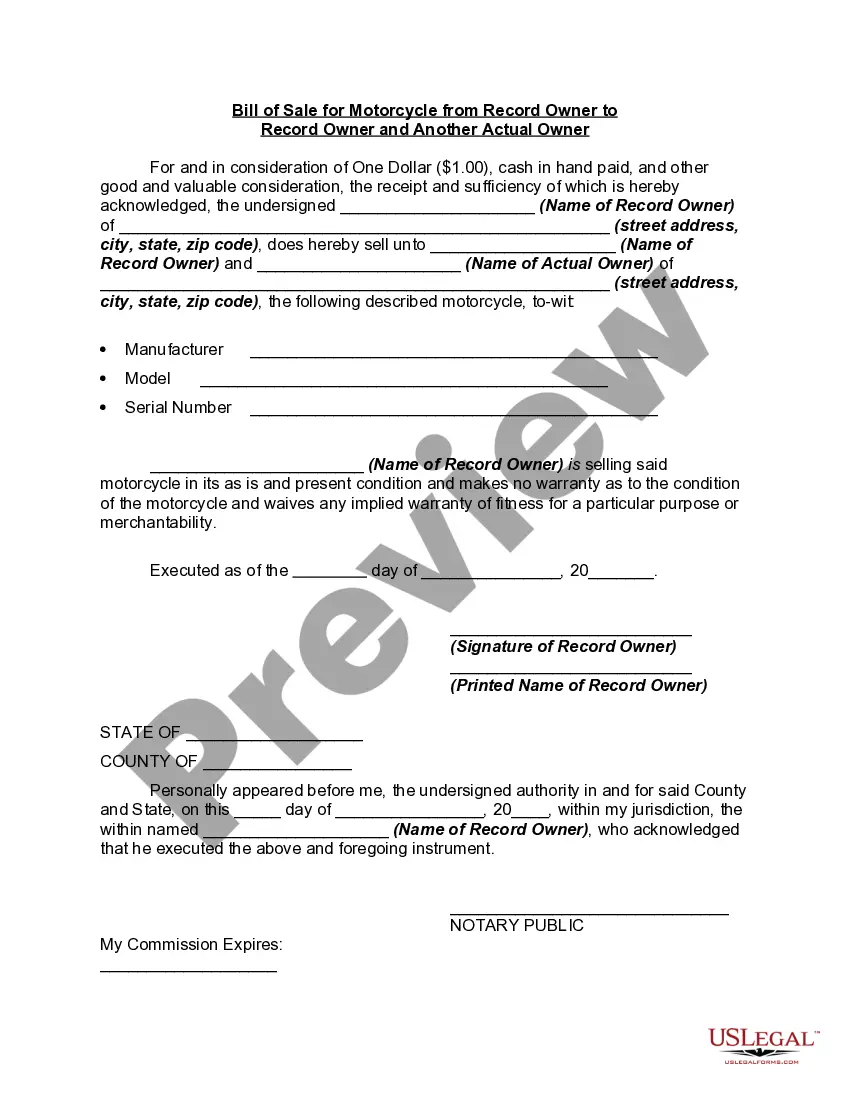
Bill Sale Motorcycle Get With Lien In Collin
Description
Get your form ready online
Our built-in tools help you complete, sign, share, and store your documents in one place.
Make edits, fill in missing information, and update formatting in US Legal Forms—just like you would in MS Word.
Download a copy, print it, send it by email, or mail it via USPS—whatever works best for your next step.
Sign and collect signatures with our SignNow integration. Send to multiple recipients, set reminders, and more. Go Premium to unlock E-Sign.
If this form requires notarization, complete it online through a secure video call—no need to meet a notary in person or wait for an appointment.
We protect your documents and personal data by following strict security and privacy standards.

Make edits, fill in missing information, and update formatting in US Legal Forms—just like you would in MS Word.

Download a copy, print it, send it by email, or mail it via USPS—whatever works best for your next step.

Sign and collect signatures with our SignNow integration. Send to multiple recipients, set reminders, and more. Go Premium to unlock E-Sign.

If this form requires notarization, complete it online through a secure video call—no need to meet a notary in person or wait for an appointment.

We protect your documents and personal data by following strict security and privacy standards.
Looking for another form?


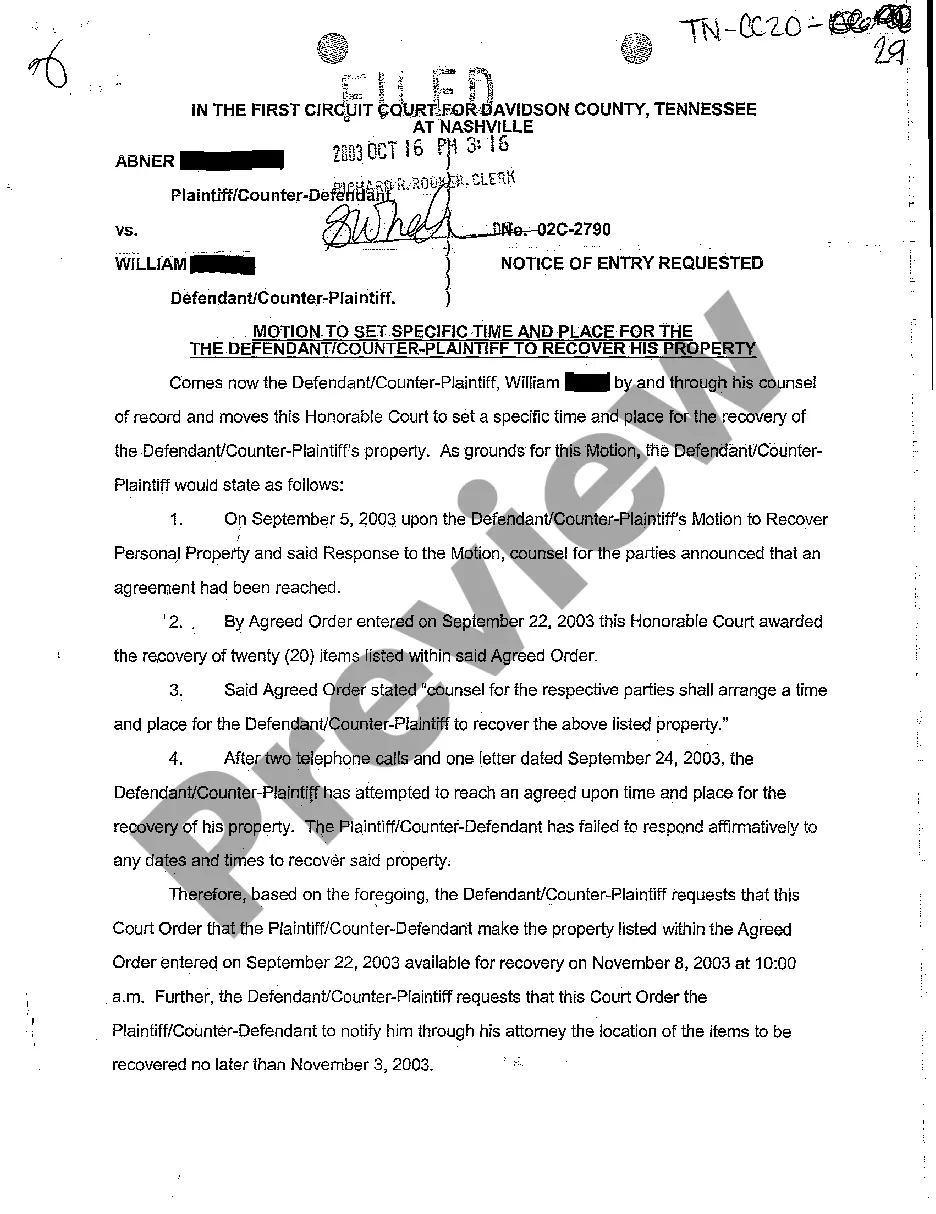
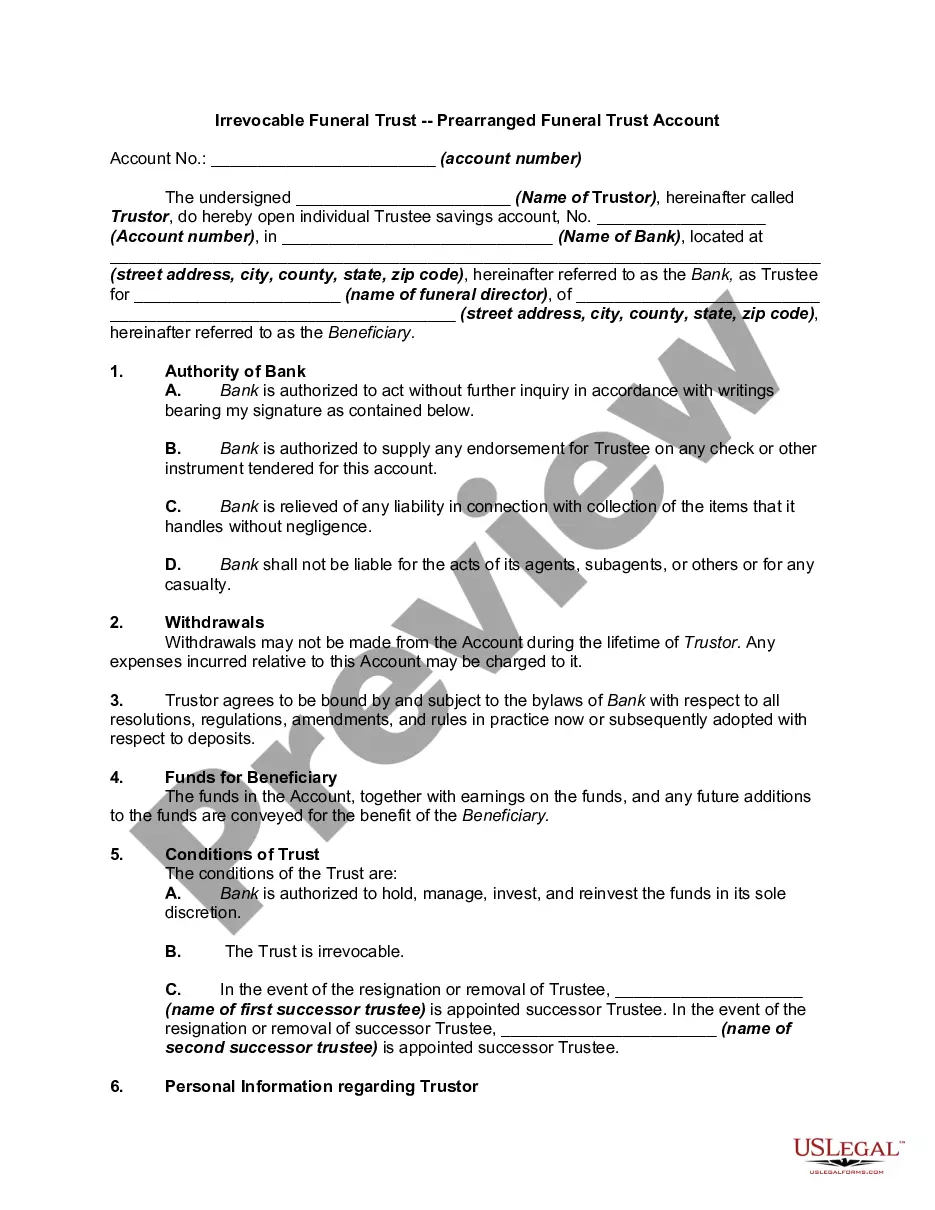
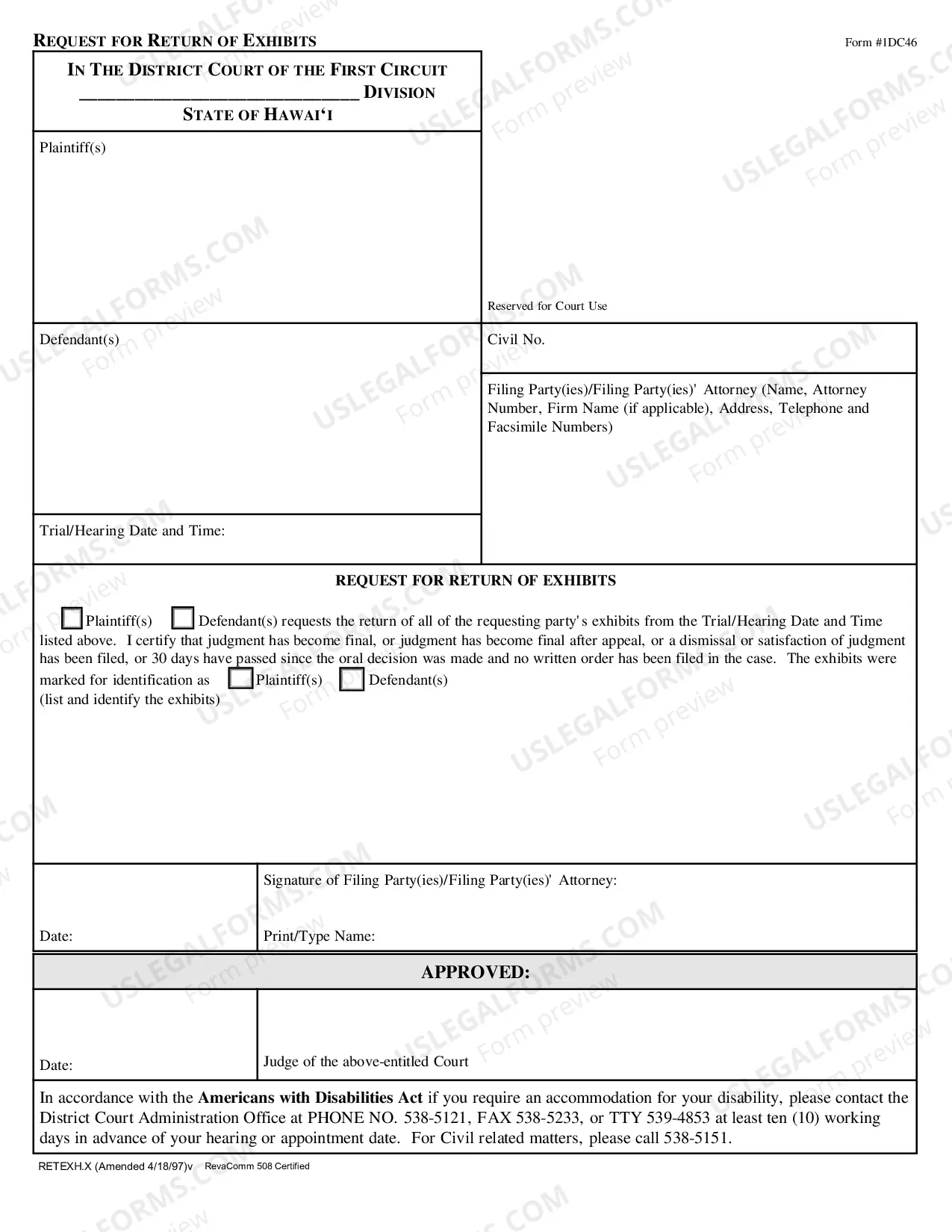

Form popularity
FAQ
To remove a lien recorded on a paper title, you will need: the vehicle title. a release of lien letter and/or other notifications from the lienholder(s) currently named on the vehicle title. a completed Application for Texas Title and/or Registration (Form 130-U)
Under ELT, when a lien has been satisfied, the lender must submit an electronic release of lien. The lienholder is then removed from the record, receives an electronic notification and a paper title is sent to the owner.
To remove a lien recorded on a paper title, you will need: the vehicle title. a release of lien letter and/or other notifications from the lienholder(s) currently named on the vehicle title. a completed Application for Texas Title and/or Registration (Form 130-U)
If you have a bill of sale for your car, you can get a title for it. It just requires a bit of research and a few extra steps. Having the title can streamline your car ownership experience, proving legal ownership and serving as a vital form of record for your local DMV.
A bill of sale in Texas is a legally binding document that records the details of a transaction. This document includes information about the buyer, the seller, and the item sold, such as a vehicle or boat. It acts as proof that the ownership has been transferred from the seller to the buyer.
Here are the four steps as to how to get a title for a motorcycle with a bill of sale. Get a bill of sale. Before gettting a new title, the first thing you'll need is a bill of sale signed by the seller. Visit the title office. Present documentation. Get a new title.
Bill of Sale For Cars In Texas: What Needs To Be Included It serves as proof of the transaction and outlines the terms of the sale. While it's not necessarily required by law, it protects both the buyer and seller by clarifying the details and providing a record in case of disputes or legal issues.
A Bill of Sale for a car in Texas is an important document that serves as proof of the transaction between you and the buyer. Although it isn't legally required, it's highly recommended when selling a car in Texas as it protects both parties.
You need to complete the remainder of the title application that the seller provides to you. Bring the completed application and your bill of sale to the Texas Department of Motor Vehicle within 30 days of the sale date. You will also need to bring: Proof of a completed Motor Vehicle Inspection.
It is important to note that a bill of sale does not necessarily indicate total ownership of a vehicle. While it can help protect you from malicious lawsuits, true ownership is generally only able to be proven with possession of a title.
