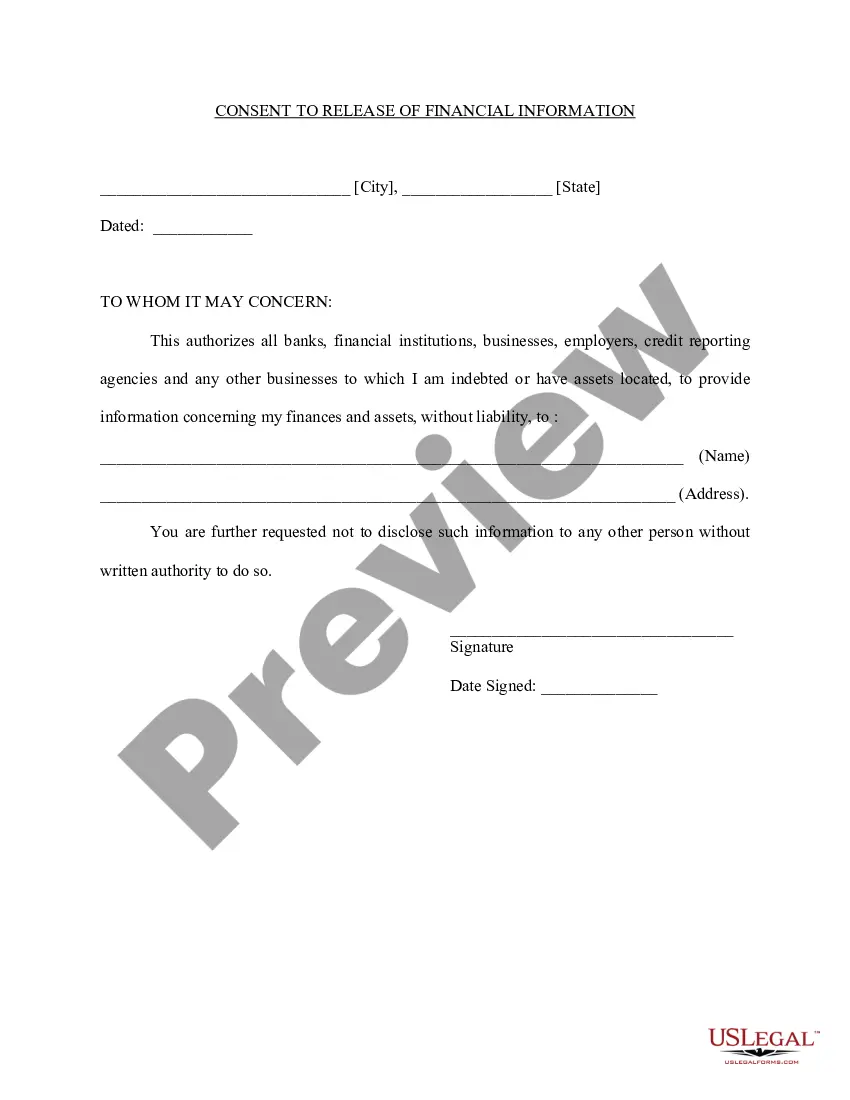
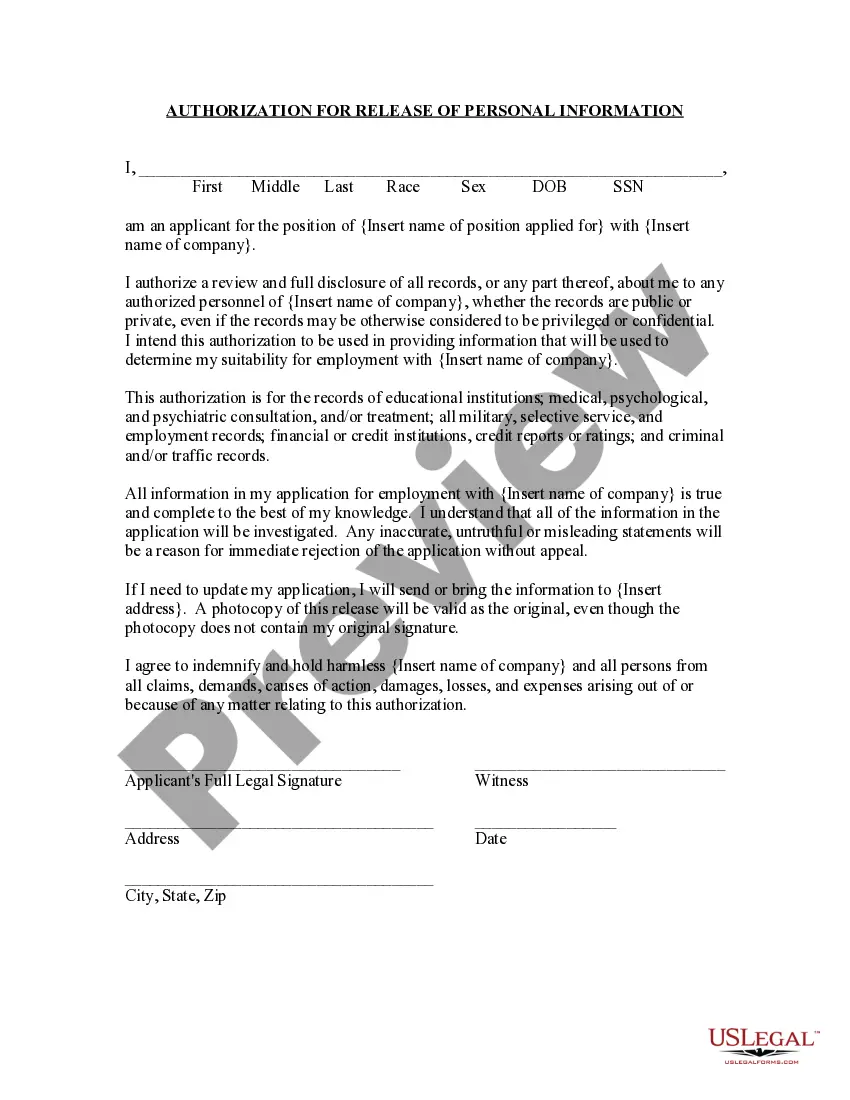
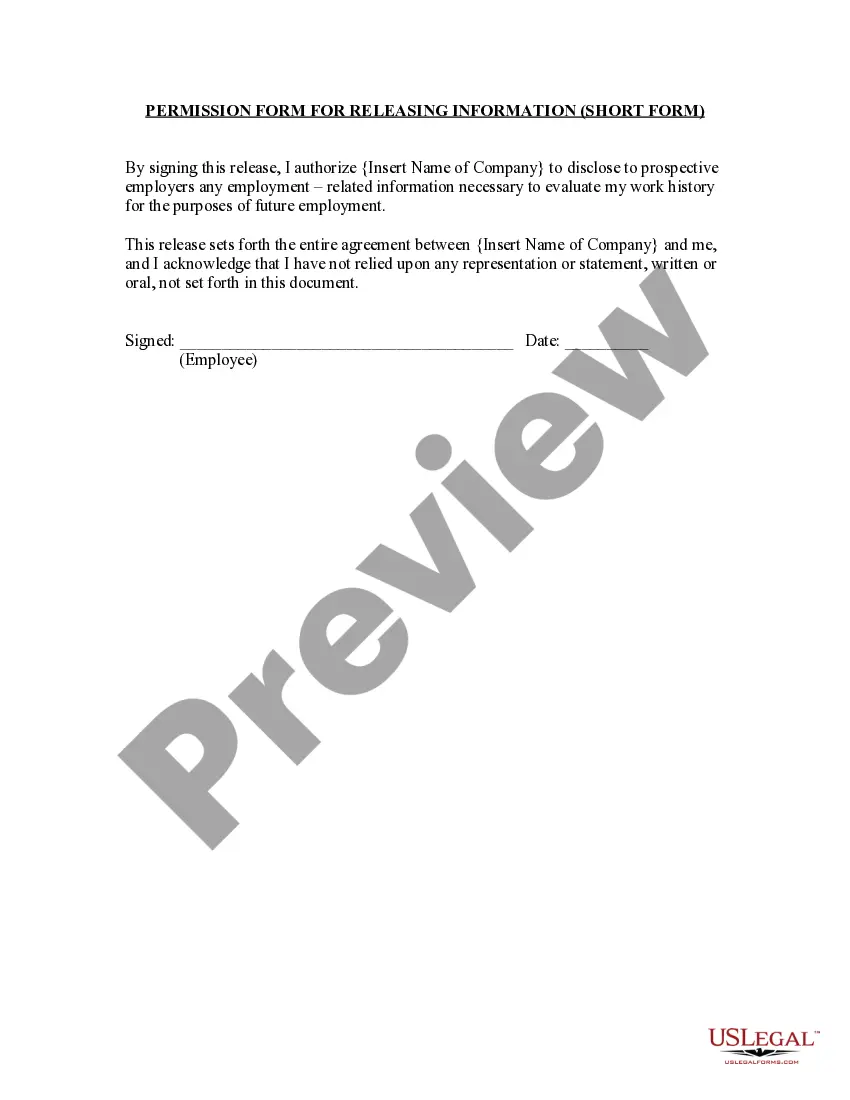
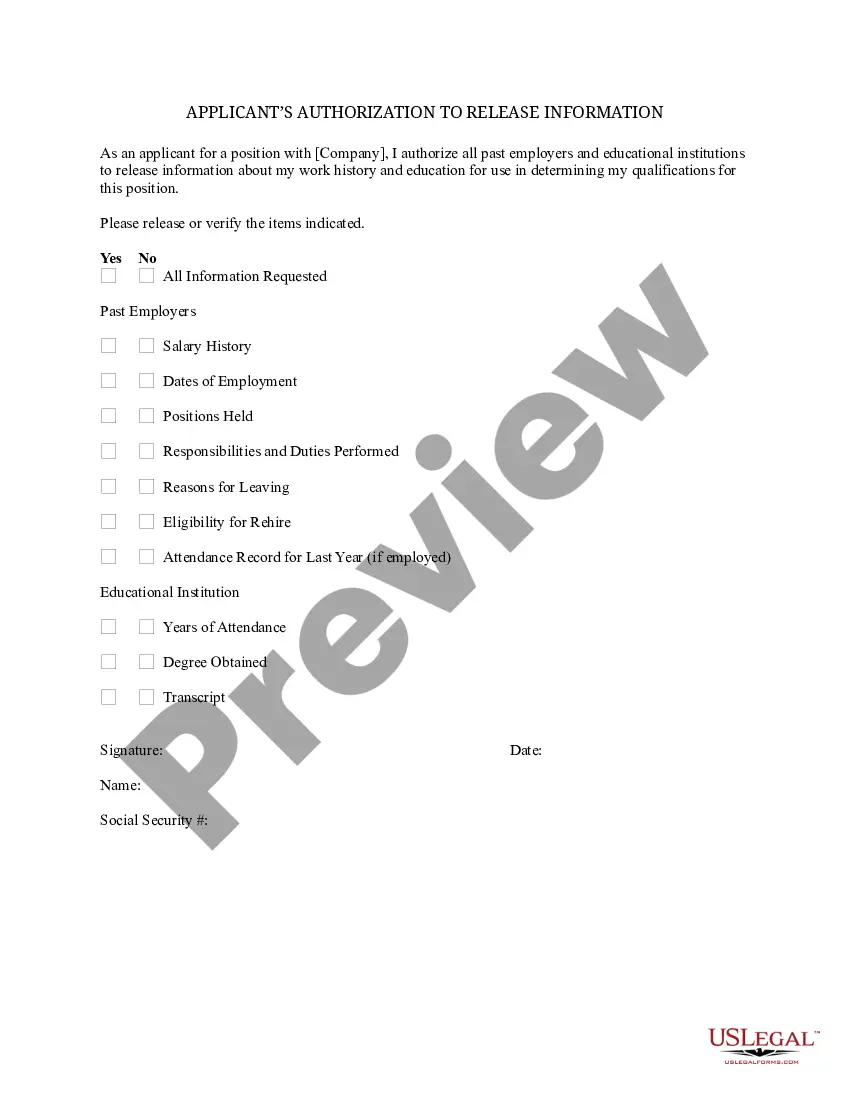
Information Release Without Consent In Sacramento
Description

Get your form ready online
Our built-in tools help you complete, sign, share, and store your documents in one place.
Make edits, fill in missing information, and update formatting in US Legal Forms—just like you would in MS Word.
Download a copy, print it, send it by email, or mail it via USPS—whatever works best for your next step.
Sign and collect signatures with our SignNow integration. Send to multiple recipients, set reminders, and more. Go Premium to unlock E-Sign.
If this form requires notarization, complete it online through a secure video call—no need to meet a notary in person or wait for an appointment.
We protect your documents and personal data by following strict security and privacy standards.

Make edits, fill in missing information, and update formatting in US Legal Forms—just like you would in MS Word.

Download a copy, print it, send it by email, or mail it via USPS—whatever works best for your next step.

Sign and collect signatures with our SignNow integration. Send to multiple recipients, set reminders, and more. Go Premium to unlock E-Sign.

If this form requires notarization, complete it online through a secure video call—no need to meet a notary in person or wait for an appointment.

We protect your documents and personal data by following strict security and privacy standards.
Looking for another form?









Form popularity
FAQ
A HIPAA consent for the release of information is a document that authorizes a healthcare provider to disclose a patient's health records to a specified party.
A covered entity is permitted, but not required, to use and disclose protected health information, without an individual's authorization, for the following purposes or situations: (1) To the Individual (unless required for access or accounting of disclosures); (2) Treatment, Payment, and Health Care Operations; (3) ...
The California Information Practices Act (IPA) protects the privacy of individuals and establishes standards for access by an individual to records pertaining to themselves. California Public Records Act (Government Code 6250 et seq.)
The California Public Records Act (PRA) gives every person the right to access public records in the physical custody of the Secretary of State unless the records are exempt from disclosure by law.
The California Consumer Privacy Act (CCPA), signed into law on June 28, 2018, creates an array of consumer privacy rights and business obligations regarding the collection and sale of personal information. The CCPA went into effect Jan. 1, 2020.
Standard of Consent: Under CIPA, California requires all-party consent for recording or intercepting communications. This means that everyone involved in a conversation must be informed and must agree before any recording can take place.
The California Invasion of Privacy Act (CIPA) is a landmark law that defends the privacy rights of Californians by strictly regulating how and when conversations and communications can be recorded or overheard.
The California Public Records Act (PRA) gives every person the right to access public records in the physical custody of the Secretary of State unless the records are exempt from disclosure by law.
Mail Requests: If you have a case number and would like copies of the file, submit a written request or complete the Local Criminal Records Copy Request form (CR-278C), and mail with your payment (see "Payment Instructions" section below) and include a self-addressed stamped envelope.