Caregiver Form For Elderly In Washington
Description






Get your form ready online
Our built-in tools help you complete, sign, share, and store your documents in one place.
Make edits, fill in missing information, and update formatting in US Legal Forms—just like you would in MS Word.
Download a copy, print it, send it by email, or mail it via USPS—whatever works best for your next step.
Sign and collect signatures with our SignNow integration. Send to multiple recipients, set reminders, and more. Go Premium to unlock E-Sign.
If this form requires notarization, complete it online through a secure video call—no need to meet a notary in person or wait for an appointment.
We protect your documents and personal data by following strict security and privacy standards.
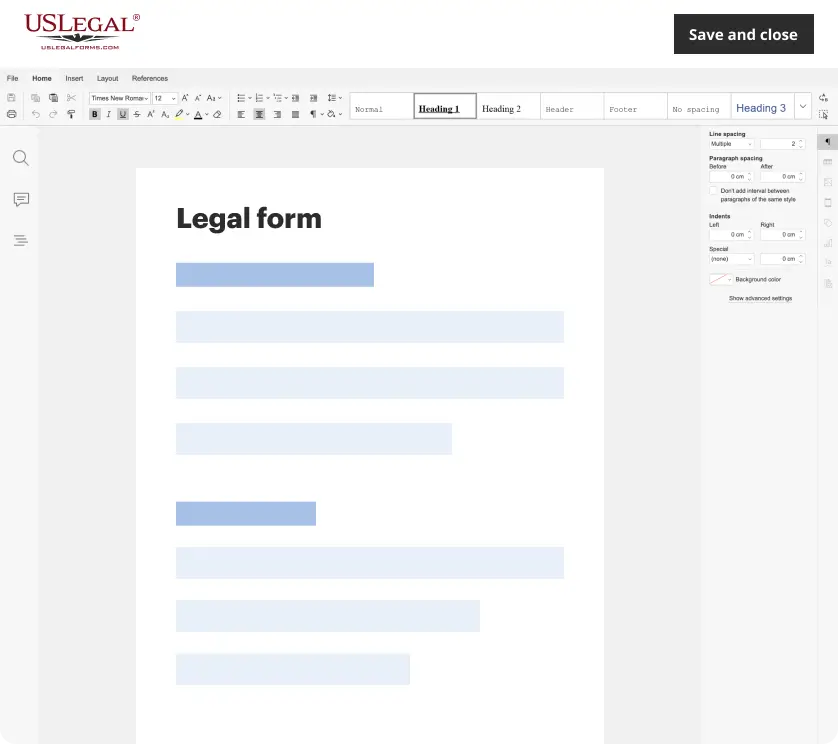
Make edits, fill in missing information, and update formatting in US Legal Forms—just like you would in MS Word.
Download a copy, print it, send it by email, or mail it via USPS—whatever works best for your next step.
Sign and collect signatures with our SignNow integration. Send to multiple recipients, set reminders, and more. Go Premium to unlock E-Sign.
If this form requires notarization, complete it online through a secure video call—no need to meet a notary in person or wait for an appointment.
We protect your documents and personal data by following strict security and privacy standards.
Looking for another form?








Form popularity
FAQ
(3) A subject individual will be disqualified when their background contains a negative action, as defined in WAC 170-06-0020 that relates to: (a) An act, finding, determination, decision, or the commission of abuse or neglect of a child as defined in chapters 26.44 RCW and 388-15 WAC.
Disqualifying convictions could also include arson, robbery, theft, criminal trespass, and other property crimes, or criminal fraud, extortion, embezzlement, and other financial crimes.
Washington Tailored Supports for Older Adults (TSOA) is a program for seniors who are at risk of requiring Medicaid for long-term care services (for example, nursing home care). This program's goal is to prevent nursing home placement by helping seniors continue living in their home or the home of a family member.
Isolation – Caregivers can often feel cut off from the outside world. So much time and energy is spent caring for someone else, caregivers often don't have time to take care of themselves. If you start to feel isolated, reach out to close friends and family to see if they are able to help.
Which Caregiver Certification Is Right For You? 6 Types To Consider Certified Dementia Practitioner. Certified Alzheimer's Disease and Dementia Care Trainer. Certified First Responder Dementia Trainer. Healthcare-Based Certifications. Personal Care and Support Certifications. Respite Care Certifications.
Diploma in Caregiving Your learners will tackle practical, legal, and even ethical issues concerned with taking care of the elderly and sick. Lesson include personal care, emotional needs, stress management, cultural differences, nutrition, fall safety, understanding dementia, and more.
As a national accrediting and certifying organization, the American Caregiver Association is an excellent choice when selecting a training program. Its National Caregiver Certification Course is the most popular of its offerings and covers behavior management, personal care, and other core topics.
Here are the most widely seen 4 types of caregivers: Professional caregivers. Those who are trained, certified, and employed to provide care services are known as professional caregivers. Family caregivers. Volunteer caregivers. Informal caregivers.
Advanced National Caregiver Certification Course (ANCCC) – Accepted in Canada and USA – $300. ANCCC includes all materials in the National Caregiver Certification course (NCCC), but it is a more comprehensive course in that it includes several additional topics and goes into greater depth.
