Illinois Caregiver Application With Medicaid In Utah
Description



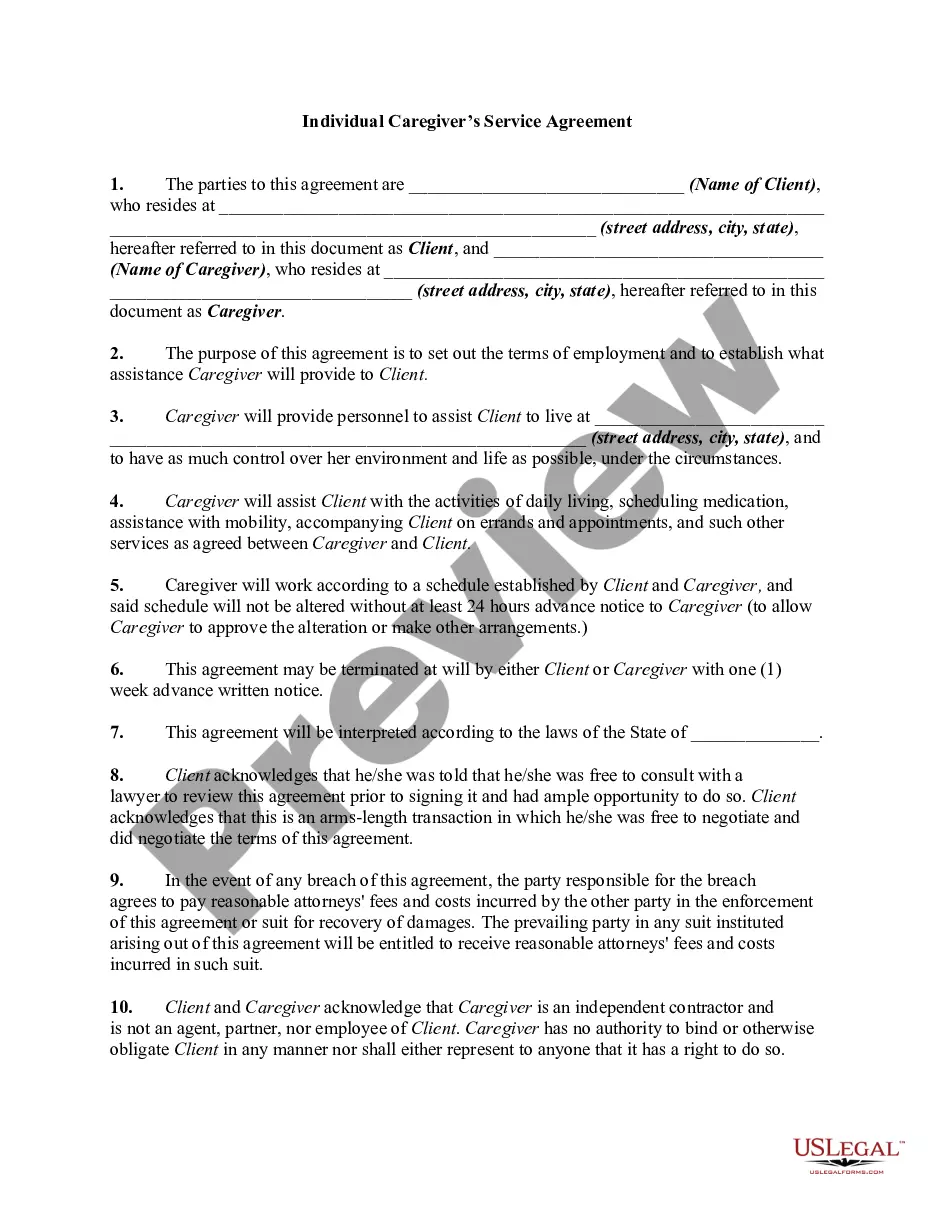


Get your form ready online
Our built-in tools help you complete, sign, share, and store your documents in one place.
Make edits, fill in missing information, and update formatting in US Legal Forms—just like you would in MS Word.
Download a copy, print it, send it by email, or mail it via USPS—whatever works best for your next step.
Sign and collect signatures with our SignNow integration. Send to multiple recipients, set reminders, and more. Go Premium to unlock E-Sign.
If this form requires notarization, complete it online through a secure video call—no need to meet a notary in person or wait for an appointment.
We protect your documents and personal data by following strict security and privacy standards.

Make edits, fill in missing information, and update formatting in US Legal Forms—just like you would in MS Word.

Download a copy, print it, send it by email, or mail it via USPS—whatever works best for your next step.

Sign and collect signatures with our SignNow integration. Send to multiple recipients, set reminders, and more. Go Premium to unlock E-Sign.

If this form requires notarization, complete it online through a secure video call—no need to meet a notary in person or wait for an appointment.

We protect your documents and personal data by following strict security and privacy standards.
Looking for another form?








Form popularity
FAQ
Programs in different states may provide various types of care through the waiver program. ing to data from the Kaiser Family Foundation, the five states with the best Medicaid benefit programs are New York, New Hampshire, Wisconsin, New Jersey, and Pennsylvania.
Most people who enroll are covered for comprehensive services, including, but not limited to; doctor visits and dental care, well-child care, immunizations for children, mental health and substance abuse services, hospital care, emergency services, prescription drugs and medical equipment and supplies.
In addition to care services in nursing homes, adult foster care homes, and assisted living facilities, UT Medicaid pays for non-medical services and supports to help frail seniors remain living in their homes. There are three categories of Medicaid long-term care programs for which seniors may be eligible.
Who Is Eligible? Age 65 or older or have a physical disability. Monthly income must be equal to or greater than the Supplemental Security Income (SSI) rate of $750 for single residents or $1,125 for married residents (as of 2018) Eligible for nursing home care but choose to receive care in an AL environment.
IL Supportive Living Program Waiver (0326. Provides assisted living services to individuals ages 65 or older and individuals with physical disabilities ages 22-64 years who meet a nursing facility level of care. This waiver operates with a concurrent 1915(a)(1)(a), 1915(b)(1), 1932(a), and 1115 authority.
Apply Now! Apply by phone: Call 1-800-221-3943 / State Relay: 711. Apply by mail: Download and print a paper application. Apply in person: Apply in person at your county of residence's local county office or at a local application assistance site.
One cannot transfer their Medicaid benefits from one state to another state, nor can they receive Medicaid benefits simultaneously in two states. Instead, one must close their Medicaid case, and hence their benefits, in their original state, and then reapply for Medicaid in the state to which they are relocating.
The top states—ranked from 1 to 10—are Massachusetts, Nebraska, Vermont, Alaska, Wisconsin, Rhode Island, Minnesota, New York, Washington, and New Hampshire.
One cannot transfer their Medicaid benefits from one state to another state, nor can they receive Medicaid benefits simultaneously in two states. Instead, one must close their Medicaid case, and hence their benefits, in their original state, and then reapply for Medicaid in the state to which they are relocating.
