Illinois Caregiver Application For Medicaid In Texas
Description

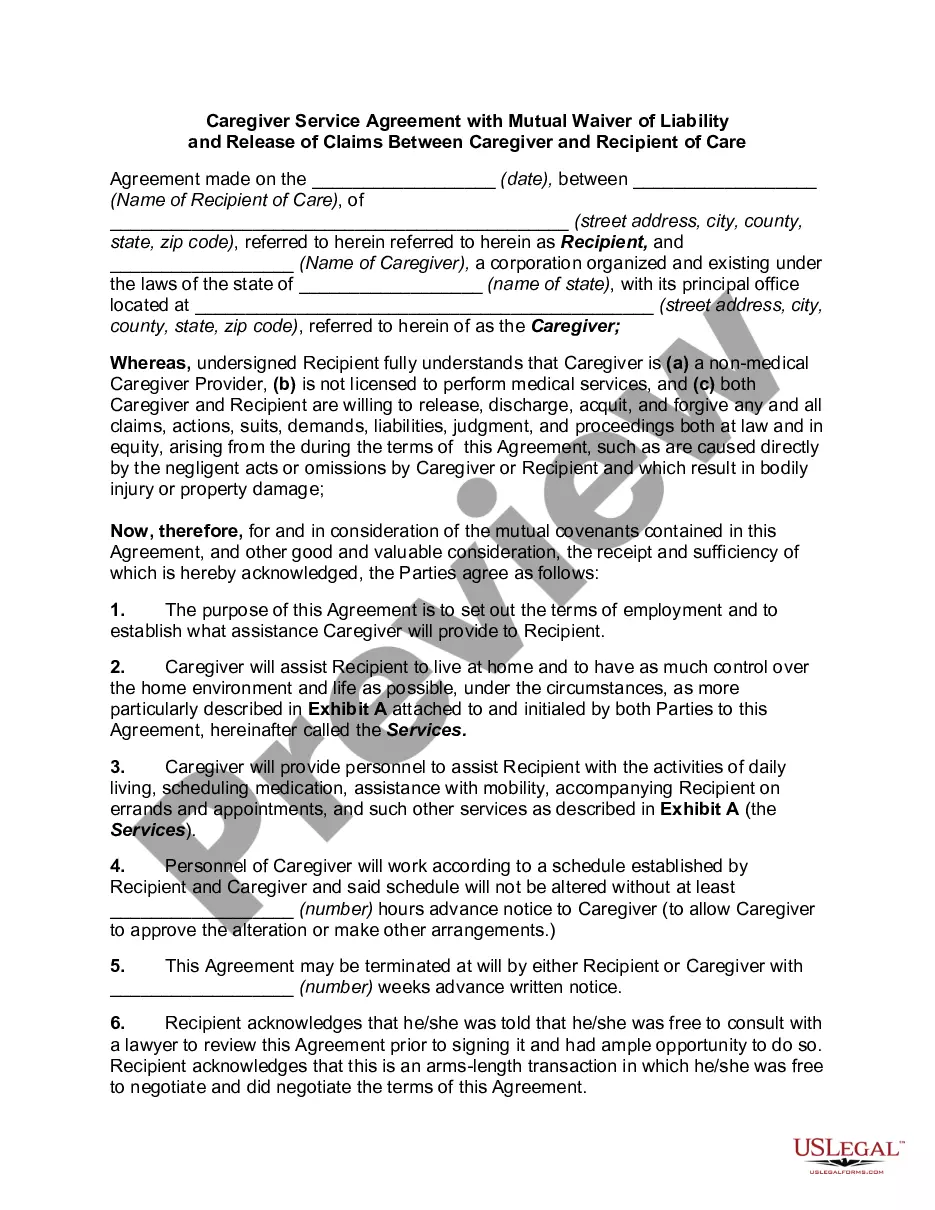
Get your form ready online
Our built-in tools help you complete, sign, share, and store your documents in one place.
Make edits, fill in missing information, and update formatting in US Legal Forms—just like you would in MS Word.
Download a copy, print it, send it by email, or mail it via USPS—whatever works best for your next step.
Sign and collect signatures with our SignNow integration. Send to multiple recipients, set reminders, and more. Go Premium to unlock E-Sign.
If this form requires notarization, complete it online through a secure video call—no need to meet a notary in person or wait for an appointment.
We protect your documents and personal data by following strict security and privacy standards.

Make edits, fill in missing information, and update formatting in US Legal Forms—just like you would in MS Word.

Download a copy, print it, send it by email, or mail it via USPS—whatever works best for your next step.

Sign and collect signatures with our SignNow integration. Send to multiple recipients, set reminders, and more. Go Premium to unlock E-Sign.

If this form requires notarization, complete it online through a secure video call—no need to meet a notary in person or wait for an appointment.

We protect your documents and personal data by following strict security and privacy standards.
Looking for another form?







Form popularity
FAQ
To become a caregiver in Texas, you typically need to have a high school diploma or GED, and complete a state-approved training program. Additionally, you may need to pass a background check and obtain a license or certification, depending on the specific job requirements.
In conclusion, there are 4 types of caregivers: family caregivers, professional caregivers, volunteer caregivers, and informal caregivers. Each caregiver faces unique challenges, including physical and emotional exhaustion, financial strain, and balancing personal and caregiving responsibilities.
One cannot transfer their Medicaid benefits from one state to another state, nor can they receive Medicaid benefits simultaneously in two states. Instead, one must close their Medicaid case, and hence their benefits, in their original state, and then reapply for Medicaid in the state to which they are relocating.
Be a resident - The applicant must be considered a resident of the state of Illinois. There is no minimum length of time for the person to have lived in Illinois. Be a citizen or an eligible non-citizen - The applicant must be a citizen of the United States or an immigrant legally admitted for permanent residence.
To be eligible for Medicaid, a person must be a resident of the U.S. To be eligible for an MEPD program under Texas Medicaid, a person must be a resident of the state of Texas.
You must be a resident of the state where you are applying for benefits. Create an account with the Health Insurance Marketplace and fill out an application. If it looks like anyone in your household qualifies for Medicaid, your information will be sent to your state agency. They will contact you about enrollment.
Eligibility: The aged, blind, and disabled. Also, parents with dependent children are eligible with household incomes up to 15% of FPL. Children are eligible for Medicaid or CHIP with household incomes up to 201% of FPL, and pregnant women are eligible with household incomes up to 198% of FPL.
To get MEPD, you must be a Texas resident and a U.S. citizen or qualified non-citizen. When you apply, we'll ask about your income, your age, and your disability to see if you qualify.
The Medicaid applicant must be either a U.S. citizen or an alien with qualified alien status. Additionally, the applicant must be a resident of Texas. There is no length of residence requirement. The applicant merely needs to reside in Texas and intend to remain or return to Texas.
