Caregiver Form Printable Without Download In Bronx
Description

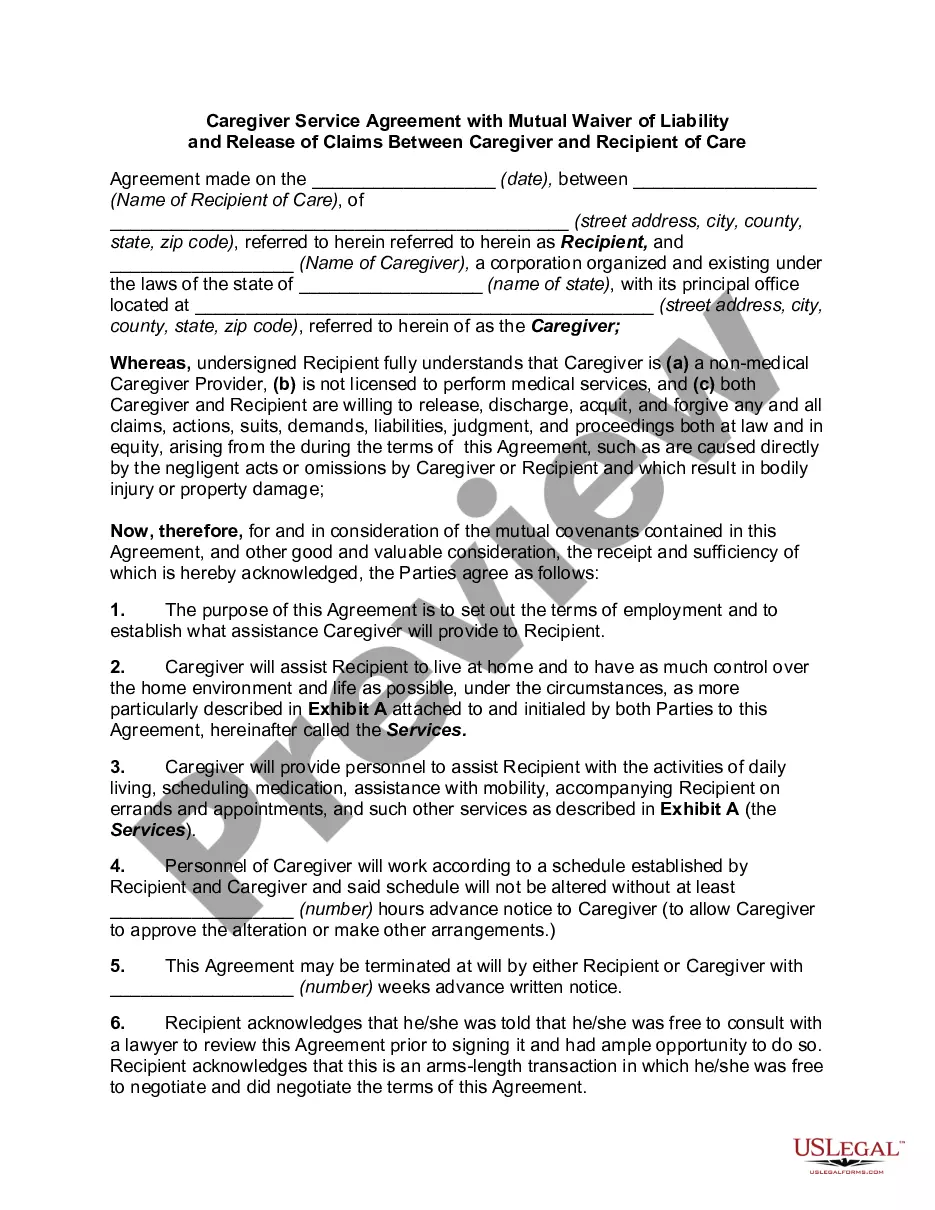
Get your form ready online
Our built-in tools help you complete, sign, share, and store your documents in one place.
Make edits, fill in missing information, and update formatting in US Legal Forms—just like you would in MS Word.
Download a copy, print it, send it by email, or mail it via USPS—whatever works best for your next step.
Sign and collect signatures with our SignNow integration. Send to multiple recipients, set reminders, and more. Go Premium to unlock E-Sign.
If this form requires notarization, complete it online through a secure video call—no need to meet a notary in person or wait for an appointment.
We protect your documents and personal data by following strict security and privacy standards.

Make edits, fill in missing information, and update formatting in US Legal Forms—just like you would in MS Word.

Download a copy, print it, send it by email, or mail it via USPS—whatever works best for your next step.

Sign and collect signatures with our SignNow integration. Send to multiple recipients, set reminders, and more. Go Premium to unlock E-Sign.

If this form requires notarization, complete it online through a secure video call—no need to meet a notary in person or wait for an appointment.

We protect your documents and personal data by following strict security and privacy standards.
Looking for another form?







Form popularity
FAQ
Caregiver: Primarily focuses on personal care and medical needs of individuals. Caretaker: This can include care for property, animals, and broader non-personal care roles.
The Difference Between Them Caretaking can often become overbearing and foster dependency, while caregiving respects the person's autonomy and encourages self-reliance. Caregivers understand the importance of empowering the person to manage their own life, even when they're there to assist.
The steps to become a caregiver in NY are having a high school diploma or equivalent, completing a caregiver training program, a background check, and additional certifications may be required by employers such as being a Certified Home Health Aide or Certified Personal Care Aide credentials.
In simple terms, a caregiver is a person who tends to the needs or concerns of a person with short- or long-term limitations due to illness, injury or disability.
Emphasis on Role: “Caregiver” and “carer” emphasize the act of giving care, with a focus on the practical and emotional work involved. “Caretaker” suggests a more functional or managerial role, often with a broader focus on property or task management.
A caregiver refers to someone who directly cares for the elderly, children, or people with serious illnesses. On the other hand, a caretaker's job is broader, such as being employed to take care of the house or land while the owner is away and someone who provides physical or emotional care and support.
The CARE Act requires that during a hospital stay, patients have the right to designate a caregiver who will help them after they are discharged.
The steps to become a caregiver in NY are having a high school diploma or equivalent, completing a caregiver training program, a background check, and additional certifications may be required by employers such as being a Certified Home Health Aide or Certified Personal Care Aide credentials.
What to Include in a Checklist for Caregivers Name of caregiver on duty. Date the checklist is being used. Name of patients. Patient's morning, afternoon, and evening routines, such as: Taking medication and vital signs. Eating food and drinking water. Housekeeping tasks to do. Changes in patient's condition, if any.
