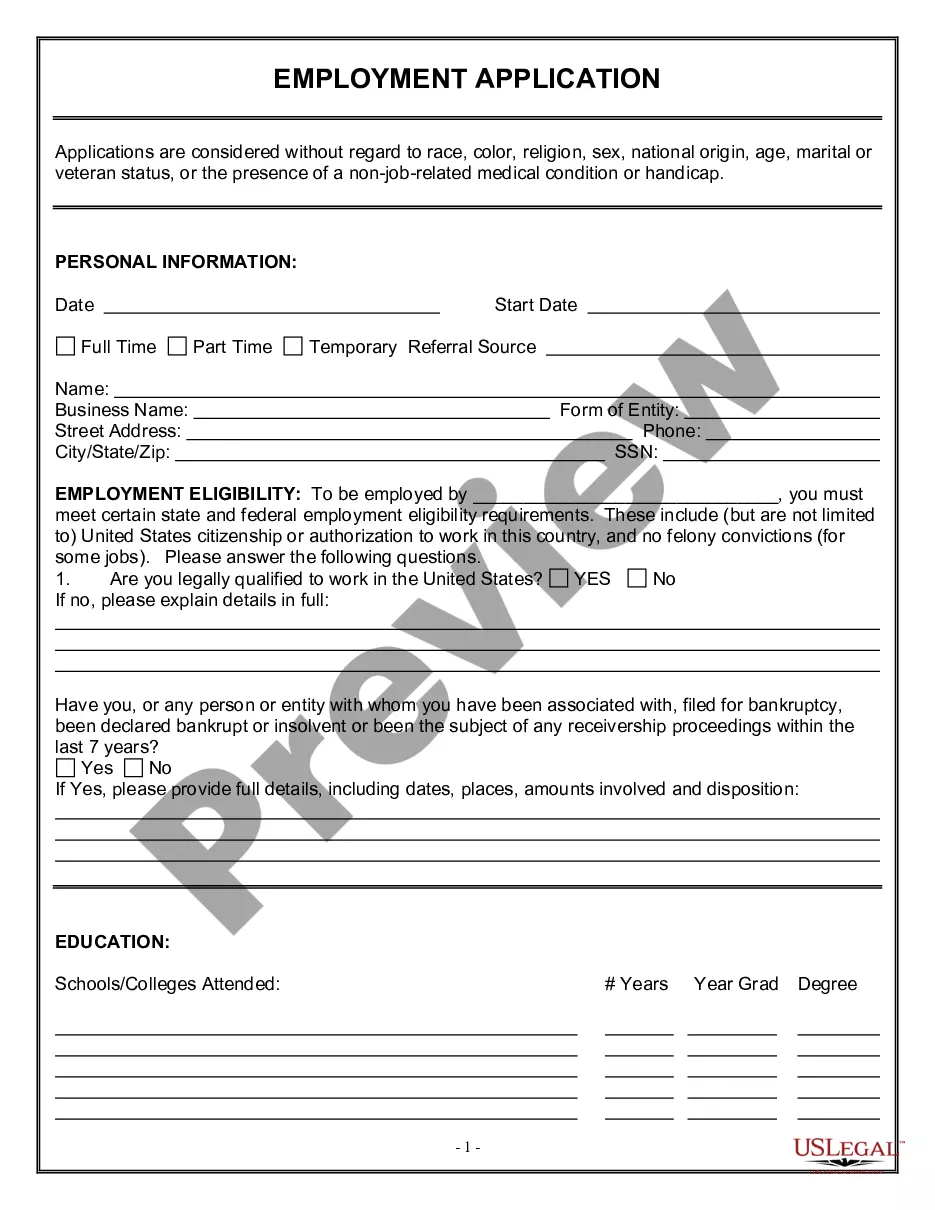
Employment Agreement With Non Compete Clause In Middlesex
Description
Get your form ready online
Our built-in tools help you complete, sign, share, and store your documents in one place.
Make edits, fill in missing information, and update formatting in US Legal Forms—just like you would in MS Word.
Download a copy, print it, send it by email, or mail it via USPS—whatever works best for your next step.
Sign and collect signatures with our SignNow integration. Send to multiple recipients, set reminders, and more. Go Premium to unlock E-Sign.
If this form requires notarization, complete it online through a secure video call—no need to meet a notary in person or wait for an appointment.
We protect your documents and personal data by following strict security and privacy standards.

Make edits, fill in missing information, and update formatting in US Legal Forms—just like you would in MS Word.

Download a copy, print it, send it by email, or mail it via USPS—whatever works best for your next step.

Sign and collect signatures with our SignNow integration. Send to multiple recipients, set reminders, and more. Go Premium to unlock E-Sign.

If this form requires notarization, complete it online through a secure video call—no need to meet a notary in person or wait for an appointment.

We protect your documents and personal data by following strict security and privacy standards.
Looking for another form?







Form popularity
FAQ
compete will be held unenforceable where the primary purpose is clearly its anticompetitive effect and where the employer did not condition signing on consideration logically related to a recognized legitimate interest. (Coskey's, 253 N.J. Super. at 63536; ADP, LLC v. Rafferty, 923 F.
Negotiating with your old employer. You might be able to persuade your old employer to ignore a restriction, or at least make it shorter. To make you follow it they'd need to go to court to prove the restriction is reasonable. This is time-consuming and can be expensive, so they might prefer to compromise.
Consequently, even where non-compete clauses are found in employment contracts, they may not necessarily be enforceable, unless a court considers that the non-compete clause is to protect a “legitimate business interest” and is no wider than reasonably necessary.
Consequently, even where non-compete clauses are found in employment contracts, they may not necessarily be enforceable, unless a court considers that the non-compete clause is to protect a “legitimate business interest” and is no wider than reasonably necessary.
If you can demonstrate that the clause is too stringent with regards to the restriction of location and time, or it's more than necessary to protect the legitimate business interest, then the clause may well be found to be unreasonable and therefore will not stand.
Non-Competitive Activity at New Employer: One of the most straightforward ways to overcome a noncompete is by ensuring that your new role with a different employer is in a non-competitive capacity. If you're not engaging in activities that directly compete with your former employer's business, you may be in the clear.
Enforceability of Non-Compete Agreements Presently, New Jersey courts will assess the enforceability of a non-compete agreement on a case-by-case basis. A court will typically only enforce a non-compete agreement if it is reasonable under the circumstances.
Ask your old employer if they'll let you ignore the limit on who you can work for. Reassure them that the limits on dealing with former customers will be enough to protect their business. It could be unreasonable to limit who you can work for as well.