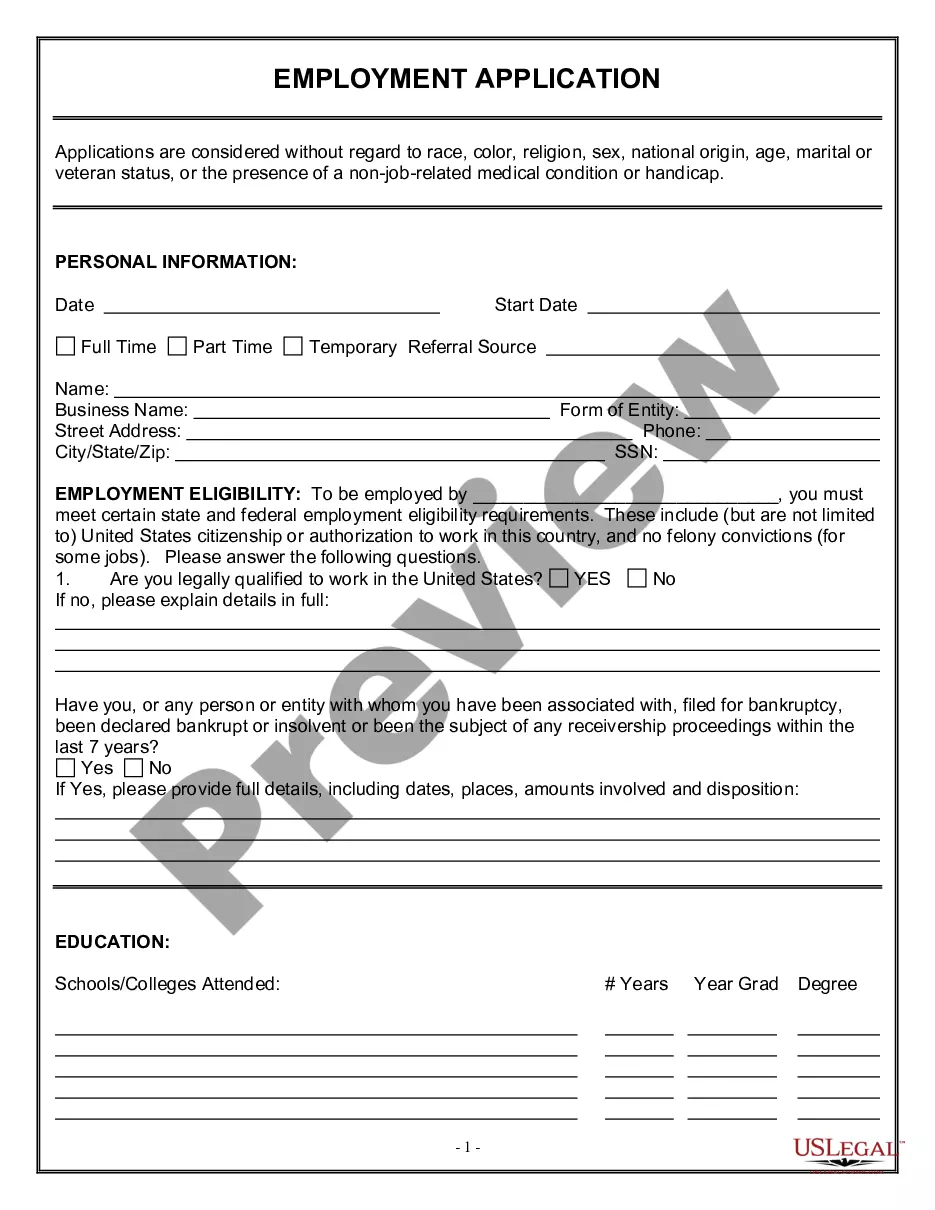
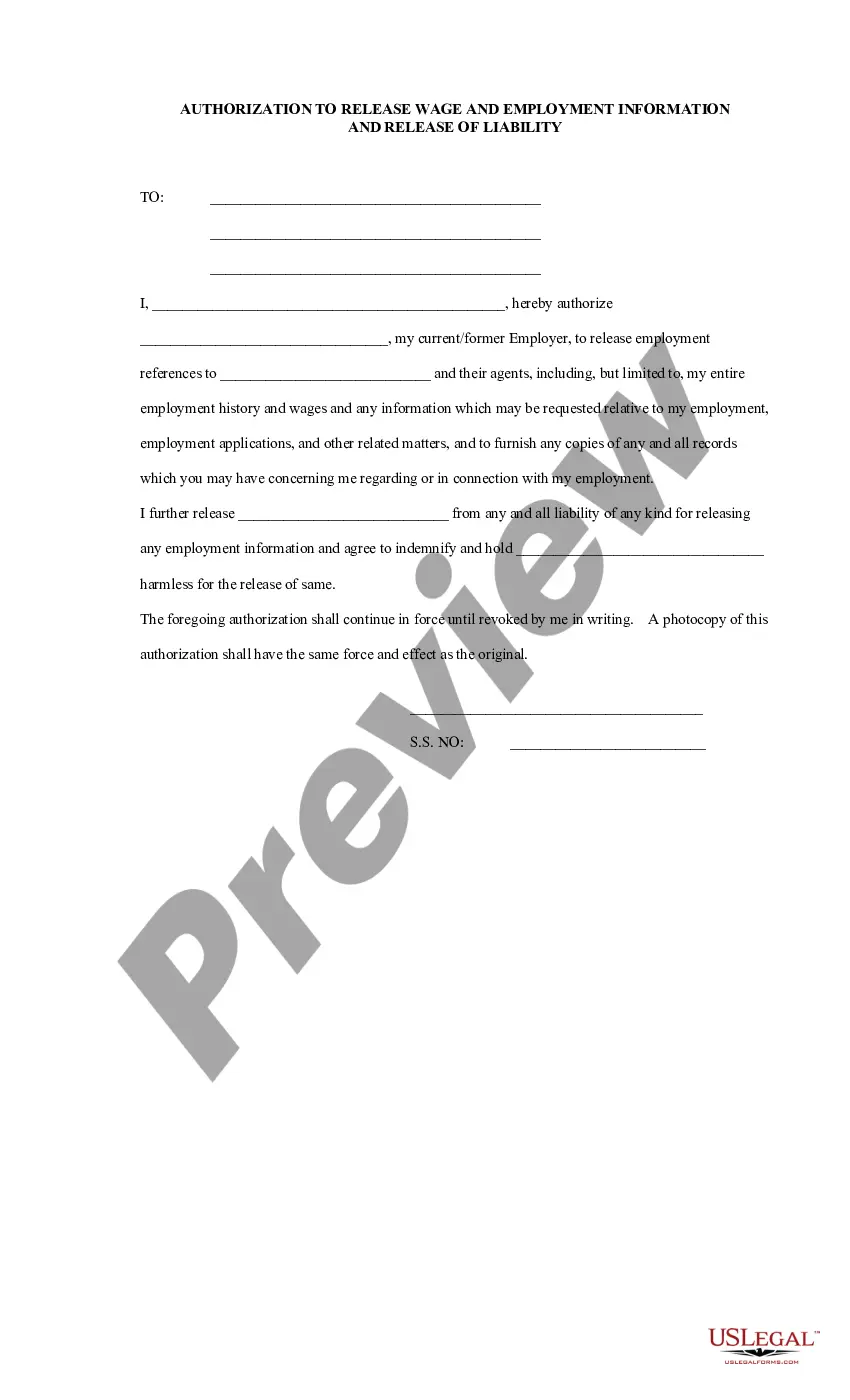
Release Of Information Form In Spanish In Maryland
Description
Get your form ready online
Our built-in tools help you complete, sign, share, and store your documents in one place.
Make edits, fill in missing information, and update formatting in US Legal Forms—just like you would in MS Word.
Download a copy, print it, send it by email, or mail it via USPS—whatever works best for your next step.
Sign and collect signatures with our SignNow integration. Send to multiple recipients, set reminders, and more. Go Premium to unlock E-Sign.
If this form requires notarization, complete it online through a secure video call—no need to meet a notary in person or wait for an appointment.
We protect your documents and personal data by following strict security and privacy standards.

Make edits, fill in missing information, and update formatting in US Legal Forms—just like you would in MS Word.

Download a copy, print it, send it by email, or mail it via USPS—whatever works best for your next step.

Sign and collect signatures with our SignNow integration. Send to multiple recipients, set reminders, and more. Go Premium to unlock E-Sign.

If this form requires notarization, complete it online through a secure video call—no need to meet a notary in person or wait for an appointment.

We protect your documents and personal data by following strict security and privacy standards.
Looking for another form?


Form popularity
FAQ
Please submit your medical release form to the medical records office by fax, mail, or in person. The form should be completed and dated. If you have any questions about how to request a patient's records, please call 443-997-1355.
Check their website: Information about how to get your health record may be found under the Contact Us section of a provider's website. It may direct you to an online portal, a phone number, an email address, or a form. Phone or visit: You can also call or visit your provider and ask them how to get your health record.
HIPAA regulations require that patient documents must be kept a minimum of six (6) years. The Medical Records Act states that unless a patient is a minor, medical records, laboratory and X-ray reports must be kept at least five years (see §4-403 below).
For legal professionals and healthcare providers, understanding the primary purpose of a Release of Information (ROI) form is vital for managing sensitive data responsibly.
Gaining Access to Your Records To do so, you must make a written request. This signed and dated request must state your name, the name of your health care provider and the party who should receive your records. Your authorization to release your records is good for one year.
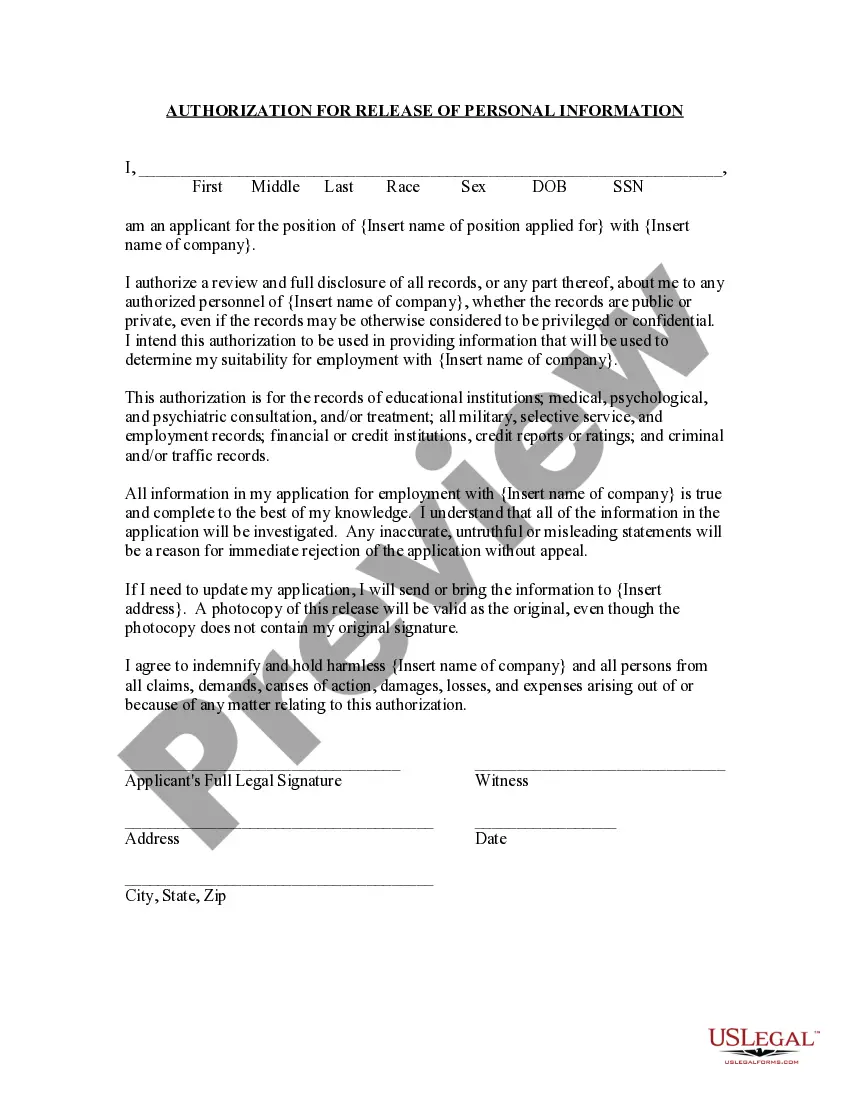
A HIPAA release form, also known as a HIPAA authorization or HIPAA consent form, is a legal document signed by an individual to grant permission for their protected health information (PHI) to be used by authorized individuals at covered entities for specific purposes other than treatment, payment, and health care ...
A HIPAA authorization form, also known as a HIPAA release form, is a document that individuals sign for their health provider before the entity may use or disclose their protected health information (PHI). HIPAA authorizes the sharing of PHI for the following purposes: Treatment. Payment.
compliant HIPAA release form must, at the very least, contain the following information: A description of the information that will be used/disclosed. The purpose for which the information will be disclosed. The name of the person or entity to whom the information will be disclosed.
Release of information Principal Translations Inglés Espaol release of information n (document: permission) (para la divulgación de datos) autorización nf permiso, consentimiento nm The hospital requires patients to sign a release of information in order for relatives to be notified about their condition.
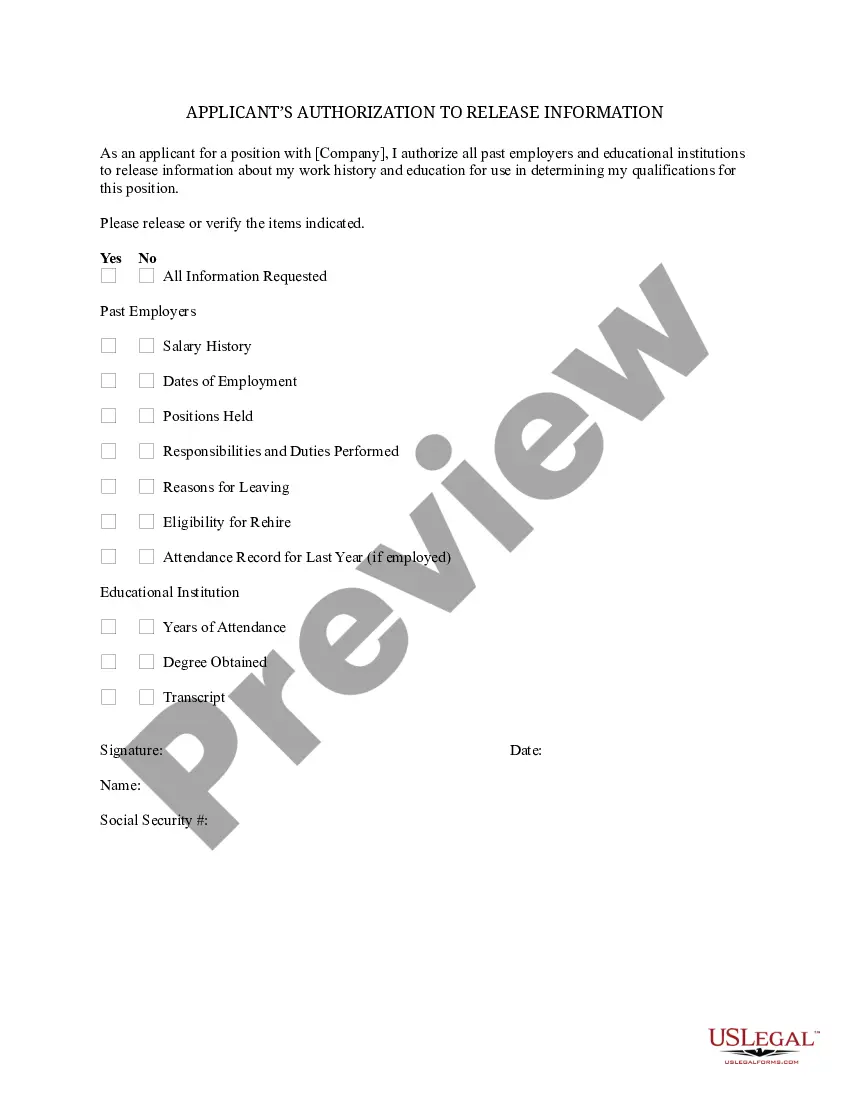
A release of information form authorizes healthcare providers to disclose a patient's health information to specified parties. This form is a critical tool in the release of information process, as it ensures that the patient consents to sharing their information.