Confidential Disclosure Agreement With In Massachusetts
Description

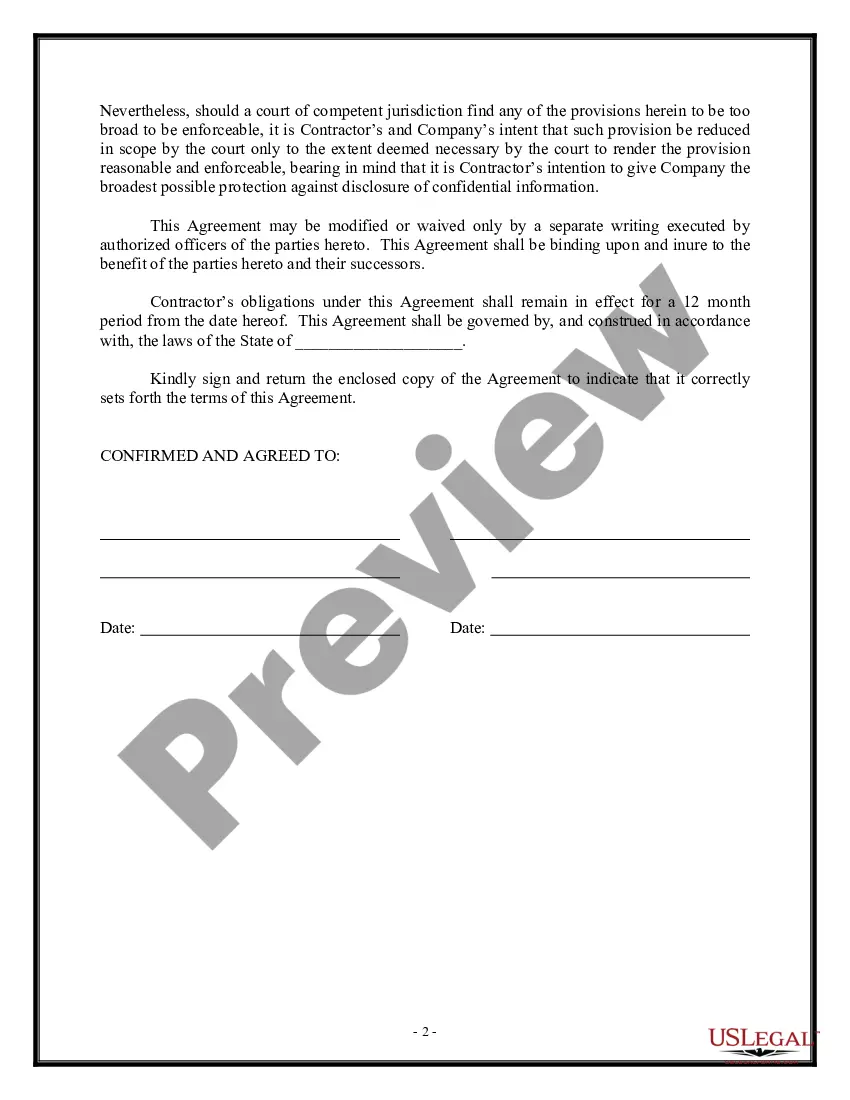
Get your form ready online
Our built-in tools help you complete, sign, share, and store your documents in one place.
Make edits, fill in missing information, and update formatting in US Legal Forms—just like you would in MS Word.
Download a copy, print it, send it by email, or mail it via USPS—whatever works best for your next step.
Sign and collect signatures with our SignNow integration. Send to multiple recipients, set reminders, and more. Go Premium to unlock E-Sign.
If this form requires notarization, complete it online through a secure video call—no need to meet a notary in person or wait for an appointment.
We protect your documents and personal data by following strict security and privacy standards.

Make edits, fill in missing information, and update formatting in US Legal Forms—just like you would in MS Word.

Download a copy, print it, send it by email, or mail it via USPS—whatever works best for your next step.

Sign and collect signatures with our SignNow integration. Send to multiple recipients, set reminders, and more. Go Premium to unlock E-Sign.

If this form requires notarization, complete it online through a secure video call—no need to meet a notary in person or wait for an appointment.

We protect your documents and personal data by following strict security and privacy standards.
Looking for another form?





Form popularity
FAQ
An NDA constitutes a legally binding agreement, albeit without the same level of scrutiny as a non-compete clause. It solely restricts the use of information rather than overall competition. Typically, the agreement will specify that the employer is entitled to injunctive relief in the event of a breach.
A HIPAA violation refers to the failure to comply with HIPAA rules, which can include unauthorized access, use, or disclosure of Protected Health Information (PHI), failure to provide patients with access to their PHI, lack of safeguards to protect PHI, failure to conduct regular risk assessments, or insufficient ...
At the top, there are three types, unilateral, bilateral, and multilateral NDAs. The rest of the specific NDA types fall under these three categories. Most are based on who has to sign the NDA. Not all NDAs are created equally, and they can only demand so much secrecy from strangers when compared to their employees.
The Massachusetts privacy act requires that “every person that owns or licenses personal information about a resident of the Commonwealth must develop, implement, and maintain a comprehensive information security program”.
The only times a psychologist would break confidentiality are in the event of threats of harm to self or other; reports that a child (under 18 years of age) or an elder (60 years and older) is being abused or neglected in some way; or if there is a subpoena or court order.
Massachusetts law (Chapter 112) and Federal law (45 CFR; HIPAA, 1996) require that you are advised regarding how personal information about you may be used and disclosed and how you can get access to this information.
Covered entities (anyone providing treatment, payment, and operations in healthcare) and business associates (anyone who has access to patient information and provides support in treatment, payment, or operations) must meet HIPAA Compliance.
There are two things that sellers must disclose in Massachusetts: the existence of lead paint in the house and presence of a septic system. However, if a prospective buyer asks questions, the seller cannot lie or hide the truth.
A confidentiality agreement should include the names and addresses of the parties to the contract. Consider also including: Reason for the agreement: Explain why you're sharing this information. The information disclosed: Be specific about the subject matter and what exactly is included in the agreement.
Typically, a legal professional writing the NDA will complete these steps: Step 1 - Describe the scope. Which information is considered confidential? ... Step 2 - Detail party obligations. Step 3 - Note potential exclusions. Step 4 - Set the term. Step 5 - Spell out consequences.
