Confidentiality Agreement Form For Accountant In Broward
Description


Get your form ready online
Our built-in tools help you complete, sign, share, and store your documents in one place.
Make edits, fill in missing information, and update formatting in US Legal Forms—just like you would in MS Word.
Download a copy, print it, send it by email, or mail it via USPS—whatever works best for your next step.
Sign and collect signatures with our SignNow integration. Send to multiple recipients, set reminders, and more. Go Premium to unlock E-Sign.
If this form requires notarization, complete it online through a secure video call—no need to meet a notary in person or wait for an appointment.
We protect your documents and personal data by following strict security and privacy standards.

Make edits, fill in missing information, and update formatting in US Legal Forms—just like you would in MS Word.

Download a copy, print it, send it by email, or mail it via USPS—whatever works best for your next step.

Sign and collect signatures with our SignNow integration. Send to multiple recipients, set reminders, and more. Go Premium to unlock E-Sign.

If this form requires notarization, complete it online through a secure video call—no need to meet a notary in person or wait for an appointment.

We protect your documents and personal data by following strict security and privacy standards.
Looking for another form?










Form popularity
FAQ
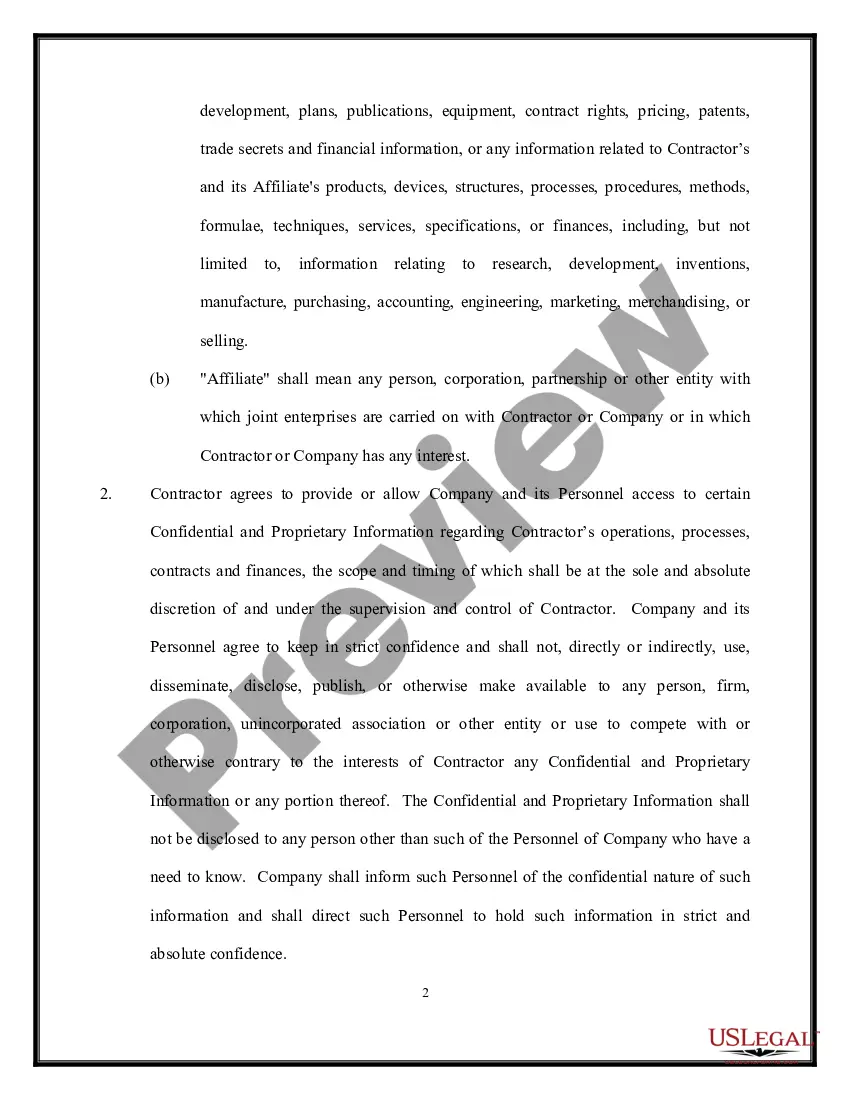
“Confidential Information” means any information, technical data or know-how (whether disclosed before or after the date of this Agreement), including, but not limited to, information relating to business and product or service plans, financial projections, customer lists, business forecasts, sales and merchandising, ...
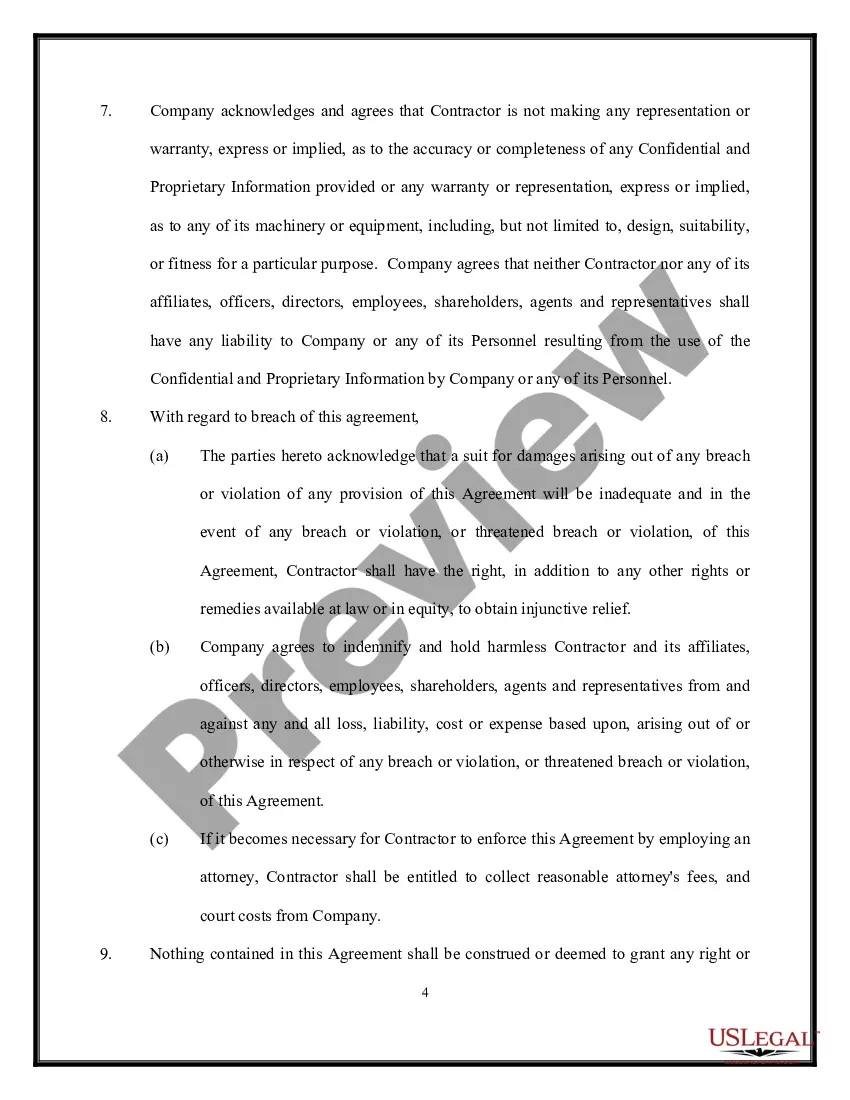
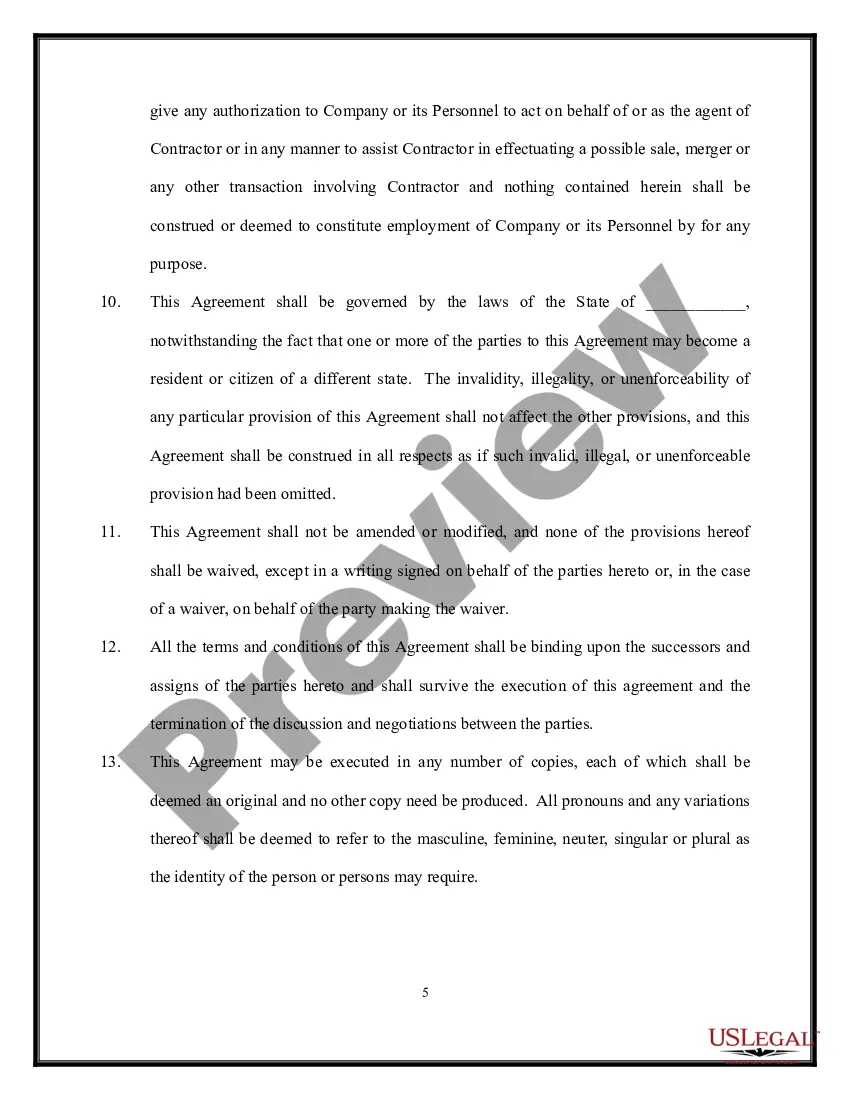
Confidentiality agreements can run indefinitely, covering the parties' disclosures of confidential information at any time, or can terminate on a certain date or event. Whether or not the overall agreement has a definite term, the parties' nondisclosure obligations can be stated to survive for a set period.
For the purposes of this Agreement, “Confidential Information” means any information not generally known to the public and proprietary to the Company and includes, without limitation, trade secrets, inventions, and information pertaining to research, development, purchasing, marketing, selling, accounting, licensing, ...
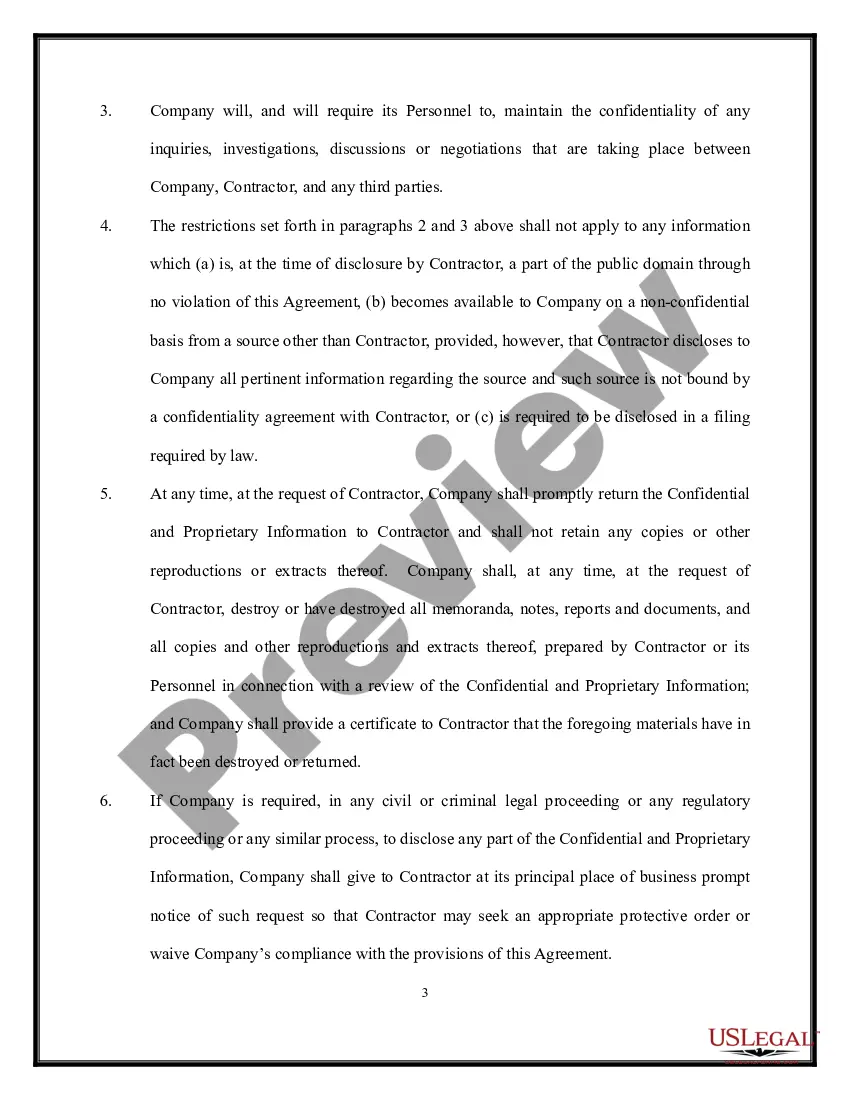
Common exclusions include: Information already in the public domain. Information known prior to its disclosure. Information independently developed without breach.
Examples of confidential information include a person's phone number and address, medical records, and social security. Companies also have confidential information such as financial records, trade secrets, customer information, and marketing strategies.
A confidentiality agreement should include the names and addresses of the parties to the contract. Consider also including: Reason for the agreement: Explain why you're sharing this information. The information disclosed: Be specific about the subject matter and what exactly is included in the agreement.
The typical confidentiality obligation imposes a duty to use confidential information only for its intended purpose.
disclosure agreement (NDA) is a legal agreement between two or more parties that outlines confidential information that the parties wish to share with one another for certain purposes, but wish to restrict access to by unauthorised third parties.
Answer: Confidentiality is one of the fundamental principles set out in APES 110 Code of Ethics for Professional Accountants (“the Code”). The Code is based on the International Code of Ethics for Professional Accountants, which is issued by the International Ethics Standards Board for Accountants.
Duty of confidentiality There are a small number of exceptions to the above which are discussed in the SRA's guidance on confidentiality of client information, but in general you must keep your client's information confidential unless the law or your client's consent allows you to disclose it.
