Roommate Agreement Rules In Pennsylvania
Description

Get your form ready online
Our built-in tools help you complete, sign, share, and store your documents in one place.
Make edits, fill in missing information, and update formatting in US Legal Forms—just like you would in MS Word.
Download a copy, print it, send it by email, or mail it via USPS—whatever works best for your next step.
Sign and collect signatures with our SignNow integration. Send to multiple recipients, set reminders, and more. Go Premium to unlock E-Sign.
If this form requires notarization, complete it online through a secure video call—no need to meet a notary in person or wait for an appointment.
We protect your documents and personal data by following strict security and privacy standards.

Make edits, fill in missing information, and update formatting in US Legal Forms—just like you would in MS Word.

Download a copy, print it, send it by email, or mail it via USPS—whatever works best for your next step.

Sign and collect signatures with our SignNow integration. Send to multiple recipients, set reminders, and more. Go Premium to unlock E-Sign.

If this form requires notarization, complete it online through a secure video call—no need to meet a notary in person or wait for an appointment.

We protect your documents and personal data by following strict security and privacy standards.
Looking for another form?
Form popularity
FAQ
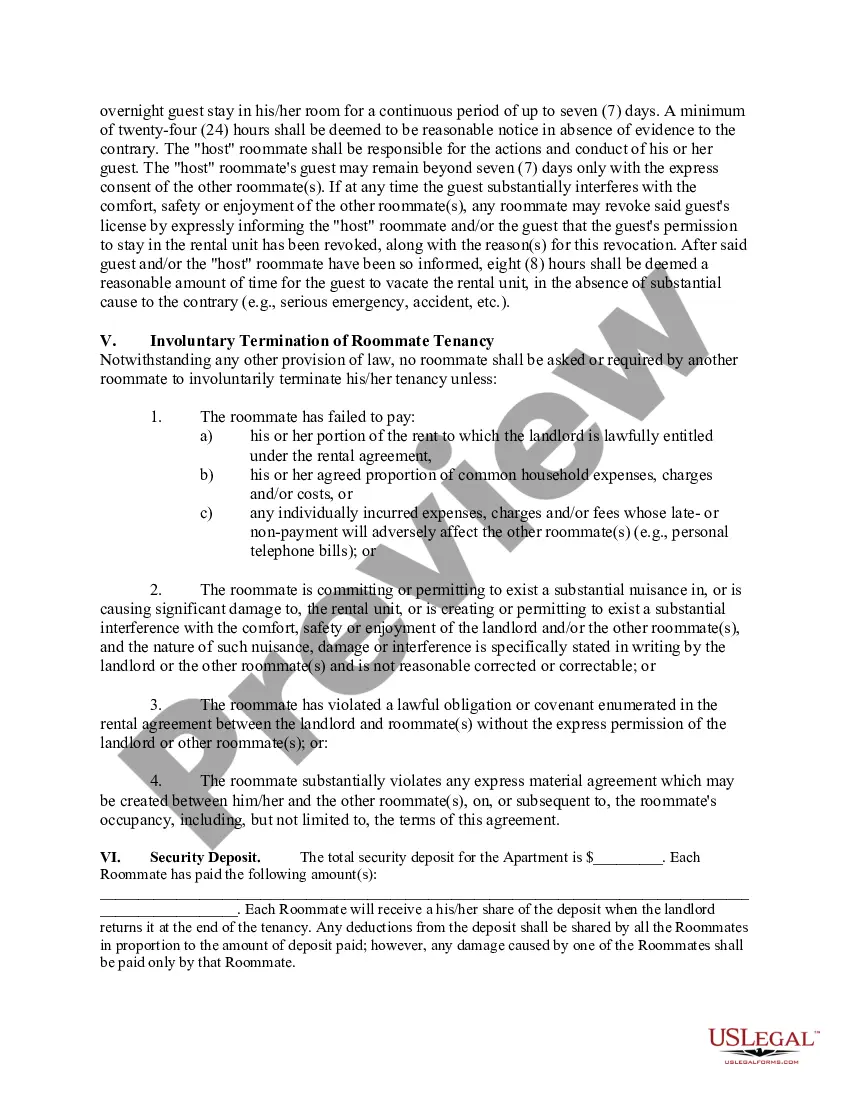
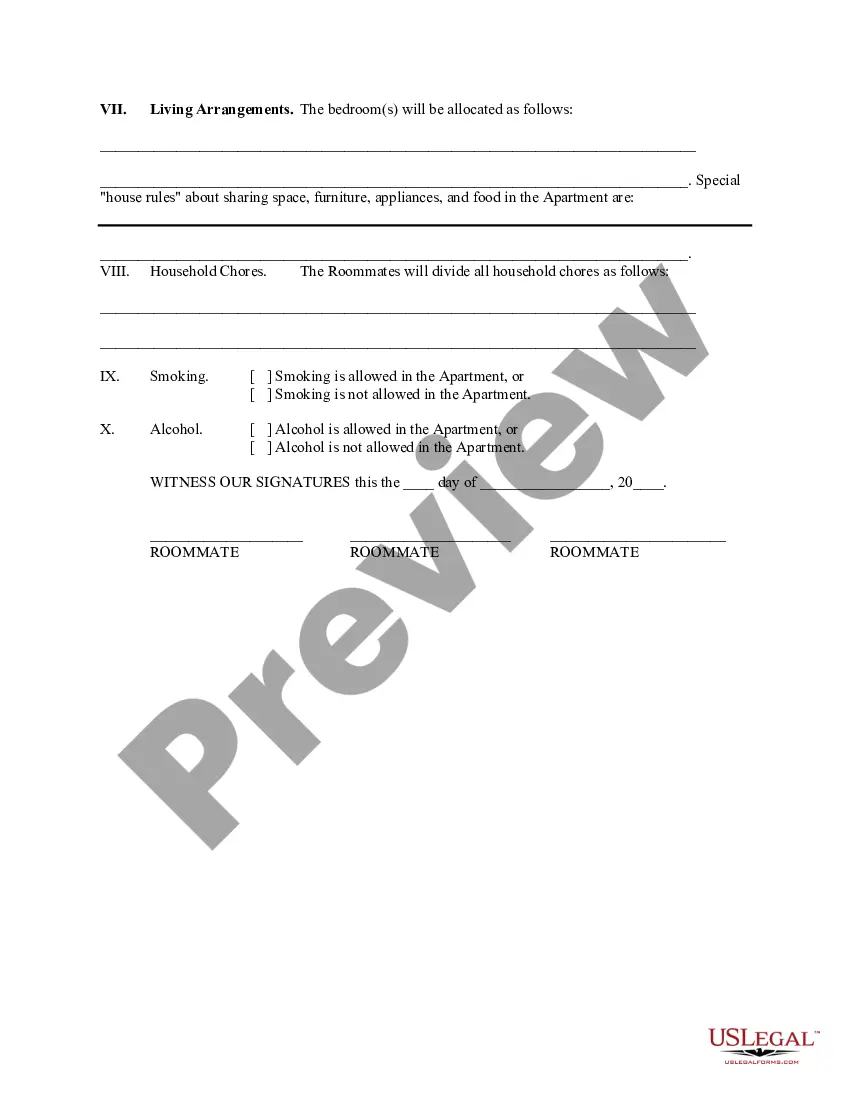
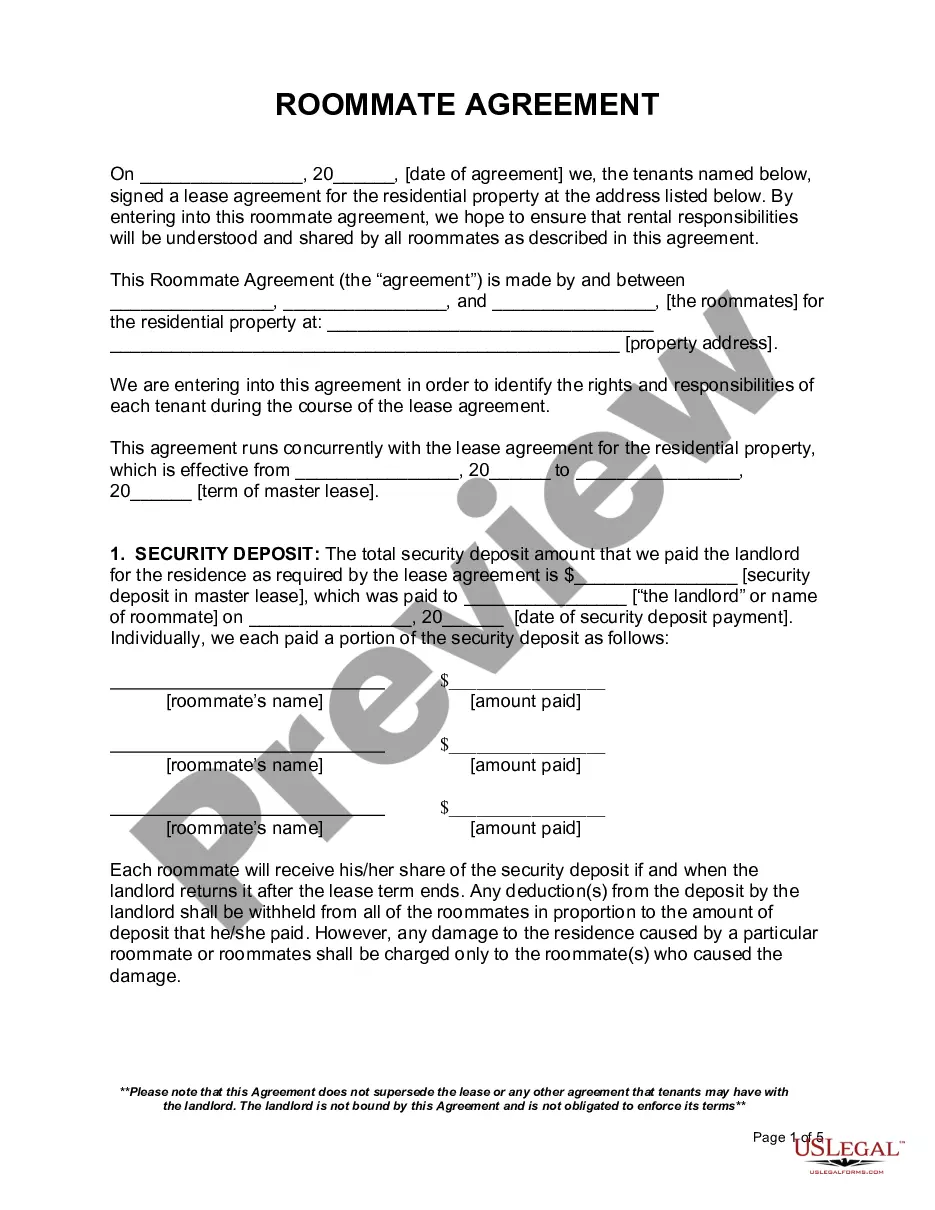
A Roommate Agreement is a written contract between roommates that outlines their rights and obligations while living together. This agreement includes house rules, maintenance duties, restricted behaviors, and more. For a Roommate Agreement to be useful, everyone sharing the household must agree to it.
Pennsylvania courts require that consideration be present for the agreement to be enforceable. Without mutual exchange or benefit, a contract can be invalid. Both parties should have something to gain or lose as part of the agreement.
Retaliate against tenants: Landlords cannot increase rent, reduce services, or threaten eviction in response to a tenant exercising legal rights, such as reporting safety violations. Enter without proper notice: Except in emergencies, landlords must provide reasonable notice before entering a rental unit.
Pennsylvania leases do not need to be notarized. Once both parties sign the document, it is considered legally valid.
Yes, verbal contracts are generally enforceable in Pennsylvania, provided they include an offer, acceptance, and consideration.
Respect privacy and boundaries. Don't look through your roommates belongings or private things. Don't borrow or use without asking permission. If it's not yours, leave it. Don't discuss private matters about the roommate (and their social life,) with others. Be polite and considerate.
Any roommate who is named as a tenant in the tenancy agreement is presumptively a tenant with rights and obligations under the Act; whether any roommate is a tenant or not is ultimately a legal determination that can only be made by a Residential Tenancy Branch arbitrator who will weigh the factors in favour and ...
A: A roommate agreement is a contract made between the residents of a rental unit. The agreement outlines the terms, conditions and responsibilities agreed to by each of the residents. Roommate agreements are sometimes referred to as roommate contracts.
When executed properly, a Roommate Agreement is a legally binding document. If a roommate fails to uphold their end of the agreement, it's possible you can reinforce your claims in court. However, there may be practical difficulties when trying to do so.
To write a simple contract, title it clearly, identify all parties and specify terms (services or payments). Include an offer, acceptance, consideration, and intent. Add a signature and date for enforceability. Written contracts reduce disputes and offer better legal security than verbal ones.
