Roommate Form Agreement With Employer In Michigan
Description

Get your form ready online
Our built-in tools help you complete, sign, share, and store your documents in one place.
Make edits, fill in missing information, and update formatting in US Legal Forms—just like you would in MS Word.
Download a copy, print it, send it by email, or mail it via USPS—whatever works best for your next step.
Sign and collect signatures with our SignNow integration. Send to multiple recipients, set reminders, and more. Go Premium to unlock E-Sign.
If this form requires notarization, complete it online through a secure video call—no need to meet a notary in person or wait for an appointment.
We protect your documents and personal data by following strict security and privacy standards.

Make edits, fill in missing information, and update formatting in US Legal Forms—just like you would in MS Word.

Download a copy, print it, send it by email, or mail it via USPS—whatever works best for your next step.

Sign and collect signatures with our SignNow integration. Send to multiple recipients, set reminders, and more. Go Premium to unlock E-Sign.

If this form requires notarization, complete it online through a secure video call—no need to meet a notary in person or wait for an appointment.

We protect your documents and personal data by following strict security and privacy standards.
Looking for another form?
Form popularity
FAQ
An “occupant/roommate” is a person who rents from a tenant with whom they live, rather than the landlord, and is therefore not covered under the Residential Tenancy Act. This type of living situation is common in shared houses where a “head-tenant” rents out bedrooms to roommates.
A tenancy agreement may end when someone goes against one of its material terms Residential Tenancy Act: Section 45.3. If a landlord or tenant breaches a material term and the other party wants to end the tenancy, they must send a written warning to the party who breached the term.
Any roommate who is named as a tenant in the tenancy agreement is presumptively a tenant with rights and obligations under the Act; whether any roommate is a tenant or not is ultimately a legal determination that can only be made by a Residential Tenancy Branch arbitrator who will weigh the factors in favour and ...
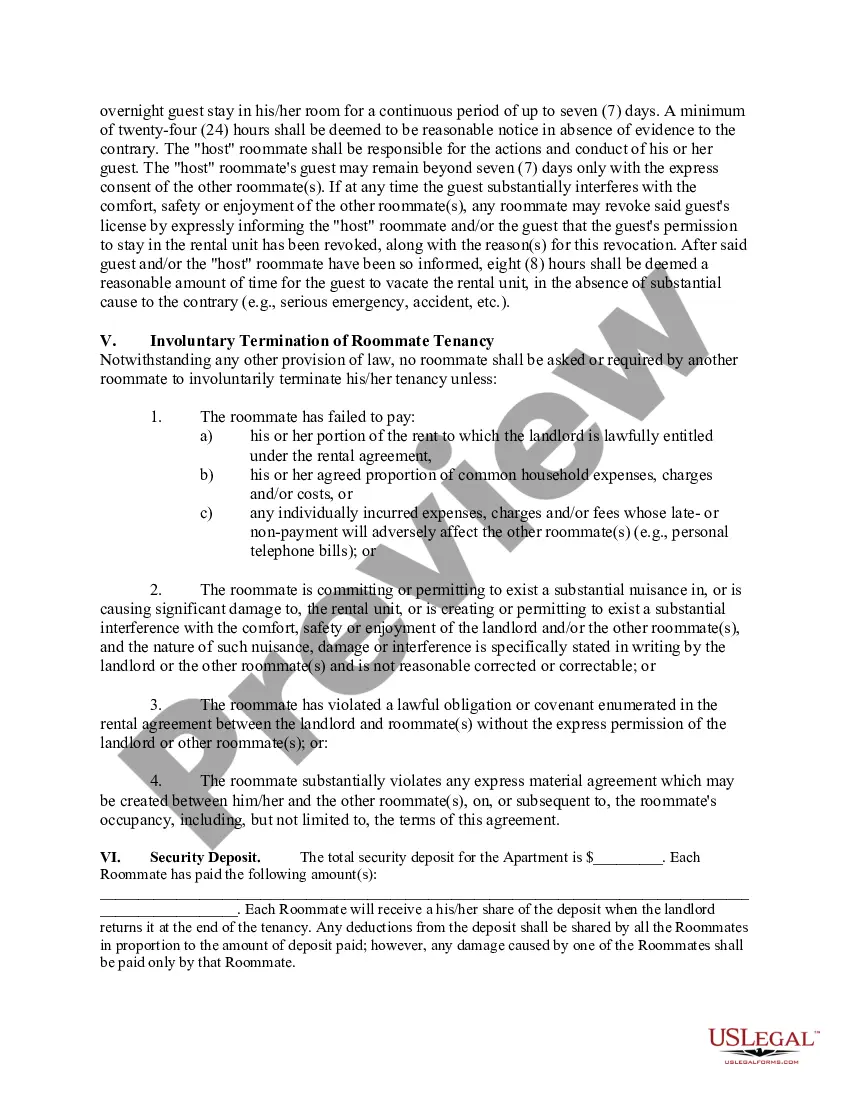
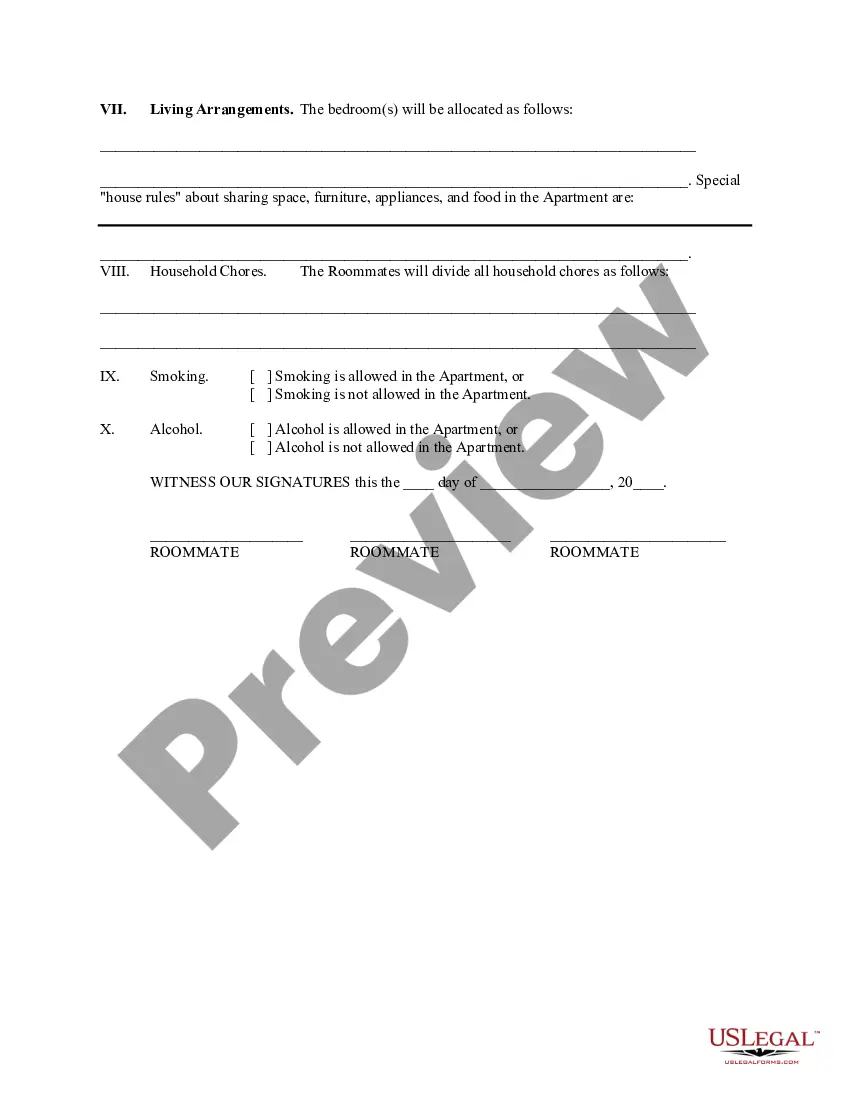
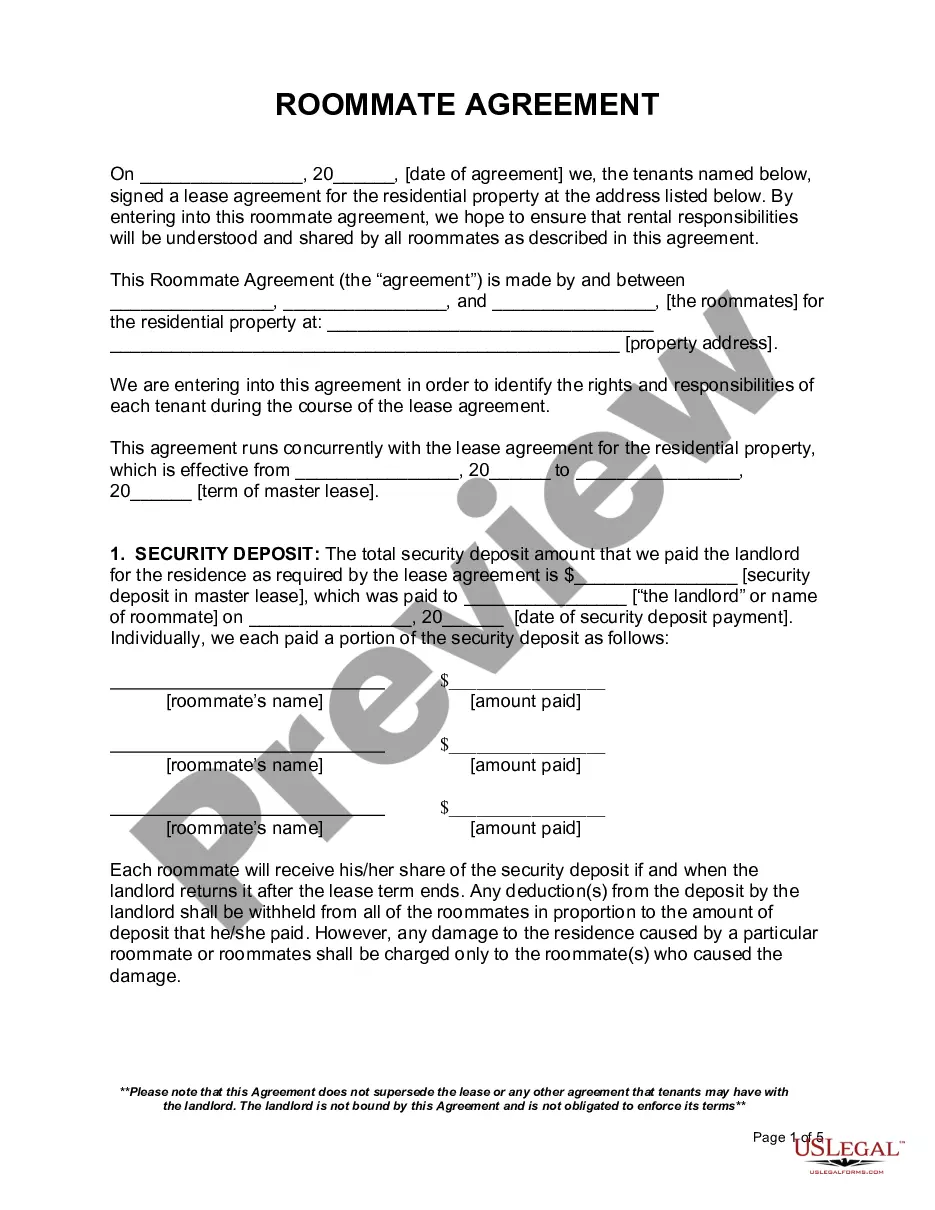
A Roommate Agreement is a written contract between roommates that outlines their rights and obligations while living together. This agreement includes house rules, maintenance duties, restricted behaviors, and more. For a Roommate Agreement to be useful, everyone sharing the household must agree to it.
Beginning in mid-May, students will be able to indicate their housing preferences, which include preferred roommates, bathroom style and dining plan selection. Depending on the size of the incoming class, MSU may need to utilize transitional housing for new students.
Log in to your My Housing account and click on "Complete Your Roommate Group." The Group Leader will invite one, two, or three additional students to join the group by providing their names and MSU emails.
If you would like to room with a friend, both of you should indicate your preference on your application. You will need their 8-digit student ID number. You must also designate the same housing preferences including North Campus neighborhood preference, room environment and room type rate group.
Once invited, the Group Members will receive an email with instructions to accept or decline the invitation in their My Housing account. If this is not done, you will not be placed together.
At the University of Michigan, students are not guaranteed housing after their freshman year on campus. Amid record-breaking enrollment numbers, many students are left to secure accommodations on their own.
Campus Neighborhoods: U-M residence halls are located in one of two neighborhoods: Central Campus and North Campus. The North Campus neighborhood residence halls, Bursley and Baits II, house primarily first-year students.
