Roommate Form Contract With Landlord In Dallas
Description

Get your form ready online
Our built-in tools help you complete, sign, share, and store your documents in one place.
Make edits, fill in missing information, and update formatting in US Legal Forms—just like you would in MS Word.
Download a copy, print it, send it by email, or mail it via USPS—whatever works best for your next step.
Sign and collect signatures with our SignNow integration. Send to multiple recipients, set reminders, and more. Go Premium to unlock E-Sign.
If this form requires notarization, complete it online through a secure video call—no need to meet a notary in person or wait for an appointment.
We protect your documents and personal data by following strict security and privacy standards.

Make edits, fill in missing information, and update formatting in US Legal Forms—just like you would in MS Word.

Download a copy, print it, send it by email, or mail it via USPS—whatever works best for your next step.

Sign and collect signatures with our SignNow integration. Send to multiple recipients, set reminders, and more. Go Premium to unlock E-Sign.

If this form requires notarization, complete it online through a secure video call—no need to meet a notary in person or wait for an appointment.

We protect your documents and personal data by following strict security and privacy standards.
Looking for another form?





Form popularity
FAQ
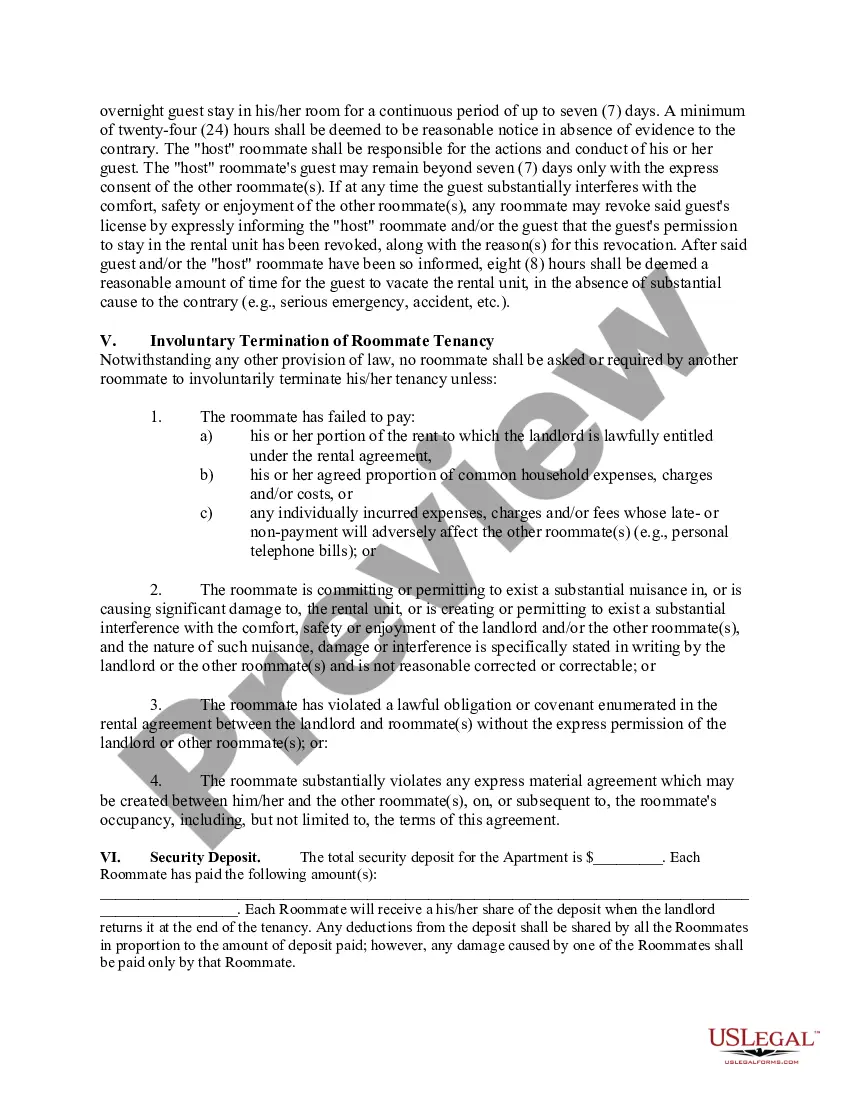
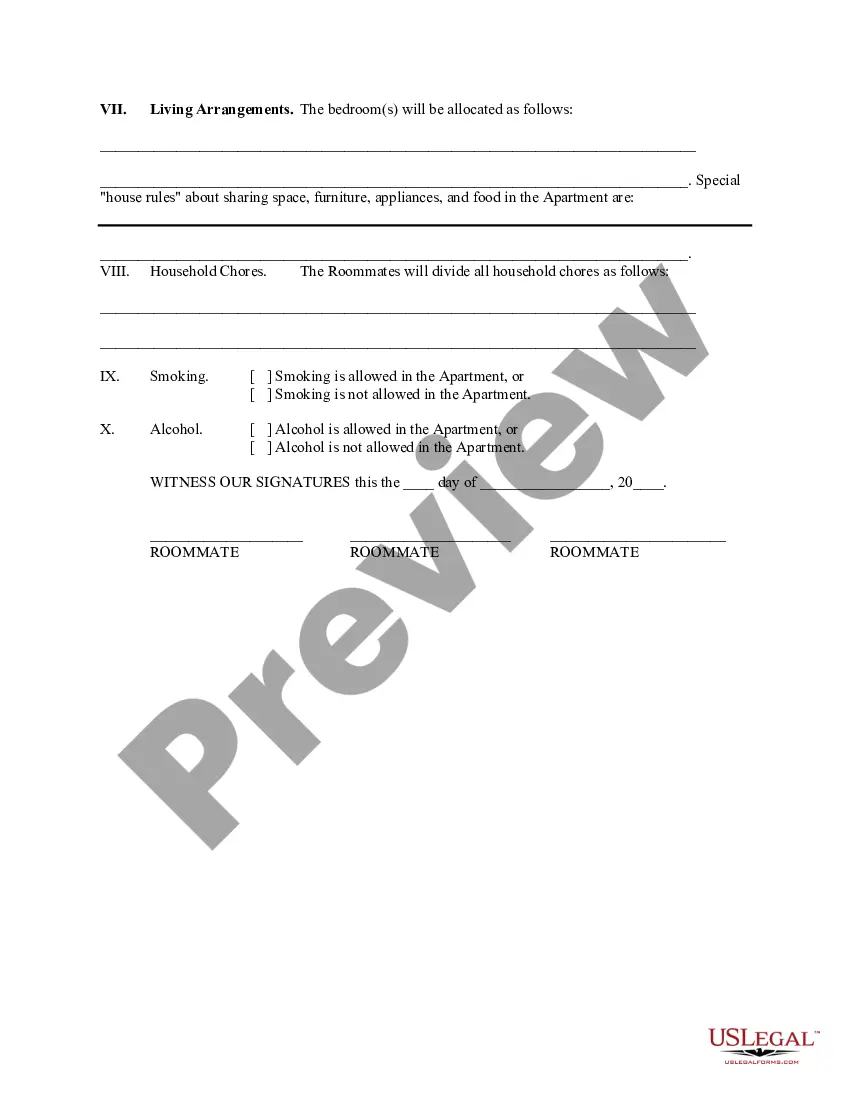
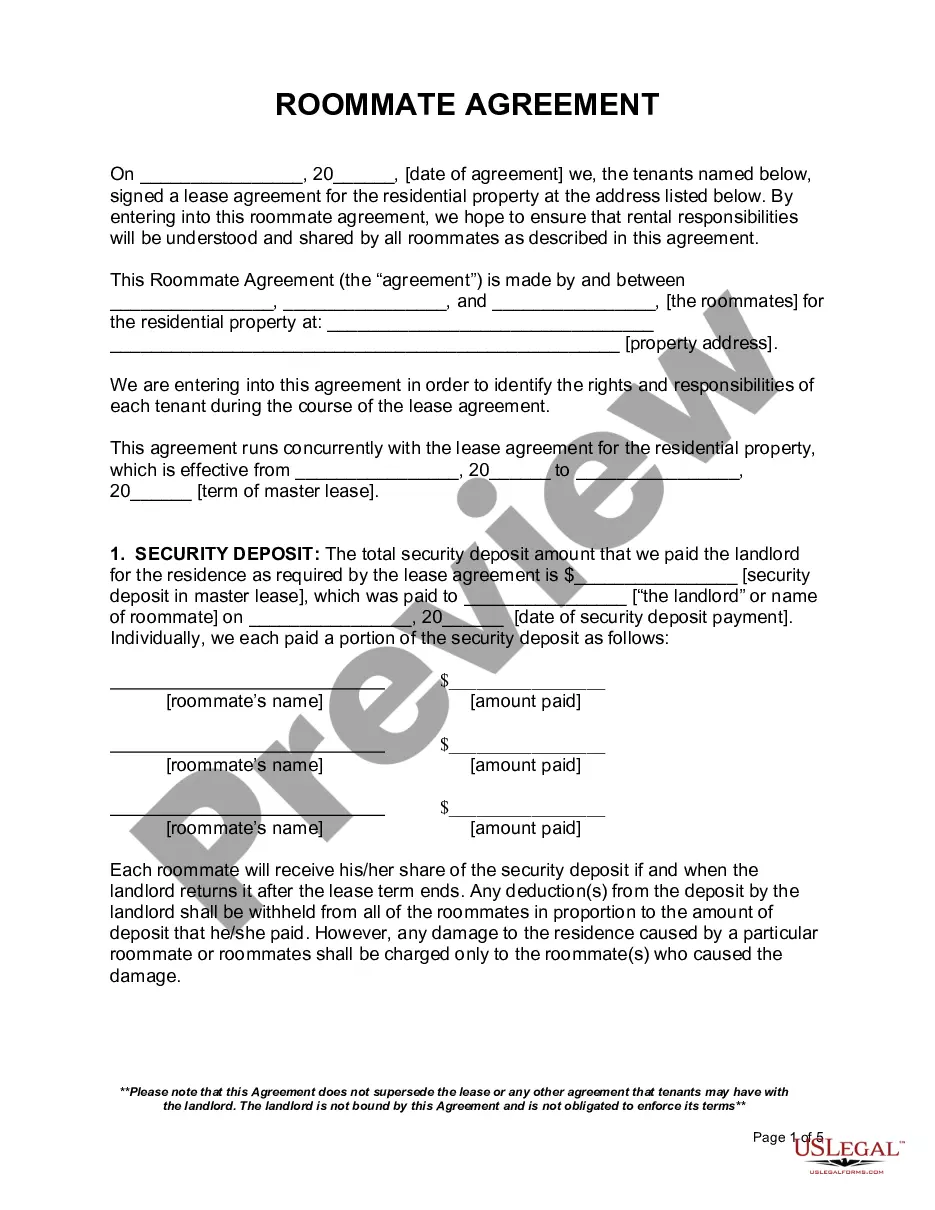
A Roommate Agreement is a written contract between roommates that outlines their rights and obligations while living together. This agreement includes house rules, maintenance duties, restricted behaviors, and more. For a Roommate Agreement to be useful, everyone sharing the household must agree to it.
Whether or not you can legally evict your roommate in Texas depends largely on the nature of your living arrangement and the legal status of your roommate in relation to the property. If your roommate is on the lease, you both have equal rights to occupy the property under the lease agreement.
As you can see, the eviction process in Texas is pretty straightforward as long as you follow the legal requirements and procedures. As a landlord, you must have a valid reason for evicting a tenant, provide proper notice, and follow the eviction steps until you obtain the Writ of Possession.
An at-will tenant must be given at least 3 days' notice to vacate, ing to Texas Property Code Section 94.005(b). If the tenant does not move out in the time specified in the notice to vacate, the next step is to file an eviction suit in justice court.
You have to file an eviction against him. Fill out the paperwork and turn it in to the court. They'll set a court date. He either show or not, but lose either way. Court will issue a writ of eviction and if he doesn't comply within a certain time frame, you file more paperwork with the judge.
You give him a written notice to move, allowing him one month as required by Texas law and specifying the date on which his tenancy will end. If he refuses to leave after that month, your recourse would be to file for an eviction in court.
Other states, like California and Texas, require all adult tenants to sign the lease. Those who do not are considered a guest of the lease signing tenant.
But not by the landlord. It does not necessarily mean the lease is invalid. However it can createMoreBut not by the landlord. It does not necessarily mean the lease is invalid. However it can create significant problems down the line for instance if there are any disputes.
Sign the lease agreement After the tenant has signed, it's time for the landlord or property manager to provide their signature. Once this is complete, the contract is legally binding to both parties. This step has to be completed before the tenant moves into the rental unit or house.
How to write a Texas lease agreement Begin by including the names and contact information of both the landlord and tenant. Describe the rental property, including its address and any unique features. Specify the lease term, including the move-in and move-out dates.
