Roommate Agreement For Couples In Dallas
Description

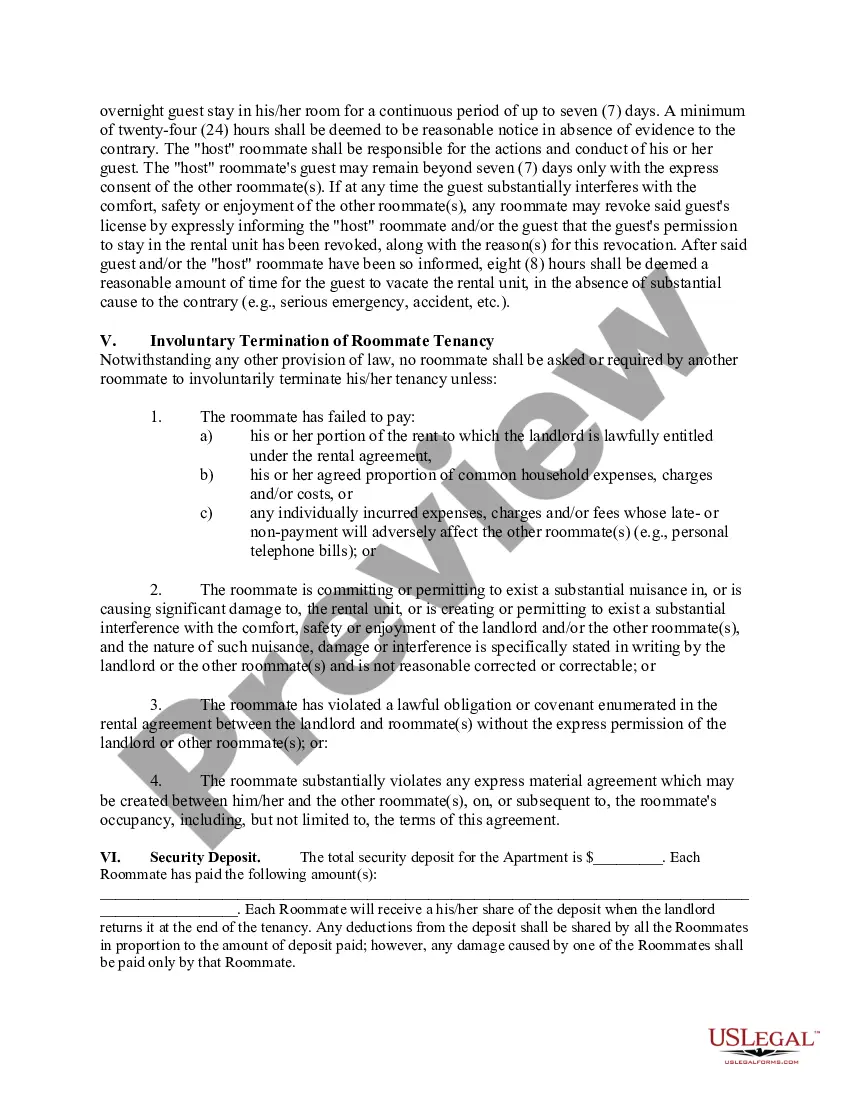
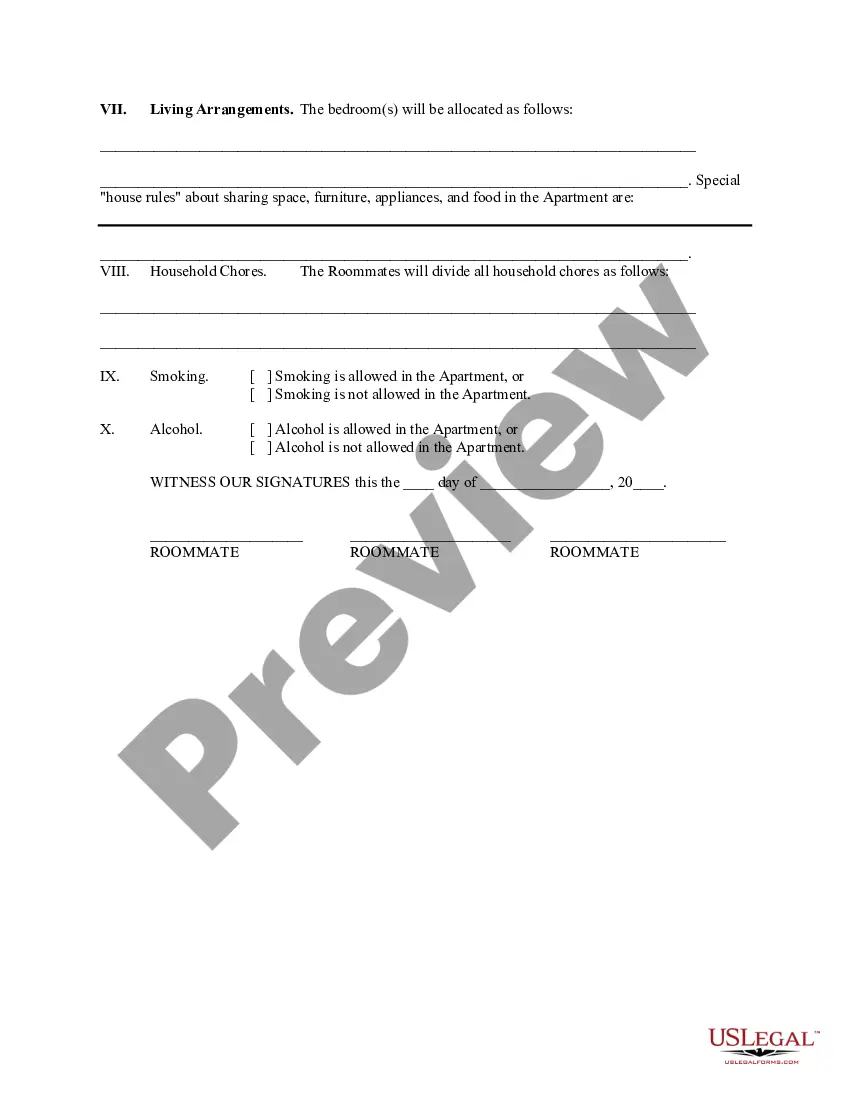
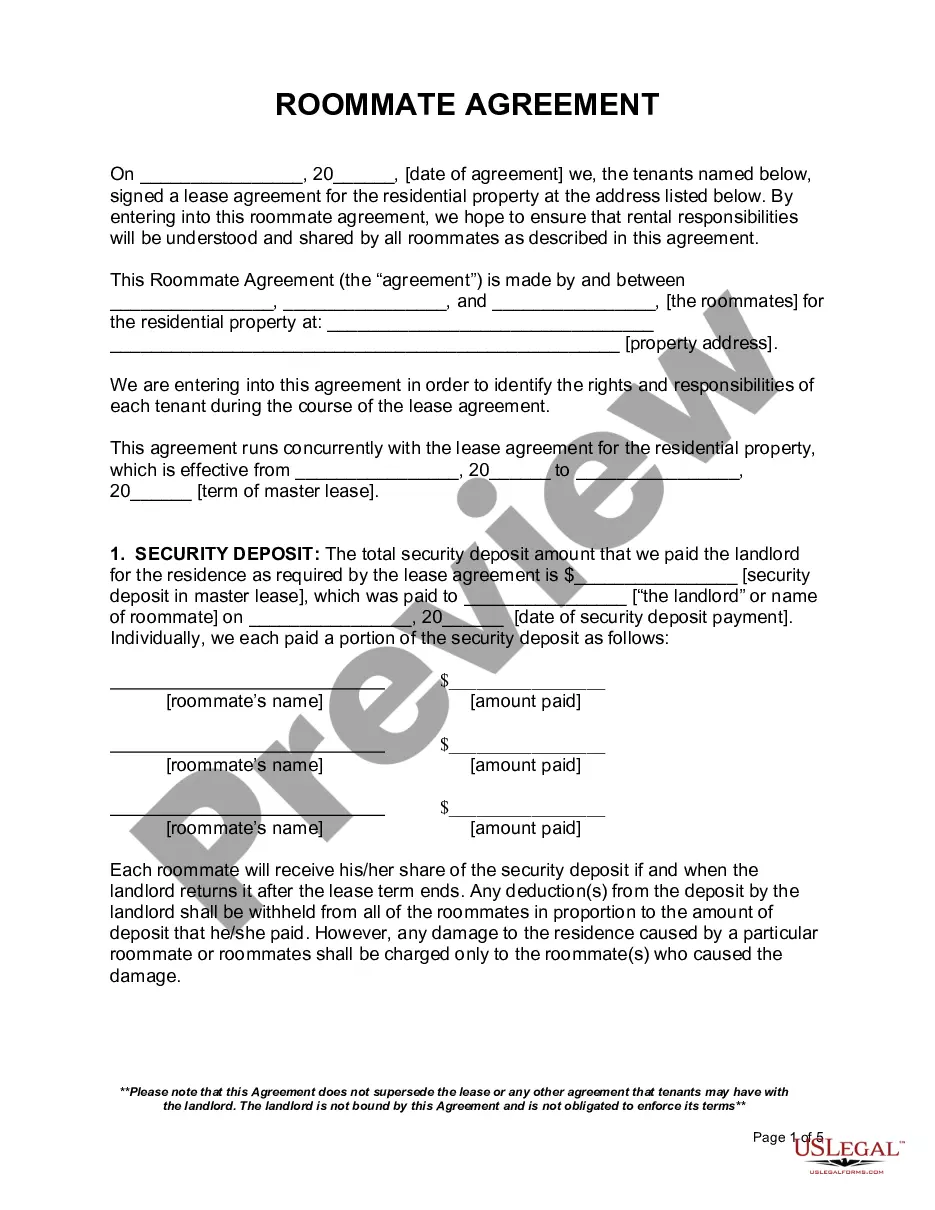
Get your form ready online
Our built-in tools help you complete, sign, share, and store your documents in one place.
Make edits, fill in missing information, and update formatting in US Legal Forms—just like you would in MS Word.
Download a copy, print it, send it by email, or mail it via USPS—whatever works best for your next step.
Sign and collect signatures with our SignNow integration. Send to multiple recipients, set reminders, and more. Go Premium to unlock E-Sign.
If this form requires notarization, complete it online through a secure video call—no need to meet a notary in person or wait for an appointment.
We protect your documents and personal data by following strict security and privacy standards.

Make edits, fill in missing information, and update formatting in US Legal Forms—just like you would in MS Word.

Download a copy, print it, send it by email, or mail it via USPS—whatever works best for your next step.

Sign and collect signatures with our SignNow integration. Send to multiple recipients, set reminders, and more. Go Premium to unlock E-Sign.

If this form requires notarization, complete it online through a secure video call—no need to meet a notary in person or wait for an appointment.

We protect your documents and personal data by following strict security and privacy standards.
Looking for another form?










Form popularity
FAQ
A tenancy agreement may end when someone goes against one of its material terms Residential Tenancy Act: Section 45.3. If a landlord or tenant breaches a material term and the other party wants to end the tenancy, they must send a written warning to the party who breached the term.
Any roommate who is named as a tenant in the tenancy agreement is presumptively a tenant with rights and obligations under the Act; whether any roommate is a tenant or not is ultimately a legal determination that can only be made by a Residential Tenancy Branch arbitrator who will weigh the factors in favour and ...
An “occupant/roommate” is a person who rents from a tenant with whom they live, rather than the landlord, and is therefore not covered under the Residential Tenancy Act. This type of living situation is common in shared houses where a “head-tenant” rents out bedrooms to roommates.
All parties agree to discuss frankly and unemotionally all concerns with their roommates before problems occur. All parties agree to negotiate in good faith, should the need arise. All parties will respect one another's privacy, sleep schedules, and other requests that are not unreasonably burdensome.
How to write a roommate agreement Names of both tenants. The property address. The dates the lease begins and ends. The amount of rent each person pays. Who pays for utilities. Who pays the security deposit. Which bedroom each person occupies. Who buys food, or if you're each buying your own food.
Any roommate who is named as a tenant in the tenancy agreement is presumptively a tenant with rights and obligations under the Act; whether any roommate is a tenant or not is ultimately a legal determination that can only be made by a Residential Tenancy Branch arbitrator who will weigh the factors in favour and ...
TLDR: Unless anything is an inhumane and borderline crazy obligation, it is legally enforceable, but should there be problems regarding the wording or phrasing then it can be contested.
Respect Personal Space Ask permission before entering someone's room, even if the door is open. Respect each other's belongings and privacy by avoiding touching or moving anything in the room without asking first. Also, talk about how common areas will be used and how storage space will be divided.
Do Not Use Each Other's Things Without Asking. Not using each other's things without asking is one of the more obvious roommate rules. While some people are more casual about sharing, others are not. You have to learn what kind of person your roommate is and then act ingly.
Setting clear roommate boundaries is key to harmonious co-living. Begin by establishing expectations through open discussions and written agreements. Respect personal space and agree on quiet hours to ensure a peaceful living environment. Share household chores and manage guest policies to prevent conflicts.
