Roommate Agreement With Boyfriend In California
Description

Get your form ready online
Our built-in tools help you complete, sign, share, and store your documents in one place.
Make edits, fill in missing information, and update formatting in US Legal Forms—just like you would in MS Word.
Download a copy, print it, send it by email, or mail it via USPS—whatever works best for your next step.
Sign and collect signatures with our SignNow integration. Send to multiple recipients, set reminders, and more. Go Premium to unlock E-Sign.
If this form requires notarization, complete it online through a secure video call—no need to meet a notary in person or wait for an appointment.
We protect your documents and personal data by following strict security and privacy standards.

Make edits, fill in missing information, and update formatting in US Legal Forms—just like you would in MS Word.

Download a copy, print it, send it by email, or mail it via USPS—whatever works best for your next step.

Sign and collect signatures with our SignNow integration. Send to multiple recipients, set reminders, and more. Go Premium to unlock E-Sign.

If this form requires notarization, complete it online through a secure video call—no need to meet a notary in person or wait for an appointment.

We protect your documents and personal data by following strict security and privacy standards.
Looking for another form?




Form popularity
FAQ
For guests staying for an extended period (such as several weeks), the tenant should inform the landlord of the situation. If a landlord tries to evict a tenant for having occupants in a rental unit, tenants can seek dispute resolution.
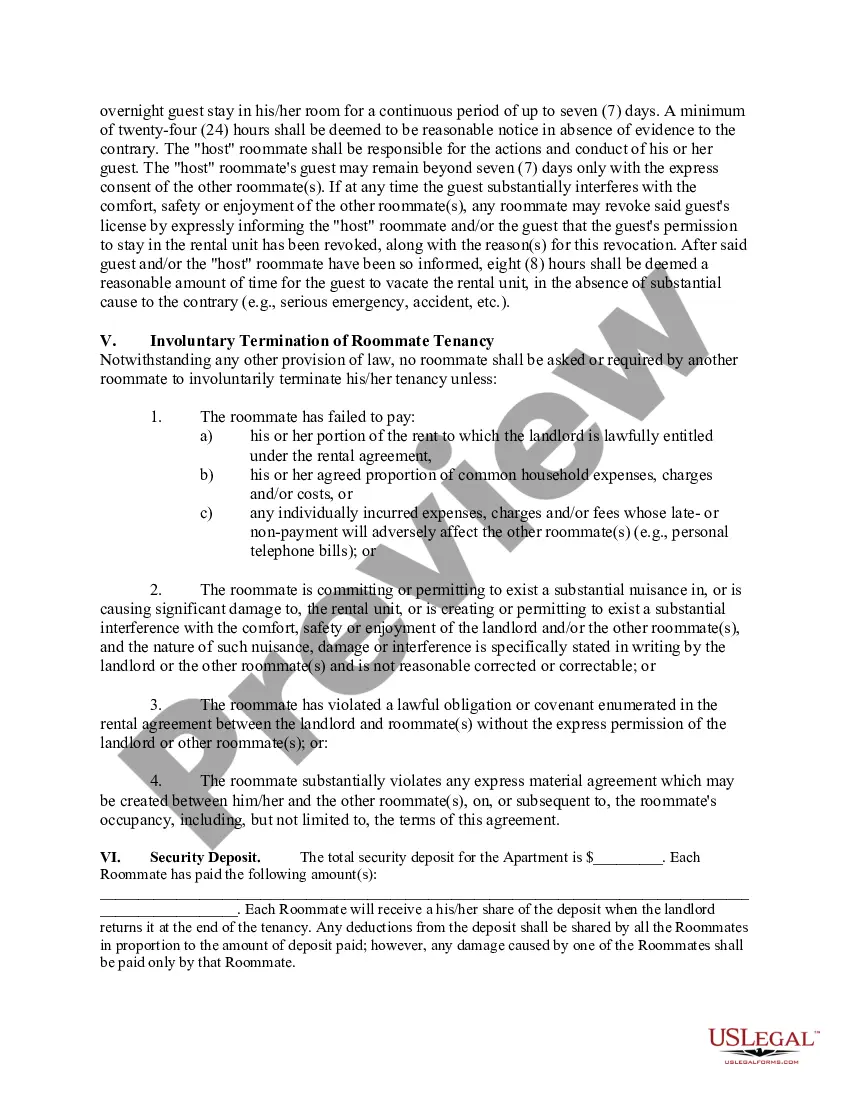
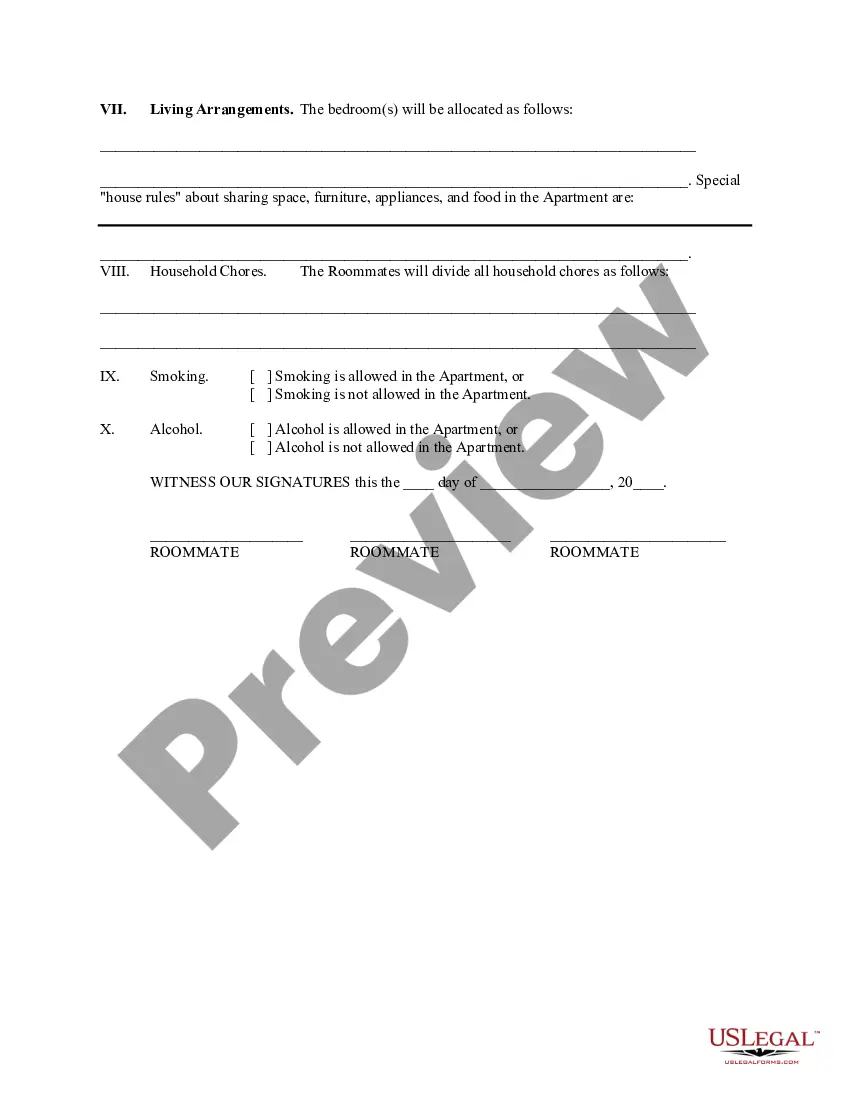
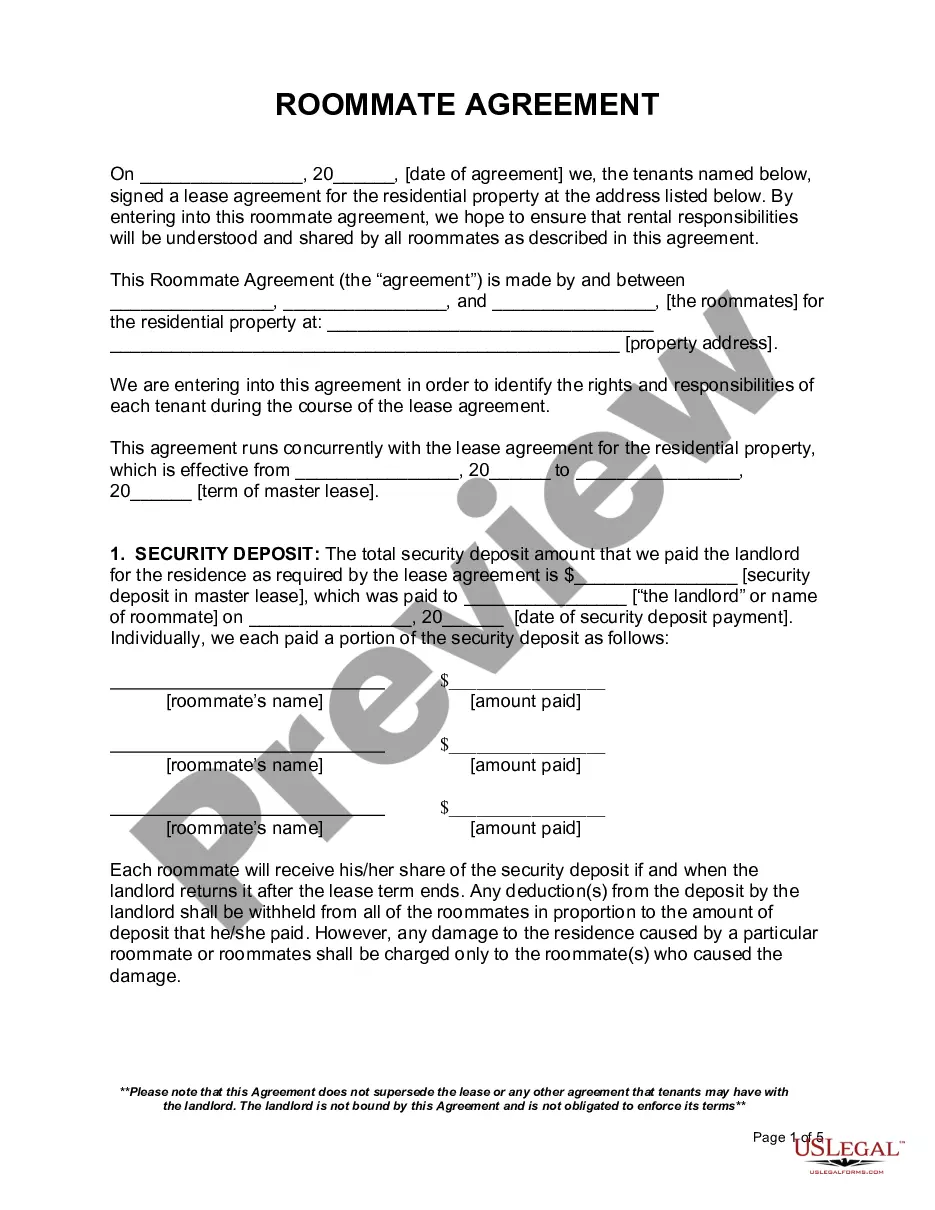
After all, you sign an agreement with a landlord almost as a matter of course—why not do the same with each other? It's a good way to make sure you're both clear as to your responsibilities to each other as tenants—who pays what portion of the rent and utilities, who gets the place if you split up, and the like.
A landlord usually requires that everyone who is living in a rental unit be named on the lease. Landlords have the right to know how many people and who are living in the rental unit. This information is important to ensuring that: the landlord meets Minimum Housing and Health Standards and.
Complete Any Required Applications: Your landlord may require your fiancé to fill out an application, which could include a background check or credit check. Update the Lease: If your landlord agrees, you may need to sign an updated lease or an addendum that officially adds your fiancé as an occupant.
How to write a roommate agreement Names of both tenants. The property address. The dates the lease begins and ends. The amount of rent each person pays. Who pays for utilities. Who pays the security deposit. Which bedroom each person occupies. Who buys food, or if you're each buying your own food.
The standard lease agreement in California, whether for residential or commercial property, is a legal contract between the property owner and the prospective tenant. It outlines the terms under which the tenant can occupy and use the rental property.
How to write a California lease agreement Identify the parties involved. Clearly state the names and contact information of both the landlord and the prospective tenant. Define the rental property. Specify the lease term. Outline rent and payment terms. Include important provisions. Comply with legal requirements.
How to write a roommate agreement Names of both tenants. The property address. The dates the lease begins and ends. The amount of rent each person pays. Who pays for utilities. Who pays the security deposit. Which bedroom each person occupies. Who buys food, or if you're each buying your own food.
California's Statute of Frauds requires a lease to be in writing if it either: 1. has a term longer than one year; or 2. has a term less than one year which expires more than one year after the agreement is reached. actually be maintained for thirteen months.
Waiver of Landlord's Liability A landlord can't waive or modify this duty. This means that any lease that contains a provision that exempts the landlord's liability for negligence is legally void and unenforceable because it is "contrary to public policy."
