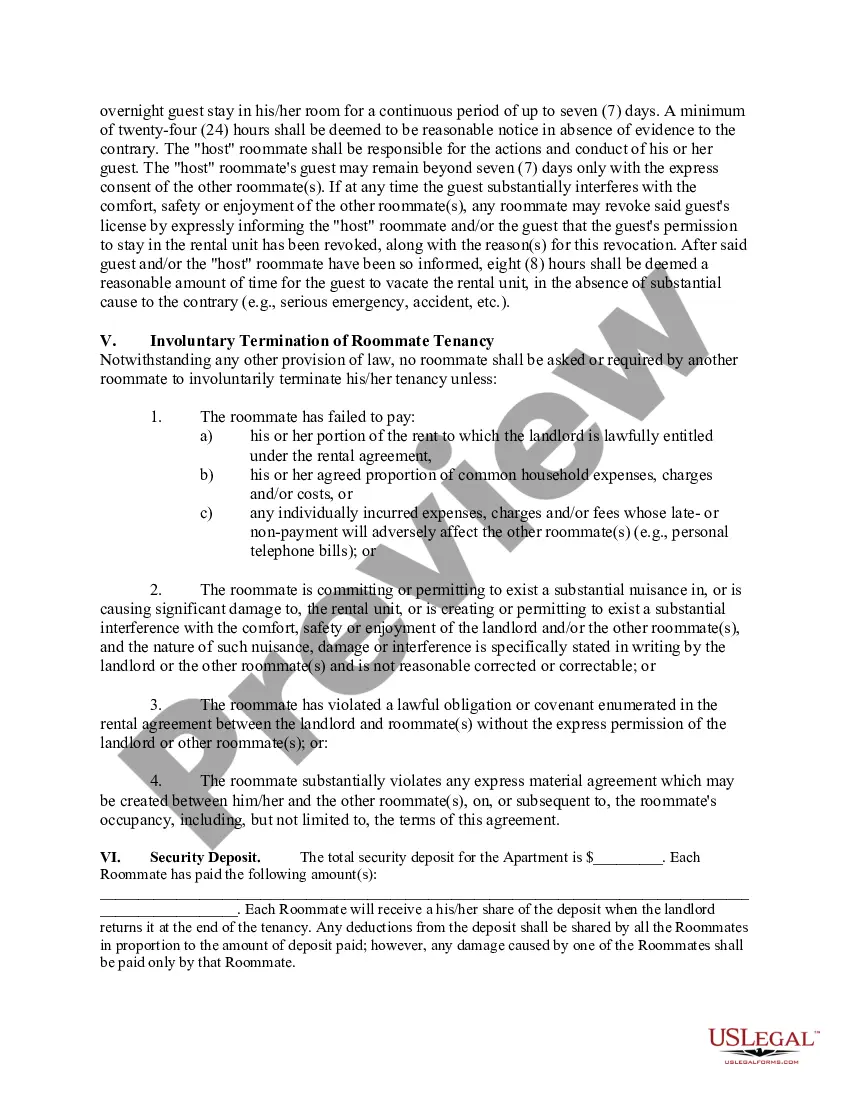
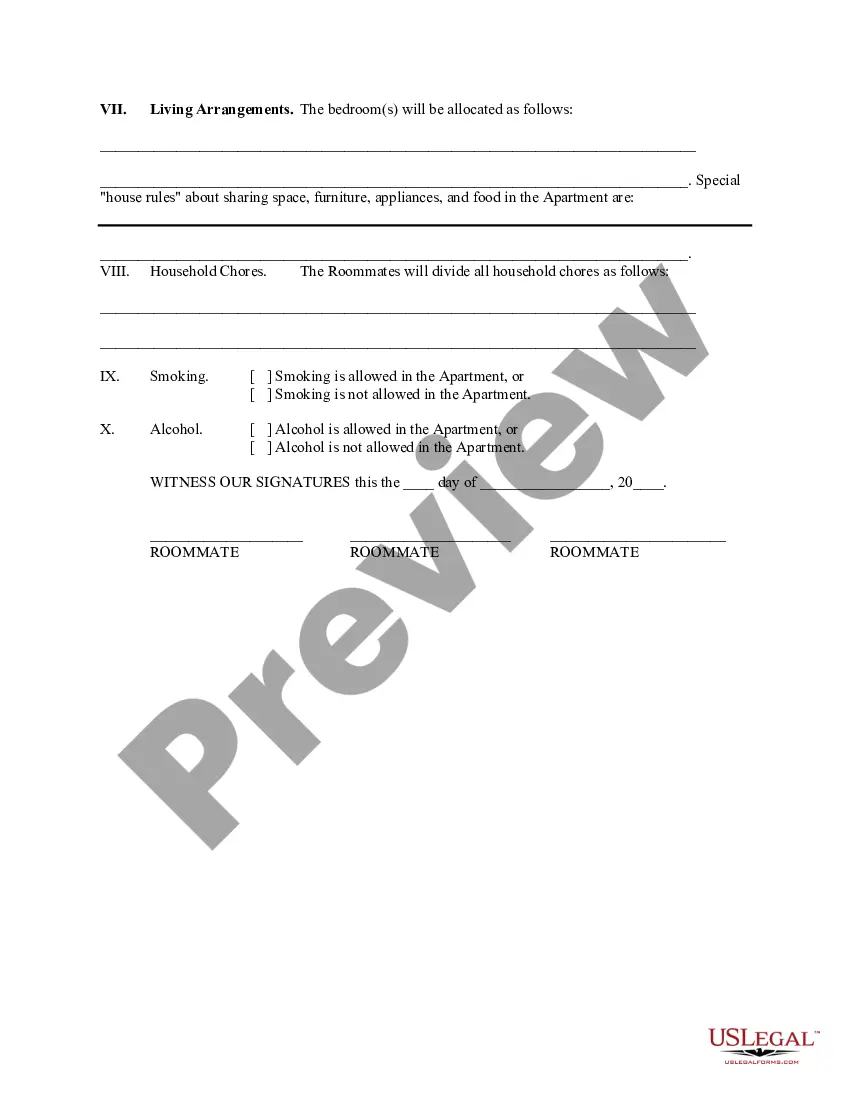
Sample Roommate Agreement With Pets In Alameda
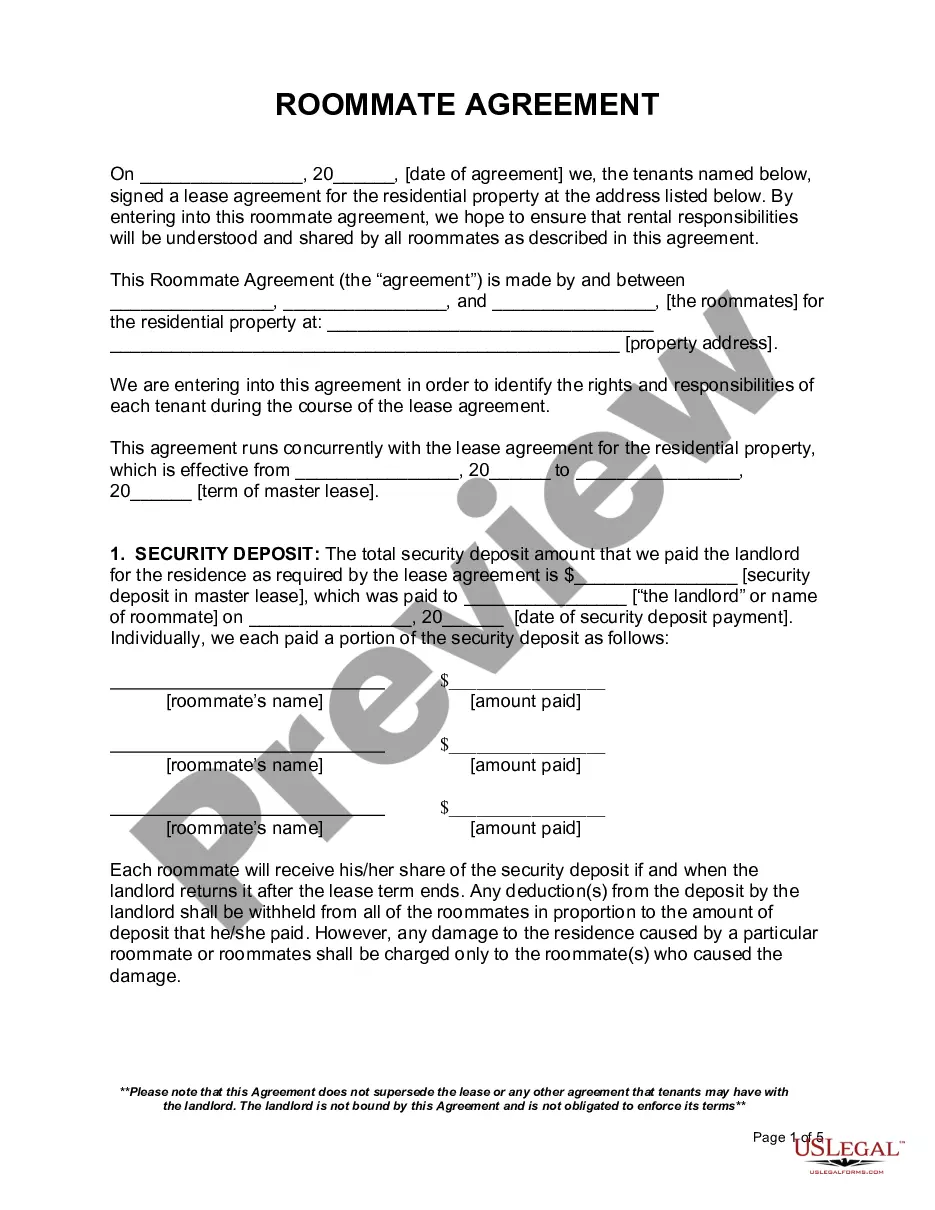
Description

Get your form ready online
Our built-in tools help you complete, sign, share, and store your documents in one place.
Make edits, fill in missing information, and update formatting in US Legal Forms—just like you would in MS Word.
Download a copy, print it, send it by email, or mail it via USPS—whatever works best for your next step.
Sign and collect signatures with our SignNow integration. Send to multiple recipients, set reminders, and more. Go Premium to unlock E-Sign.
If this form requires notarization, complete it online through a secure video call—no need to meet a notary in person or wait for an appointment.
We protect your documents and personal data by following strict security and privacy standards.

Make edits, fill in missing information, and update formatting in US Legal Forms—just like you would in MS Word.

Download a copy, print it, send it by email, or mail it via USPS—whatever works best for your next step.

Sign and collect signatures with our SignNow integration. Send to multiple recipients, set reminders, and more. Go Premium to unlock E-Sign.

If this form requires notarization, complete it online through a secure video call—no need to meet a notary in person or wait for an appointment.

We protect your documents and personal data by following strict security and privacy standards.
Looking for another form?









Form popularity
FAQ
This can lead to consequences, including eviction and potential legal action. There are a few options for pet owners who want to get around the no-pet policy, including obtaining an emotional support animal letter or negotiating with the landlord.
You must provide proper care to any animal you keep as a pet. You may get an unlimited fine or be sent to prison for up to 6 months if you don't look after an animal properly. You may also be banned from owning animals in future.
An example of a pet clause would be: “It is further agreed between the Landlord and Tenant that the Landlord grants permission for the Tenant to keep a pet {insert animal type and breed} named {insert animal name} (“The Pet”) in The Property for the duration of the Tenancy.
If you have beloved pets and want to ensure their well-being after your passing, you can include a pet provision clause in your will. This clause specifies instructions for the care of your pets and may include provisions for their financial support.
Yes of course a landlord can deny you a pet unless it is a service animal or in California, an Emotional Support Animal, certified.
If you mean you are RENTING a house FROM a landlord, then the landlord makes the rules. If the rule is “no pets”, then you had better ask BEFORE you get a pet or you'll be in violation of your lease. You'll be given the choice to get rid of the pet (and possibly incur a fine) or move out.
No. Only humans can be evicted because eviction is a legal proceeding and the person being evicted must be able to respond to the various legal notices. Pets can't do that.
A pet agreement should include the landlord's and tenant's information, the place where the tenant will live with their pet, the inclusive dates of the contract (start date and end date), as well as how many pets are allowed within the property, and specify the amenities where the pet(s) are allowed.
How to write a roommate agreement Names of both tenants. The property address. The dates the lease begins and ends. The amount of rent each person pays. Who pays for utilities. Who pays the security deposit. Which bedroom each person occupies. Who buys food, or if you're each buying your own food.
