Roommate Agreement For Couples With Roommates In Massachusetts
Description

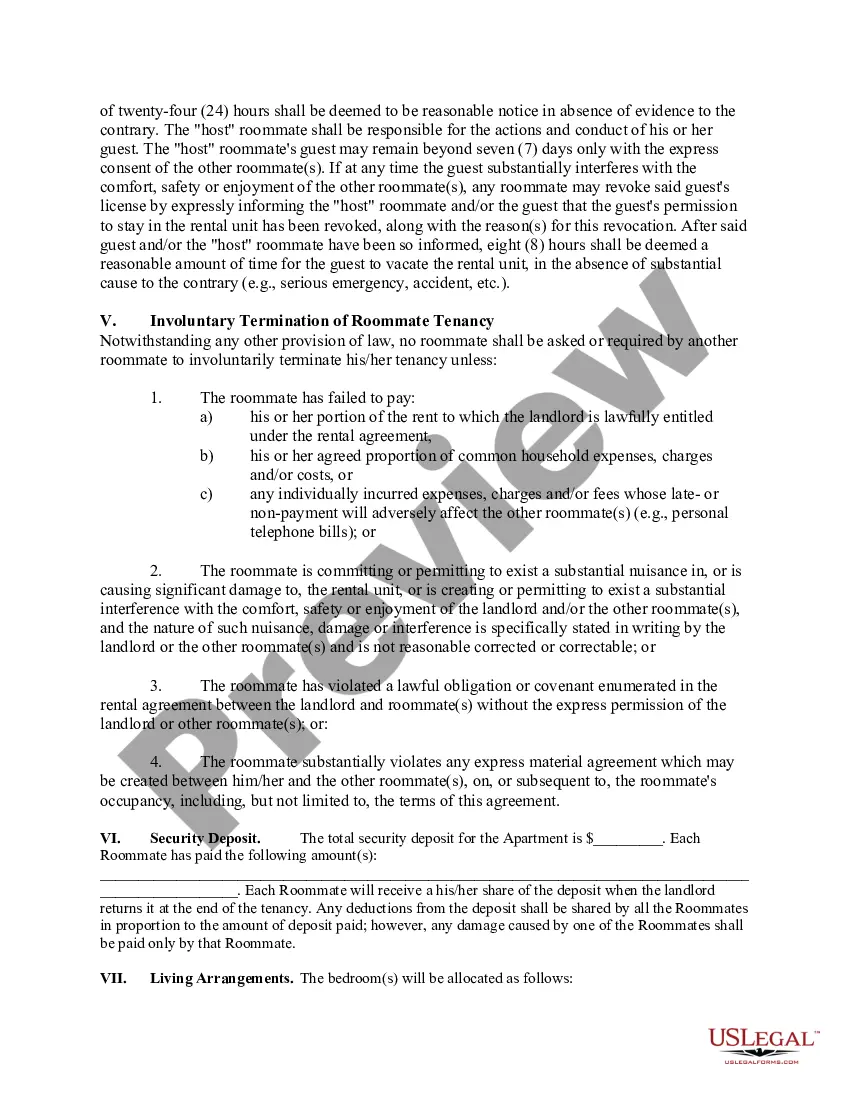
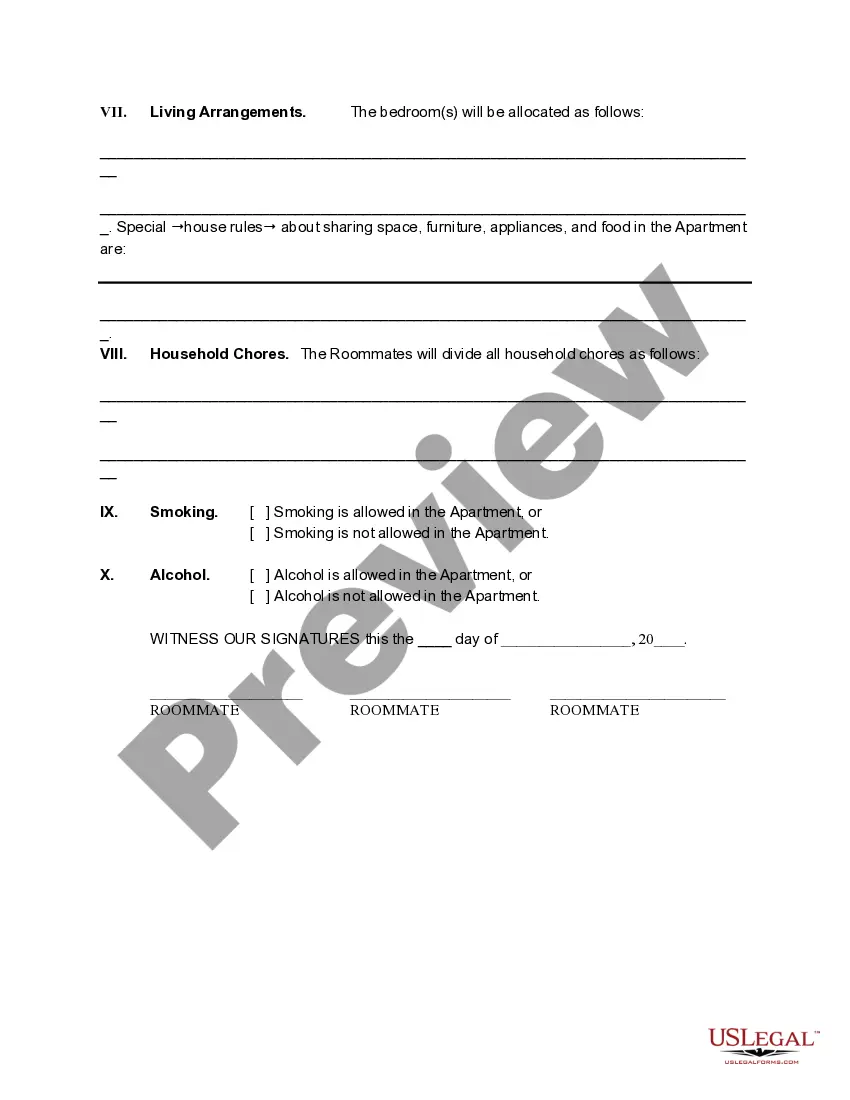

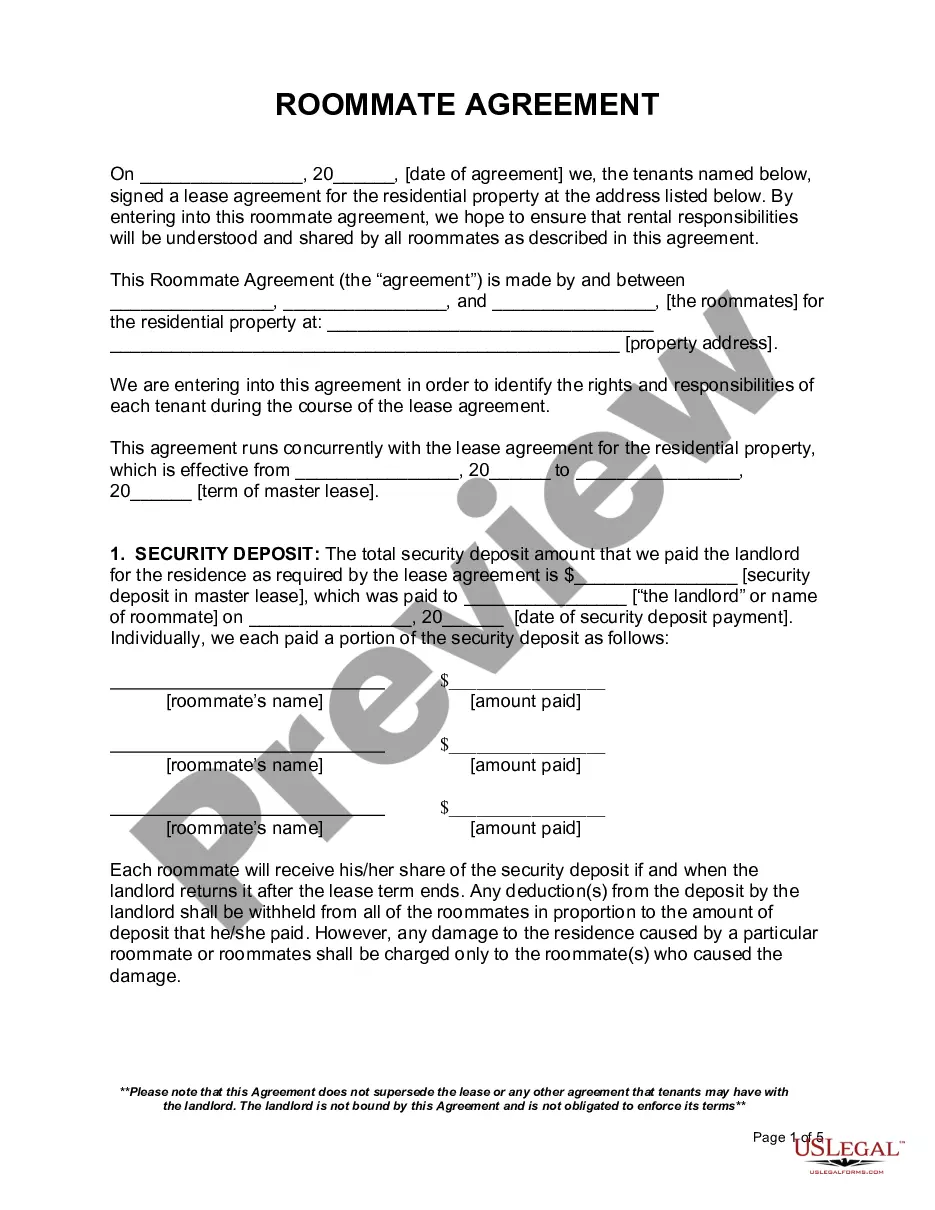
Get your form ready online
Our built-in tools help you complete, sign, share, and store your documents in one place.
Make edits, fill in missing information, and update formatting in US Legal Forms—just like you would in MS Word.
Download a copy, print it, send it by email, or mail it via USPS—whatever works best for your next step.
Sign and collect signatures with our SignNow integration. Send to multiple recipients, set reminders, and more. Go Premium to unlock E-Sign.
If this form requires notarization, complete it online through a secure video call—no need to meet a notary in person or wait for an appointment.
We protect your documents and personal data by following strict security and privacy standards.

Make edits, fill in missing information, and update formatting in US Legal Forms—just like you would in MS Word.

Download a copy, print it, send it by email, or mail it via USPS—whatever works best for your next step.

Sign and collect signatures with our SignNow integration. Send to multiple recipients, set reminders, and more. Go Premium to unlock E-Sign.

If this form requires notarization, complete it online through a secure video call—no need to meet a notary in person or wait for an appointment.

We protect your documents and personal data by following strict security and privacy standards.
Looking for another form?







Form popularity
FAQ
Do Not Use Each Other's Things Without Asking. Not using each other's things without asking is one of the more obvious roommate rules. While some people are more casual about sharing, others are not. You have to learn what kind of person your roommate is and then act ingly.
To write a simple contract, title it clearly, identify all parties and specify terms (services or payments). Include an offer, acceptance, consideration, and intent. Add a signature and date for enforceability. Written contracts reduce disputes and offer better legal security than verbal ones.
Any roommate who is named as a tenant in the tenancy agreement is presumptively a tenant with rights and obligations under the Act; whether any roommate is a tenant or not is ultimately a legal determination that can only be made by a Residential Tenancy Branch arbitrator who will weigh the factors in favour and ...
A: A roommate agreement is a contract made between the residents of a rental unit. The agreement outlines the terms, conditions and responsibilities agreed to by each of the residents. Roommate agreements are sometimes referred to as roommate contracts.
A roommate arrangement is when multiple adults occupy a single unit together. In most cases, the renters are not related, but siblings and cousins can be roommates as well. With a traditional roommate arrangement, all roommates share a single lease.
In this type of agreement, you as a landlord give exclusive rights to one agent or company to rent your property during a specified period of time. What's unique in this arrangement, is that it entitles the agency to be the exclusive listing agent for that property.
If you have a roommate or a family member who is listed as a tenant on the lease, s/he will still be bound by the lease even if you are allowed to get out of it.
A Washington room rental agreement is a formal document detailing the guidelines and duties for several tenants residing together in a single unit or property. Every individual involved must review and consent to the contents of the document, and each roommate must sign the agreement.
An “occupant/roommate” is a person who rents from a tenant with whom they live, rather than the landlord, and is therefore not covered under the Residential Tenancy Act. This type of living situation is common in shared houses where a “head-tenant” rents out bedrooms to roommates.
