Condo Master Deed And Bylaws In Suffolk
Description



Get your form ready online
Our built-in tools help you complete, sign, share, and store your documents in one place.
Make edits, fill in missing information, and update formatting in US Legal Forms—just like you would in MS Word.
Download a copy, print it, send it by email, or mail it via USPS—whatever works best for your next step.
Sign and collect signatures with our SignNow integration. Send to multiple recipients, set reminders, and more. Go Premium to unlock E-Sign.
If this form requires notarization, complete it online through a secure video call—no need to meet a notary in person or wait for an appointment.
We protect your documents and personal data by following strict security and privacy standards.

Make edits, fill in missing information, and update formatting in US Legal Forms—just like you would in MS Word.

Download a copy, print it, send it by email, or mail it via USPS—whatever works best for your next step.

Sign and collect signatures with our SignNow integration. Send to multiple recipients, set reminders, and more. Go Premium to unlock E-Sign.

If this form requires notarization, complete it online through a secure video call—no need to meet a notary in person or wait for an appointment.

We protect your documents and personal data by following strict security and privacy standards.
Looking for another form?









Form popularity
FAQ
The ByLaws is the corporate governance: The bylaws describe among other things, how the common expenses will be shared to maintain the building. Any restrictions on the use of the units and common areas. The bylaws are actually a part of the Master Deed itself.
Right to Fair Treatment: Homeowners are entitled to equitable enforcement of rules, CC&Rs, and bylaws. This right ensures that all residents are treated fairly and without discrimination by the HOA board.
As a condo owner, you have the right to use your unit as provided in the master deed and in a way that allows you to maintain a reasonable standard of living as required by Massachusetts health, safety and building laws. Your legal rights as a condo owner also include: The right to protest.
The inium bylaws govern the structure and operation of the association. They contain information regarding board meetings, elections, board terms, voting procedures, and the like. The bylaws are more about the management of the association than the rules that govern it and its members.
Massachusetts has detailed rules related to the establishing of a inium and the responsibilities of all parties involved, including the board, the owners of individual units, and their tenants.
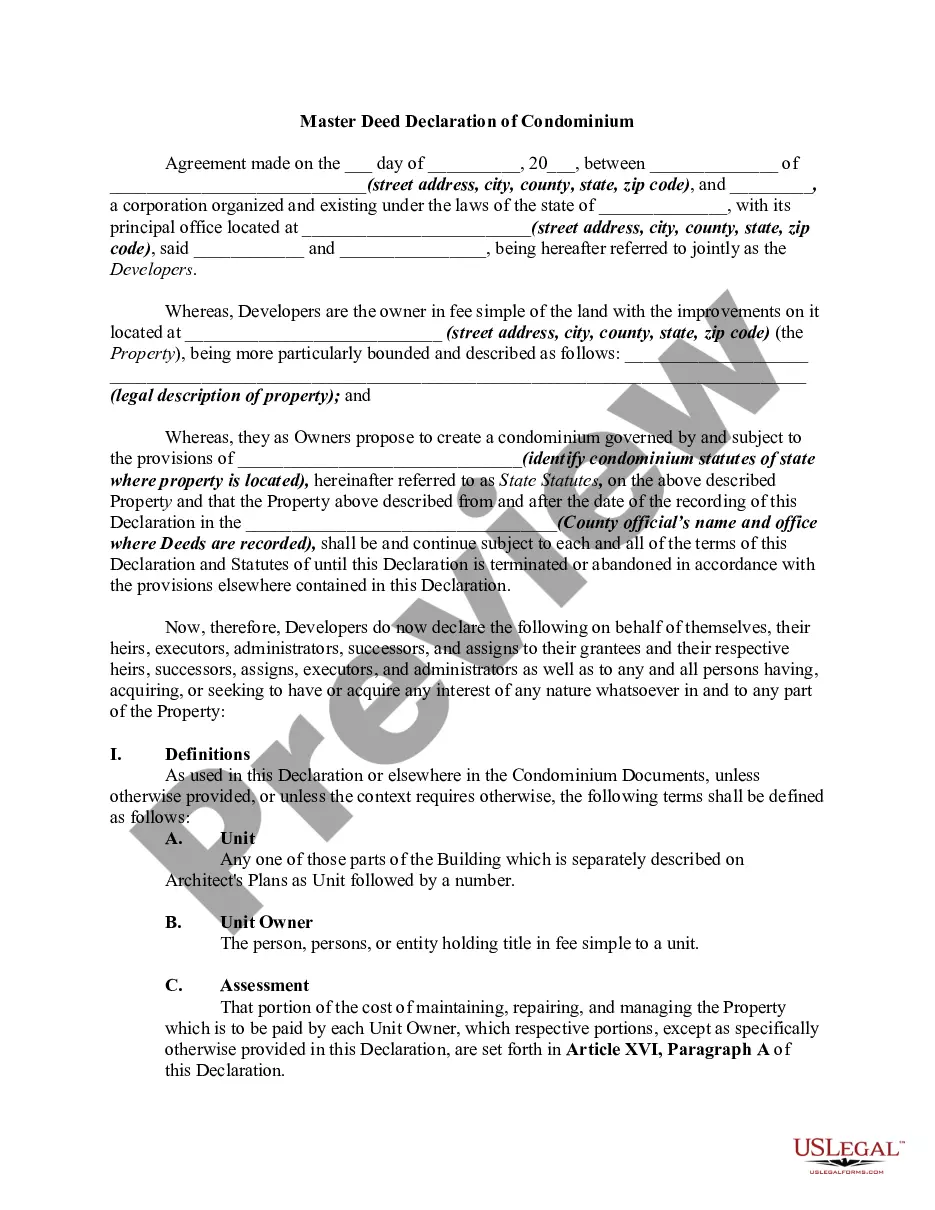
A Master Deed is a legal document that outlines the rules and regulations for a inium or cooperative property. It's a document that's created by the developer of the property and it's used to govern how the property is managed and maintained.
Unlike a landlord-tenant relationship, where eviction is a well-defined legal process, condo ownership comes with specific property rights. These rights limit the association's legal authority to evict an owner from their unit directly.
Condo Owners Are Responsible for Interior Maintenance Unless they employ a property management service, owners will need to maintain their condo's interior and any attachments to the unit, such as a deck, garage, or private yard.
The master deed is one of the documents that transfer property to be owned by the inium. It includes a description of the land and buildings, a description of what is the common area and what the individual owners own, a determination of percentage interest, a plot plan, and use restrictions.
A inium association (COA) does have authority to get a court order requiring a unit owner to evict a tenant. Whether or not the COA would be successful under your facts and circumstances is questionable.
