Condominium Common Element With Bright Red Blood In Orange
Description



Get your form ready online
Our built-in tools help you complete, sign, share, and store your documents in one place.
Make edits, fill in missing information, and update formatting in US Legal Forms—just like you would in MS Word.
Download a copy, print it, send it by email, or mail it via USPS—whatever works best for your next step.
Sign and collect signatures with our SignNow integration. Send to multiple recipients, set reminders, and more. Go Premium to unlock E-Sign.
If this form requires notarization, complete it online through a secure video call—no need to meet a notary in person or wait for an appointment.
We protect your documents and personal data by following strict security and privacy standards.

Make edits, fill in missing information, and update formatting in US Legal Forms—just like you would in MS Word.

Download a copy, print it, send it by email, or mail it via USPS—whatever works best for your next step.

Sign and collect signatures with our SignNow integration. Send to multiple recipients, set reminders, and more. Go Premium to unlock E-Sign.

If this form requires notarization, complete it online through a secure video call—no need to meet a notary in person or wait for an appointment.

We protect your documents and personal data by following strict security and privacy standards.
Looking for another form?










Form popularity
FAQ
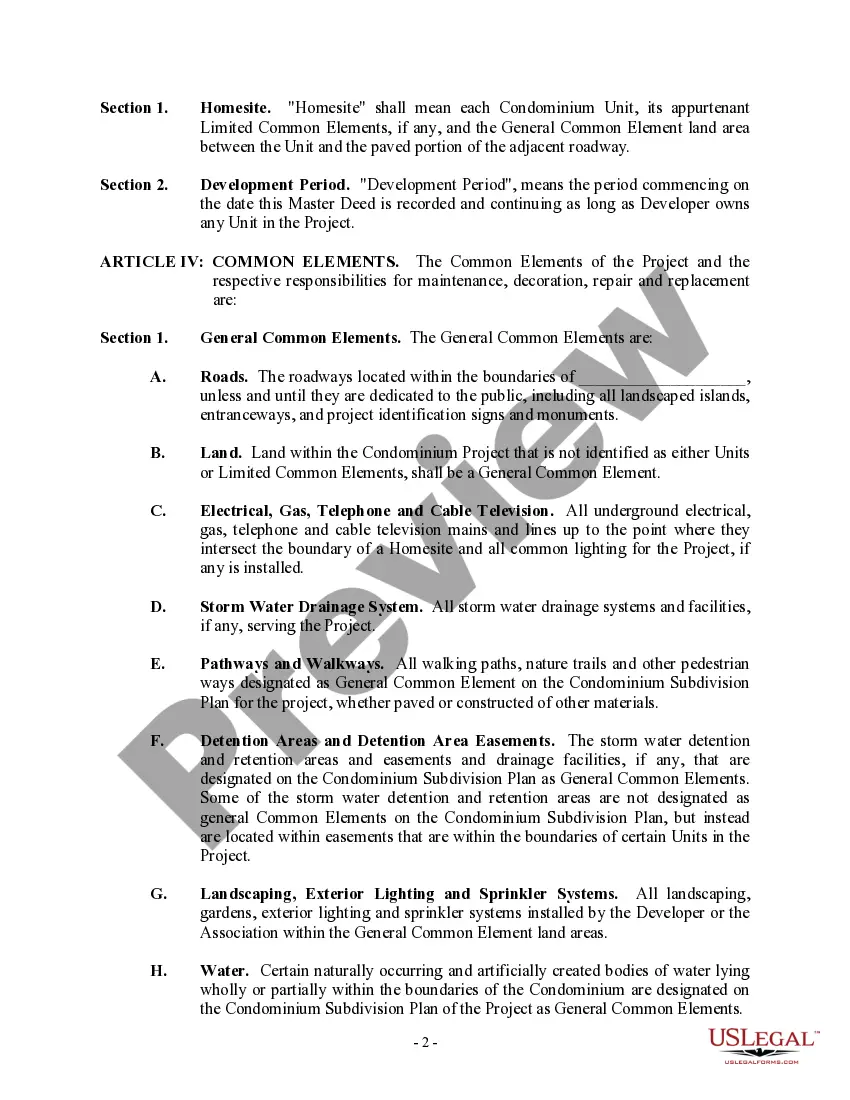
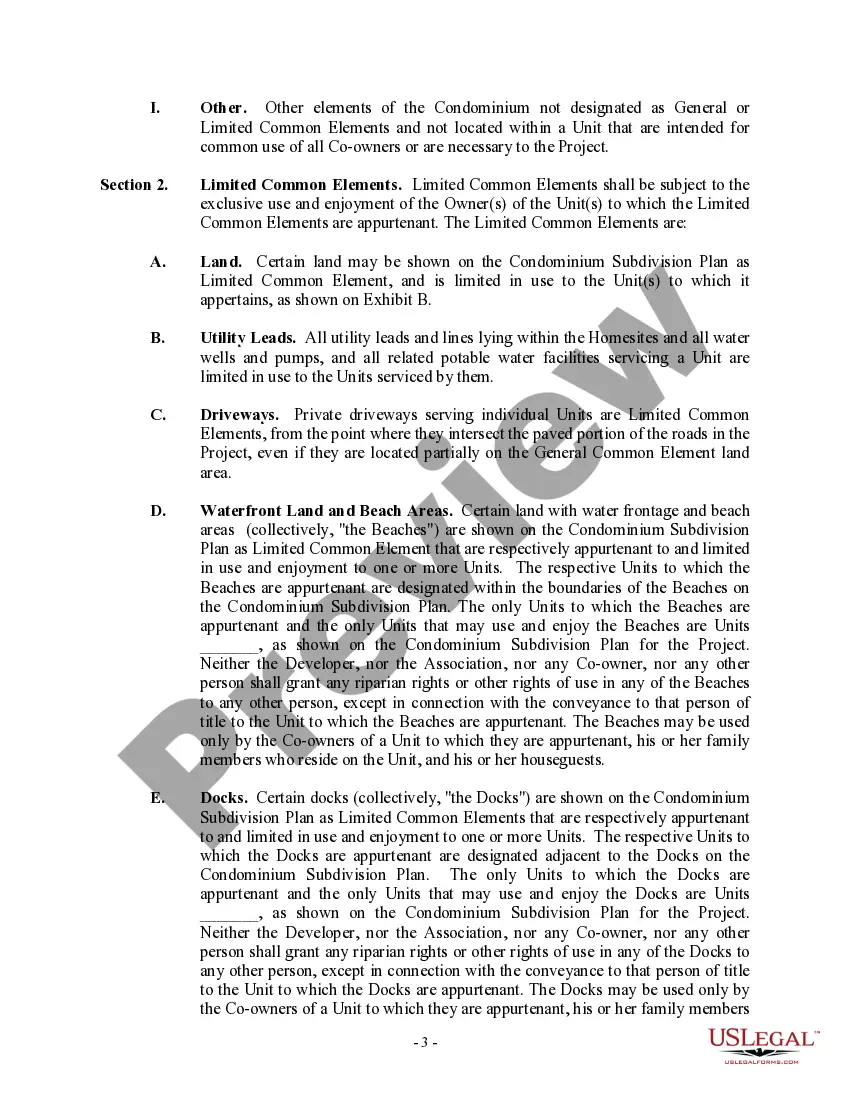
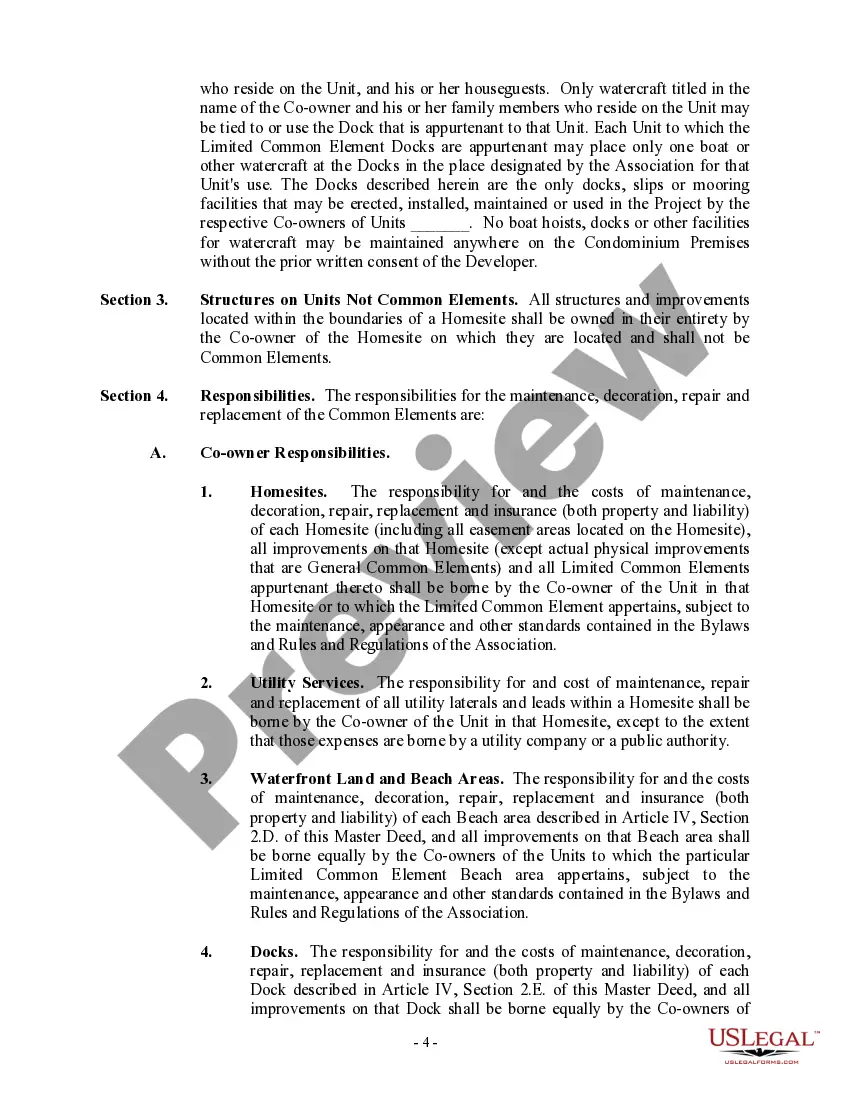
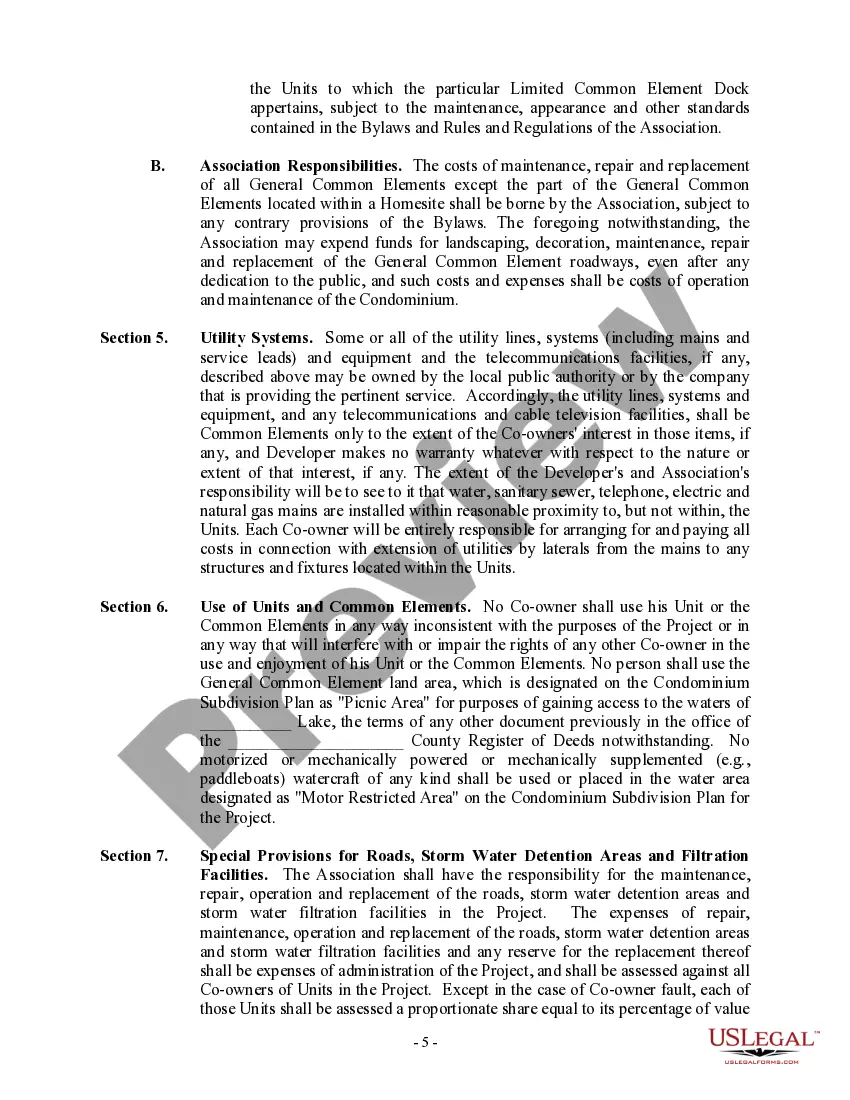
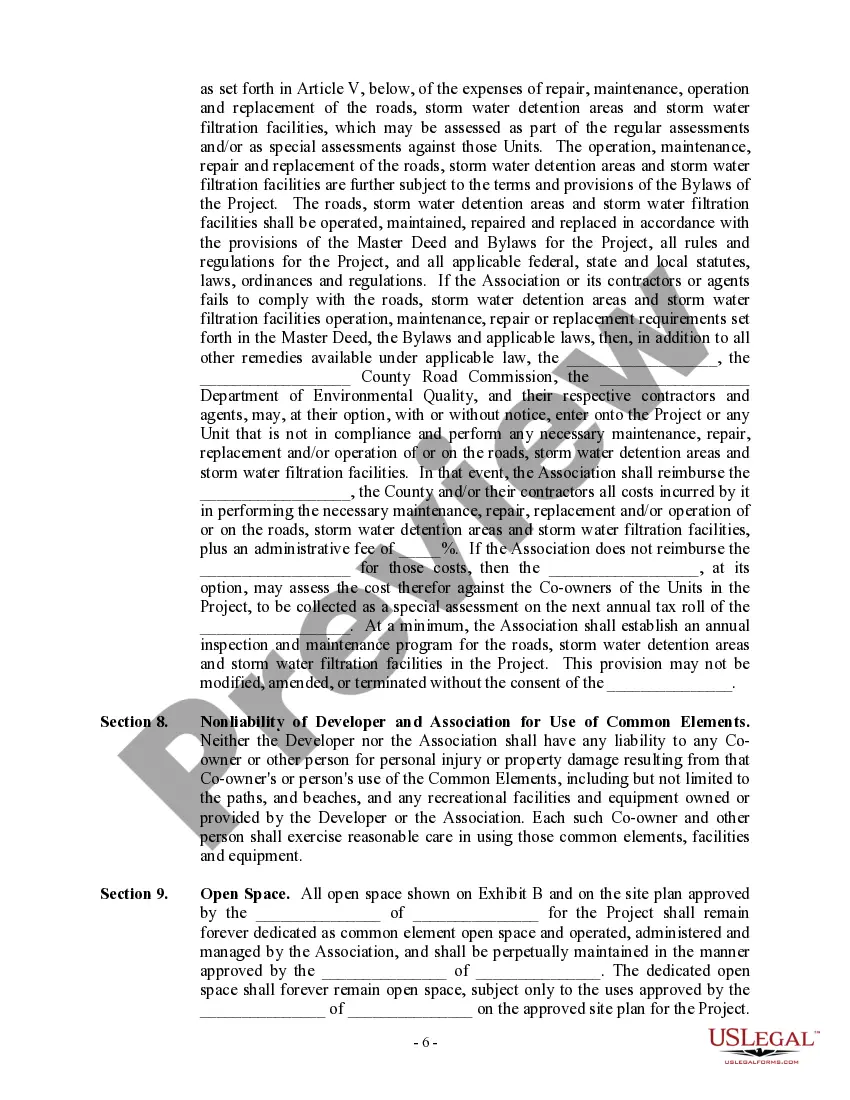
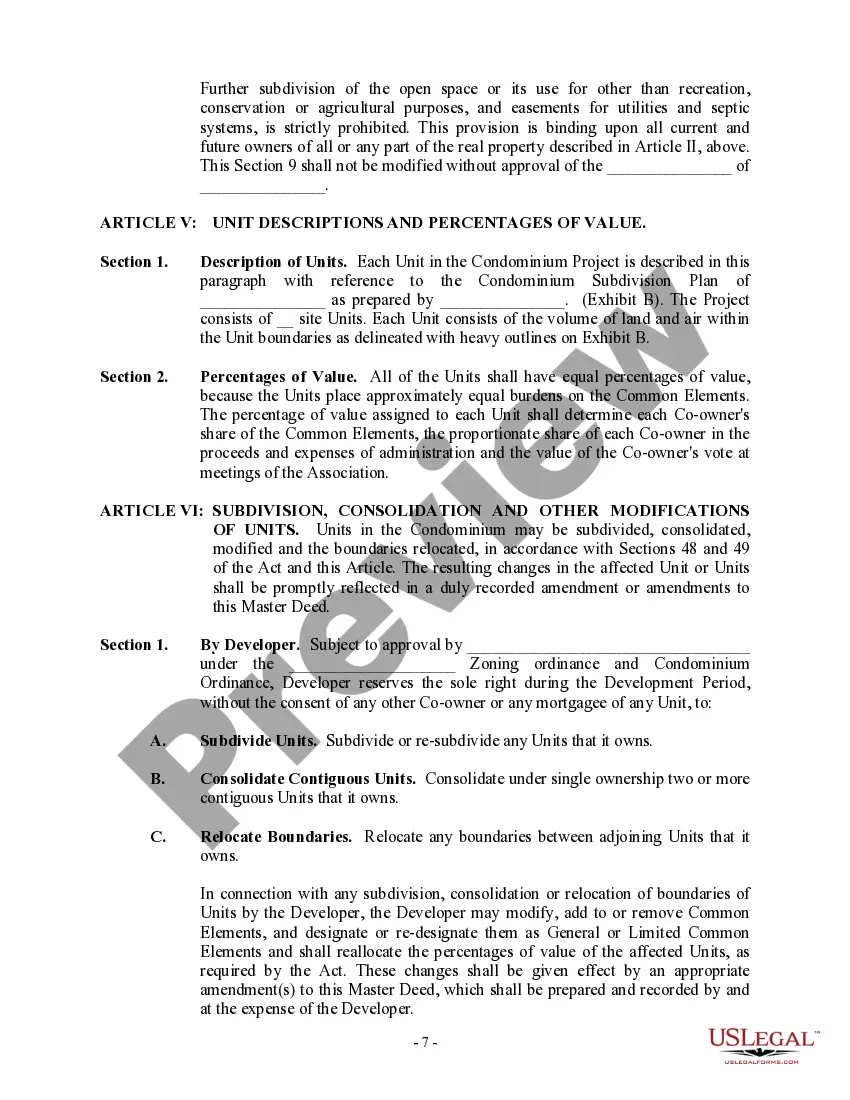
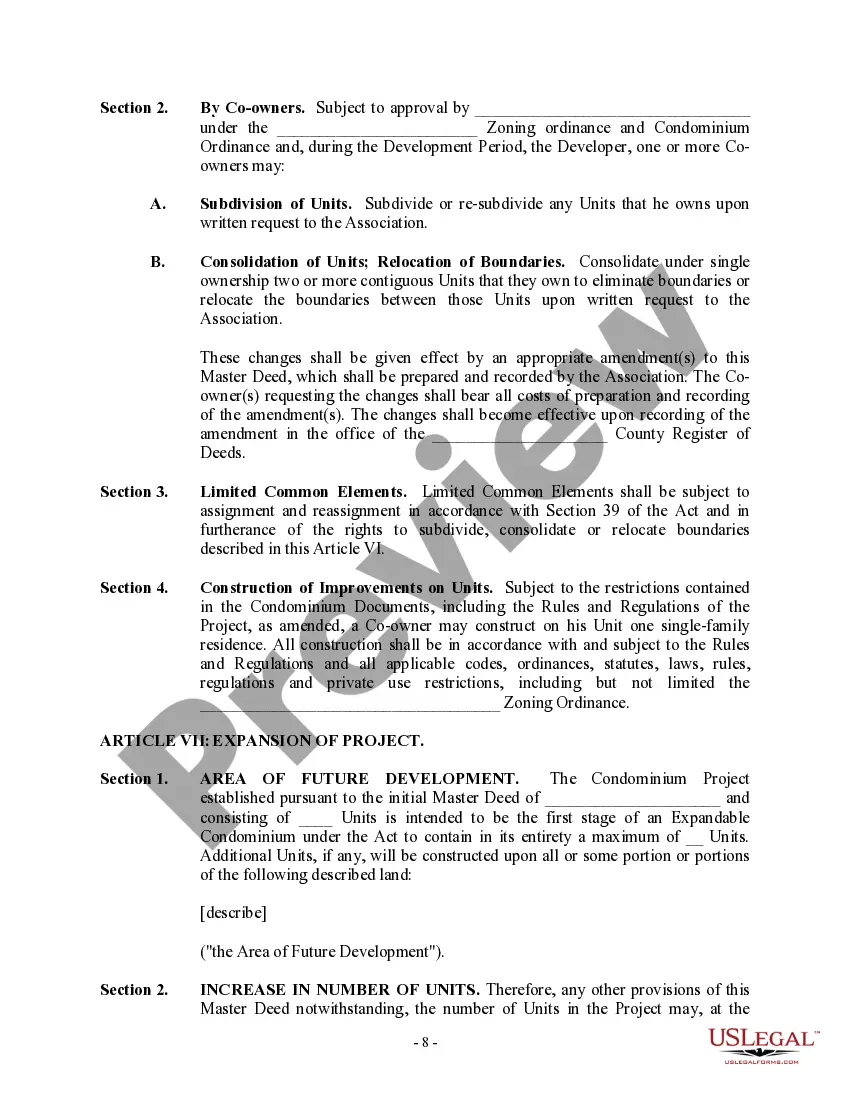
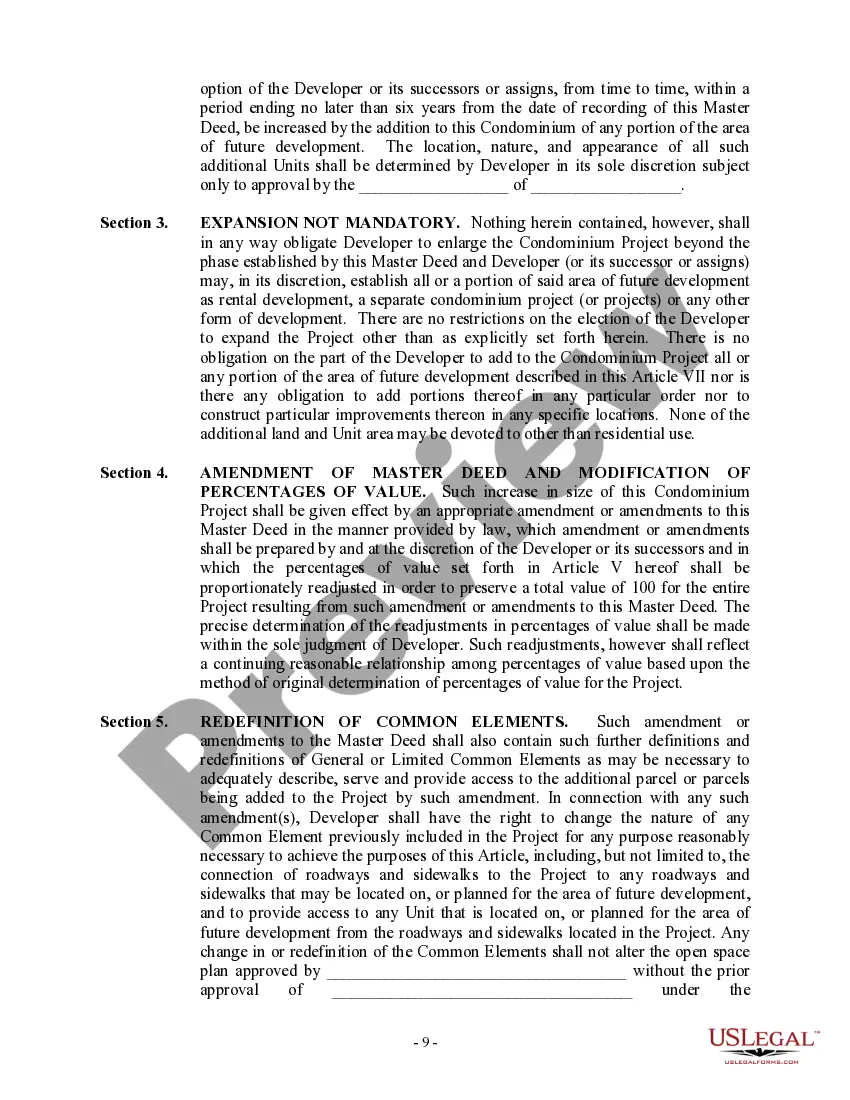
Definition of common elements in a inium, those portions of the property not owned individually by unit owners but in which an indivisible interest is held by all unit owners. Generally includes the grounds, parking areas, recreational facilities, and external structure of the building.
A common element is defined as all portions of the property except the units. Examples of common elements include fitness centers, elevators, lobbies, walkways, lighting in common hallways, garbage collection areas, swimming pools, landscaping, club houses, and more.
Common elements are owned in undivided shares by all inium unit owners as tenants in common and include portions of the inium shared or used in common by the inium's residents. Examples of common elements are: Building structural components and systems. Lobbies. Parking areas.
A Common Element inium is comprised solely of common elements such as a private road, parking spaces, mailbox pad, play area and any other common elements and do not include dwelling units/lots.
This means common elements could include, but are not limited to, all the following: land, foundations, hallways, stairways, entrances and exits, common parking areas, storage areas, basement, roof, incinerator, pipes, ducts, electrical wiring and conduits, central heating and air, public utility lines, floors, ...
Blush and rust. Tan and rust. Navy and rust. Light blue and rust. White and rust. Olive green and rust. Black and rust. Burgundy and rust. Burgundy and rust are a fall match made in heaven, and I'm obsessed with this pairing.
You will glow with cornflower blue nails. It's a complimentary color to orange (eg rust or copper).
Don't be afraid of other citrus hues and botanical colours when decorating with burnt orange. Sage green and olive green work wonderfully with more muted hues, while a hint of mint green will alongside more daring shades. Blue and orange are a natural fit.
Directly opposite on the color wheel, blue tones are a natural fit for orange. These complementary colors look especially stunning when used in saturated shades, such as red-orange and indigo blue.
Balance with Neutrals: Pair orange rust with neutral colors like beige, gray, or white to create a harmonious and balanced look.
