Master Deed Condominium Meaning In New York
Description



Get your form ready online
Our built-in tools help you complete, sign, share, and store your documents in one place.
Make edits, fill in missing information, and update formatting in US Legal Forms—just like you would in MS Word.
Download a copy, print it, send it by email, or mail it via USPS—whatever works best for your next step.
Sign and collect signatures with our SignNow integration. Send to multiple recipients, set reminders, and more. Go Premium to unlock E-Sign.
If this form requires notarization, complete it online through a secure video call—no need to meet a notary in person or wait for an appointment.
We protect your documents and personal data by following strict security and privacy standards.

Make edits, fill in missing information, and update formatting in US Legal Forms—just like you would in MS Word.

Download a copy, print it, send it by email, or mail it via USPS—whatever works best for your next step.

Sign and collect signatures with our SignNow integration. Send to multiple recipients, set reminders, and more. Go Premium to unlock E-Sign.

If this form requires notarization, complete it online through a secure video call—no need to meet a notary in person or wait for an appointment.

We protect your documents and personal data by following strict security and privacy standards.
Looking for another form?









Form popularity
FAQ
The master deed. Affected unit owners and mortgage lenders must give written consent for changes. This means getting a certain number of unit owner votes – often 67% (two-thirds) or 75% (three-fourths), or even a supermajority of 80%.
You may want to talk with your HOA, city council or community association to alter the restriction. Consult the covenant and contact the governing body directly. You may be able to get permission to ignore the deed restriction.
A master inium is a relatively new concept in inium law. The definition of a master inium is a inium in which the inium instruments permit one or more of the units to be submitted to a subinium.
Changing the bylaws or covenants usually requires a vote from the membership. As such, the board should provide proper notice of the change and the board meeting where the discussion/voting will occur. Bear in mind that notice requirements can vary as well.
A warranty deed is the most common deed for real estate transfers in Upstate New York. With a warranty deed, the grantor is promising that they own the property and there are no title issues relating to property.
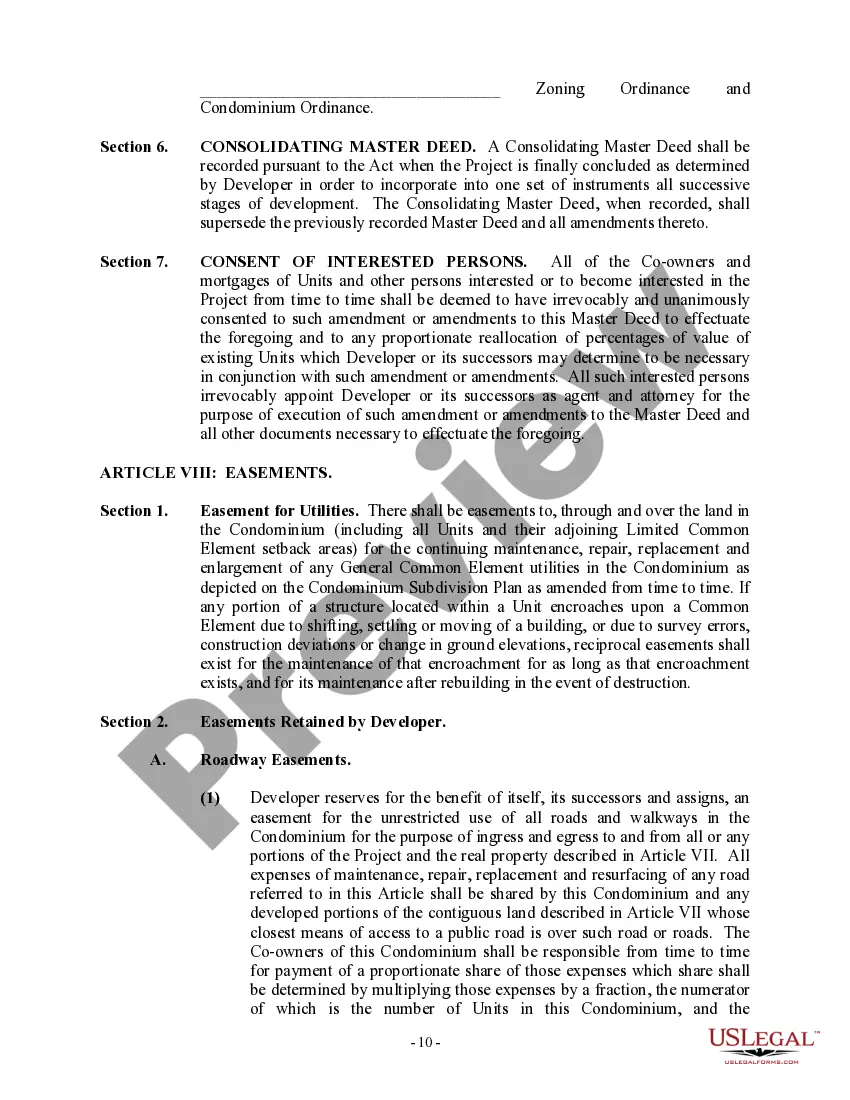
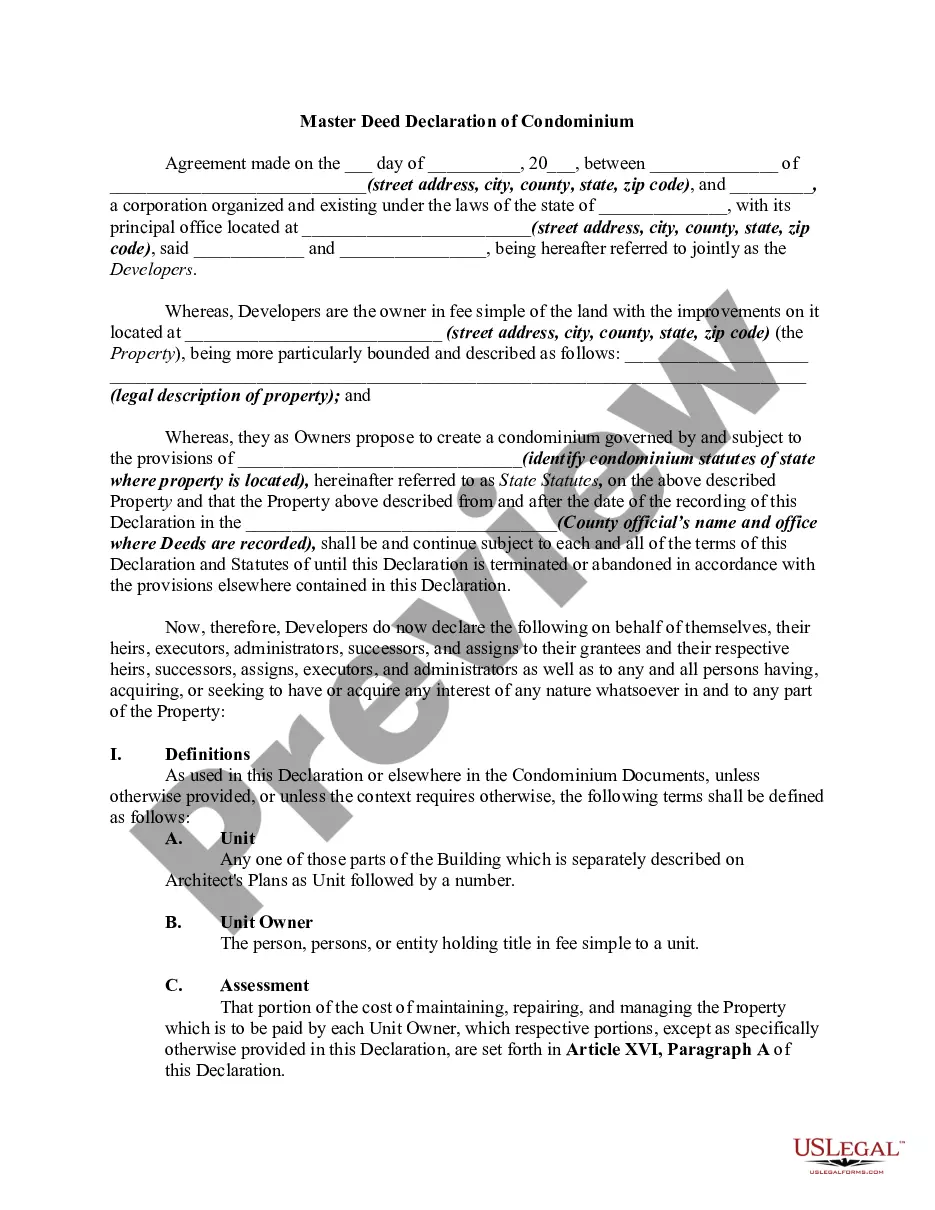
A Master Deed is a legal document that outlines the rules and regulations for a inium or cooperative property. It's a document that's created by the developer of the property and it's used to govern how the property is managed and maintained.
The master deed is a document that outlines the rights and responsibilities of the property owners, tenants, and property management company. The plaintiff must show that the terms of the master deed were not followed by the property management company.
In New Jersey, transferring real property using TOD deeds upon the owner's death isn't permitted by law. Therefore, real estate in the state typically goes through the probate process, unless it's held in a trust or owned jointly with rights of survivorship.
Master Deed/Declaration of Covenants and Restrictions It is filed with the county clerk's office where the community is located and outlines the physical boundaries of the property, including common areas, limited common elements or areas, and individual units/lots.
While it is not legally required to have an attorney, it is highly recommended to consult with a real estate attorney when dealing with deed transfers in New York and New Jersey. An attorney can ensure that the transfer is conducted correctly, protect your interests, and address any legal issues that may arise.
