Condominium Bylaws Condo Association With Hoa In Virginia
Description



Get your form ready online
Our built-in tools help you complete, sign, share, and store your documents in one place.
Make edits, fill in missing information, and update formatting in US Legal Forms—just like you would in MS Word.
Download a copy, print it, send it by email, or mail it via USPS—whatever works best for your next step.
Sign and collect signatures with our SignNow integration. Send to multiple recipients, set reminders, and more. Go Premium to unlock E-Sign.
If this form requires notarization, complete it online through a secure video call—no need to meet a notary in person or wait for an appointment.
We protect your documents and personal data by following strict security and privacy standards.

Make edits, fill in missing information, and update formatting in US Legal Forms—just like you would in MS Word.

Download a copy, print it, send it by email, or mail it via USPS—whatever works best for your next step.

Sign and collect signatures with our SignNow integration. Send to multiple recipients, set reminders, and more. Go Premium to unlock E-Sign.

If this form requires notarization, complete it online through a secure video call—no need to meet a notary in person or wait for an appointment.

We protect your documents and personal data by following strict security and privacy standards.
Looking for another form?





Form popularity
FAQ
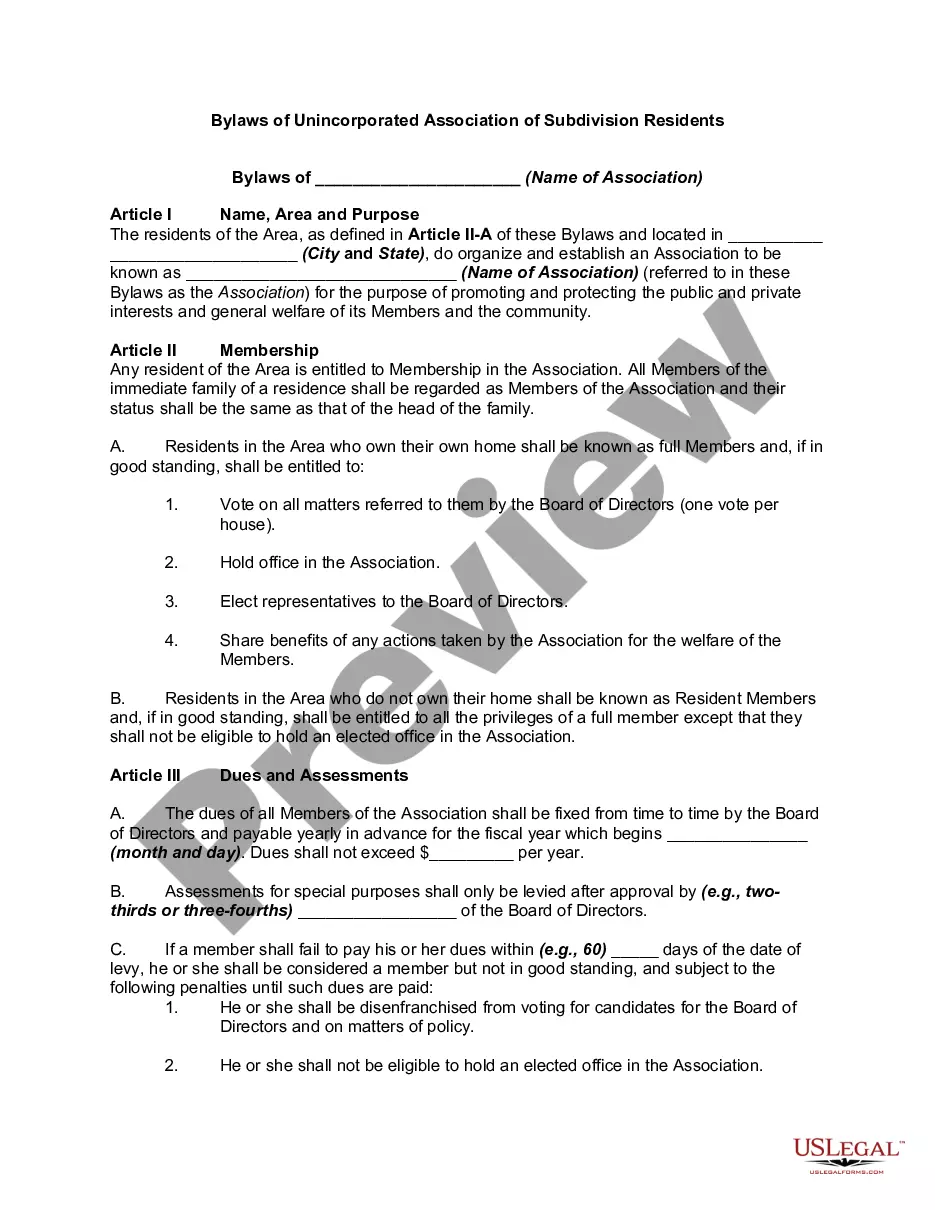
HOA bylaws are legal documents that revolve around operational issues, mainly pertaining to the board of directors. They're the specific rules that explain how an HOA runs on a daily basis. Within the bylaws, you'll find information about: Board member election processes.
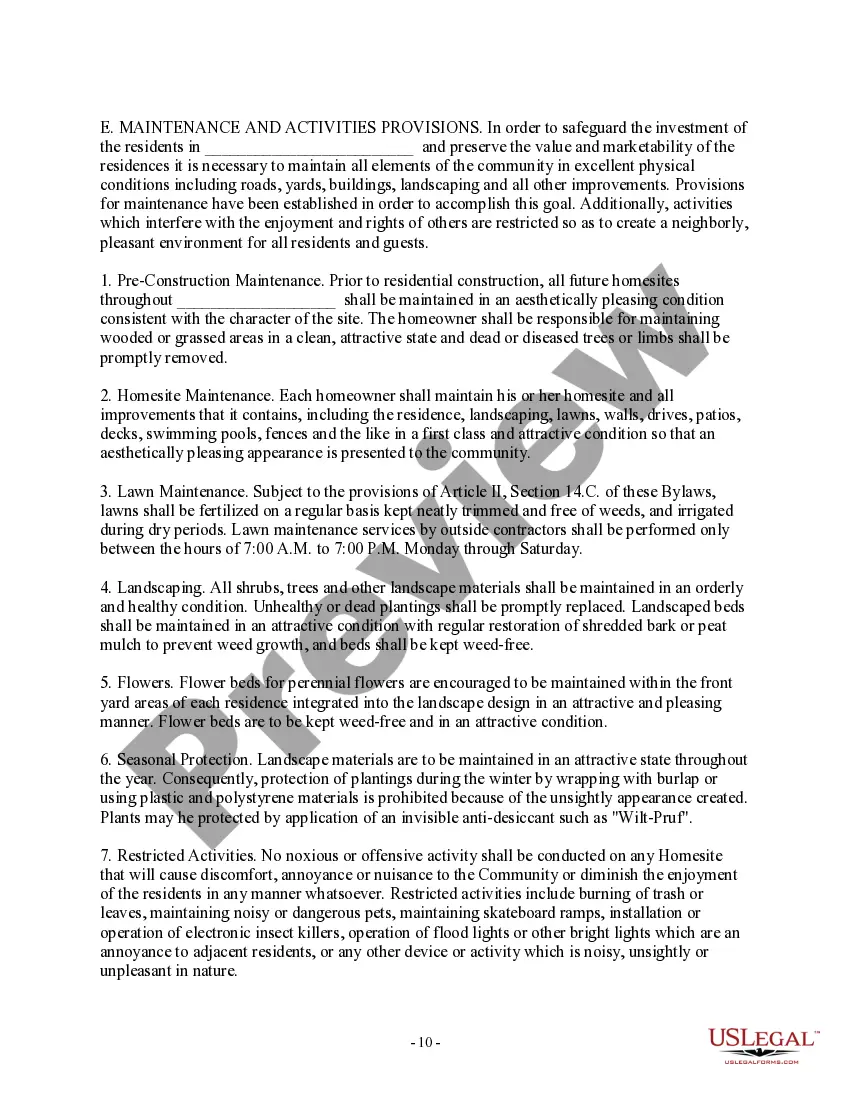
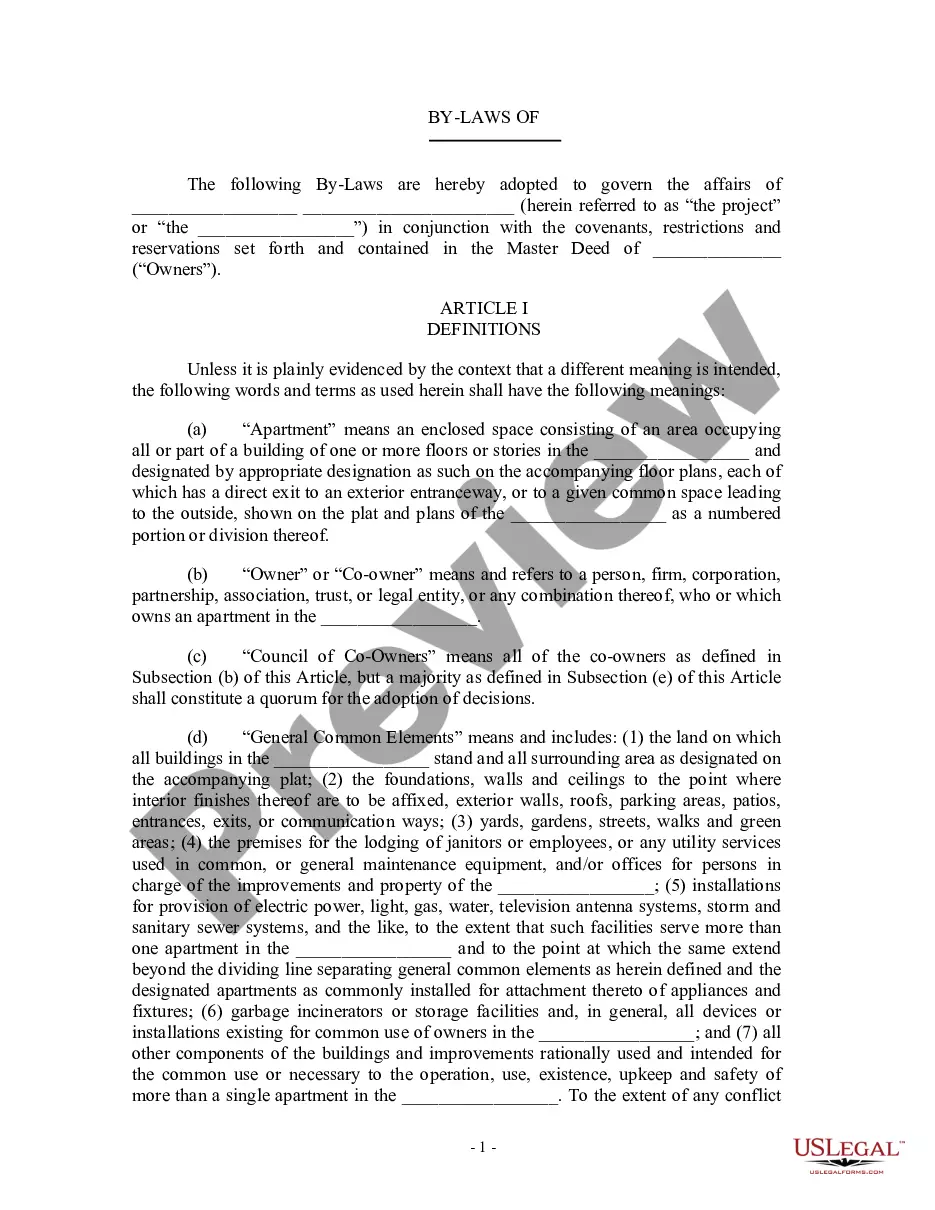
Bylaws. The Bylaws of a inium or planned development contain the operating procedures of the homeowners association. These generally include how to call and conduct a meeting, how to vote, how to levy assessments, how to manage association business, and how to keep records.
In some states, such as California, HOA bylaws are considered public record and must be made available upon request.
Who governs homeowners associations in Virginia? HOAs are subject to a number of state, federal, and local laws and are governed by a common interest community board that creates and enforces certain rules and regulations contained in the HOA's governing documents.
The HOA board is responsible for running the association, including duties such as collecting dues, enforcing the rules, and maintaining the common areas. It is equally important for a board to understand the various HOA laws in Virginia that apply to their communities.
Criminal law, you should contact your local law enforcement office or Commonwealth Attorney's office. Fair Housing violations, you can contact the Office of Fair Housing at 804-367-8530 or fairhousing@dpor.virginia.
If the vote, consent, or approval is required to be obtained by secret ballot, the electronic means shall protect the identity of the voter. If the electronic means cannot protect the identity of the voter, another means of voting shall be used.
§ 55.1-1805. The Common Interest Community Board may assess a monetary penalty for a violation of this section against any (a) association pursuant to § 54.1-2351 or (b) common interest community manager pursuant to § 54.1-2349, and may issue a cease and desist order pursuant to § 54.1-2352. 2008, cc.
This Act, found under Title 55.1, Chapter 18, governs the formation and operation of associations subject to a declaration recorded after January 1, 1959. The Act covers many topics, including association charges, access to association records, amendments to the declaration and bylaws, and liens.
