Bylaws Residential Association For The Philippines In New York
Description

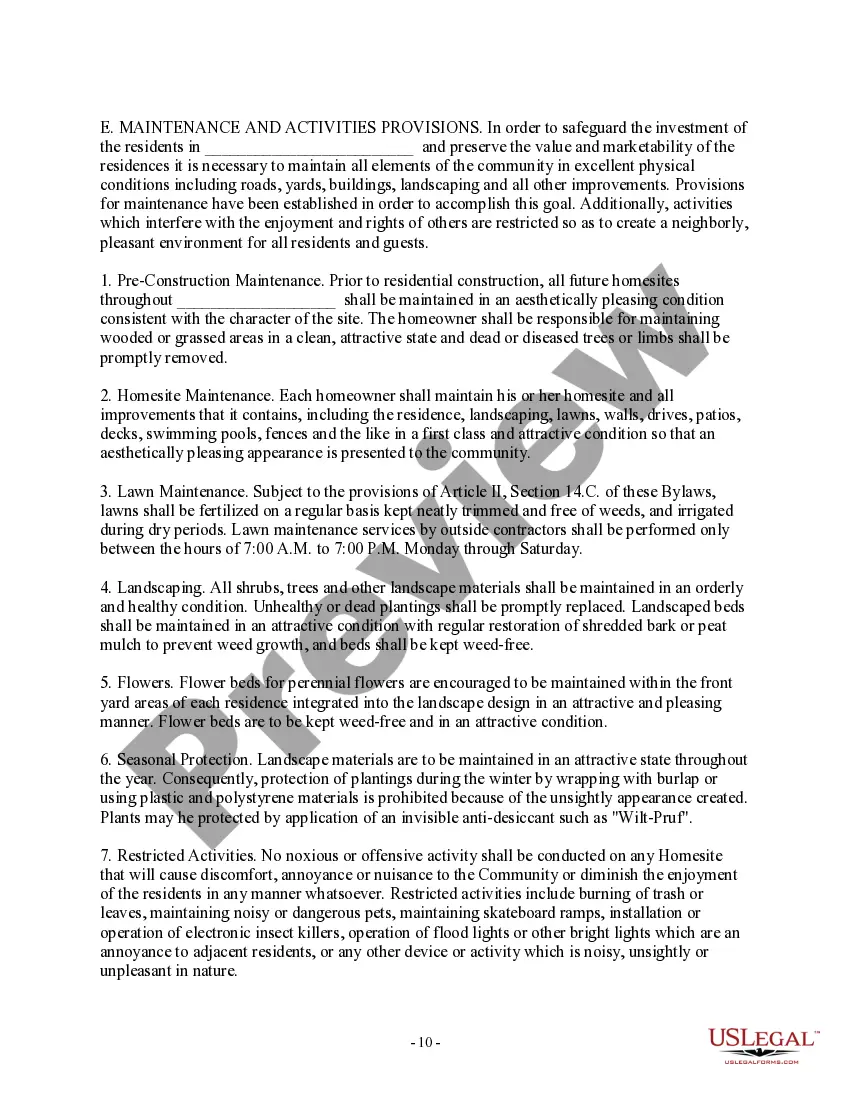




Get your form ready online
Our built-in tools help you complete, sign, share, and store your documents in one place.
Make edits, fill in missing information, and update formatting in US Legal Forms—just like you would in MS Word.
Download a copy, print it, send it by email, or mail it via USPS—whatever works best for your next step.
Sign and collect signatures with our SignNow integration. Send to multiple recipients, set reminders, and more. Go Premium to unlock E-Sign.
If this form requires notarization, complete it online through a secure video call—no need to meet a notary in person or wait for an appointment.
We protect your documents and personal data by following strict security and privacy standards.

Make edits, fill in missing information, and update formatting in US Legal Forms—just like you would in MS Word.

Download a copy, print it, send it by email, or mail it via USPS—whatever works best for your next step.

Sign and collect signatures with our SignNow integration. Send to multiple recipients, set reminders, and more. Go Premium to unlock E-Sign.

If this form requires notarization, complete it online through a secure video call—no need to meet a notary in person or wait for an appointment.

We protect your documents and personal data by following strict security and privacy standards.
Looking for another form?

Form popularity
FAQ
Under the law, all homeowners are qualified to join a HOA, but they are not required or mandated to be members.
In homeowners association cases, the Complaint shall be filed in the RAB which has jurisdiction over the region where the association is registered with the DHSUD. (Rule 2, Section 7, Rules of Procedure of the Human Settlements Adjudication Commission).
To comply with New York law, there are three primary pathways to establish an HOA: obtaining a no-action letter under 13 NYCRR Section 22.8, utilizing the Cooperative Policy Statement No. 7 (CPS-7), or filing an offering plan pursuant to 13 NYCRR Part 22 (Part 22).
The New York State laws provide a legal framework for the creation, organization, and enforcement of HOAs. The governing documents of an HOA typically include the Articles of Incorporation, Bylaws, and the Declaration of Covenants, Conditions, and Restrictions (CC&Rs).
Statutory Basis: RA 9904 (Magna Carta for Homeowners and Homeowners Associations) and its IRR grant HOAs the right to impose and adjust reasonable fees and assessments. Procedure: Increases require: A board resolution. Proper notice to members.
— Every association of homeowners shall be required to register with the HLURB. This registration shall serve to grant juridical personality to all such associations that have not previously acquired the same by operation of the General Corporation Law or by any other general law.
Bylaws are internal documents, so they don't need to be filed with the New York Department of State like your Certificate of Incorporation. But even though the state government may never see your bylaws, they're still legally required for all New York corporations.
Bylaws are internal documents, so they don't need to be filed with the New York Department of State like your Certificate of Incorporation. But even though the state government may never see your bylaws, they're still legally required for all New York corporations.
(a) The board of directors shall consist of one or more members. The number of directors constituting the board may be fixed by the by-laws, or by action of the shareholders or of the board under the specific provisions of a by-law adopted by the shareholders.
Every corporation organized for profit and carrying out any of the purposes of its organization is deemed to be doing business for purposes of the tax. In determining whether a corporation is doing business, it is immaterial whether its activities actually result in a profit or a loss.
