Bylaws For Condominium Association In Franklin
Description





Get your form ready online
Our built-in tools help you complete, sign, share, and store your documents in one place.
Make edits, fill in missing information, and update formatting in US Legal Forms—just like you would in MS Word.
Download a copy, print it, send it by email, or mail it via USPS—whatever works best for your next step.
Sign and collect signatures with our SignNow integration. Send to multiple recipients, set reminders, and more. Go Premium to unlock E-Sign.
If this form requires notarization, complete it online through a secure video call—no need to meet a notary in person or wait for an appointment.
We protect your documents and personal data by following strict security and privacy standards.

Make edits, fill in missing information, and update formatting in US Legal Forms—just like you would in MS Word.

Download a copy, print it, send it by email, or mail it via USPS—whatever works best for your next step.

Sign and collect signatures with our SignNow integration. Send to multiple recipients, set reminders, and more. Go Premium to unlock E-Sign.

If this form requires notarization, complete it online through a secure video call—no need to meet a notary in person or wait for an appointment.

We protect your documents and personal data by following strict security and privacy standards.
Looking for another form?










Form popularity
FAQ
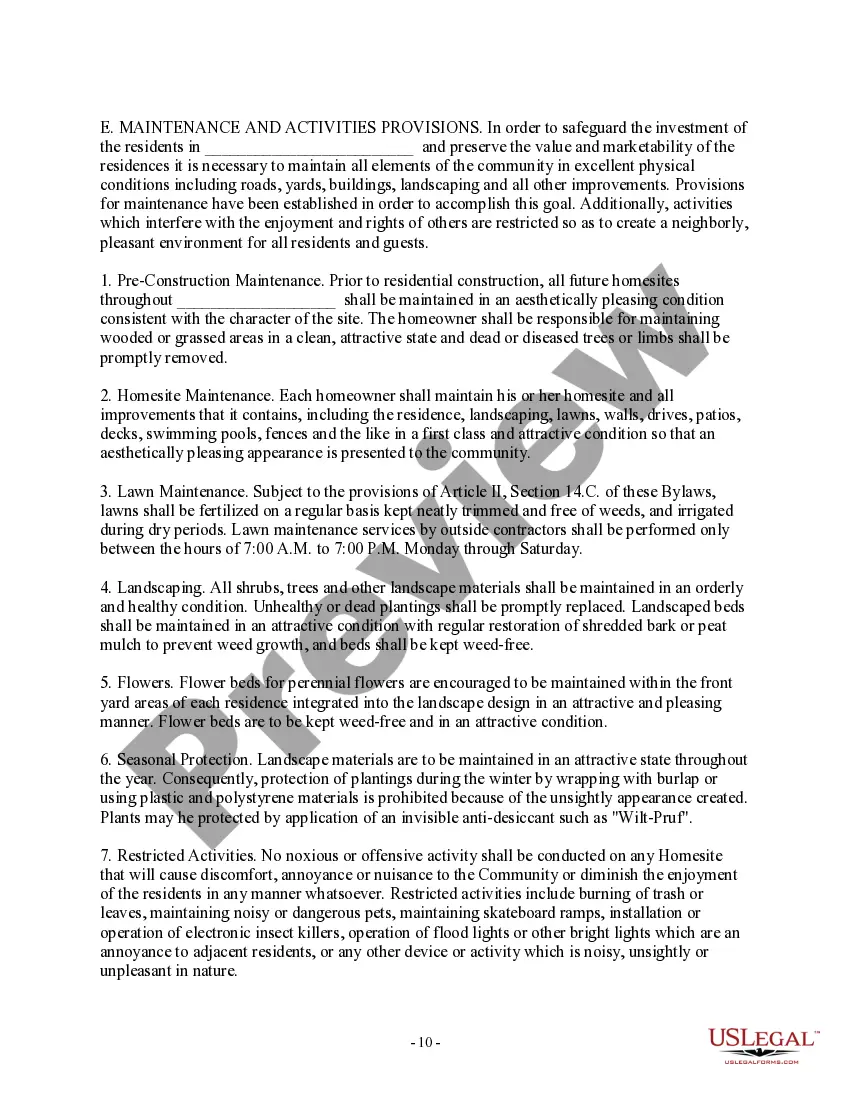
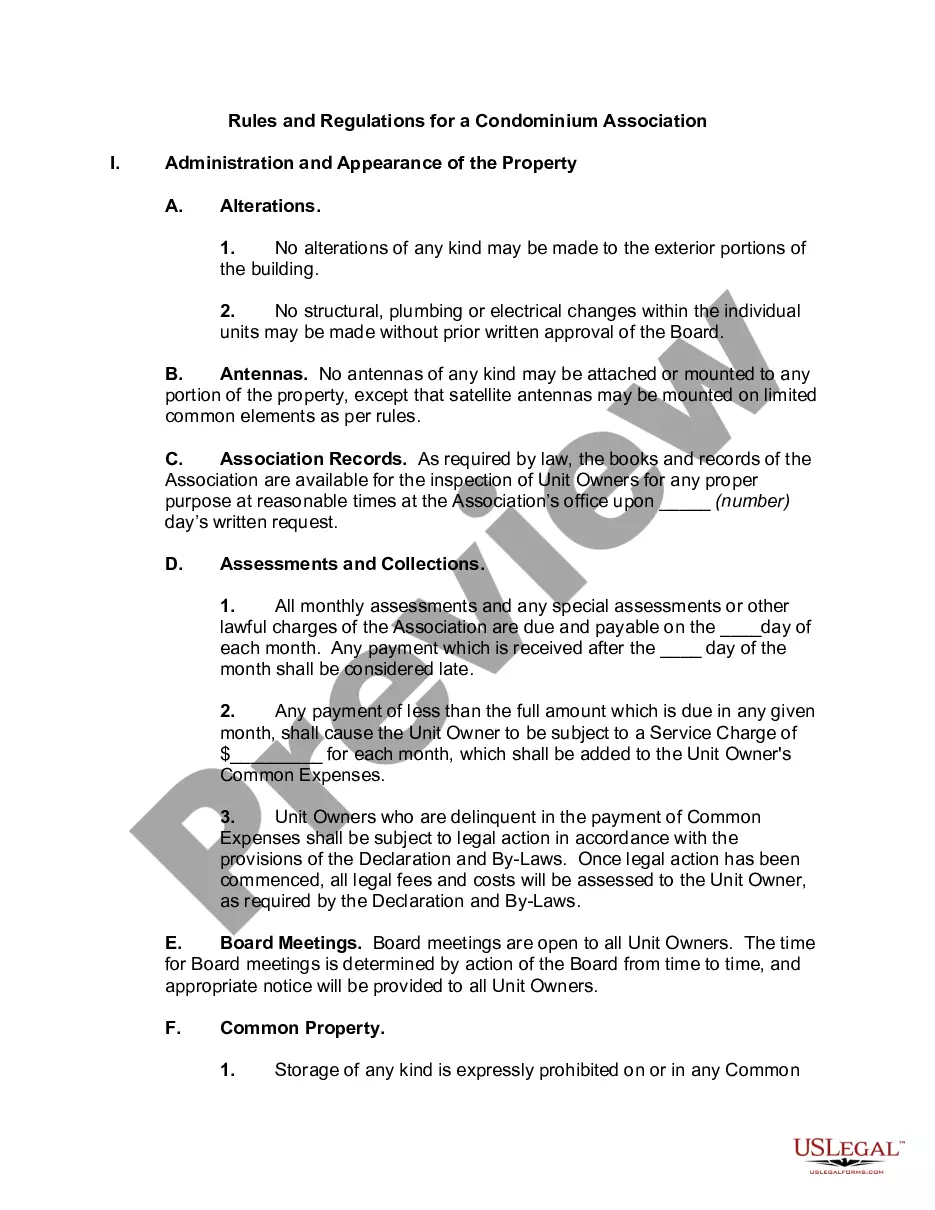
Bylaws. The Bylaws of a inium or planned development contain the operating procedures of the homeowners association. These generally include how to call and conduct a meeting, how to vote, how to levy assessments, how to manage association business, and how to keep records.
Association bylaws are detailed rules and regulations within your organization or association that help with internal operations like your organizational makeup. They also provide guidelines for members and the board to follow. For nonprofit organizations, bylaws are a legal document that must be adhered to.
In some states, such as California, HOA bylaws are considered public record and must be made available upon request. In other states, such as Virginia, HOA bylaws are not considered public record and therefore are not required to be made publicly available.
More important, most inium documents were written by developer lawyers for the primary benefit of the developer. As a board member, you have a responsibility to ensure that owners can live with your condo documents. The declaration and bylaws of your association are your constitution.
