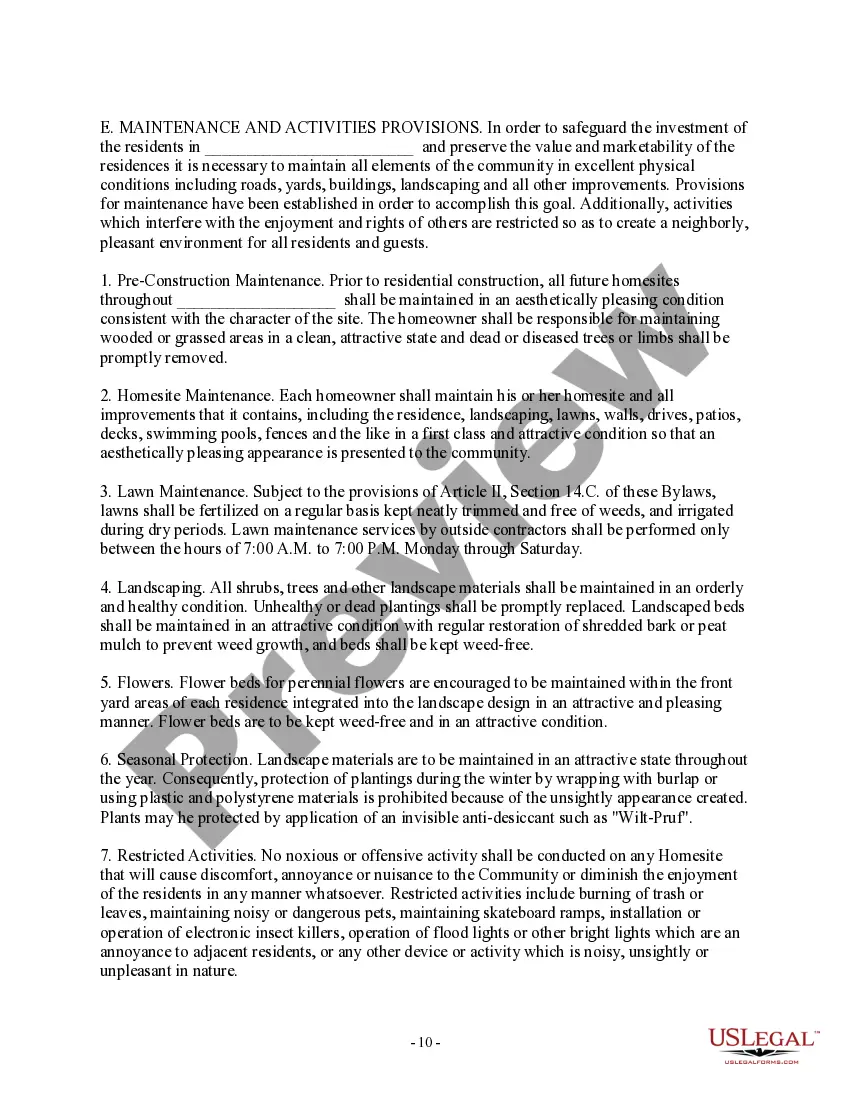
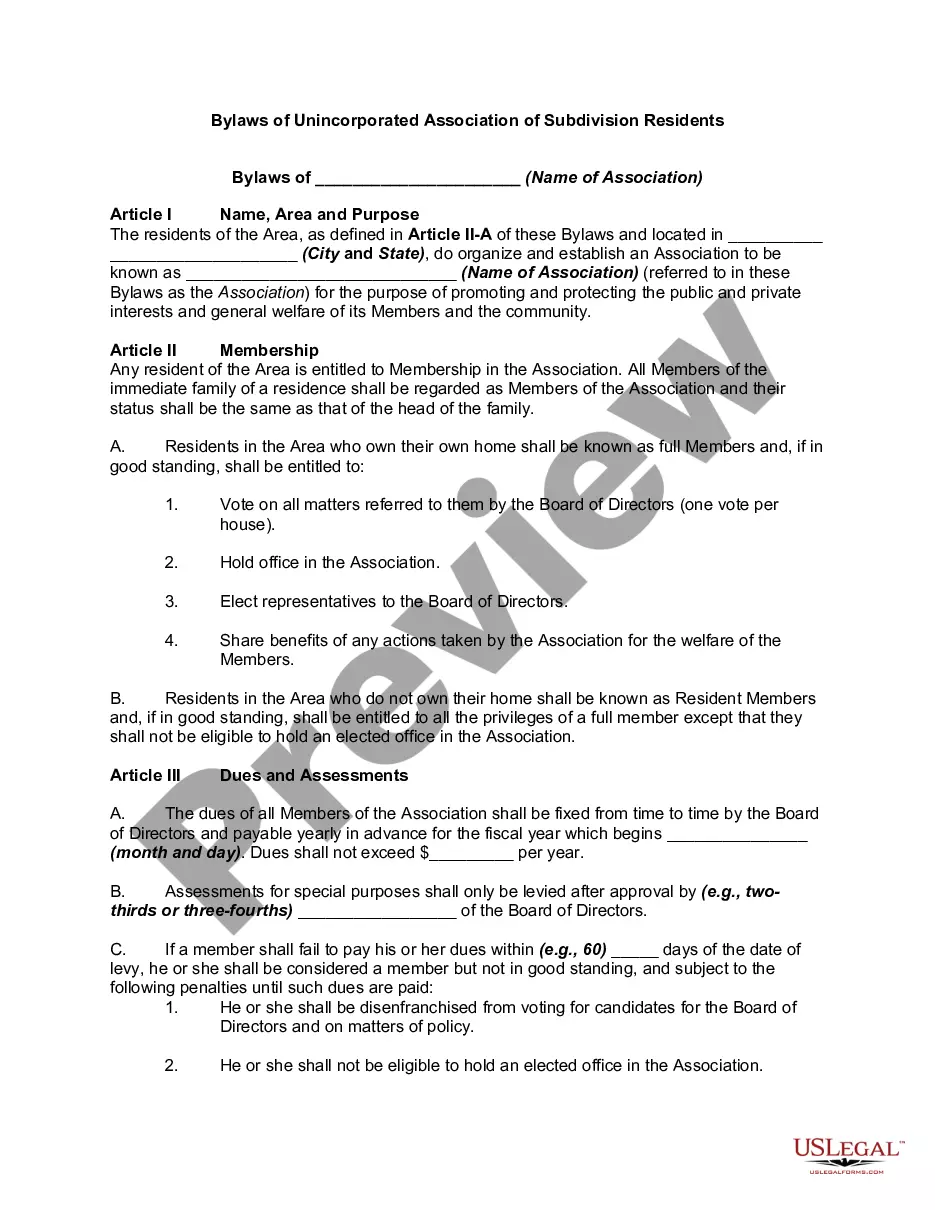
Bylaws Condo Association With Regulations In Fairfax
Description



Get your form ready online
Our built-in tools help you complete, sign, share, and store your documents in one place.
Make edits, fill in missing information, and update formatting in US Legal Forms—just like you would in MS Word.
Download a copy, print it, send it by email, or mail it via USPS—whatever works best for your next step.
Sign and collect signatures with our SignNow integration. Send to multiple recipients, set reminders, and more. Go Premium to unlock E-Sign.
If this form requires notarization, complete it online through a secure video call—no need to meet a notary in person or wait for an appointment.
We protect your documents and personal data by following strict security and privacy standards.

Make edits, fill in missing information, and update formatting in US Legal Forms—just like you would in MS Word.

Download a copy, print it, send it by email, or mail it via USPS—whatever works best for your next step.

Sign and collect signatures with our SignNow integration. Send to multiple recipients, set reminders, and more. Go Premium to unlock E-Sign.

If this form requires notarization, complete it online through a secure video call—no need to meet a notary in person or wait for an appointment.

We protect your documents and personal data by following strict security and privacy standards.
Looking for another form?


Form popularity
FAQ
Common Interest Community Board | Virginia Department of Professional and Occupational Regulation.
The Virginia inium Act (the “Act”) was enacted on July 1, 1974. It superseded the Horizontal Property Act, which was enacted in 1962. iniums are purely “creatures of statute” meaning that without the laws permitting them, they would not exist. In other words, they are a legal entity created by statute.
Who governs homeowners associations in Virginia? HOAs are subject to a number of state, federal, and local laws and are governed by a common interest community board that creates and enforces certain rules and regulations contained in the HOA's governing documents.
For questions or additional information, please contact the Office of the Common Interest Community Ombudsman at (804) 367-2941 or cicombudsman@dpor.virginia.
Who governs homeowners associations in Virginia? HOAs are subject to a number of state, federal, and local laws and are governed by a common interest community board that creates and enforces certain rules and regulations contained in the HOA's governing documents.
The HOA board is responsible for running the association, including duties such as collecting dues, enforcing the rules, and maintaining the common areas. It is equally important for a board to understand the various HOA laws in Virginia that apply to their communities.
Many associations have communication channels in place so that homeowners can talk to the board or the community manager about any issues. However, if you wish to file a complaint against your HOA, you can do so with the Office of the Common Interest Community Ombudsman.
The association will likely go into receivership. Any homeowner or creditor can take legal action against the HOA. Once it is clear that no one on the board will serve as the association's representative, the court will appoint a receiver.
In these situations, you can complain directly to this office by filing the CIC Complaint Form, which you can find under the “Forms and Applications” tab here: .dpor.virginia/cic-ombudsman.
