Bylaws Residential Association With Board Members In California
Description



Get your form ready online
Our built-in tools help you complete, sign, share, and store your documents in one place.
Make edits, fill in missing information, and update formatting in US Legal Forms—just like you would in MS Word.
Download a copy, print it, send it by email, or mail it via USPS—whatever works best for your next step.
Sign and collect signatures with our SignNow integration. Send to multiple recipients, set reminders, and more. Go Premium to unlock E-Sign.
If this form requires notarization, complete it online through a secure video call—no need to meet a notary in person or wait for an appointment.
We protect your documents and personal data by following strict security and privacy standards.

Make edits, fill in missing information, and update formatting in US Legal Forms—just like you would in MS Word.

Download a copy, print it, send it by email, or mail it via USPS—whatever works best for your next step.

Sign and collect signatures with our SignNow integration. Send to multiple recipients, set reminders, and more. Go Premium to unlock E-Sign.

If this form requires notarization, complete it online through a secure video call—no need to meet a notary in person or wait for an appointment.

We protect your documents and personal data by following strict security and privacy standards.
Looking for another form?






Form popularity
FAQ
For instance, California's Civil Code Section 4925 states that members can attend any non-executive portion of board meetings. For most HOAs, association members are allowed to attend most meetings.
Location does not matter. Whether the meeting occurs at a bar, a restaurant, or even just out on the street, as long as a quorum of board members and HOA business is discussed, it technically counts as a meeting. Many board members participate in informal meetings, unknowingly or otherwise.
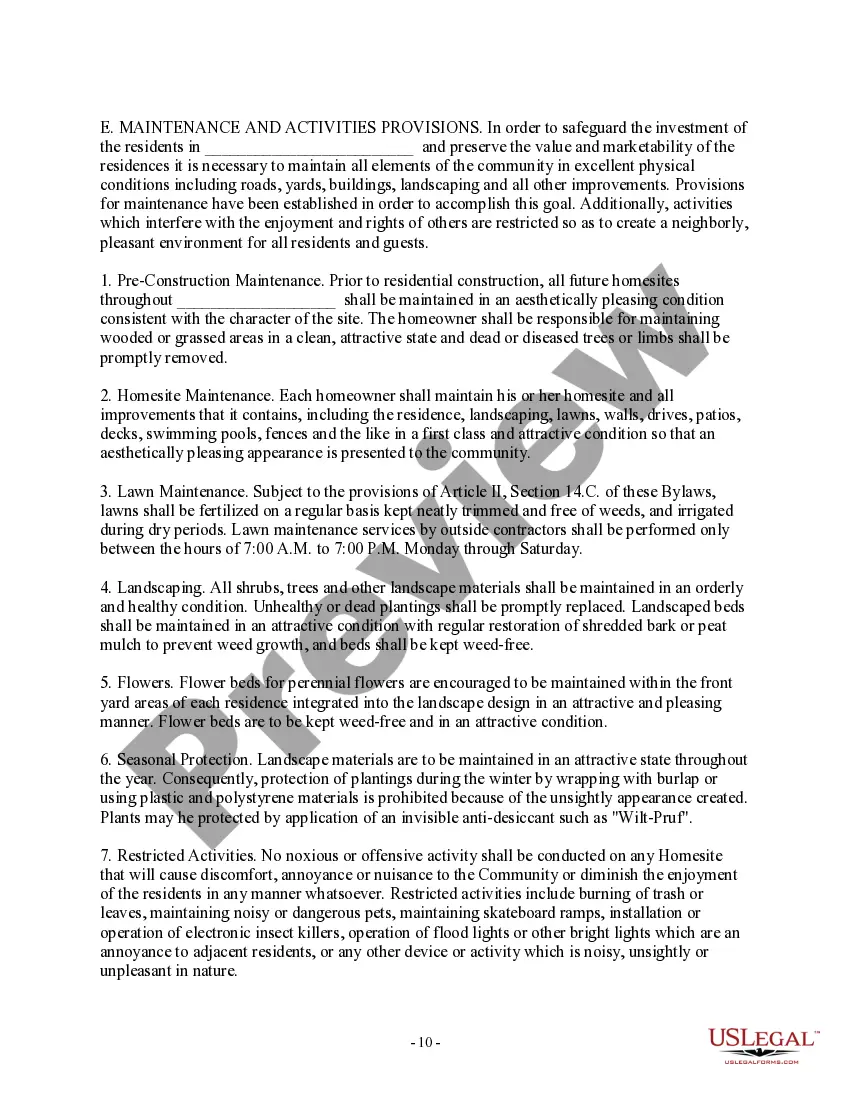
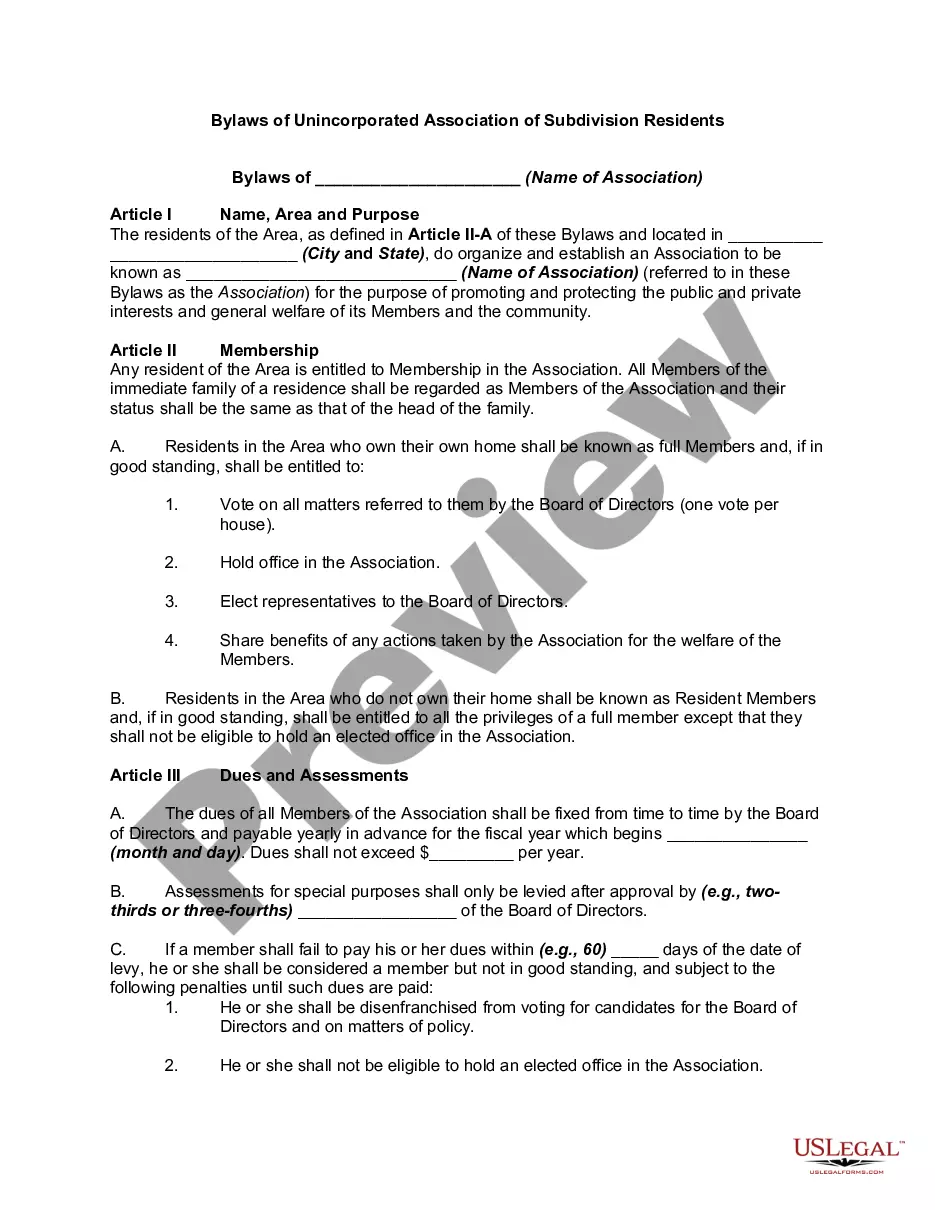
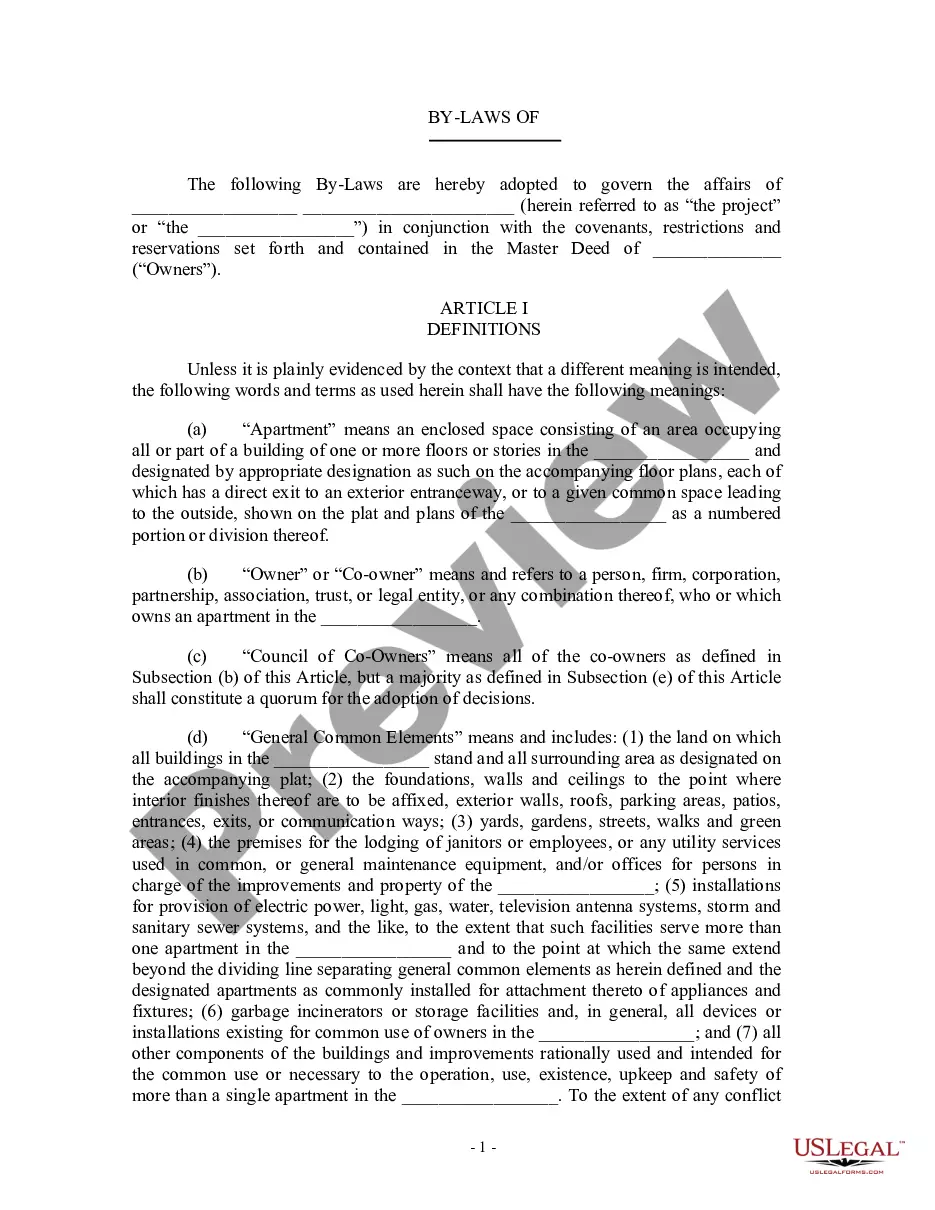
Simply put, homeowners association bylaws dictate how an HOA should run. Since HOAs are considered corporations under law, albeit non-profit, they require bylaws to govern day-to-day operations. HOA bylaws are also sometimes referred to as neighborhood association bylaws or subdivision bylaws.
The Davis-Stirling Act in California spells out the rules for open meetings, which greatly affects when and how HOA boards can have closed meetings. Section 4900 of the Act says that all HOA board meetings must be open to all association members, with a few exceptions for private sessions.
For instance, California's Civil Code Section 4925 states that members can attend any non-executive portion of board meetings. For most HOAs, association members are allowed to attend most meetings.
Board members are volunteers who are elected to the position by other association members. Homeowners' association board responsibilities include handling a variety of tasks, including creating and enforcing guidelines, overseeing finances, and maintaining shared spaces.
Email Discussions Outside of Board Meetings are Permitted Although the Open Meeting Act prohibits the board from acting on items of Association business outside a board meeting…it does not prohibit the board from discussing the items outside a meeting.” (LNSU #1, LLC v. Alta Del Mar Coastal Community Assn (2023).)
Rules and Guidelines for HOA Lawsuits Individual members of the HOA board cannot typically be sued; however, the board as a whole functions as a single entity that can be held legally liable in court. Prior to suing a California HOA, it is wise to attempt other types of resolution.
The number is usually five. Very small associations sometimes call for three directors, and very large associations may have seven or more.
The Davis-Stirling Act in California spells out the rules for open meetings, which greatly affects when and how HOA boards can have closed meetings. Section 4900 of the Act says that all HOA board meetings must be open to all association members, with a few exceptions for private sessions.
