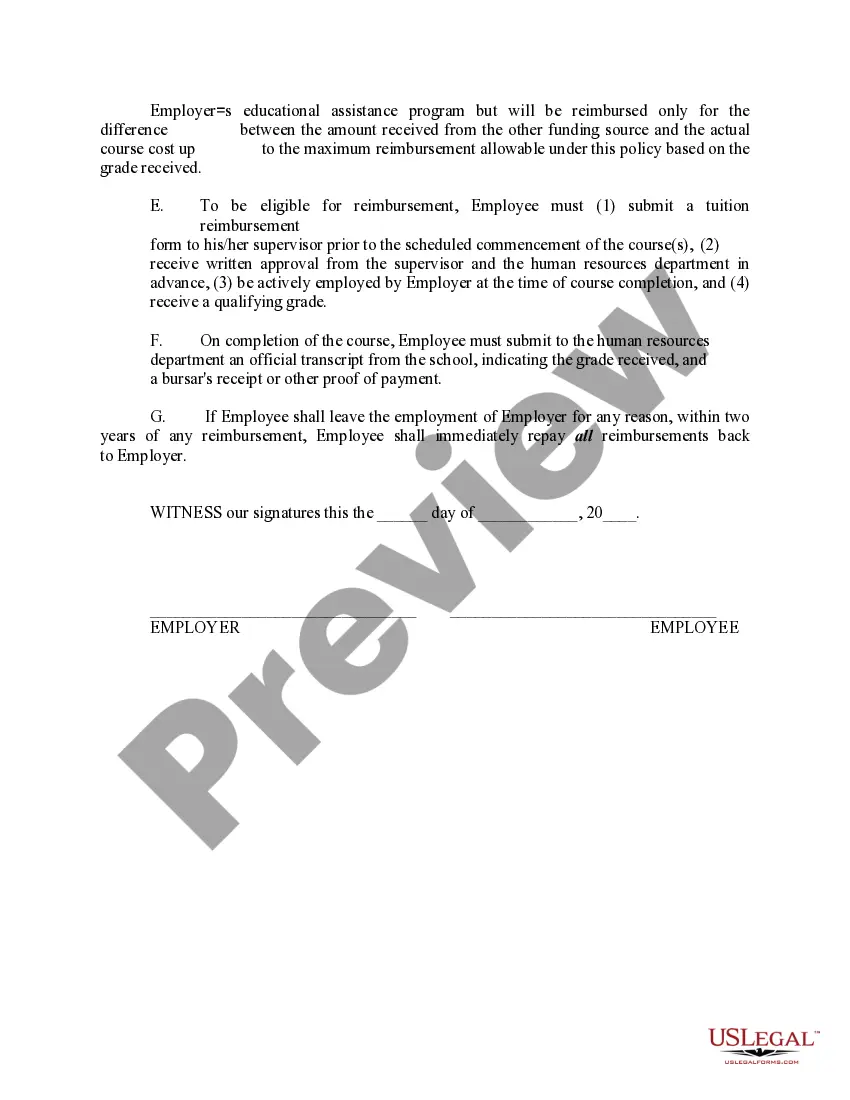
Educational Assistance Programme Employees With Disabilities In Maryland
Description

Get your form ready online
Our built-in tools help you complete, sign, share, and store your documents in one place.
Make edits, fill in missing information, and update formatting in US Legal Forms—just like you would in MS Word.
Download a copy, print it, send it by email, or mail it via USPS—whatever works best for your next step.
Sign and collect signatures with our SignNow integration. Send to multiple recipients, set reminders, and more. Go Premium to unlock E-Sign.
If this form requires notarization, complete it online through a secure video call—no need to meet a notary in person or wait for an appointment.
We protect your documents and personal data by following strict security and privacy standards.

Make edits, fill in missing information, and update formatting in US Legal Forms—just like you would in MS Word.

Download a copy, print it, send it by email, or mail it via USPS—whatever works best for your next step.

Sign and collect signatures with our SignNow integration. Send to multiple recipients, set reminders, and more. Go Premium to unlock E-Sign.

If this form requires notarization, complete it online through a secure video call—no need to meet a notary in person or wait for an appointment.

We protect your documents and personal data by following strict security and privacy standards.
Looking for another form?








Form popularity
FAQ
The Americans with Disabilities Act (ADA) became law in 1990. The ADA is a civil rights law that prohibits discrimination against individuals with disabilities in all areas of public life, including jobs, schools, transportation, and all public and private places that are open to the general public.
Residents of Maryland can apply for federal disability programs (SSDI and SSI). Read more about SSDI and SSI here.
What Is the Most Approved Disability? Arthritis and other musculoskeletal system disabilities make up the most commonly approved conditions for social security disability benefits. This is because arthritis is so common. In the United States, over 58 million people suffer from arthritis.
Employed Individuals with Disabilities (EID) Program The EID Program, administered by the Maryland Department of Health (MDH), provides Medical Assistance (also called Medicaid) to working Marylanders with disabilities who meet a few conditions.
DORS partners with people with physical, emotional, intellectual, developmental, sensory and learning disabilities who want to maintain employment or become employed, by providing services such as career assessment and counseling, assistive technology, job training, higher education and job placement.
Who is eligible for special education? Under federal and state law, children with disabilities from birth through the end of the school year in which they turn age 21 may be eligible for special education and related services.
The Temporary Disability Assistance Program (TDAP) is available to help low-income, disabled Marylanders through a period of short-term disability or while they are awaiting approval of federal disability support.
