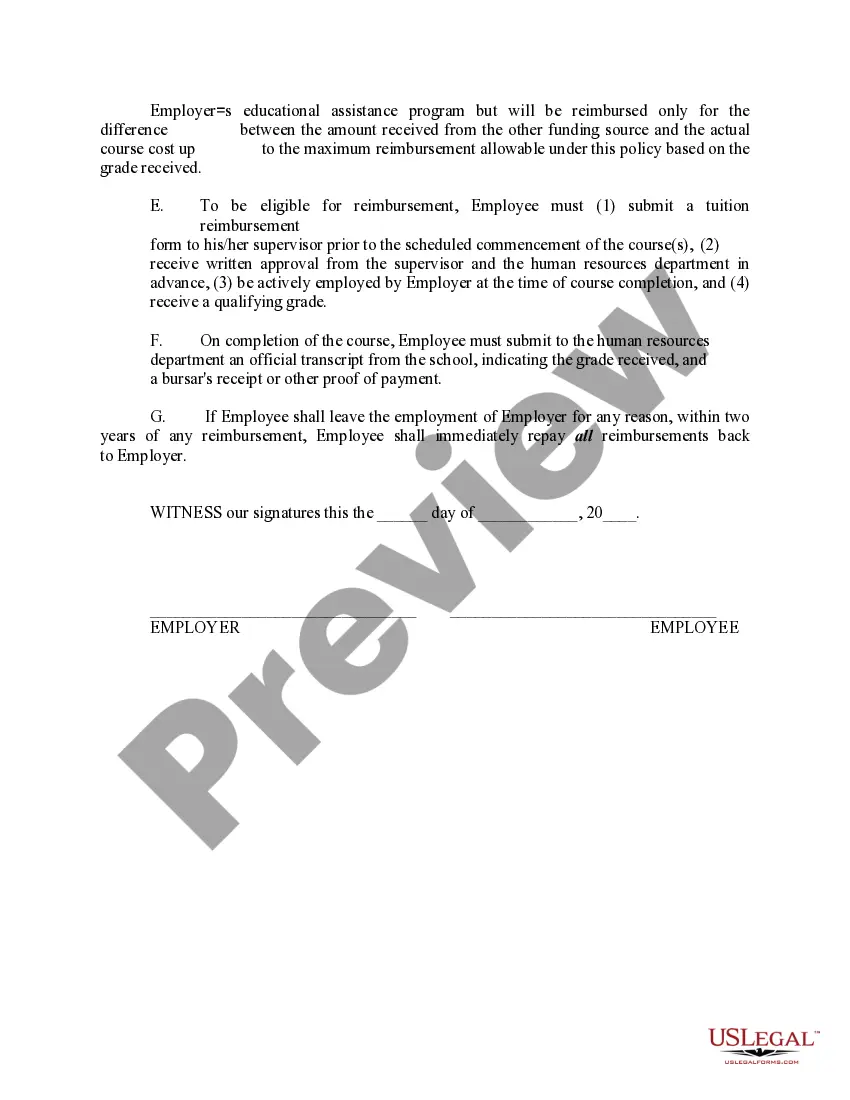
Educational Assistance Programme Employees With Disabilities In California
Description

Get your form ready online
Our built-in tools help you complete, sign, share, and store your documents in one place.
Make edits, fill in missing information, and update formatting in US Legal Forms—just like you would in MS Word.
Download a copy, print it, send it by email, or mail it via USPS—whatever works best for your next step.
Sign and collect signatures with our SignNow integration. Send to multiple recipients, set reminders, and more. Go Premium to unlock E-Sign.
If this form requires notarization, complete it online through a secure video call—no need to meet a notary in person or wait for an appointment.
We protect your documents and personal data by following strict security and privacy standards.

Make edits, fill in missing information, and update formatting in US Legal Forms—just like you would in MS Word.

Download a copy, print it, send it by email, or mail it via USPS—whatever works best for your next step.

Sign and collect signatures with our SignNow integration. Send to multiple recipients, set reminders, and more. Go Premium to unlock E-Sign.

If this form requires notarization, complete it online through a secure video call—no need to meet a notary in person or wait for an appointment.

We protect your documents and personal data by following strict security and privacy standards.
Looking for another form?








Form popularity
FAQ
How Do I Get an IEP for My Child in California? Step 1: Identify Your Child's Needs. Step 2: Request an Assessment. Step 3: Attend the IEP Meeting. Step 4: Review and Approve the IEP. Step 5: Implementation and Regular Review. Step 6: Advocacy and Support.
In general, to qualify for special education in California, (i) the child must have one or more eligible disabilities; (ii) the disability must negatively affect her/his educational performance; and (iii) the disability must require special education and related services. See Capistrano Unified Sch. Dist.
So, unless your child has another disability (such as a learning disability, which often occurs concomitantly with ADHD), an IEP is out of the question. '' ADHD is expressly considered a qualifying condition, usually as Other Health Impaired without other problems.
To be eligible for special education and related services, a child must be in the age range of birth to 22 years of age and meet the criteria in two areas outlined in federal law: (1) the child must be identified as a child with a disability in one or more of the 13 categories defined below; and (2) the child's ...
To Get into Special Education Credential Programs in California, You'll Need a Bachelor's Degree Have an undergraduate degree. Satisfy the basic skills requirement. Demonstrate subject-matter competency. Pass the Reading Instruction Competence Assessment test.
The state funds special education services through Special Education Local Planning Areas (SELPAs). SELPAs coordinate local services and allocates funding to programs and districts. The state's 133 SELPAS include some that operate in a single district and others that serve multiple districts.
