Letter Engagement Statement For Tax Services In Massachusetts
Description
Get your form ready online
Our built-in tools help you complete, sign, share, and store your documents in one place.
Make edits, fill in missing information, and update formatting in US Legal Forms—just like you would in MS Word.
Download a copy, print it, send it by email, or mail it via USPS—whatever works best for your next step.
Sign and collect signatures with our SignNow integration. Send to multiple recipients, set reminders, and more. Go Premium to unlock E-Sign.
If this form requires notarization, complete it online through a secure video call—no need to meet a notary in person or wait for an appointment.
We protect your documents and personal data by following strict security and privacy standards.
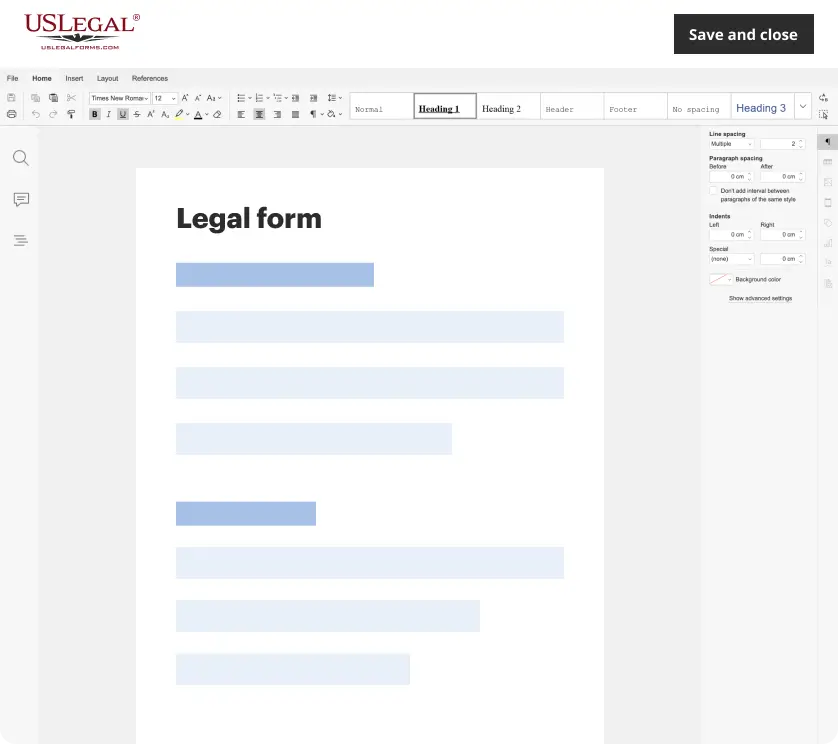
Make edits, fill in missing information, and update formatting in US Legal Forms—just like you would in MS Word.
Download a copy, print it, send it by email, or mail it via USPS—whatever works best for your next step.
Sign and collect signatures with our SignNow integration. Send to multiple recipients, set reminders, and more. Go Premium to unlock E-Sign.

If this form requires notarization, complete it online through a secure video call—no need to meet a notary in person or wait for an appointment.
We protect your documents and personal data by following strict security and privacy standards.
Looking for another form?







Form popularity
FAQ
An engagement letter is a short agreement that outlines the scope of work, fees, and other important details, while a contract is a more comprehensive document that outlines the legal obligations of both parties and provides more detailed information about the project or service.
In a tax preparation business, an engagement letter communicates, from the tax preparer's perspective, the work the preparer will do as well as what they won't do and the terms and conditions of performing that work.
Summary: Proposal usually signifies an initial offer or request (either for marriage or a business opportunity). Engagement signifies a commitment to follow through on that proposal, whether it be in a personal relationship or a business project.
Engagement letters set the terms of the agreement between two parties and include details such as the scope, fees, and responsibilities, among others. Some of the benefits of engagement letters are that they are legally binding documents, they reduce misunderstandings, and they set clear expectations.
To obtain this letter, you need to contact a certified public accountant (CPA), like Dimov Tax, who can prepare and sign the document. You'll need to provide relevant financial documents, such as tax returns, bank statements, and any other proof of income.
Engagement letters are important because they outline the expectations and responsibilities of both the bookkeeper and the client. They also help protect both parties in case of any disputes or misunderstandings, especially involving the scope of work to be completed.
An engagement letter is a written agreement that describes the business relationship to be entered into by a client and a company. The letter details the scope of the agreement, its terms, and costs. The purpose of an engagement letter is to set expectations on both sides of the agreement.
An audit engagement letter is one of the most crucial initial items in the entire audit process reflecting the general terms, responsibilities and the scope of the audit service by the auditor and his or her client. Learn about official guidelines, standards and key elements.
In practice, practitioners are urged to use engagement letters for all compilation and review engagements. The statement does not address whether the letter can be a perpetual letter, or needs to be issued annually. Again, the better practice would be to obtain an engagement letter each year.
You may need the following: Copies of last year's federal and state tax returns. Personal information including. Records of your earnings (W-2 forms from each employer or 1099-MISC forms if you're a contractor) Records of interest and dividends from banks (1099 forms: 1099-INT, 1099-DIV, etc.)

