Consultant Work Contract For Taxes In Utah
Description

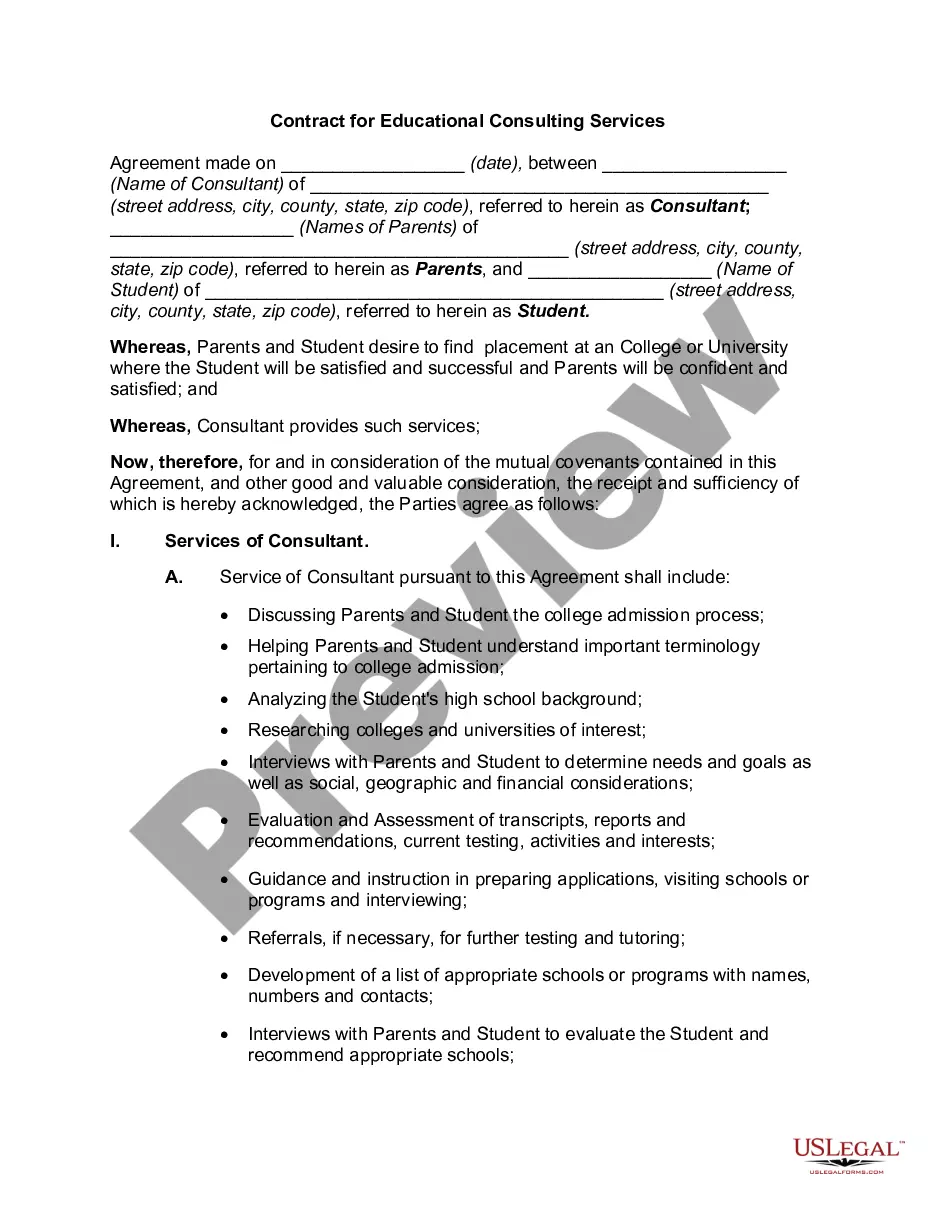
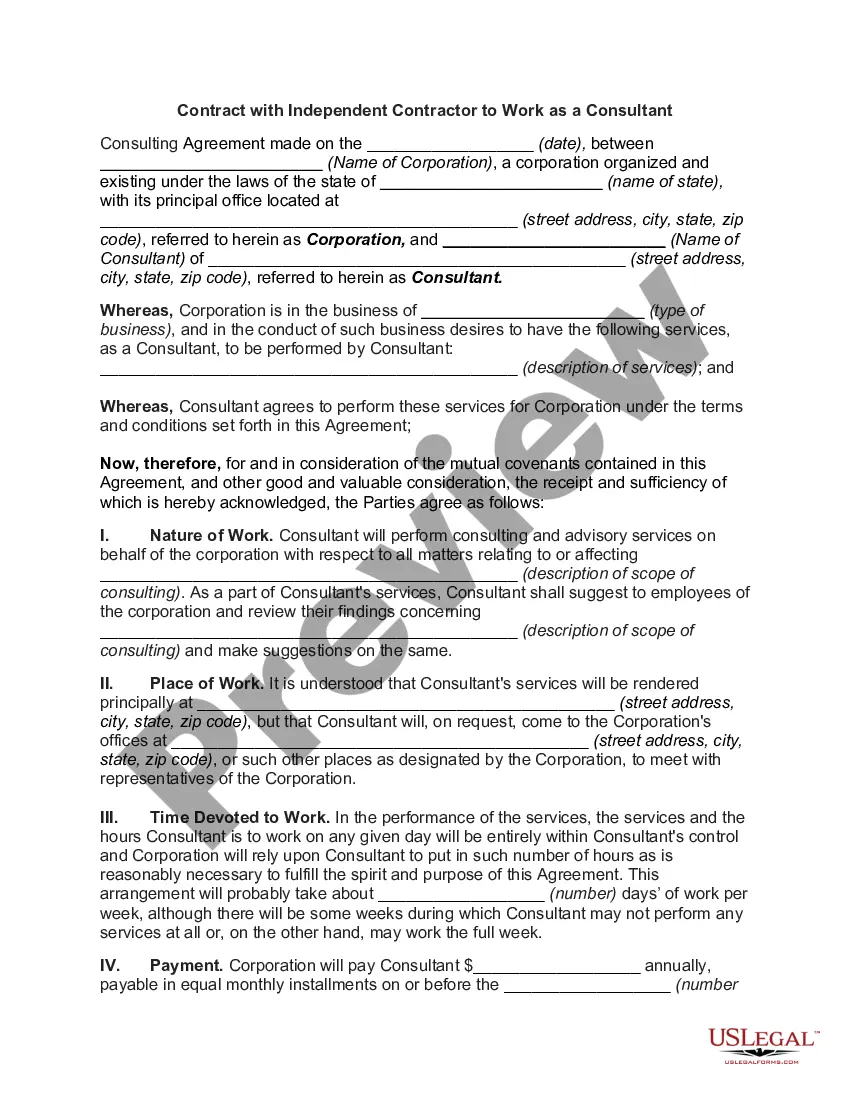
Get your form ready online
Our built-in tools help you complete, sign, share, and store your documents in one place.
Make edits, fill in missing information, and update formatting in US Legal Forms—just like you would in MS Word.
Download a copy, print it, send it by email, or mail it via USPS—whatever works best for your next step.
Sign and collect signatures with our SignNow integration. Send to multiple recipients, set reminders, and more. Go Premium to unlock E-Sign.
If this form requires notarization, complete it online through a secure video call—no need to meet a notary in person or wait for an appointment.
We protect your documents and personal data by following strict security and privacy standards.

Make edits, fill in missing information, and update formatting in US Legal Forms—just like you would in MS Word.

Download a copy, print it, send it by email, or mail it via USPS—whatever works best for your next step.

Sign and collect signatures with our SignNow integration. Send to multiple recipients, set reminders, and more. Go Premium to unlock E-Sign.

If this form requires notarization, complete it online through a secure video call—no need to meet a notary in person or wait for an appointment.

We protect your documents and personal data by following strict security and privacy standards.
Looking for another form?








Form popularity
FAQ
Federal, state, or local governments file this form if they made payments of: Unemployment compensation. State or local income tax refunds, credits, or offsets. Reemployment trade adjustment assistance (RTAA) payments. Taxable grants.
Yes, you must file 1099 forms with the state of Utah if there was state tax withholding.
Yes! It's true that many self-employed individuals, especially those who work from home, never get a business license in Utah. But if your local government finds out that you're running an unlicensed business, you might be fined, or even be prevented from doing business until you obtain the license.
Ing to Utah Instructions for Form TC-40, you must file a Utah income tax return if: You were a resident or part year resident of Utah that must file a federal return. You were a nonresident or part-year resident with Utah source income and are required to file a federal return.
In Utah, business owners, sole proprietors, partners, and certain real estate, agricultural, and domestic workers are exempt from carrying workers' compensation insurance. Additionally, LLC members may also opt out of coverage, streamlining financial obligations for small businesses and independent workers.
Independent contractors are not covered by the Utah Workers' Com- pensation Act, so employees do not need to obtain workers' compen- sation coverage for independent contractors. Independent contrac- tors are not eligible to receive or file workers' compensation claims.
The current self-employment tax rate is 15.3%. You'll be able to deduct some of your business expenses from your income when calculating how much self-employment tax you owe.
(180 day reporting requirement of employees, link) If the injury or illness is beyond first-aid or a medical bill is generated for the medical service, the employer must report a First Report of Injury or Occupational Disease (Form 122) within seven days of being informed of the incident.
Yes! It's true that many self-employed individuals, especially those who work from home, never get a business license in Utah. But if your local government finds out that you're running an unlicensed business, you might be fined, or even be prevented from doing business until you obtain the license.
In Utah, individuals with no employees and who hire out their services to a hiring employer may be considered “statutory employees.” These individuals are allowed to waive their rights to workers' compensation coverage by obtaining a Workers' Compensation Coverage Waiver (WCCW).
