Contract Consultant Contract With Services In Santa Clara
Description

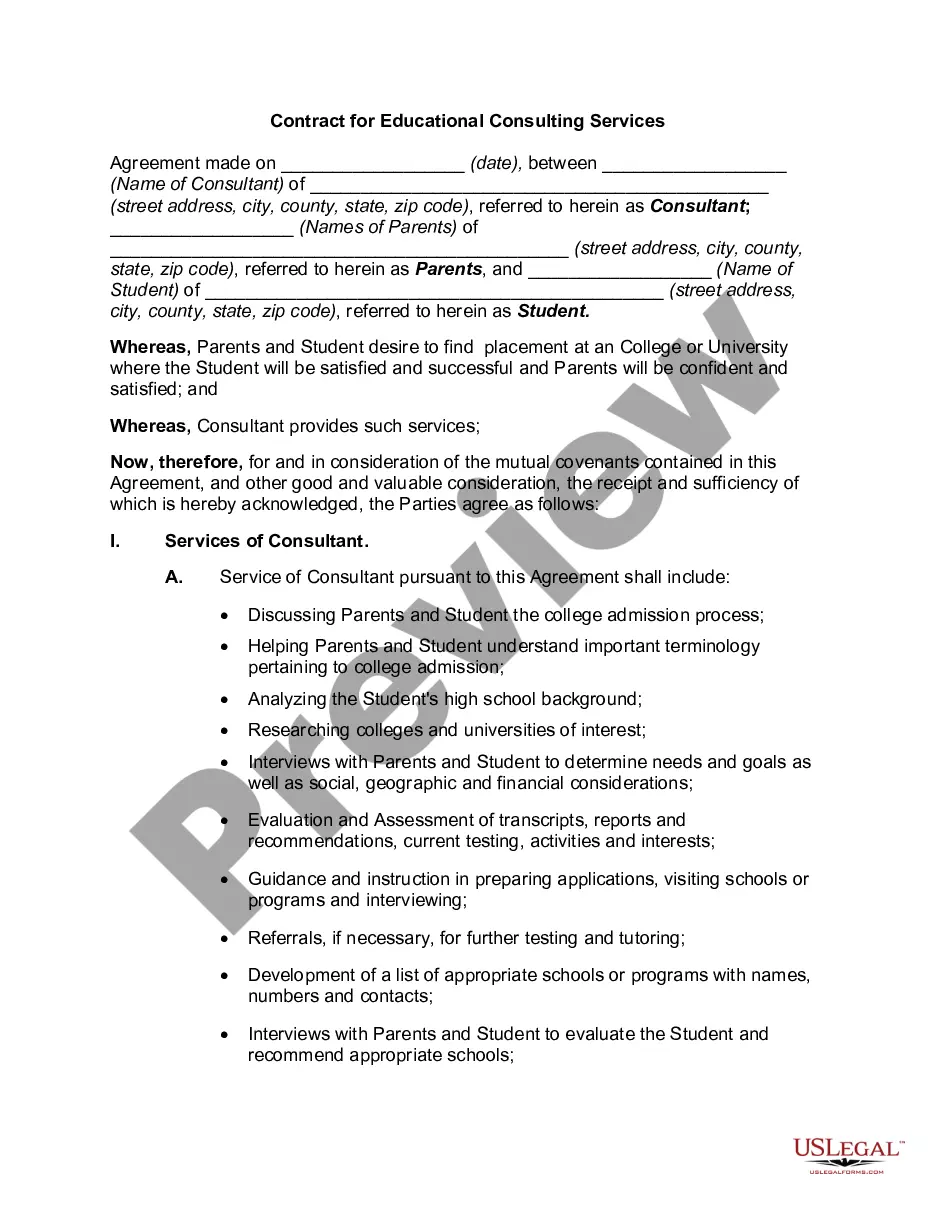
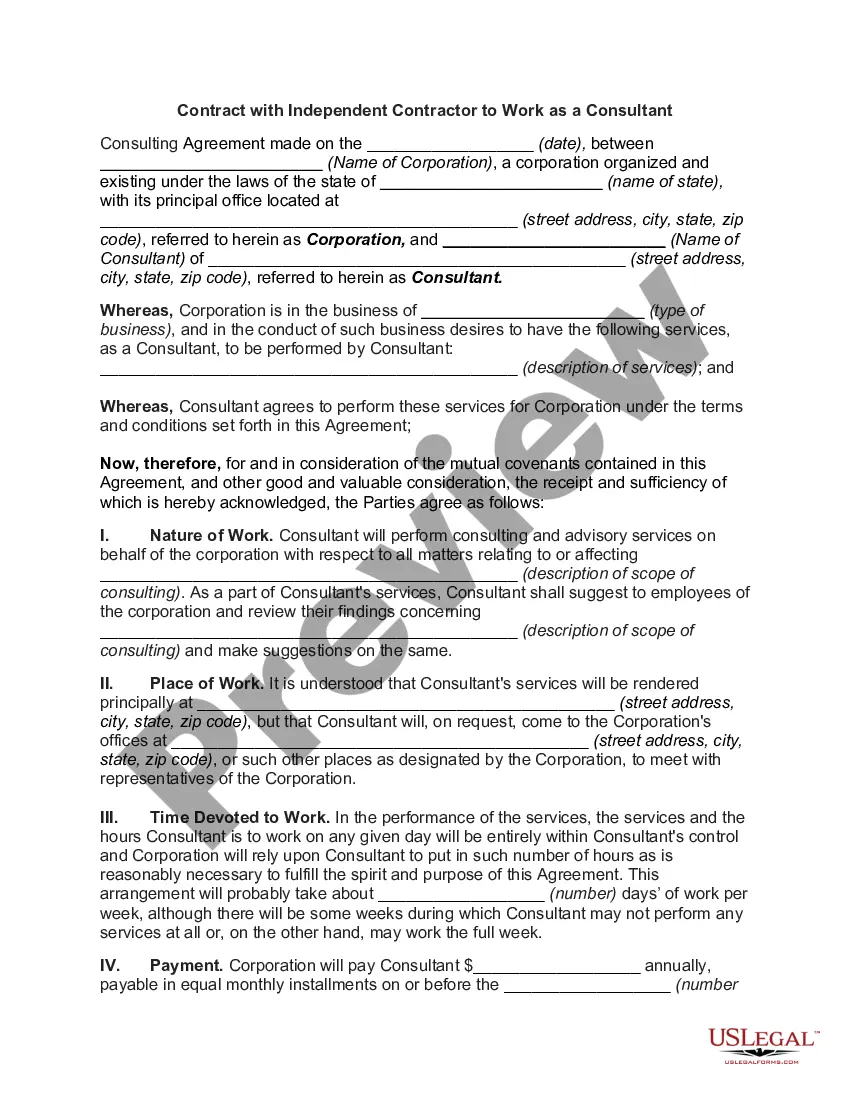
Get your form ready online
Our built-in tools help you complete, sign, share, and store your documents in one place.
Make edits, fill in missing information, and update formatting in US Legal Forms—just like you would in MS Word.
Download a copy, print it, send it by email, or mail it via USPS—whatever works best for your next step.
Sign and collect signatures with our SignNow integration. Send to multiple recipients, set reminders, and more. Go Premium to unlock E-Sign.
If this form requires notarization, complete it online through a secure video call—no need to meet a notary in person or wait for an appointment.
We protect your documents and personal data by following strict security and privacy standards.

Make edits, fill in missing information, and update formatting in US Legal Forms—just like you would in MS Word.

Download a copy, print it, send it by email, or mail it via USPS—whatever works best for your next step.

Sign and collect signatures with our SignNow integration. Send to multiple recipients, set reminders, and more. Go Premium to unlock E-Sign.

If this form requires notarization, complete it online through a secure video call—no need to meet a notary in person or wait for an appointment.

We protect your documents and personal data by following strict security and privacy standards.
Looking for another form?









Form popularity
FAQ
What is the difference between a consultant and an agent? Consultants offer strategic advice, requiring specialized knowledge, while agents focus on buying and selling.
Essentially, they are hired to share their expertise and knowledge to help businesses reach goals and solve problems. Sometimes, companies bring on consultants to perform day-to-day work and augment or supplement staff, without the overhead costs associated with a full-time employee.
Key takeaways: The primary difference between a consultant and a contractor is that a consultant advises on an organization's needs and potential solutions, while a contractor executes tasks based on those requirements.
A contract consultant analyzes client needs, provides expertise, and manages projects on a temporary basis. Skills include strong communication, problem-solving, and industry-specific knowledge. Qualifications typically involve a relevant degree, professional certifications, and a proven track record in consulting.
Contracts come in various forms but require elements like Legality, Capacity, Offer, Consideration, Intention, Certainty, and Acceptance to be legally valid and enforceable. Missing any element can render the contract unenforceable.
A consulting agreement is a legally binding document that affirms a client's request for assistance from a consultant. It's a contract detailing the terms of service between a consultant — operating as an independent contractor — and a client.
How do you find contracts as an independent consultant? 1. Leverage Your Network 2. Get on a Pre-Qualified List 3. Subcontract with Another Firm 4. Team up with Other Independent Consultants 5. Ask for Referrals
Following is a discussion of the more important issues to be considered in every consulting agreement. Scope of Work, Compensation. Independent Contractor. Term and Termination. Rights and Data. Conflict of Interest, Non-Solicitation. Miscellaneous Provisions.
10 Different Types of Contracts Type of ContractEveryday Use Implied Contracts Common in everyday transactions like dining out. Express Contracts Standard in formal business agreements. Simple Contracts Used for straightforward services or transactions. Unconscionable Contracts Often challenged in court for fairness.10 more rows •
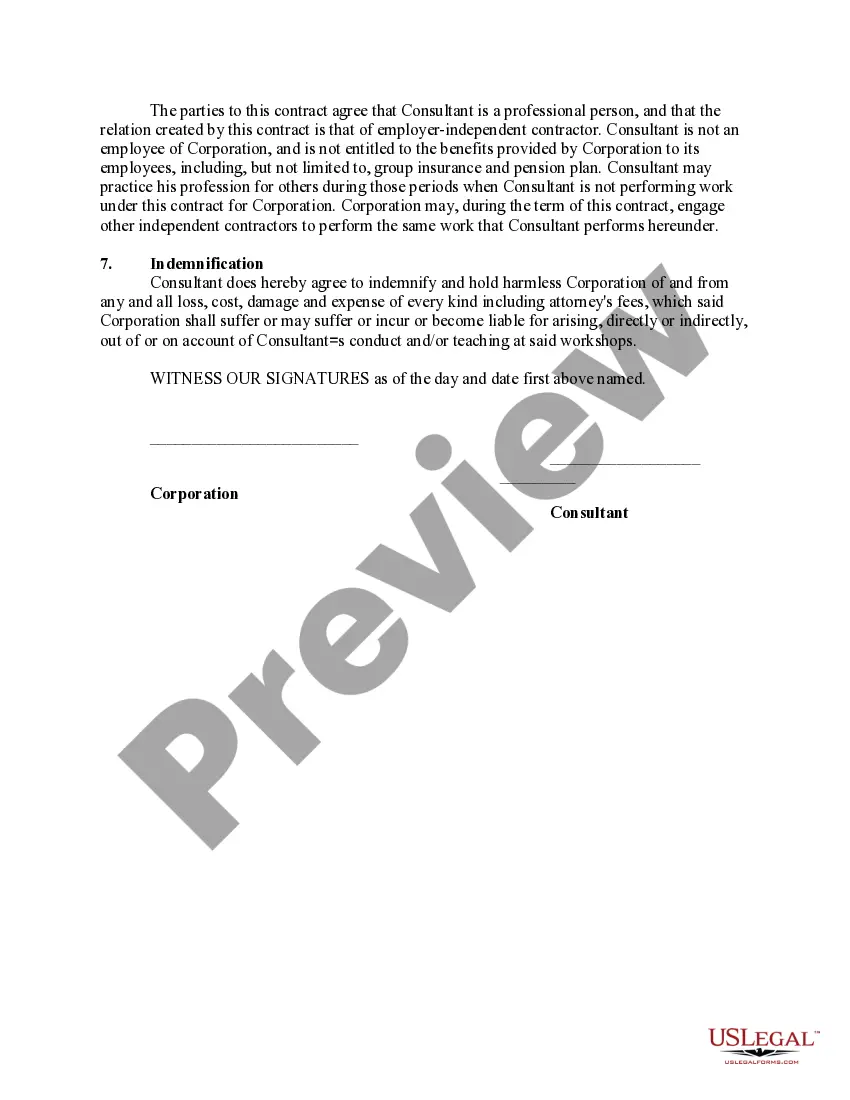
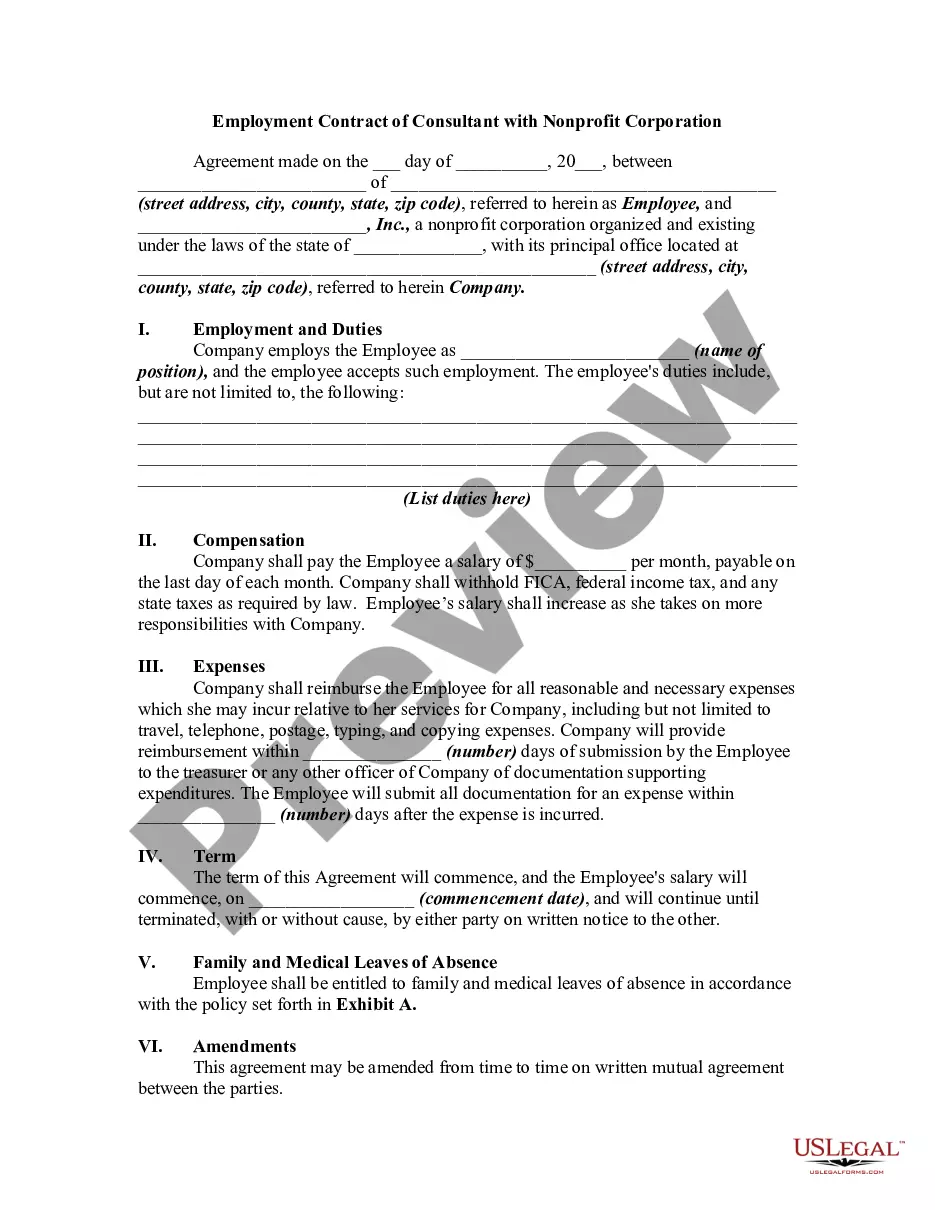
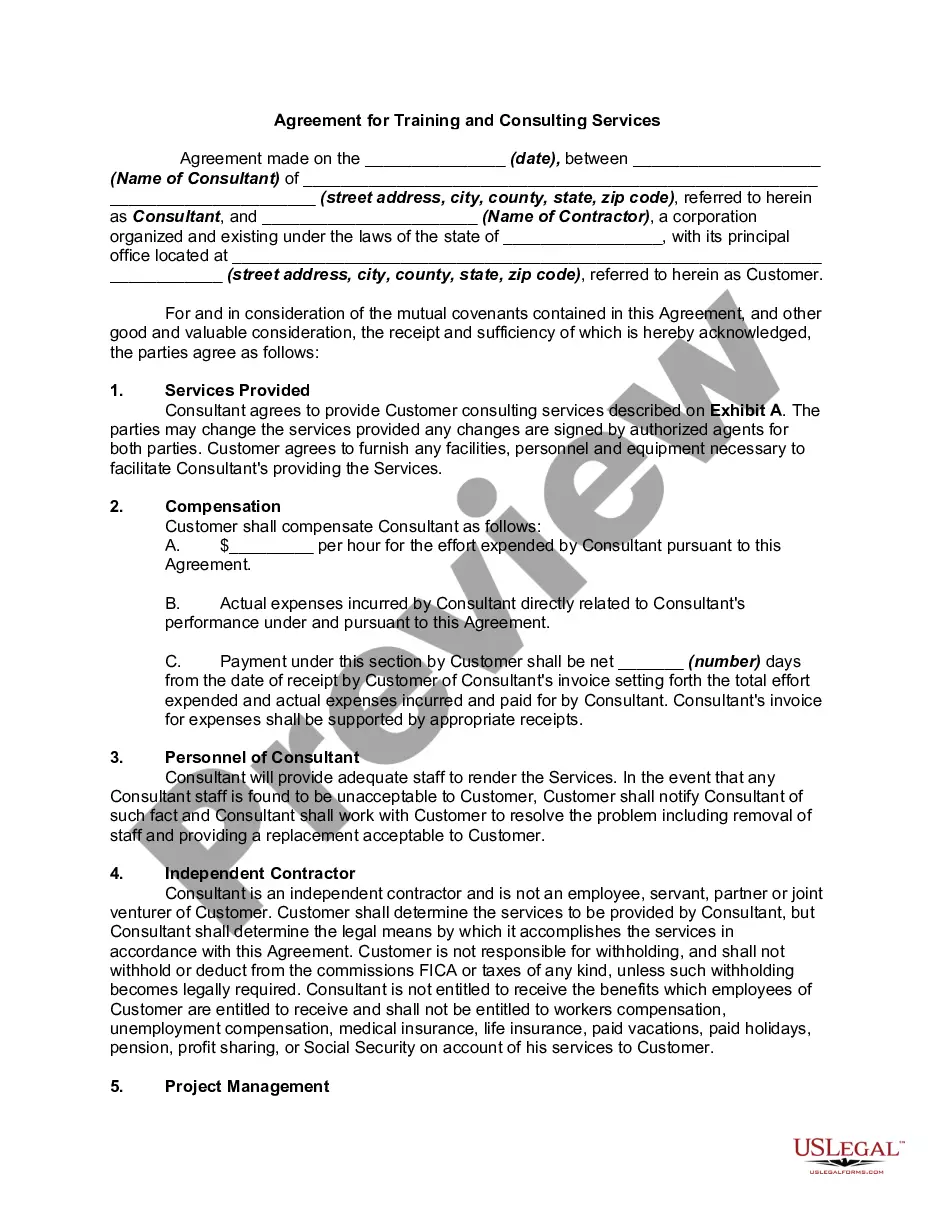
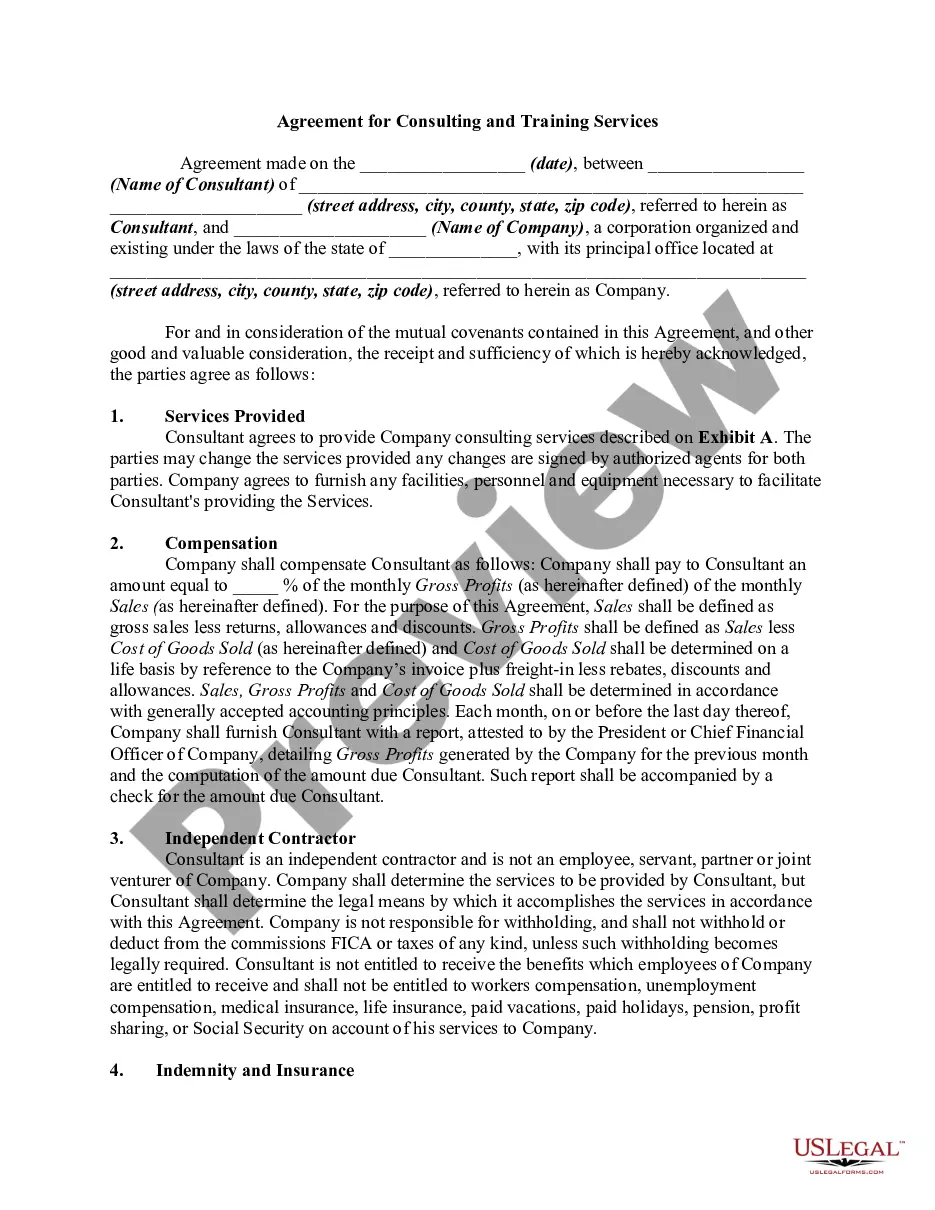
A consultant contract is a legal agreement between a consultant and a client, by means of which the client buys the services of the consultant. We supply templates covering both general consultancy services and web-related consultancy services. It is a type of services agreement.
