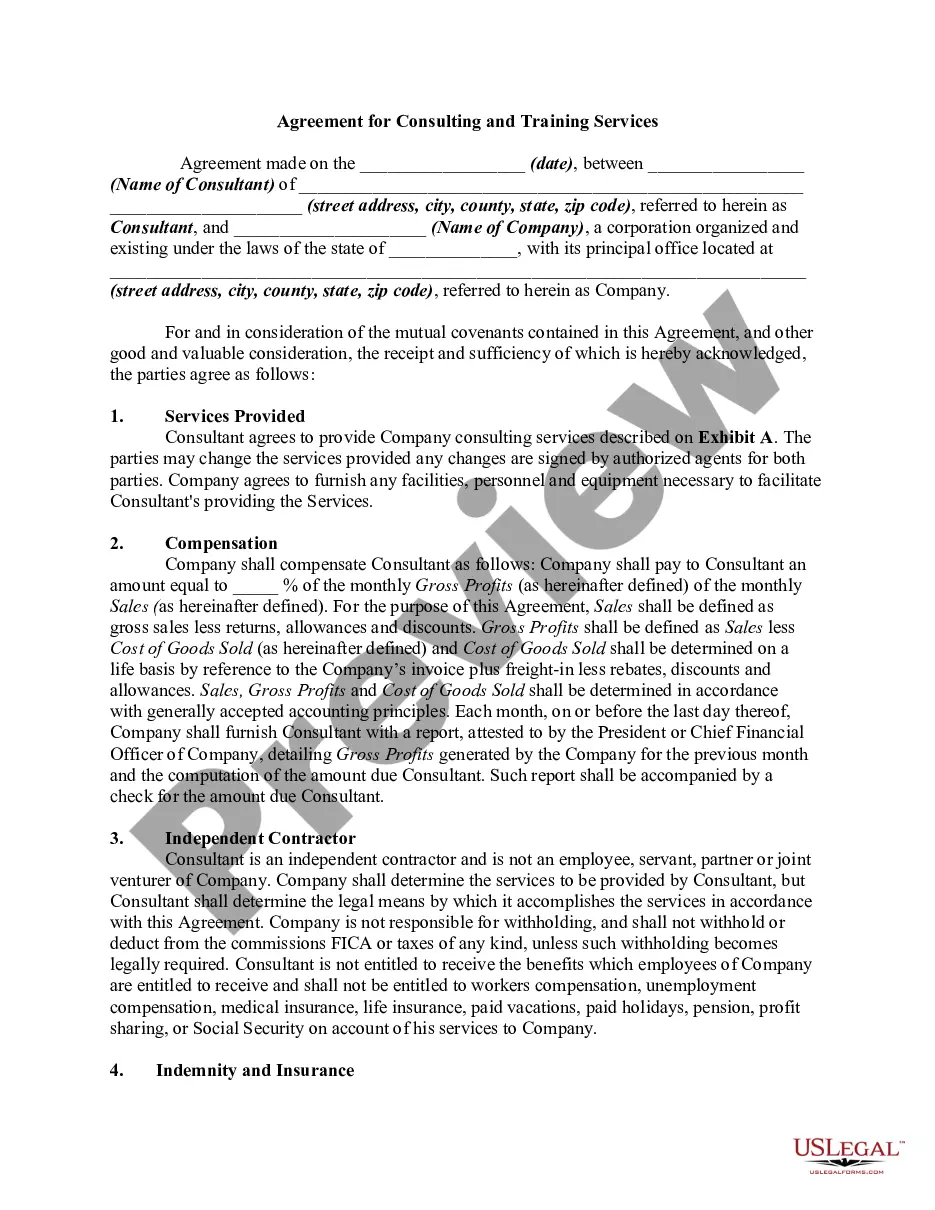
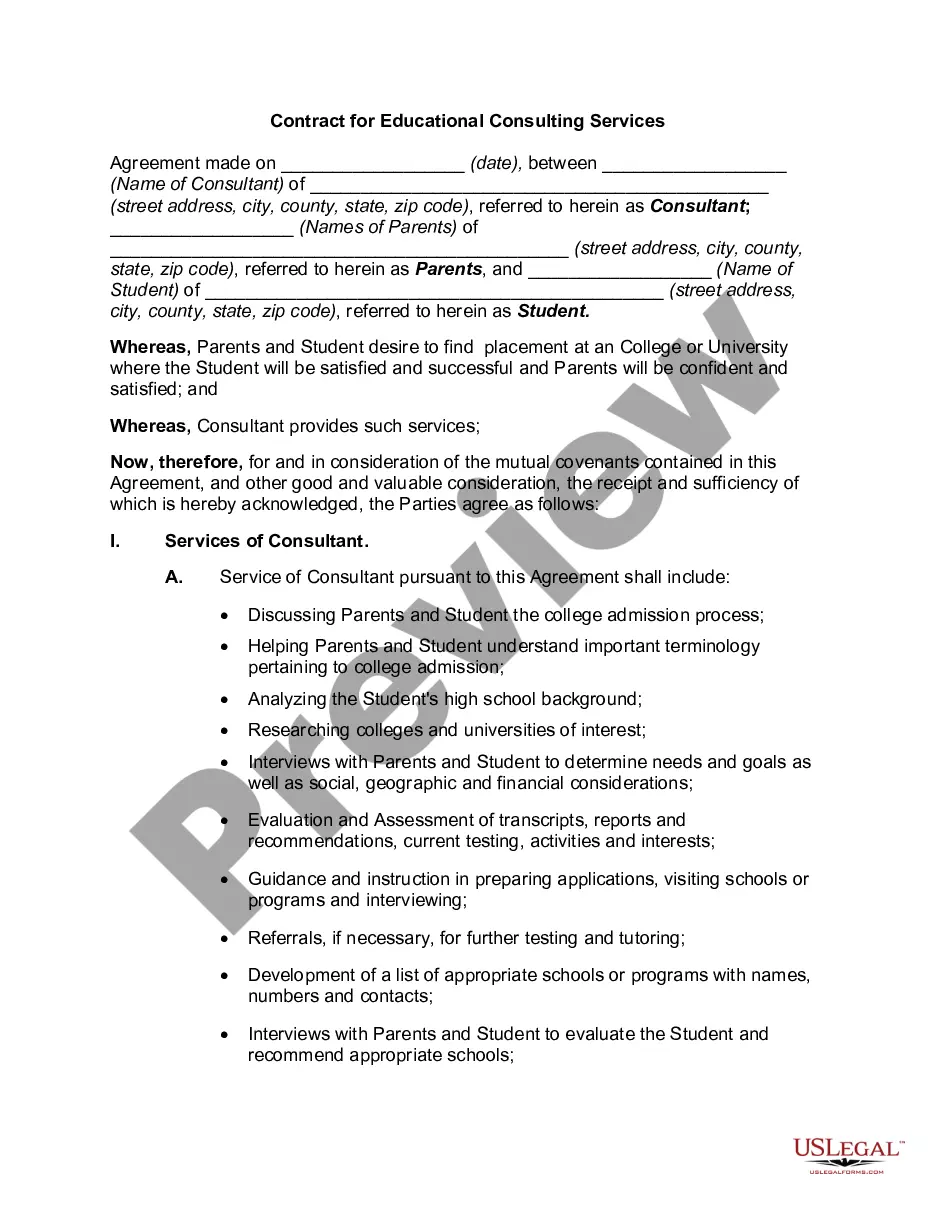
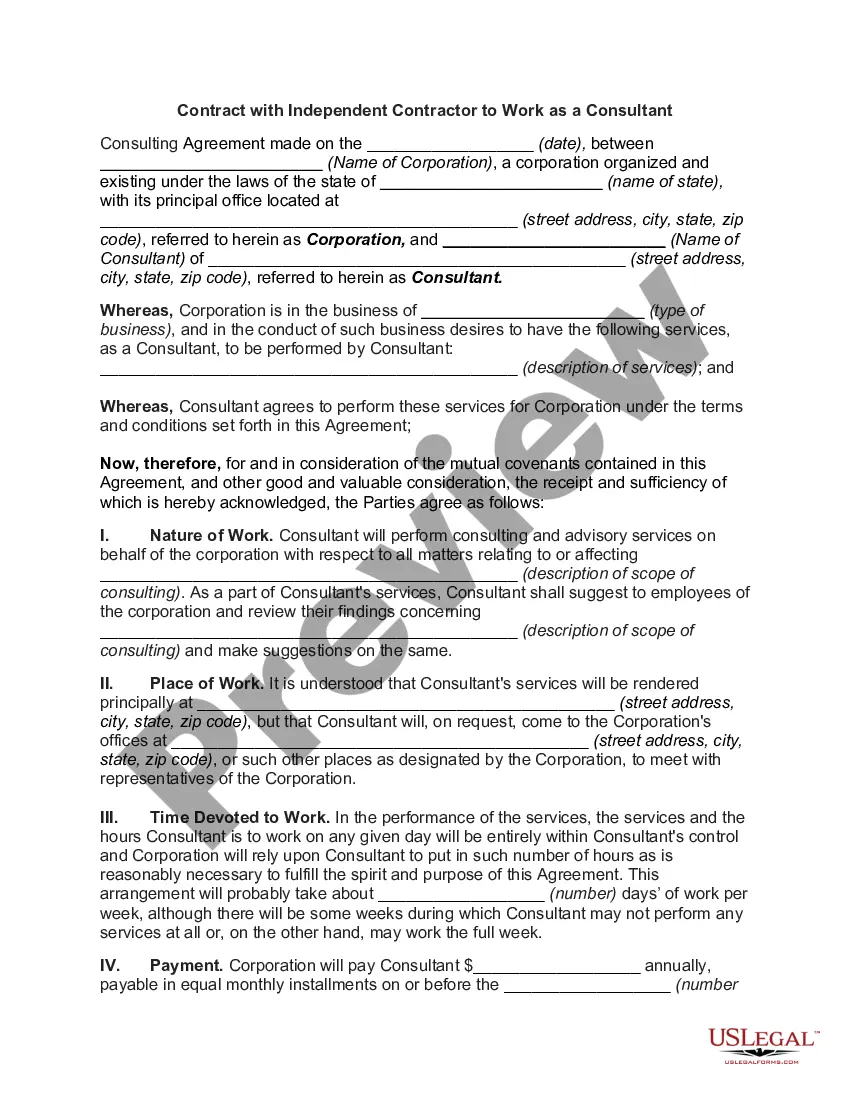
Consultant Work Contract For Accounting In Nassau
Description

Get your form ready online
Our built-in tools help you complete, sign, share, and store your documents in one place.
Make edits, fill in missing information, and update formatting in US Legal Forms—just like you would in MS Word.
Download a copy, print it, send it by email, or mail it via USPS—whatever works best for your next step.
Sign and collect signatures with our SignNow integration. Send to multiple recipients, set reminders, and more. Go Premium to unlock E-Sign.
If this form requires notarization, complete it online through a secure video call—no need to meet a notary in person or wait for an appointment.
We protect your documents and personal data by following strict security and privacy standards.

Make edits, fill in missing information, and update formatting in US Legal Forms—just like you would in MS Word.

Download a copy, print it, send it by email, or mail it via USPS—whatever works best for your next step.

Sign and collect signatures with our SignNow integration. Send to multiple recipients, set reminders, and more. Go Premium to unlock E-Sign.

If this form requires notarization, complete it online through a secure video call—no need to meet a notary in person or wait for an appointment.

We protect your documents and personal data by following strict security and privacy standards.
Looking for another form?







Form popularity
FAQ
Accounting consulting jobs may involve: Helping your business clients maintain efficient and accurate accounting practices. Providing your expertise to help clients understand the meaning behind their financial data and how those numbers affect their business.
Accounting can involve more than just filing tax returns, generating financial statements or offering back-office accounting solutions. Many certified public accountants (CPAs) are increasingly offering their services as accounting consultants, a profile that acts as a trusted adviser to clients regarding the economy.
Here are six best practices to write a consulting contract that defines your project scope and protects both you and your business. Define Duties, Deliverables, and Roles. Prepare for Potential Risk. Specify Project Milestones and Engagement Time. Identify Expenses and Outline Payment Terms. Specify Product Ownership.
One of the main benefits of being a freelance accountant is that you get to set your own agenda. Not only can you pick and choose the clients you want to work with, but also the kinds of services you offer and the way you work with those clients.
Consultants usually hold degrees in business administration, finance or economics. However, degrees in psychology, marketing and computer science are common as well among business consultants. To work in a particular industry, consider a minor in that field in addition to a business degree.
Follow these five steps to take to do to set yourself up for future contract opportunities. Consider Your Options and Plan Ahead. While it's natural to worry, it's better to plan out your options. Keep Potential Clients Informed. Use Your Network. Build Your Own Opportunities. Always Be Proactive.
It's fairly common for CPAs to become part-time or full-time consultants just prior to retirement, while others enjoy the benefits of greater flexibility and control over their schedules earlier in their careers. Another option is to consult on the side, or in between permanent jobs.
The big 4 refer to the top 4 accounting firms. These firms can have strategy arms that compete with MBB firms, but the bulk of their business is related to accounting. So let's do a little comparison between the top 3 and big 4 consulting firms and learn what some of the difference are.
While a GPA of 3.7 is often seen as a threshold for many top consulting firms, it is not necessarily a cut-off point and other factors such as relevant coursework, extracurricular activities, and internships can also be important.