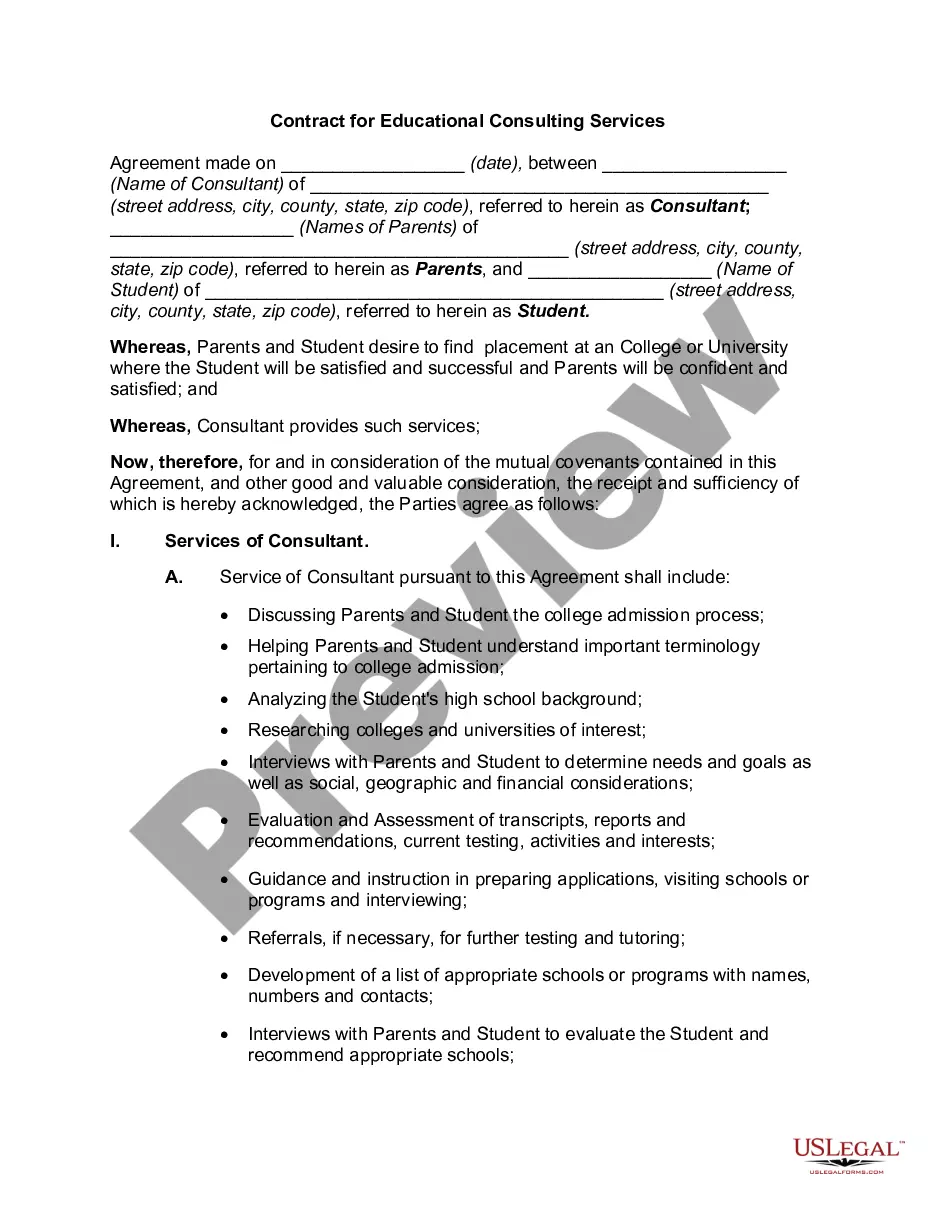
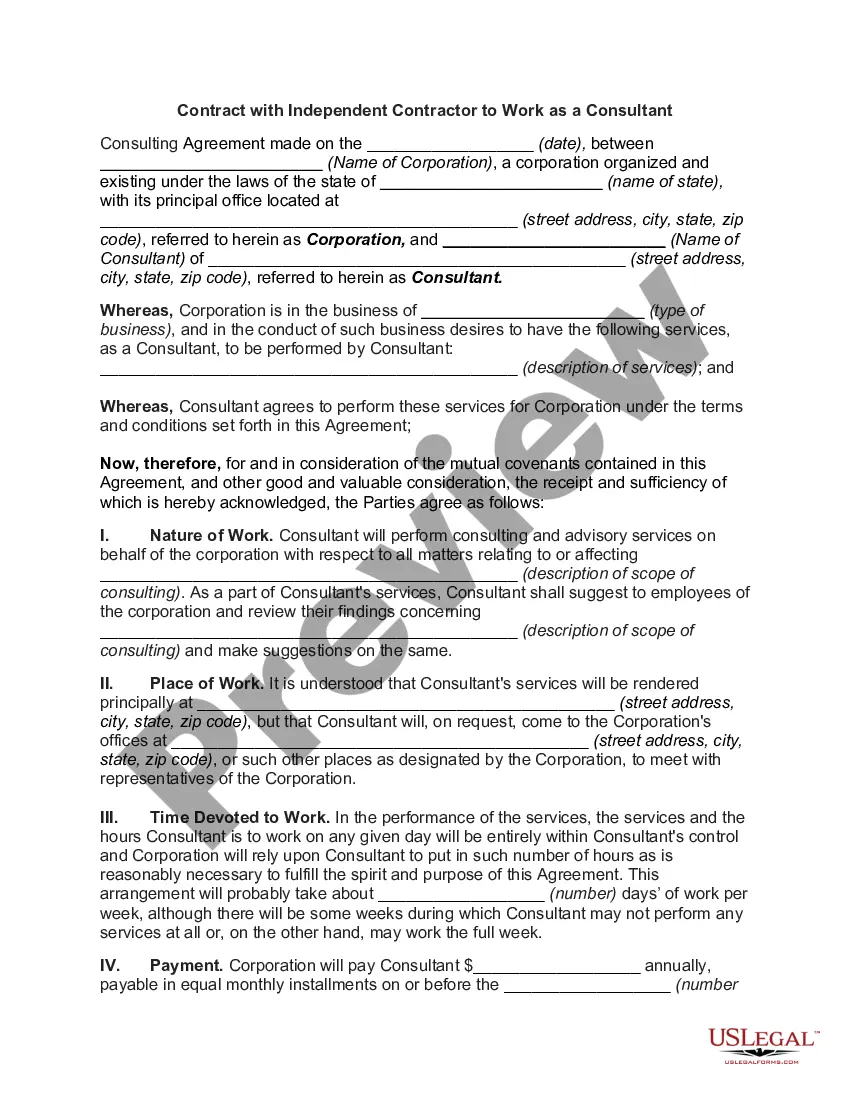
Consultant Work Contract For 1099 In Contra Costa
Description

Get your form ready online
Our built-in tools help you complete, sign, share, and store your documents in one place.
Make edits, fill in missing information, and update formatting in US Legal Forms—just like you would in MS Word.
Download a copy, print it, send it by email, or mail it via USPS—whatever works best for your next step.
Sign and collect signatures with our SignNow integration. Send to multiple recipients, set reminders, and more. Go Premium to unlock E-Sign.
If this form requires notarization, complete it online through a secure video call—no need to meet a notary in person or wait for an appointment.
We protect your documents and personal data by following strict security and privacy standards.

Make edits, fill in missing information, and update formatting in US Legal Forms—just like you would in MS Word.

Download a copy, print it, send it by email, or mail it via USPS—whatever works best for your next step.

Sign and collect signatures with our SignNow integration. Send to multiple recipients, set reminders, and more. Go Premium to unlock E-Sign.

If this form requires notarization, complete it online through a secure video call—no need to meet a notary in person or wait for an appointment.

We protect your documents and personal data by following strict security and privacy standards.
Looking for another form?








Form popularity
FAQ
California Overtime Laws California employees except for independent contractors and exempt employees are entitled to compensation for overtime. Independent contractors are not eligible for overtime as they exercise control over the number of hours and days in which they work.
Independent contractors don't need a license to operate in the state of California, but they may have other requirements based on where they build their business. Still others will vary based on the kind of work you do.
Independent contractors use 1099 forms. In California, if you report your income on a Form 1099, you are an independent contractor, while if you report it on a W-2 form, you are an employee.
However immigration status, or the lack thereof, does not necessarily prevent them from obtaining a Contractor's or other professional license in California, and establishing their own construction business. California Business and Professions Code section 135.5 provides: § 135.5.
How to Be an Independent Contractor Step 1) Name Your Business. Step 2) Register Your Business Entity. Step 3) Obtain a Contractor's License. Step 4) Open Your Business Bank Account. Step 5) Start Marketing.
Under the ABC test, a worker may only be classified as an independent contractor if he or she meets the following conditions: A. Operates without the control or guidance of the hiring company. B. Performs services unrelated to the hiring company's core business. C.
If a business pays you $600 or more in a year for consulting fees, they have to report it to the IRS on form 1099-MISC. You'll receive a copy of the 1099-MISC as well, and you must retain these records because you will need to report this additional income.
