Consultant Contract Under For Services In Alameda
Description

Get your form ready online
Our built-in tools help you complete, sign, share, and store your documents in one place.
Make edits, fill in missing information, and update formatting in US Legal Forms—just like you would in MS Word.
Download a copy, print it, send it by email, or mail it via USPS—whatever works best for your next step.
Sign and collect signatures with our SignNow integration. Send to multiple recipients, set reminders, and more. Go Premium to unlock E-Sign.
If this form requires notarization, complete it online through a secure video call—no need to meet a notary in person or wait for an appointment.
We protect your documents and personal data by following strict security and privacy standards.

Make edits, fill in missing information, and update formatting in US Legal Forms—just like you would in MS Word.

Download a copy, print it, send it by email, or mail it via USPS—whatever works best for your next step.

Sign and collect signatures with our SignNow integration. Send to multiple recipients, set reminders, and more. Go Premium to unlock E-Sign.

If this form requires notarization, complete it online through a secure video call—no need to meet a notary in person or wait for an appointment.

We protect your documents and personal data by following strict security and privacy standards.
Looking for another form?









Form popularity
FAQ
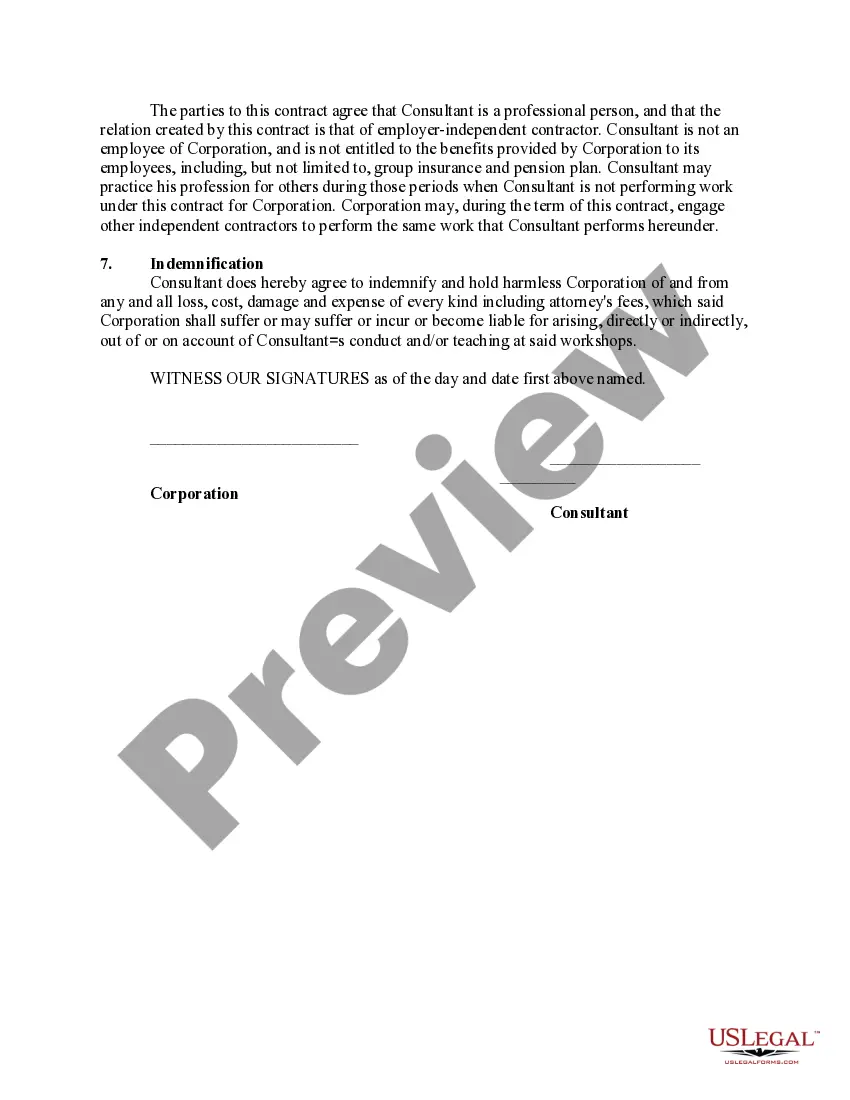
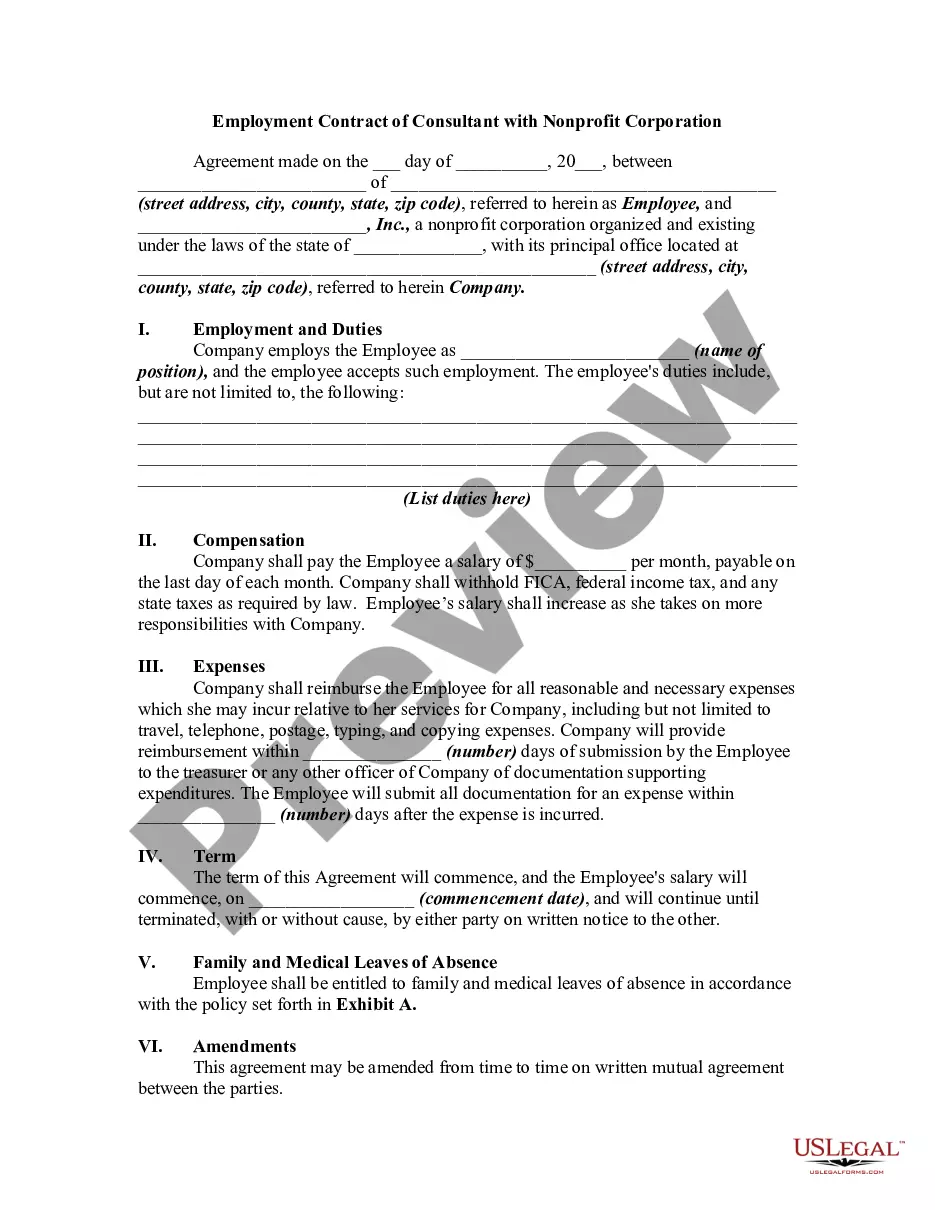
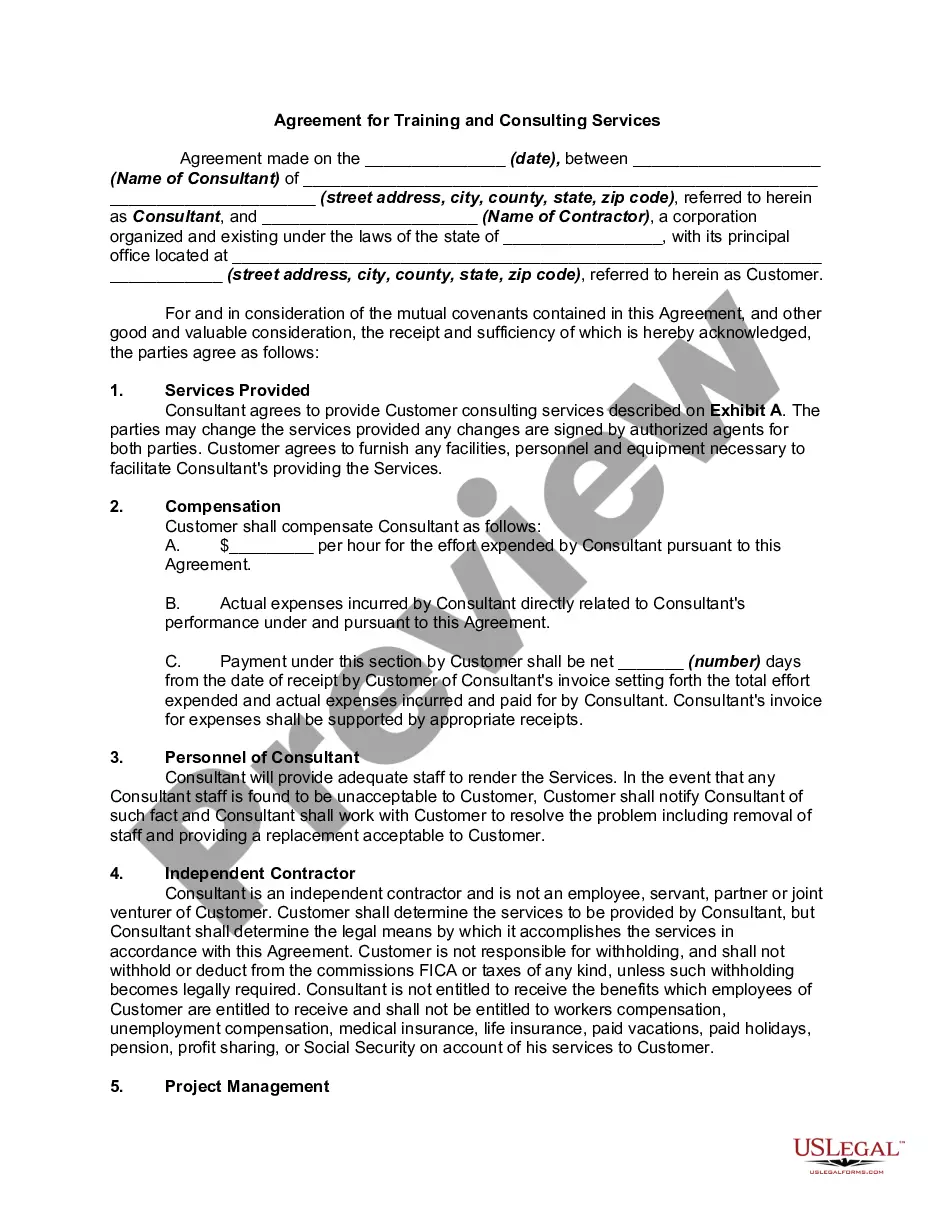
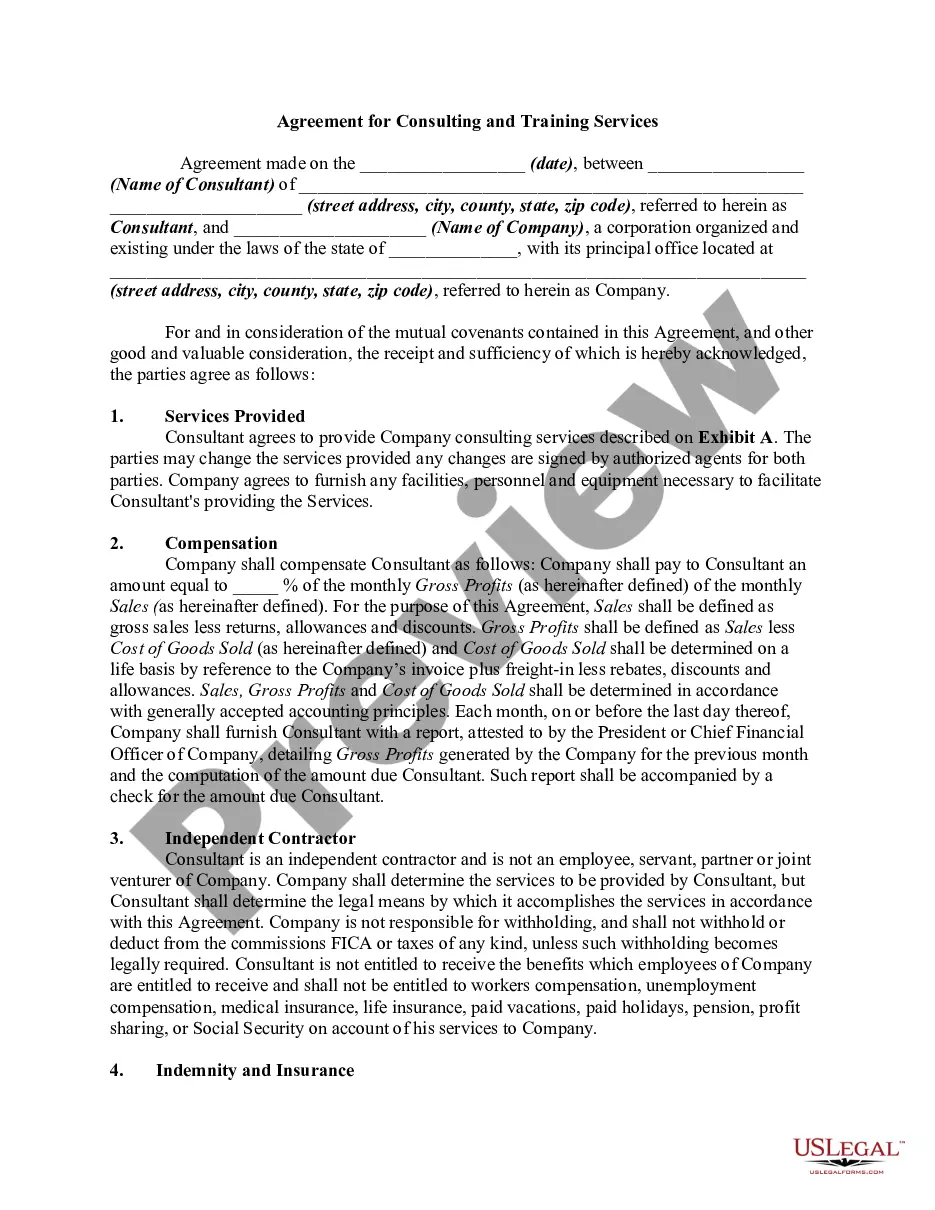
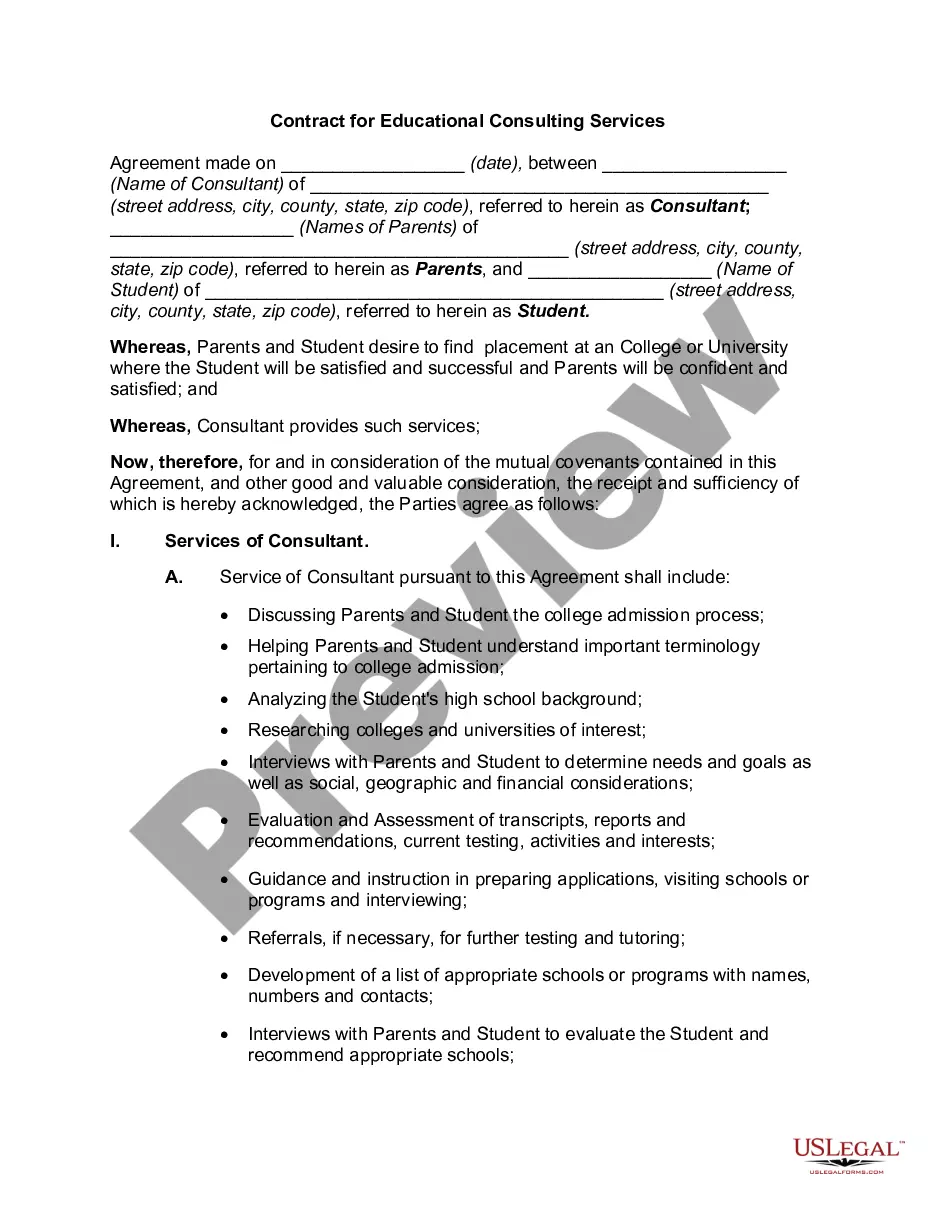
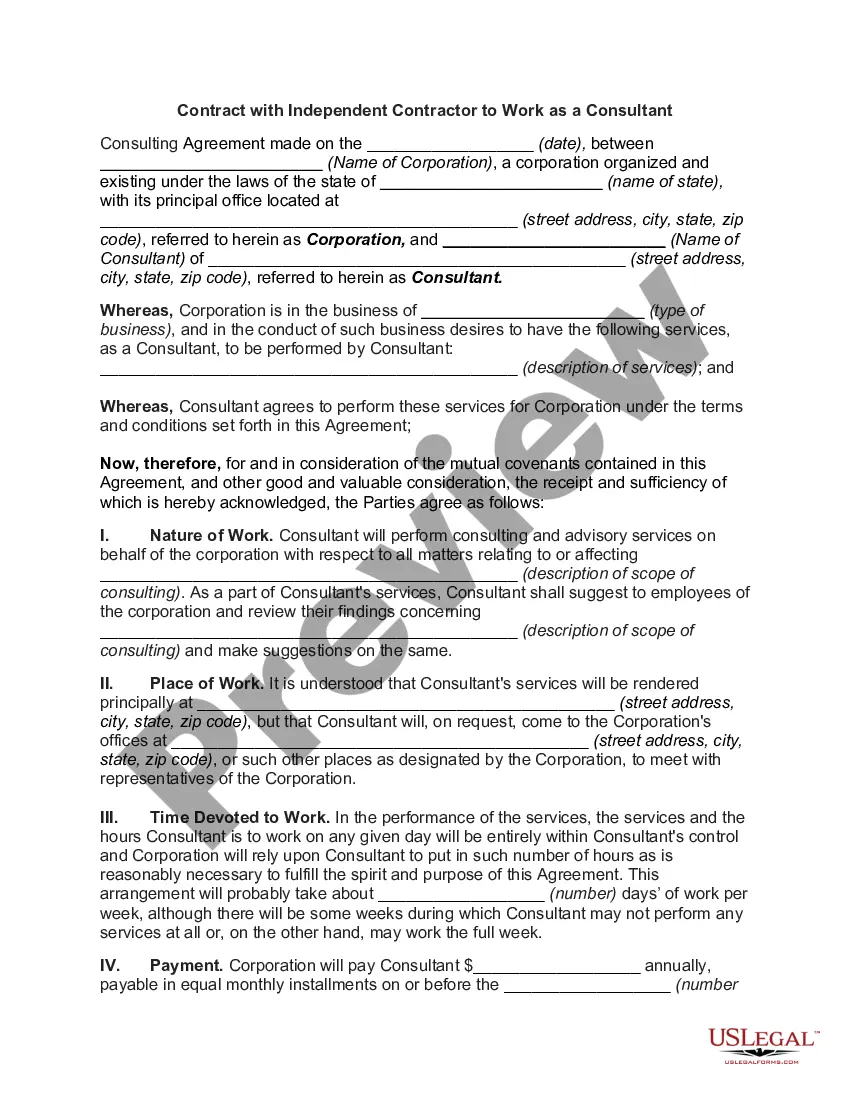
Consulting agreements spell out the exact terms of the agreement between the consultant and their client, specifying the type and quality of services the consultant will perform for the client, for how long they will perform these services, and how they will be compensated.
How do you find contracts as an independent consultant? 1. Leverage Your Network 2. Get on a Pre-Qualified List 3. Subcontract with Another Firm 4. Team up with Other Independent Consultants 5. Ask for Referrals
Referrals are a great way to get introduced to a new client. A potential client is much more likely to take advice from someone they know and trust rather than trying their luck on someone entirely new. To ask for a referral, approach a client you've successfully worked with before.
A consulting contract should offer a detailed description of the duties you will perform and the deliverables you promise the client. The agreement may also explain how much work you will perform at the client's office and how often you will work remotely.
How to Market Yourself as a Consultant Keep Your Resume Up-to-Date. Showcase Your Expertise with a Strong Online Presence. Leverage Social Proof and Recommendations. Keep Your Skills Relevant and Up-to-Date. Stay Consistent Across All Platforms.
Scope of work The consultant doesn't implement the strategies they suggest. The client puts the suggestions into action. On the other hand, a contractor performs the work for their clients. A typical contract stipulates that they're responsible for completing a defined set of tasks in the way the client wants.
How do you find contracts as an independent consultant? 1. Leverage Your Network 2. Get on a Pre-Qualified List 3. Subcontract with Another Firm 4. Team up with Other Independent Consultants 5. Ask for Referrals
Here are six best practices to write a consulting contract that defines your project scope and protects both you and your business. Define Duties, Deliverables, and Roles. Prepare for Potential Risk. Specify Project Milestones and Engagement Time. Identify Expenses and Outline Payment Terms. Specify Product Ownership.
What is typically included in a contract for services. Description of services. This lays out what professional services you and your company will receive. Payment terms. Ownership rights. Confidentiality clause. Indemnification clause. Amendment. Termination. Dispute resolution.
