Long Term Lease Of Land In Queens
Description
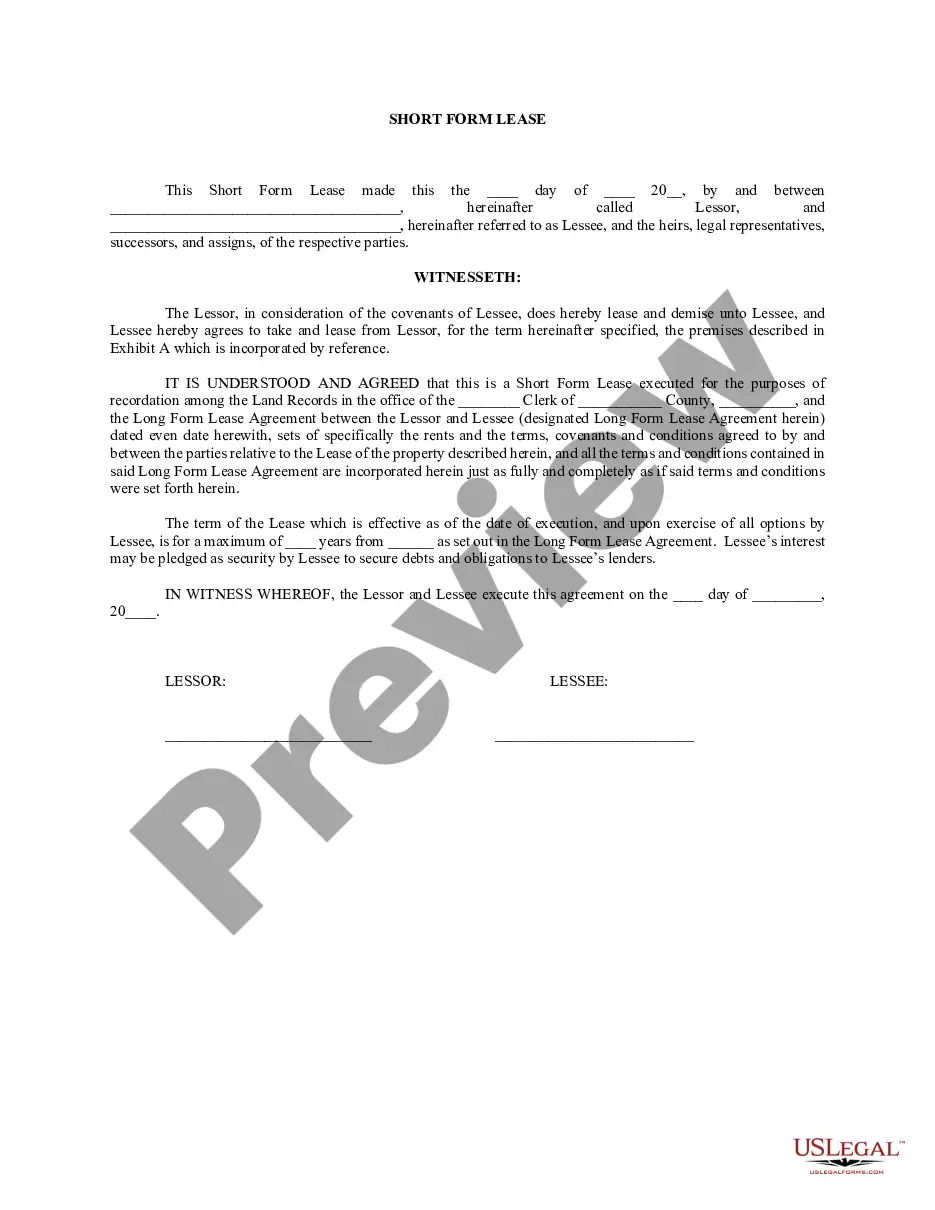
Get your form ready online
Our built-in tools help you complete, sign, share, and store your documents in one place.
Make edits, fill in missing information, and update formatting in US Legal Forms—just like you would in MS Word.
Download a copy, print it, send it by email, or mail it via USPS—whatever works best for your next step.
Sign and collect signatures with our SignNow integration. Send to multiple recipients, set reminders, and more. Go Premium to unlock E-Sign.
If this form requires notarization, complete it online through a secure video call—no need to meet a notary in person or wait for an appointment.
We protect your documents and personal data by following strict security and privacy standards.

Make edits, fill in missing information, and update formatting in US Legal Forms—just like you would in MS Word.

Download a copy, print it, send it by email, or mail it via USPS—whatever works best for your next step.

Sign and collect signatures with our SignNow integration. Send to multiple recipients, set reminders, and more. Go Premium to unlock E-Sign.

If this form requires notarization, complete it online through a secure video call—no need to meet a notary in person or wait for an appointment.

We protect your documents and personal data by following strict security and privacy standards.
Looking for another form?
Form popularity
FAQ
In the law of several US states, a 99-year lease will always be the longest possible contract for realty by statute, but many states have enacted shorter terms and some allow infinite terms.
A gross lease, also known as a full-service lease, is the most common type of commercial lease agreement. In this type of lease, the lessee is responsible for paying the base rent and the lessor generally handles any other building expenses, such as utilities, maintenance costs, taxes, and insurance.
Landlords may refuse to renew a lease only under certain enumerated circumstances, such as when the tenant is not using the premises as a primary residence.
The gross lease is MOST commonly used for residential leases. T/F Leases for space in a shopping mall are usually percentage leases.
The tenancy agreement should include: the deposit amount and how it will be protected. when the deposit can be fully or partly withheld, for example to repair damage caused by tenants. the property address. the start and end date of the tenancy. any tenant or landlord obligations. which bills your tenants are responsible for.
Our firm often receives inquires regarding renewals of residential leases. As prior blog posts have discussed, in general, a tenant in New York has no legal right to an automatic renewal lease, unless the rental unit is subject to some type of rent regulation.
The lease agreement is valid for a period of 99 years, after which the property reverts back to the lessor (the owner of the property). Rights and Responsibilities: The lessee has certain rights over the property during the lease period, including the right to use, occupy, and transfer the lease to another party.
The main difference between leasing and renting a property is the length of the contract. Leasehold is usually granted for at least 21 years and can last as long as 999 years.
999 years is the maximum term for a lease. A formal lease extension is limited to 90 years, but an informal extension can extend up to 999 years. Extending to 999 years can add 5 to 7% to the value of the property.
Longest lease There is a lease concerning a plot for a sewage tank adjoining Columb Barracks, Mullingar, Co. Westmeath, Republic of Ireland, which was signed on for 10million years. Leases in Ireland lasting `for ever' are quite common.