Mississippi Motion to Clarify and / or Reconsider and for Protective order
About this form
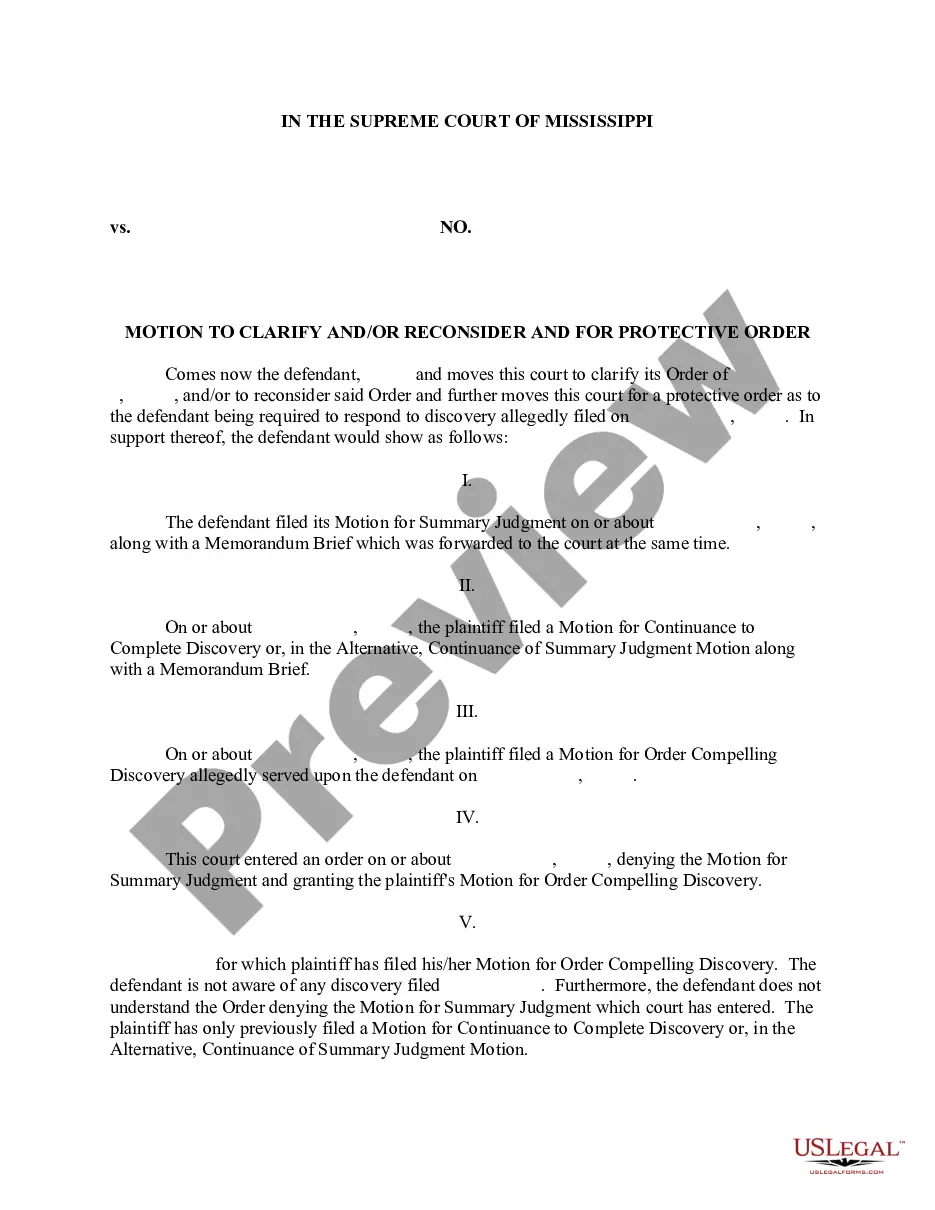
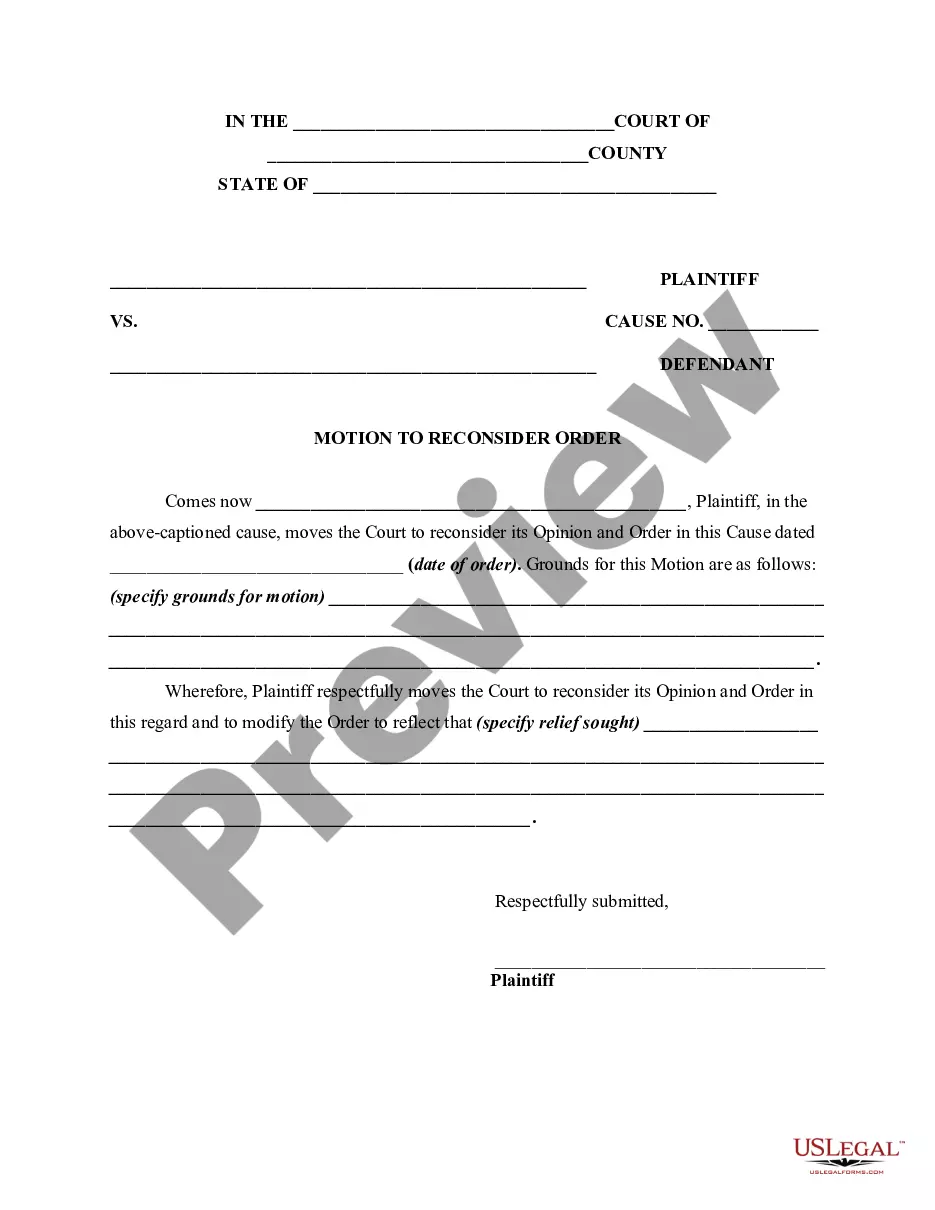
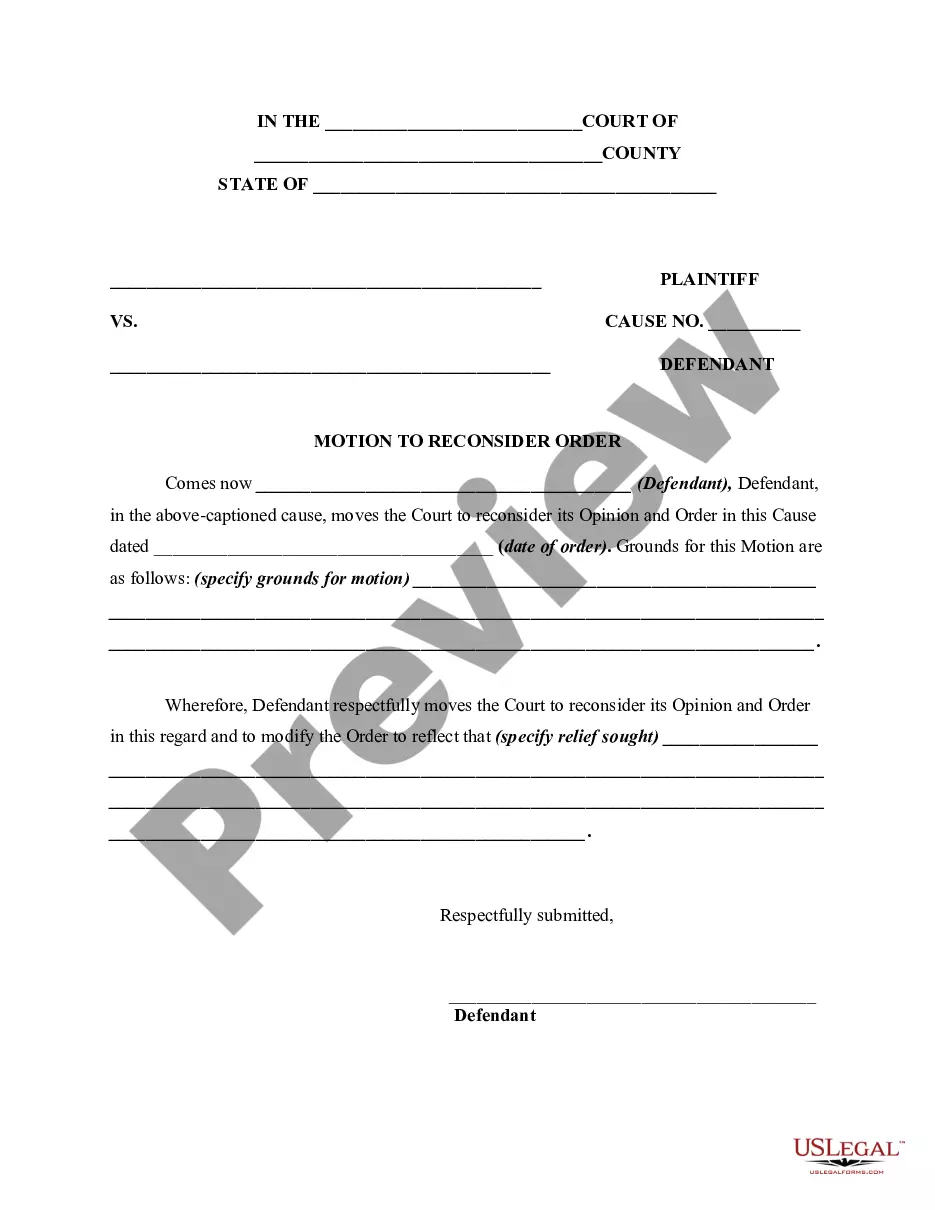
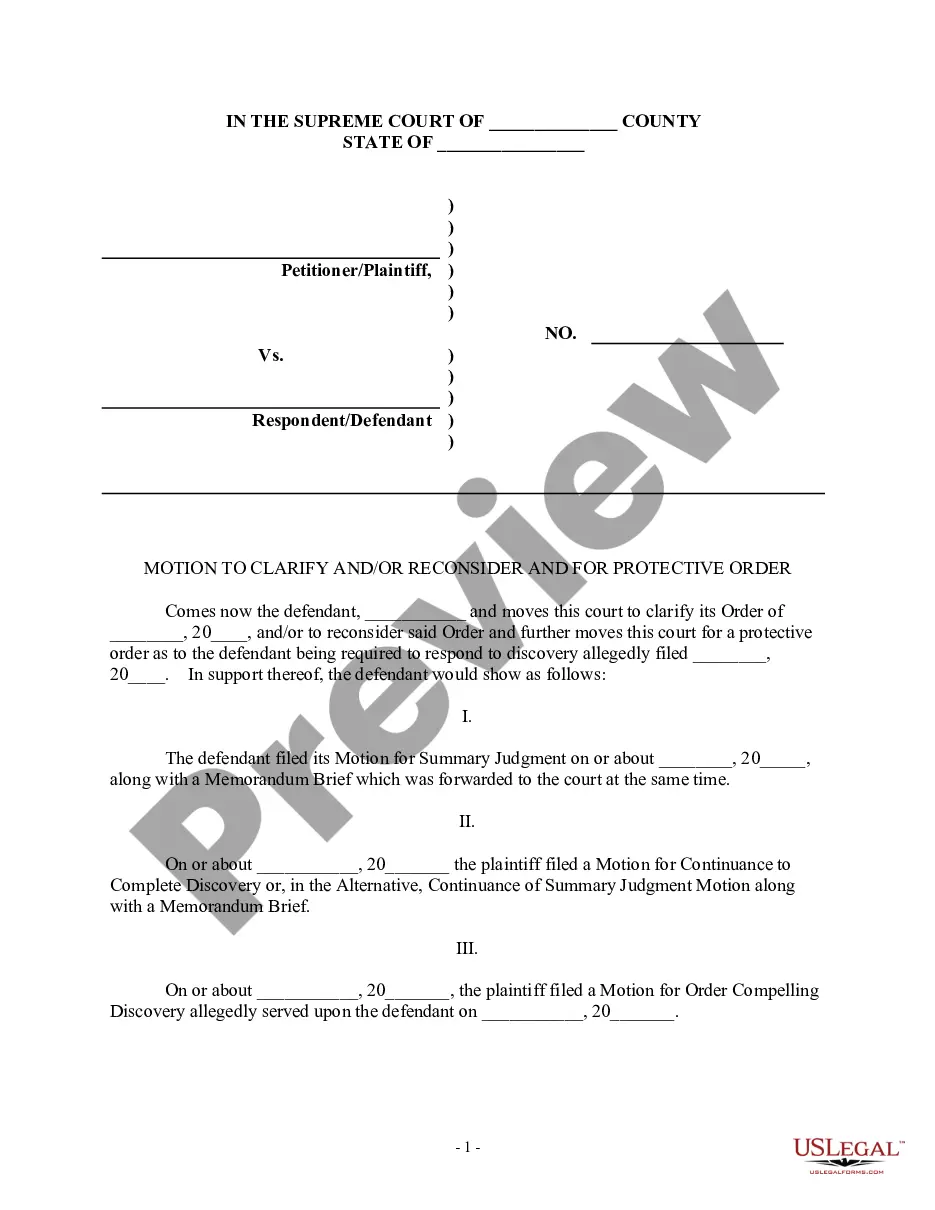
A Motion to Clarify and/or Reconsider and for Protective Order is a legal document used to formally request a court to clarify a ruling or reconsider its decision on a specific matter. This motion can also seek protective orders to limit or restrict certain actions or disclosures. Unlike general motions, this form is tailored for situations that require precise legal intent and clarity regarding past court decisions.
Key parts of this document
- Caption section to identify the court and case details.
- Statement of facts that outlines the circumstances leading to the motion.
- Legal arguments supporting the need for clarification or reconsideration.
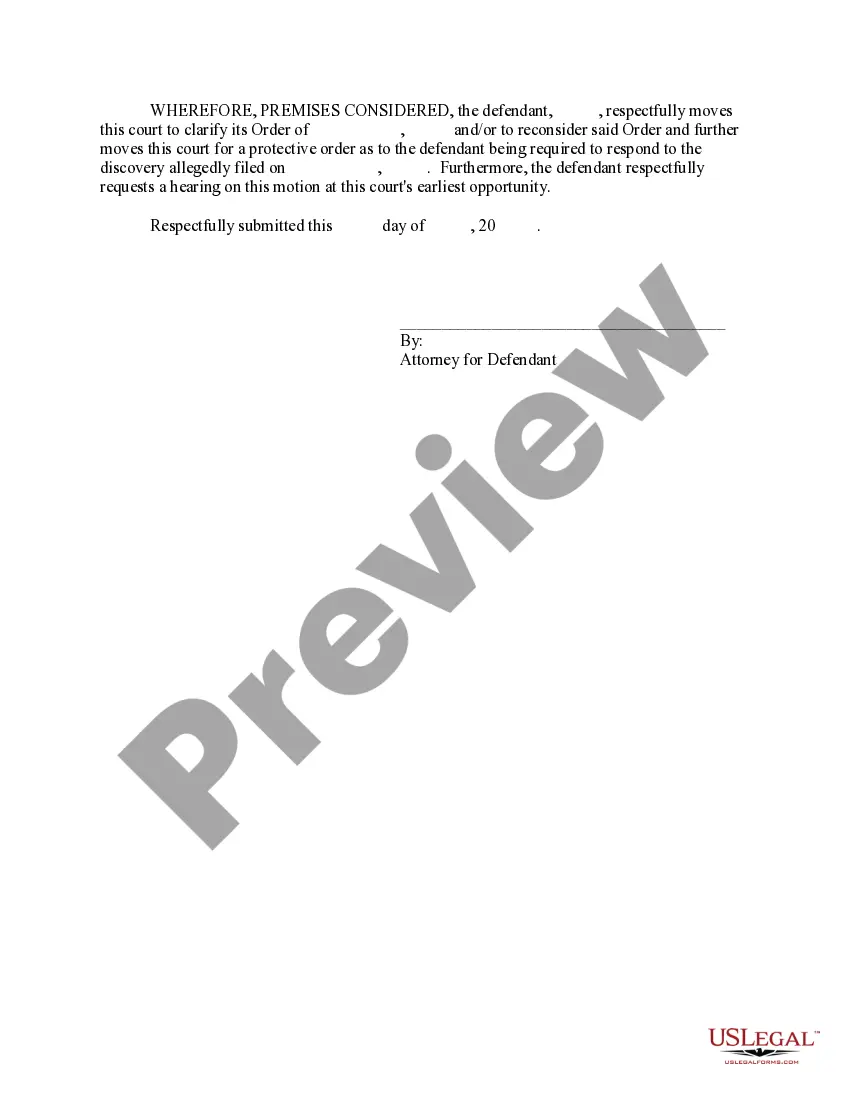
- Specific requests for protective orders addressing the desired outcomes.
- Signature block for the party filing the motion or their attorney.

When this form is needed
This form is used when a party believes the court has made an error in its judgment and seeks clarification or an adjustment to that ruling. It may also be necessary in instances where sensitive information is involved, and the party wishes to prevent its disclosure. Common scenarios include family law matters, civil litigation, or any situation where clarity on a court ruling is crucial.
Who this form is for
- Individuals or parties involved in a legal case seeking to clarify court decisions.
- Attorneys representing clients who need to file for a protective order regarding sensitive matters.
- Litigants requiring adjustment of previous court rulings in civil or family law cases.
Steps to complete this form
- Identify the parties involved by entering their names in the caption section.
- Provide a clear statement of facts, detailing the reason for the motion.
- Present the legal arguments that justify the need for clarification or reconsideration.
- Specify the protective orders requested, clarifying the desired restrictions.
- Sign and date the motion, ensuring all required parties are included.
Notarization requirements for this form
Notarization is generally not required for this form. However, certain states or situations might demand it. You can complete notarization online through US Legal Forms, powered by Notarize, using a verified video call available anytime.
Get your form ready online
Our built-in tools help you complete, sign, share, and store your documents in one place.
Make edits, fill in missing information, and update formatting in US Legal Forms—just like you would in MS Word.
Download a copy, print it, send it by email, or mail it via USPS—whatever works best for your next step.
Sign and collect signatures with our SignNow integration. Send to multiple recipients, set reminders, and more. Go Premium to unlock E-Sign.
If this form requires notarization, complete it online through a secure video call—no need to meet a notary in person or wait for an appointment.
We protect your documents and personal data by following strict security and privacy standards.

Make edits, fill in missing information, and update formatting in US Legal Forms—just like you would in MS Word.

Download a copy, print it, send it by email, or mail it via USPS—whatever works best for your next step.

Sign and collect signatures with our SignNow integration. Send to multiple recipients, set reminders, and more. Go Premium to unlock E-Sign.

If this form requires notarization, complete it online through a secure video call—no need to meet a notary in person or wait for an appointment.

We protect your documents and personal data by following strict security and privacy standards.
Common mistakes
- Failing to provide adequate facts to support the motion.
- Neglecting to specify the protective orders clearly.
- Omitting signatures or improperly formatting the caption section.
Why complete this form online
- Convenient access to legal templates crafted by licensed attorneys.
- Editable documents that can be tailored to individual circumstances.
- Reliable formatting that meets court standards.
Looking for another form?

Form popularity
FAQ
A hearing for the purpose of asking a judge to issue a ruling or order. The motion is typically filed by one side and a notice is sent to the opposing attorney who responds in writing.
A motion is an application to the court made by the prosecutor or defense attorney, requesting that the court make a decision on a certain issue before the trial begins. The motion can affect the trial, courtroom, defendants, evidence, or testimony. Only judges decide the outcome of motions.
The motion must include a separate "Notice of Motion" which includes a brief summary of the nature of the motion, the deadline for filing a response, and if there is a hearing, the date, time, and location of the hearing.
A "motion" is simply a formal request to a court that it do something or decide an issue in favor of the party that asks for it. "Granted" means the court agreed with the request, and did or decided in favor of the requester.
The facts of the case concern the trial court's attempt to divide marital property in a divorce, including real estate owned by the family business.A motion for clarification is just what the name implies: a request for an explanation from the trial court as to the meaning of a prior, allegedly unclear, order.
Generally speaking, a MOTION, is a request made to the Court to take some specified action or to compell a party to take some specified action, whereas an ORDER is the decree or decision of the Court.
When you file your motion, the court clerk will insert the date, time, and place of the hearing on your motion. You must then serve (mail) a copy of your filed motion (including all exhibits and the date, time, and place of hearing) to all other parties in the case.
A motion is an application to the court made by the prosecutor or defense attorney, requesting that the court make a decision on a certain issue before the trial begins. The motion can affect the trial, courtroom, defendants, evidence, or testimony. Only judges decide the outcome of motions.
A motion is a written request or proposal to the court to obtain an asked-for order, ruling, or direction. There are a variety of motions, and it has become standard practice to file certain kinds of motions with the court based on the type of case.