Closure Any Property For Whole Numbers In Contra Costa
Description

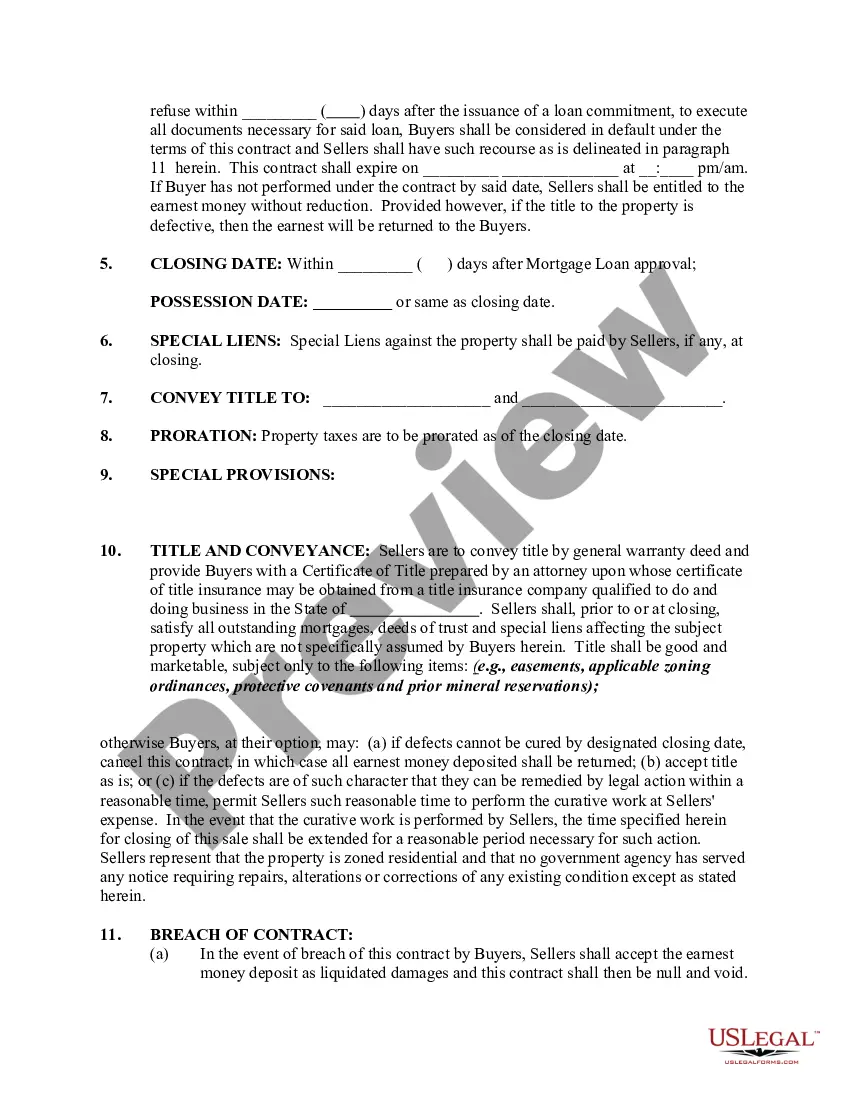
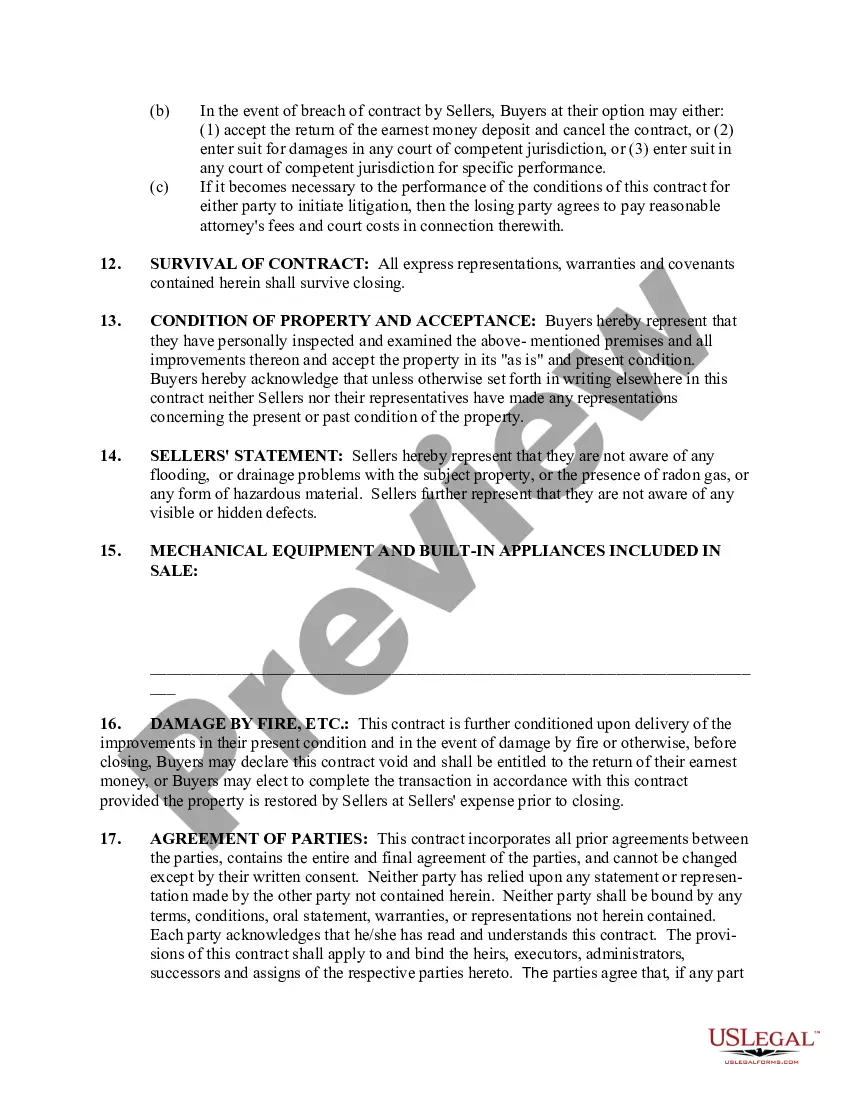
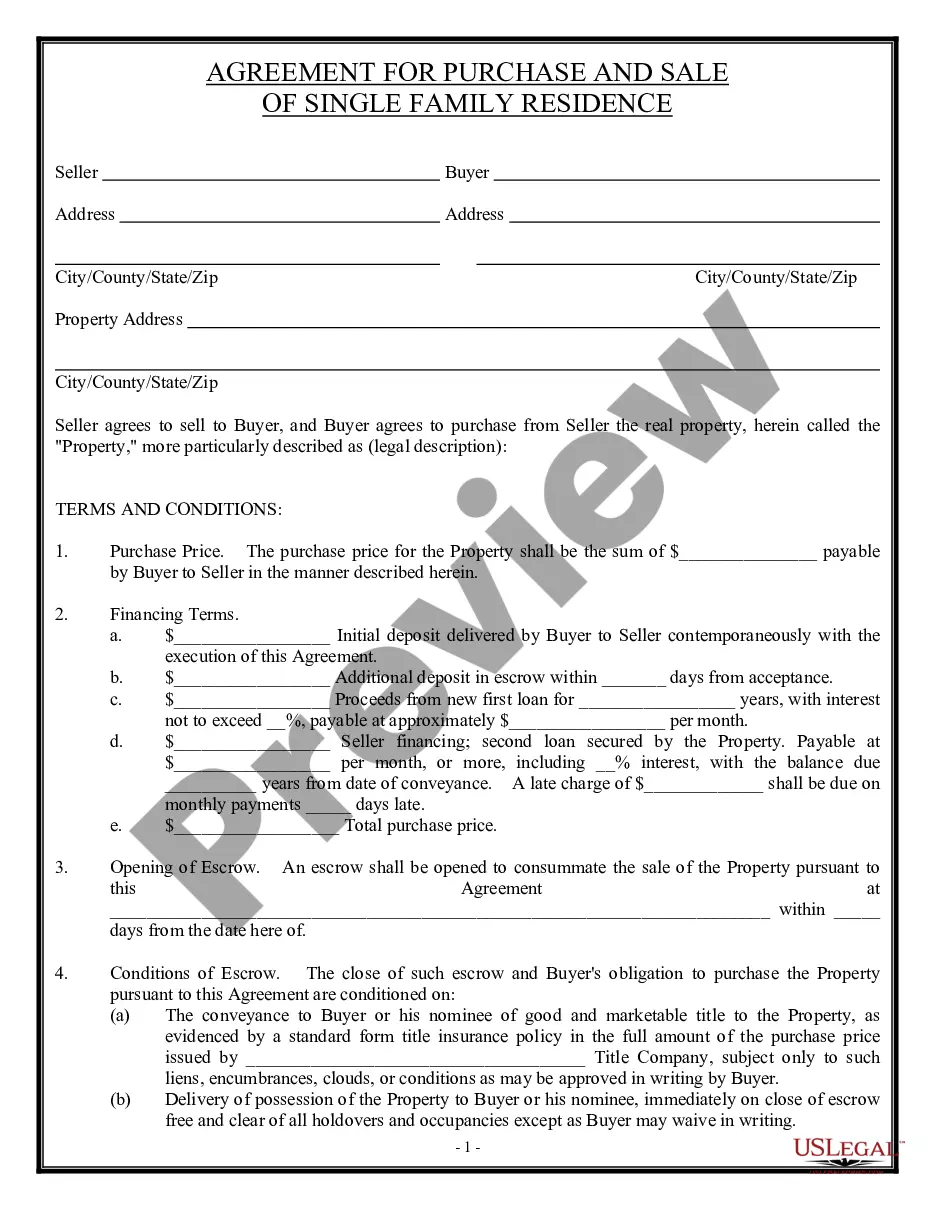
Get your form ready online
Our built-in tools help you complete, sign, share, and store your documents in one place.
Make edits, fill in missing information, and update formatting in US Legal Forms—just like you would in MS Word.
Download a copy, print it, send it by email, or mail it via USPS—whatever works best for your next step.
Sign and collect signatures with our SignNow integration. Send to multiple recipients, set reminders, and more. Go Premium to unlock E-Sign.
If this form requires notarization, complete it online through a secure video call—no need to meet a notary in person or wait for an appointment.
We protect your documents and personal data by following strict security and privacy standards.

Make edits, fill in missing information, and update formatting in US Legal Forms—just like you would in MS Word.

Download a copy, print it, send it by email, or mail it via USPS—whatever works best for your next step.

Sign and collect signatures with our SignNow integration. Send to multiple recipients, set reminders, and more. Go Premium to unlock E-Sign.

If this form requires notarization, complete it online through a secure video call—no need to meet a notary in person or wait for an appointment.

We protect your documents and personal data by following strict security and privacy standards.
Looking for another form?

Form popularity
FAQ
This means that as long as property values increase by more than 2 percent per year, homeowners gain from remaining in the same house because their taxes are lower than they would be on a different house of the same value.
Proposition 13 rolled back most local real property, or real estate, assessments to 1975 market value levels, limited the property tax rate to 1 percent plus the rate necessary to fund local voter-approved bonded indebtedness, and limited future property tax increases.
Closure property holds for addition and multiplication of whole numbers. Closure property of whole numbers under addition: The sum of any two whole numbers will always be a whole number, i.e. if a and b are any two whole numbers, a + b will be a whole number.
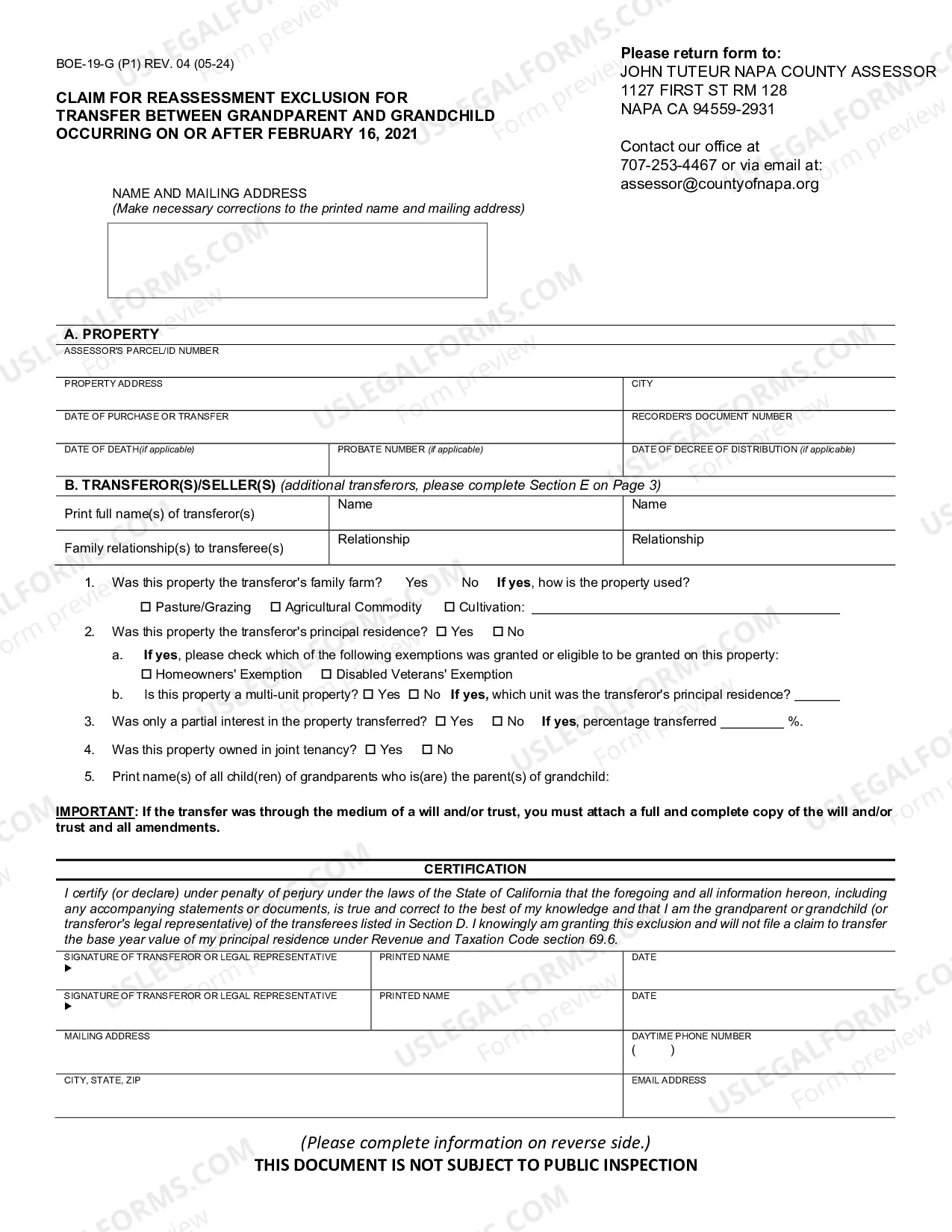
Proposition 13 (officially named the People's Initiative to Limit Property Taxation) is an amendment of the Constitution of California enacted during 1978, by means of the initiative process, to cap property taxes and limit property reassessments to when the property changes ownership, and to require a 2/3 majority for ...
ACTION TO CONSIDER: To avoid property tax reassessment, do not transfer real property from individuals to a legal entity unless the individuals have the same proportionate interest in the legal entity as they did in the real property.
Proposition 13 was adopted by California voters in 1978, and changed the definition of taxable value for all real property in the state. Taxable value of real property is now defined as the : Factored Base Year Value (FBYV), or. Market value on lien date (January 1st), whichever is lower.
