Boat Rental Liability Waiver Format In Illinois
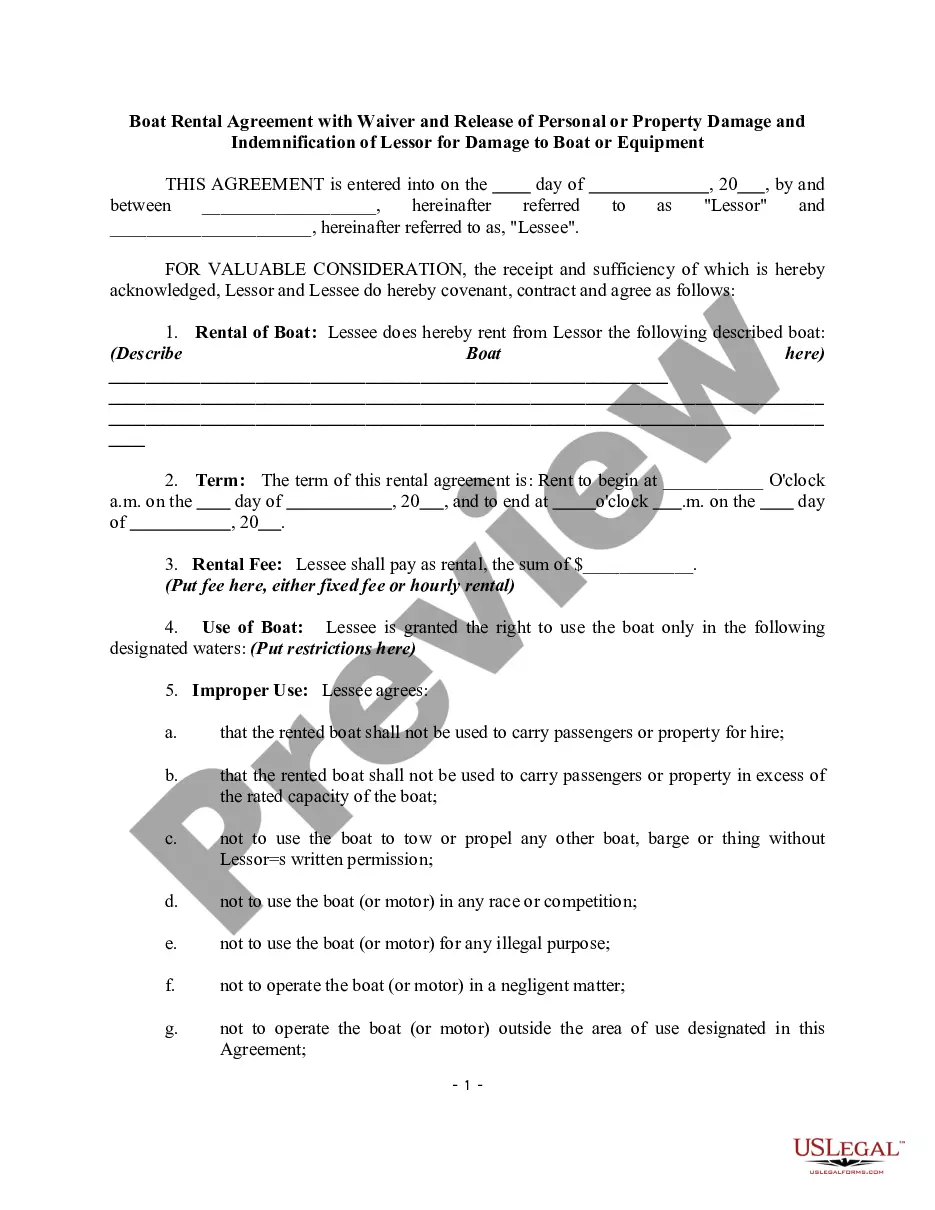
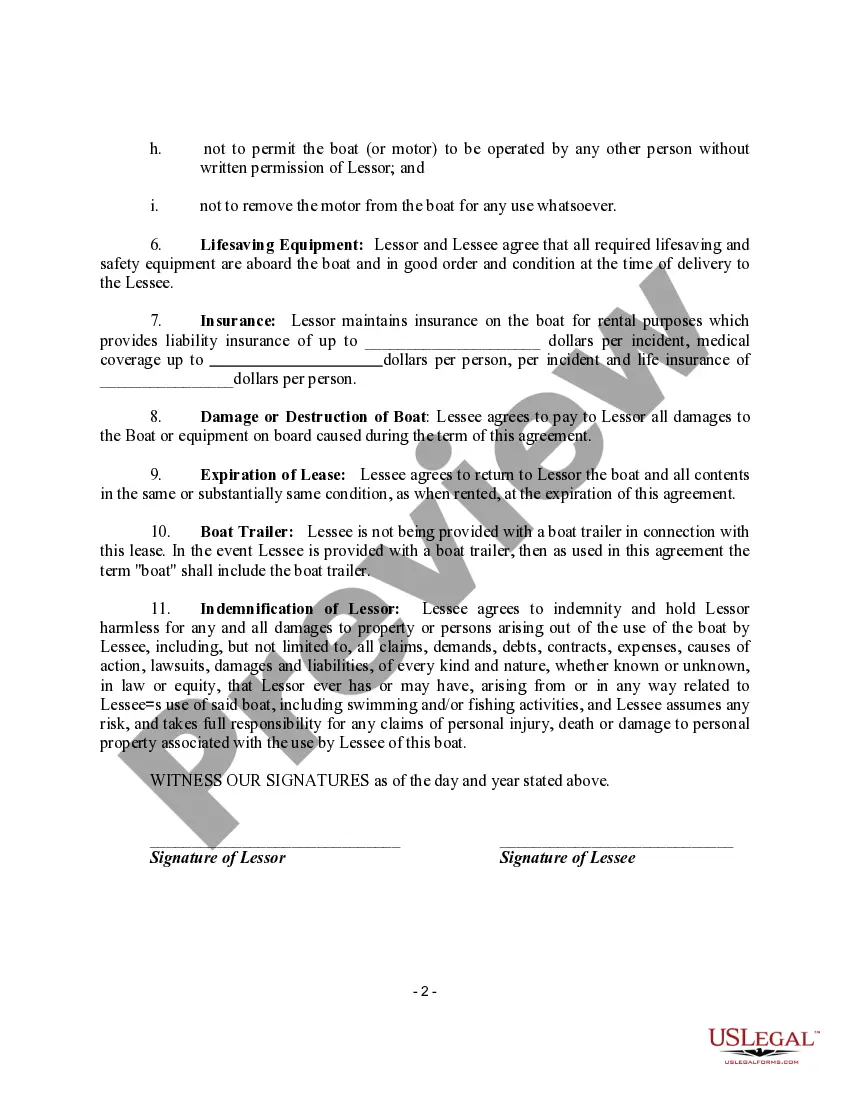
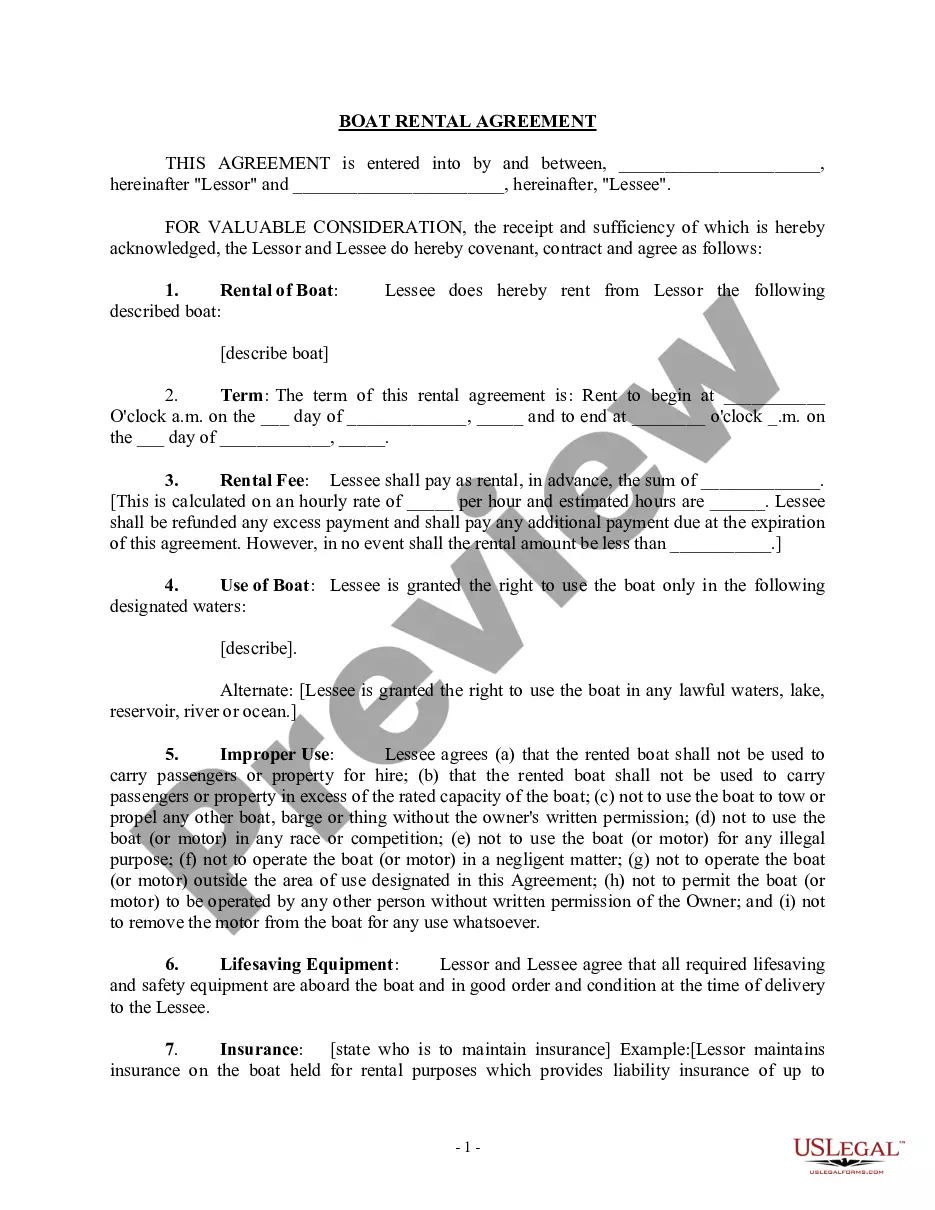
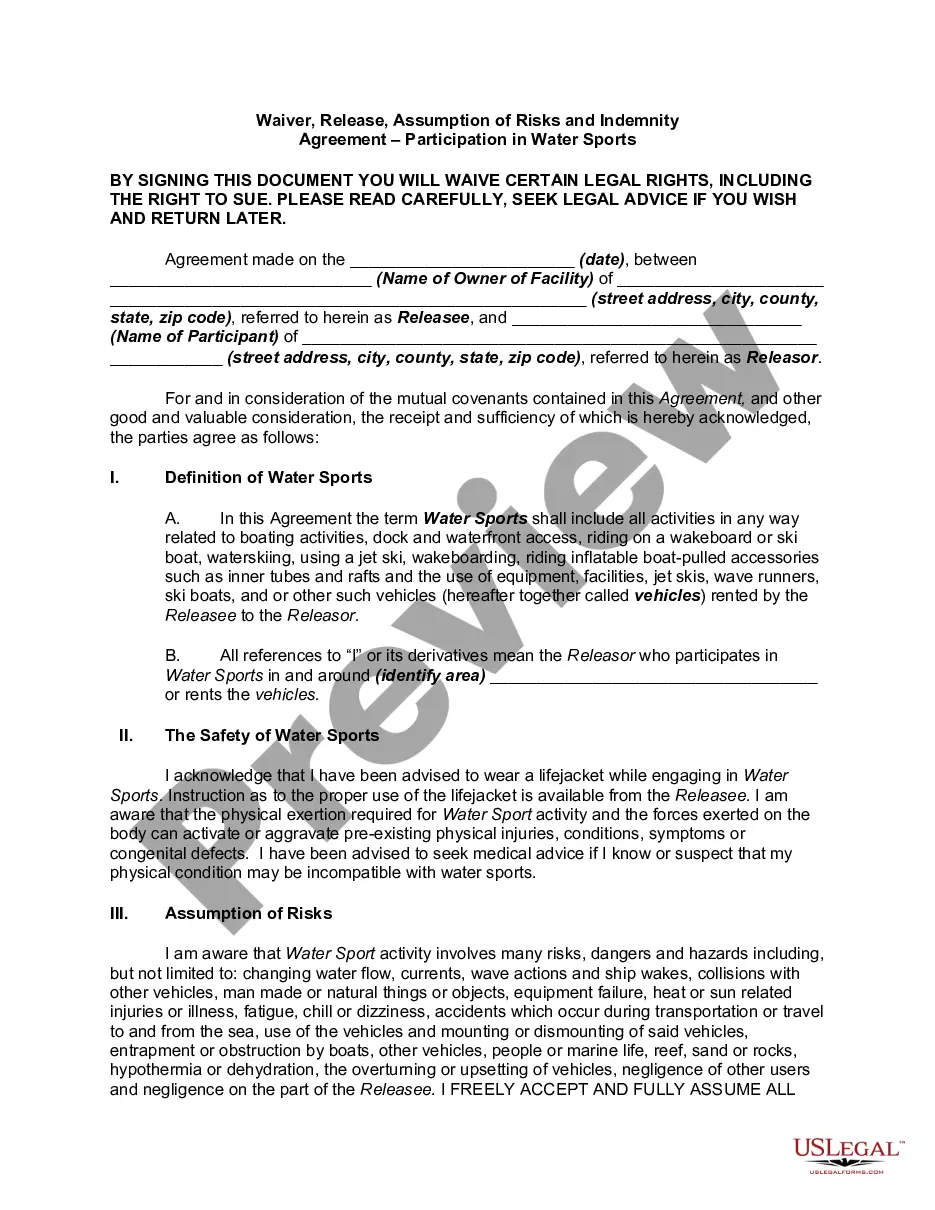
Description
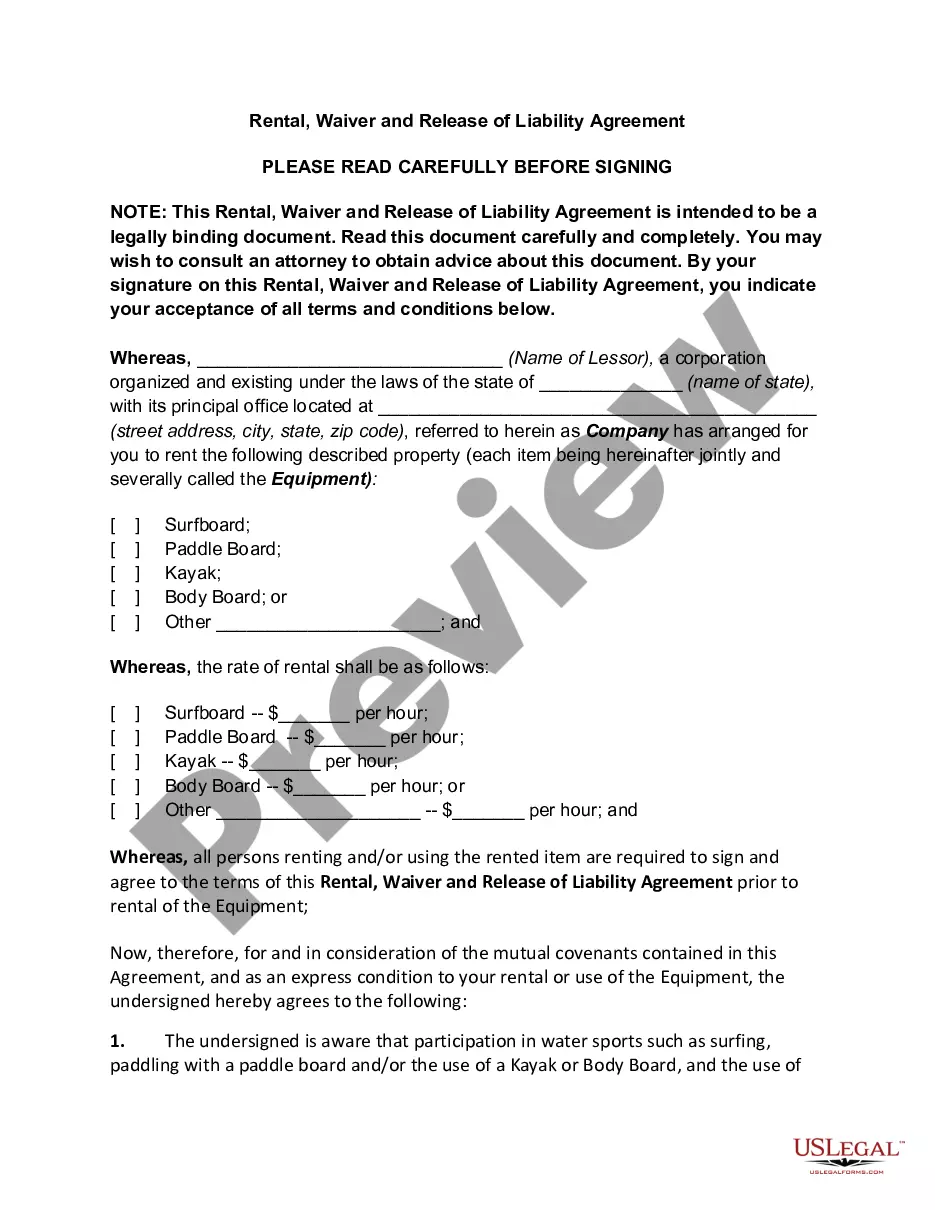
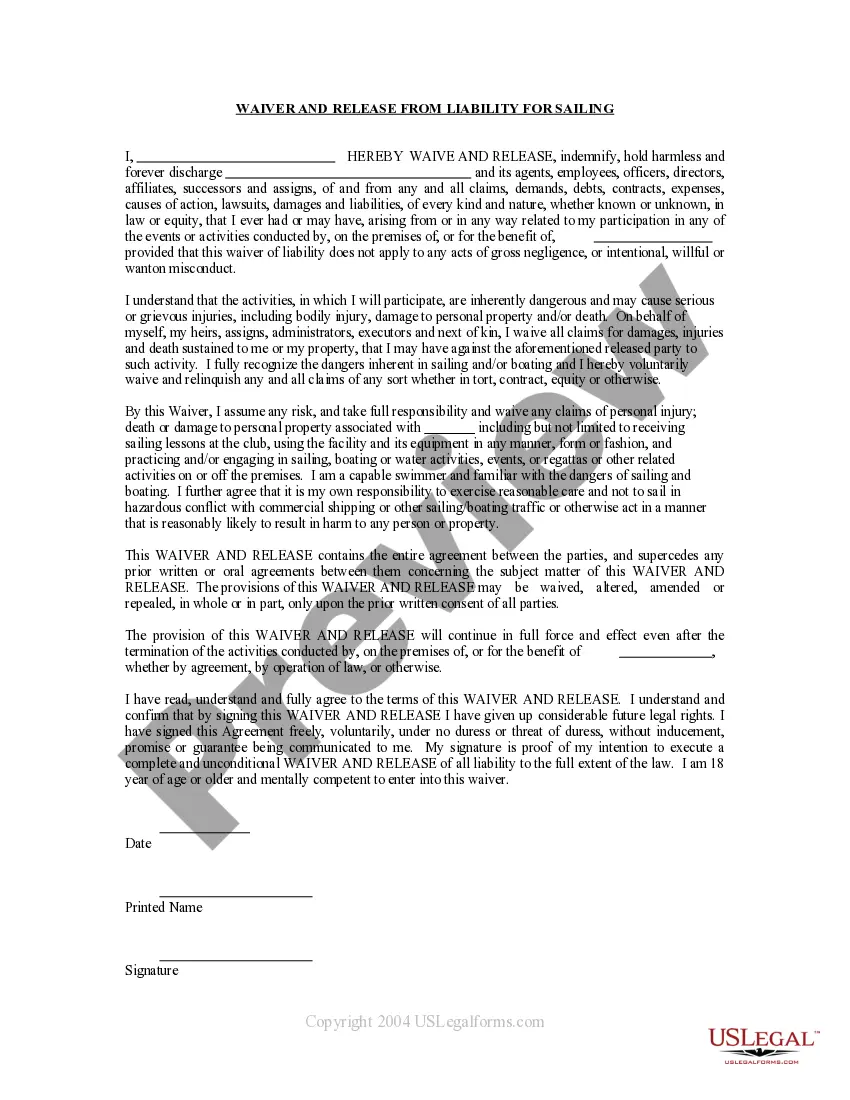
Get your form ready online
Our built-in tools help you complete, sign, share, and store your documents in one place.
Make edits, fill in missing information, and update formatting in US Legal Forms—just like you would in MS Word.
Download a copy, print it, send it by email, or mail it via USPS—whatever works best for your next step.
Sign and collect signatures with our SignNow integration. Send to multiple recipients, set reminders, and more. Go Premium to unlock E-Sign.
If this form requires notarization, complete it online through a secure video call—no need to meet a notary in person or wait for an appointment.
We protect your documents and personal data by following strict security and privacy standards.

Make edits, fill in missing information, and update formatting in US Legal Forms—just like you would in MS Word.

Download a copy, print it, send it by email, or mail it via USPS—whatever works best for your next step.

Sign and collect signatures with our SignNow integration. Send to multiple recipients, set reminders, and more. Go Premium to unlock E-Sign.

If this form requires notarization, complete it online through a secure video call—no need to meet a notary in person or wait for an appointment.

We protect your documents and personal data by following strict security and privacy standards.
Looking for another form?






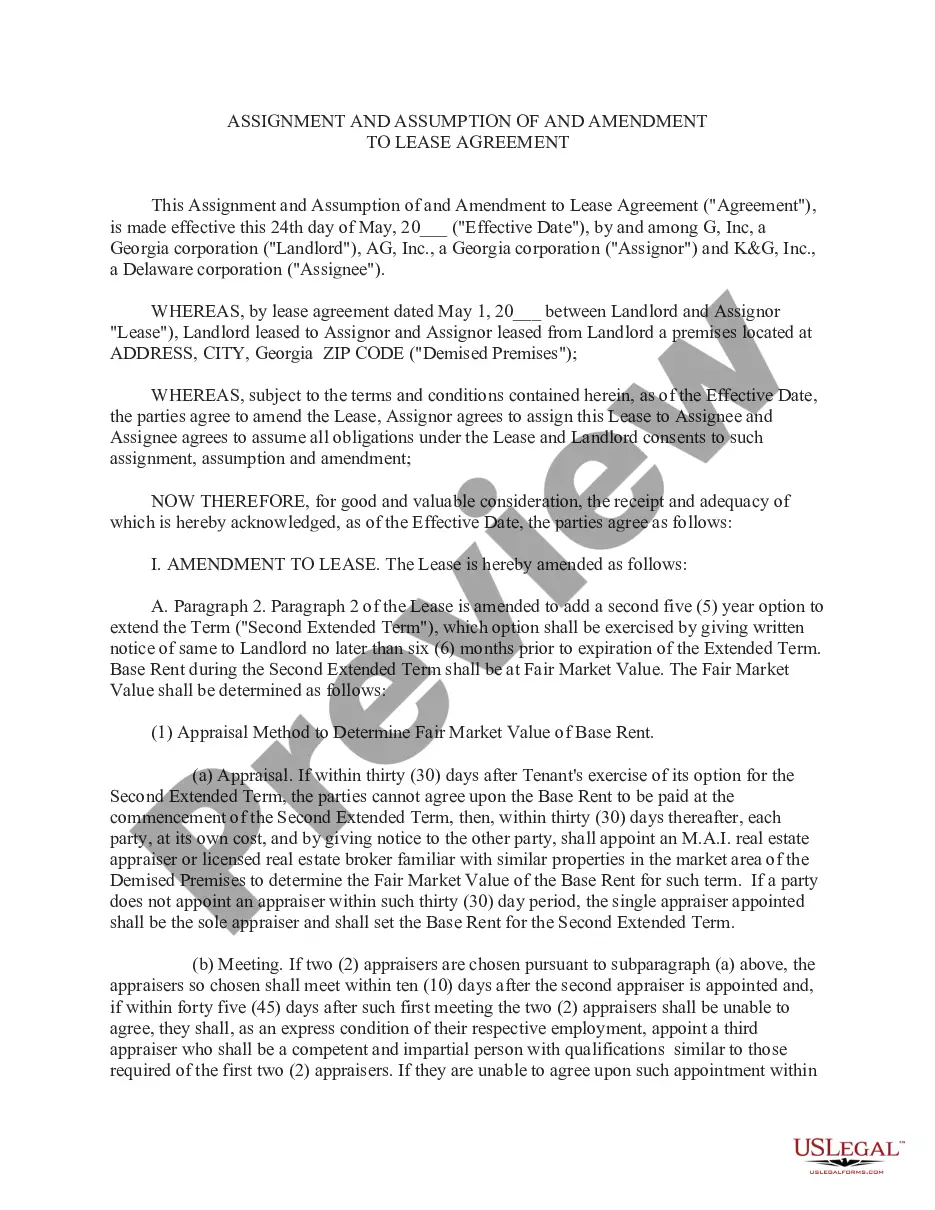
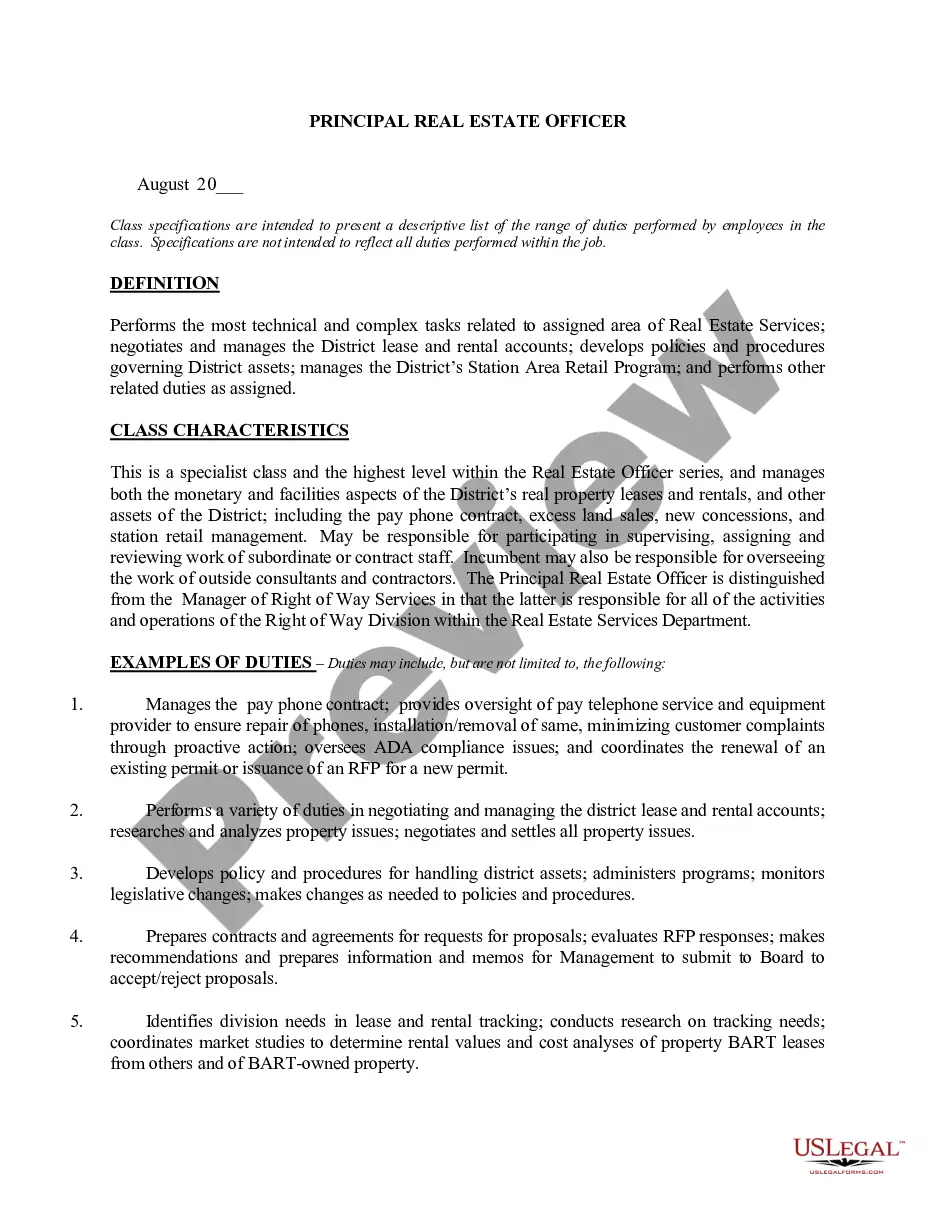

Form popularity
FAQ
In basic terms, a liability waiver is a legal document between a business and customer that is often at the center of injury lawsuits against a company. The customer agrees to accept the risk of injury in a dangerous activity or procedure and agrees not to hold the business responsible should damage occur.
The company wouldn't likely want to accept responsibility if something went wrong, so the liability waiver would make it clear to you what risks you're accepting before you take the leap. Disclaimers are statements that specifically outline the scope of responsibilities and obligations that one party has for another.
A release of liability, also known as a liability waiver or a hold harmless agreement, is a contract in which one party agrees not to hold another party liable for damages or injury. These contracts are common in fields that involve some risk to property, finances, or health.
Depending on the size and type of boats you offer, you may need to apply for certain licenses and certifications before renting out vessels. You should also familiarize yourself with local boat rental regulations and laws concerning navigational rules and restricted areas when operating a rented vessel.
A liability waiver form is a legal contract that educates one party about the risks associated with an activity. Once signed, it prevents the participant from opening a lawsuit against the company in the event of damage or loss, effectively shifting responsibility for injuries from the company to the customer.
In the law of contract, the term 'waiver' is most commonly used to denote the granting of a concession by one party to a contract by not insisting on the precise performance by the other party of a duty under the contract, whether before or after any breach of the term waived.