Boat Contract With Us In Hennepin
Description

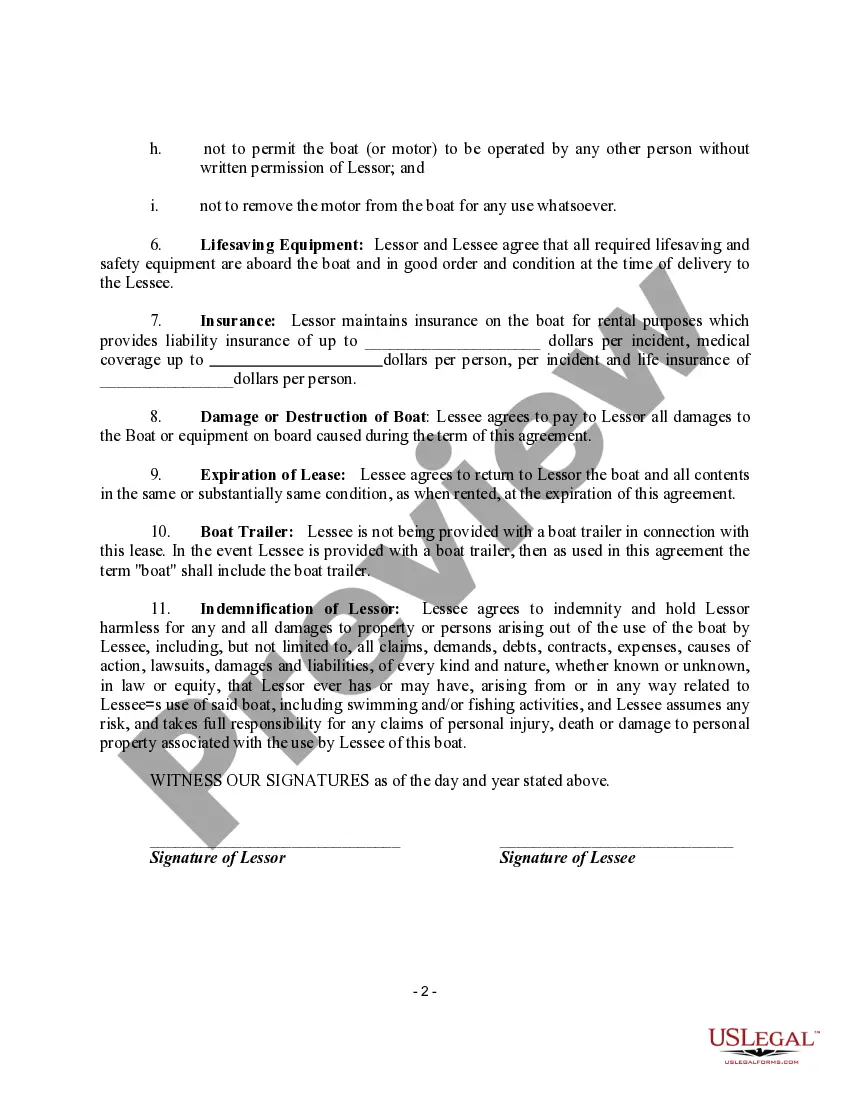
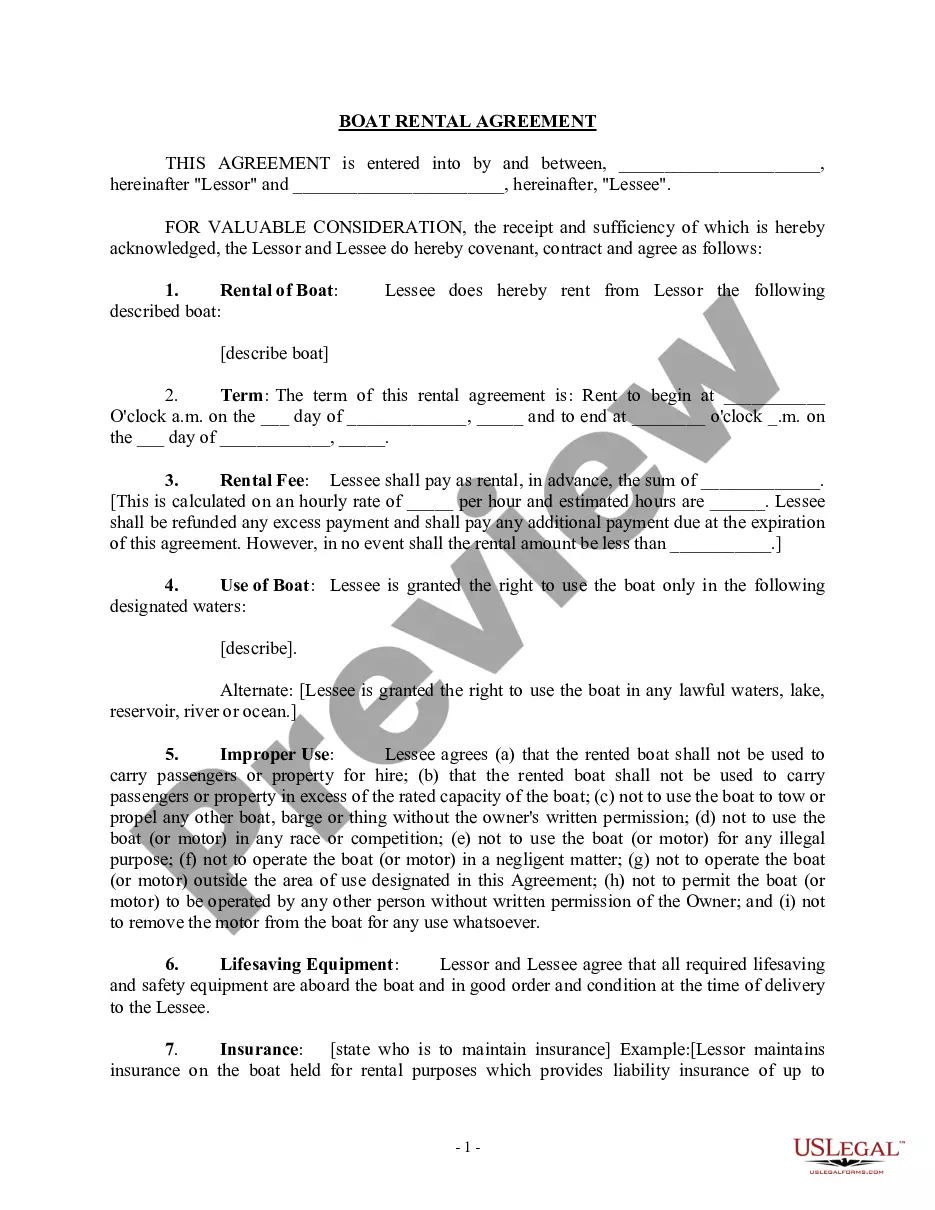
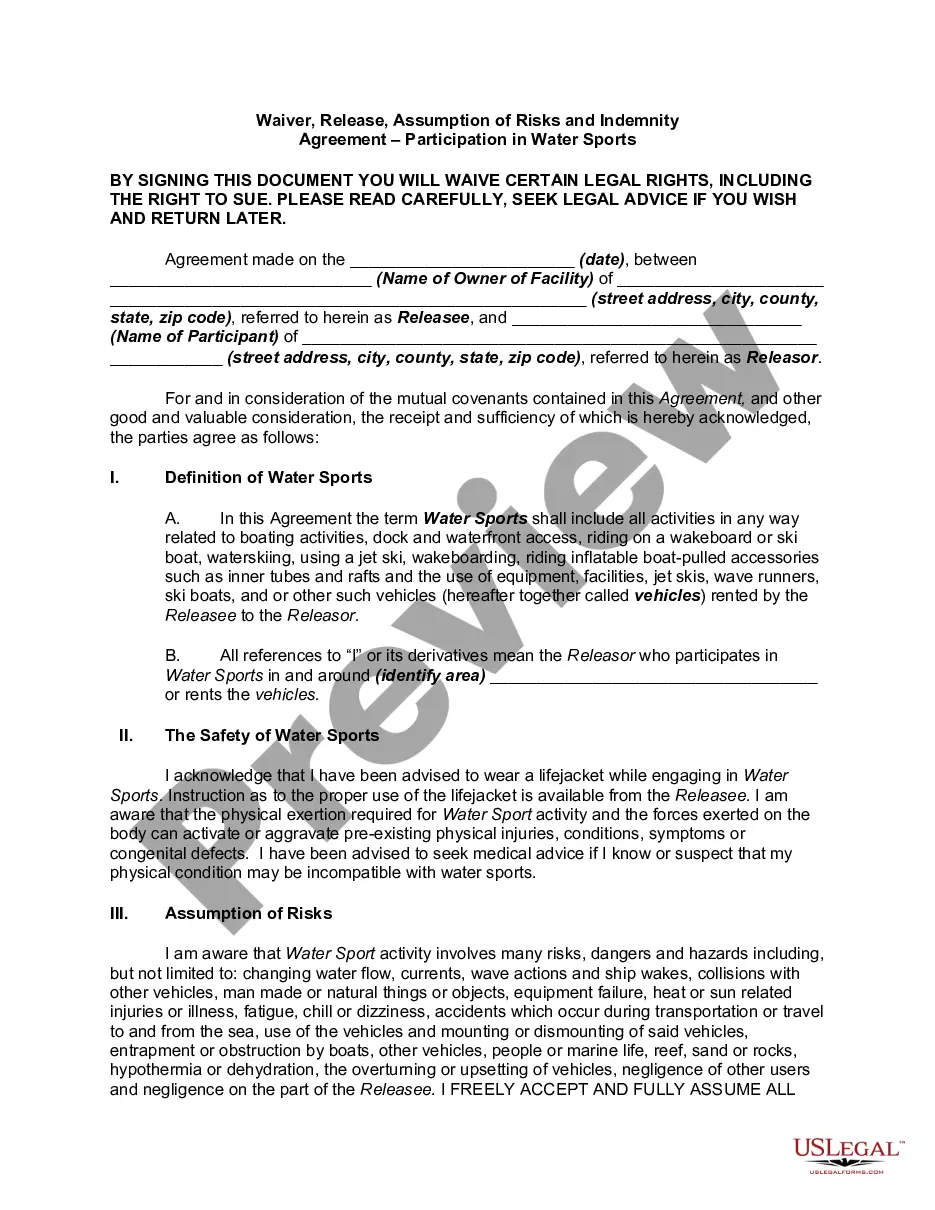
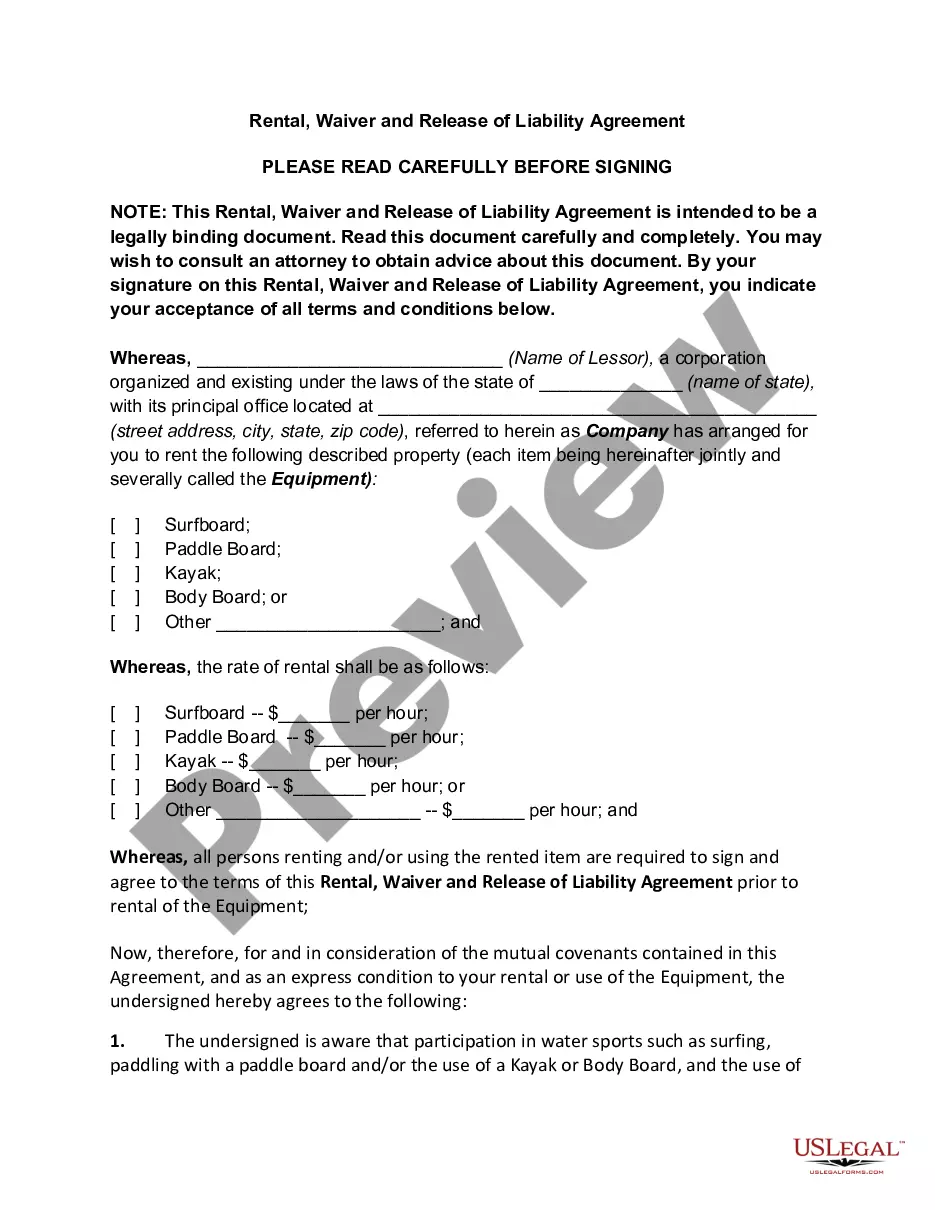
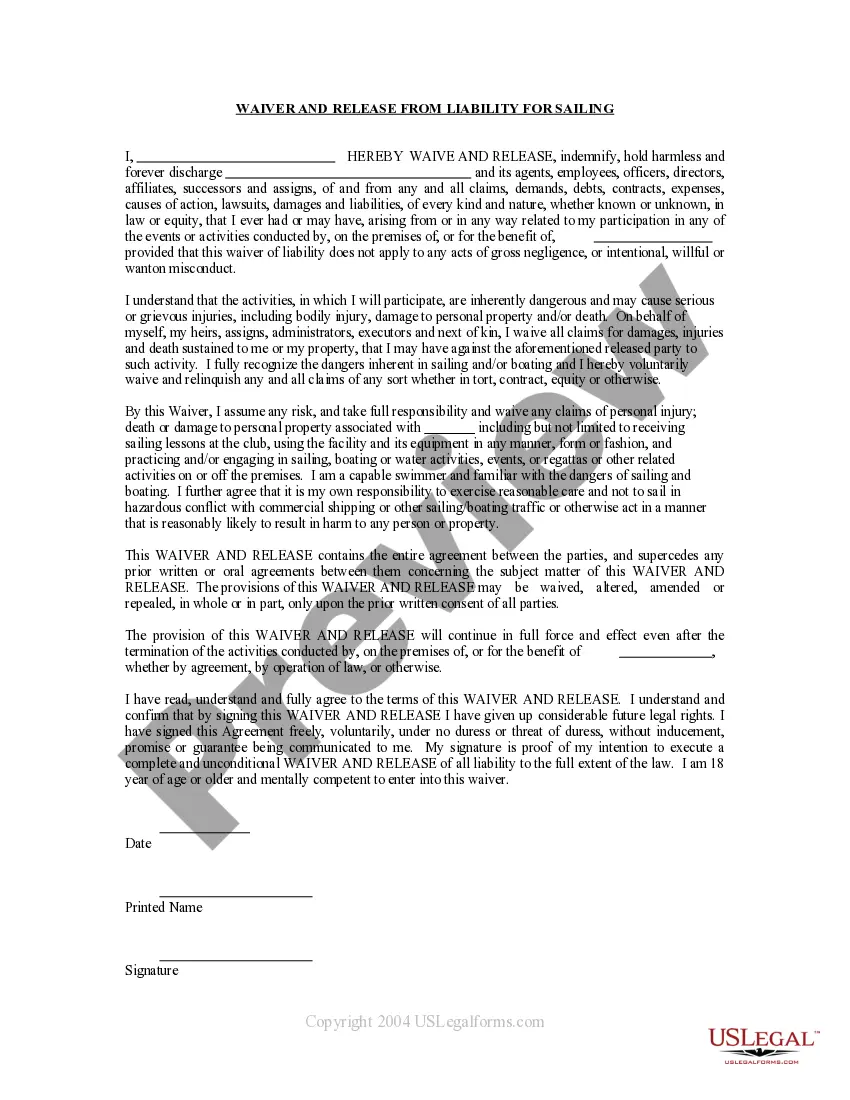
Get your form ready online
Our built-in tools help you complete, sign, share, and store your documents in one place.
Make edits, fill in missing information, and update formatting in US Legal Forms—just like you would in MS Word.
Download a copy, print it, send it by email, or mail it via USPS—whatever works best for your next step.
Sign and collect signatures with our SignNow integration. Send to multiple recipients, set reminders, and more. Go Premium to unlock E-Sign.
If this form requires notarization, complete it online through a secure video call—no need to meet a notary in person or wait for an appointment.
We protect your documents and personal data by following strict security and privacy standards.

Make edits, fill in missing information, and update formatting in US Legal Forms—just like you would in MS Word.

Download a copy, print it, send it by email, or mail it via USPS—whatever works best for your next step.

Sign and collect signatures with our SignNow integration. Send to multiple recipients, set reminders, and more. Go Premium to unlock E-Sign.

If this form requires notarization, complete it online through a secure video call—no need to meet a notary in person or wait for an appointment.

We protect your documents and personal data by following strict security and privacy standards.
Looking for another form?



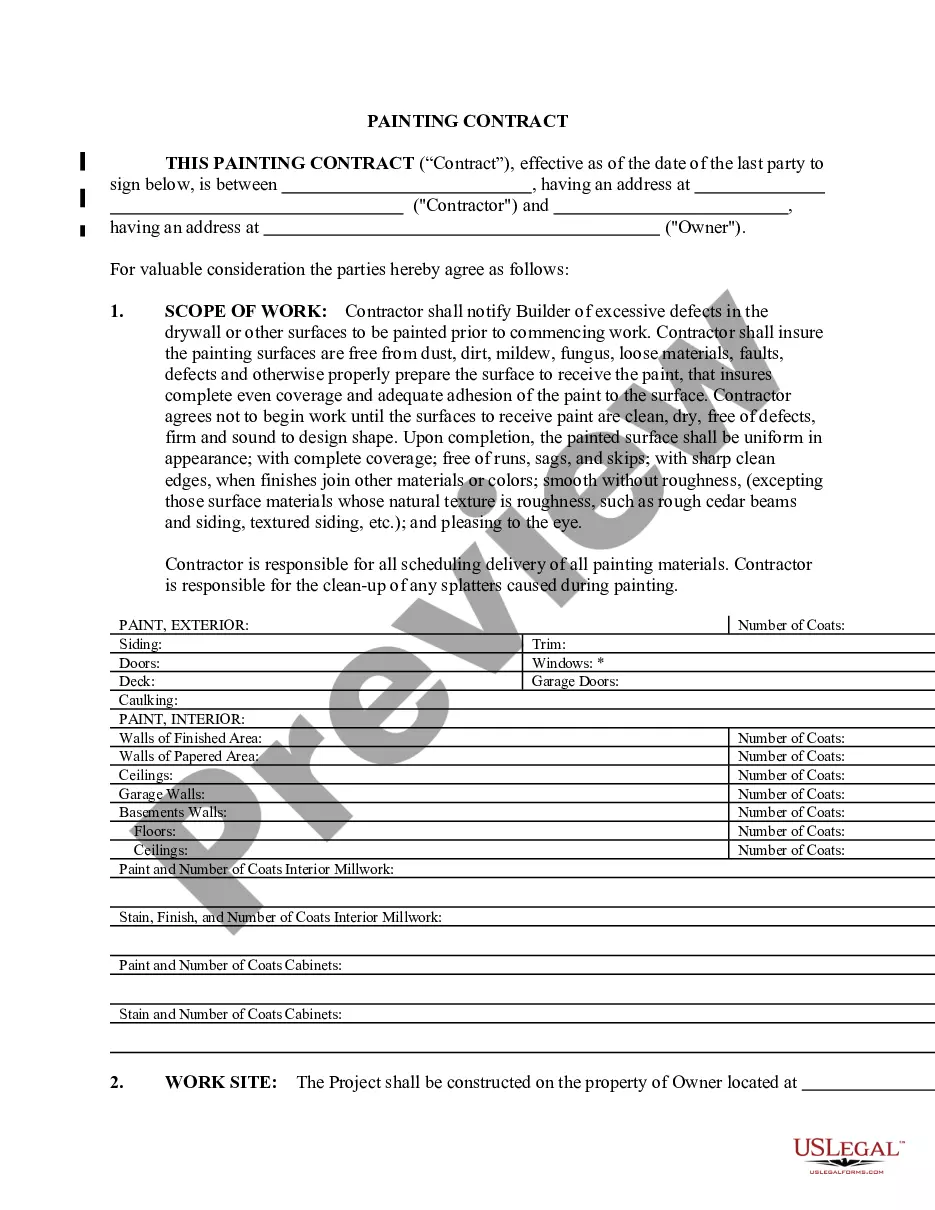


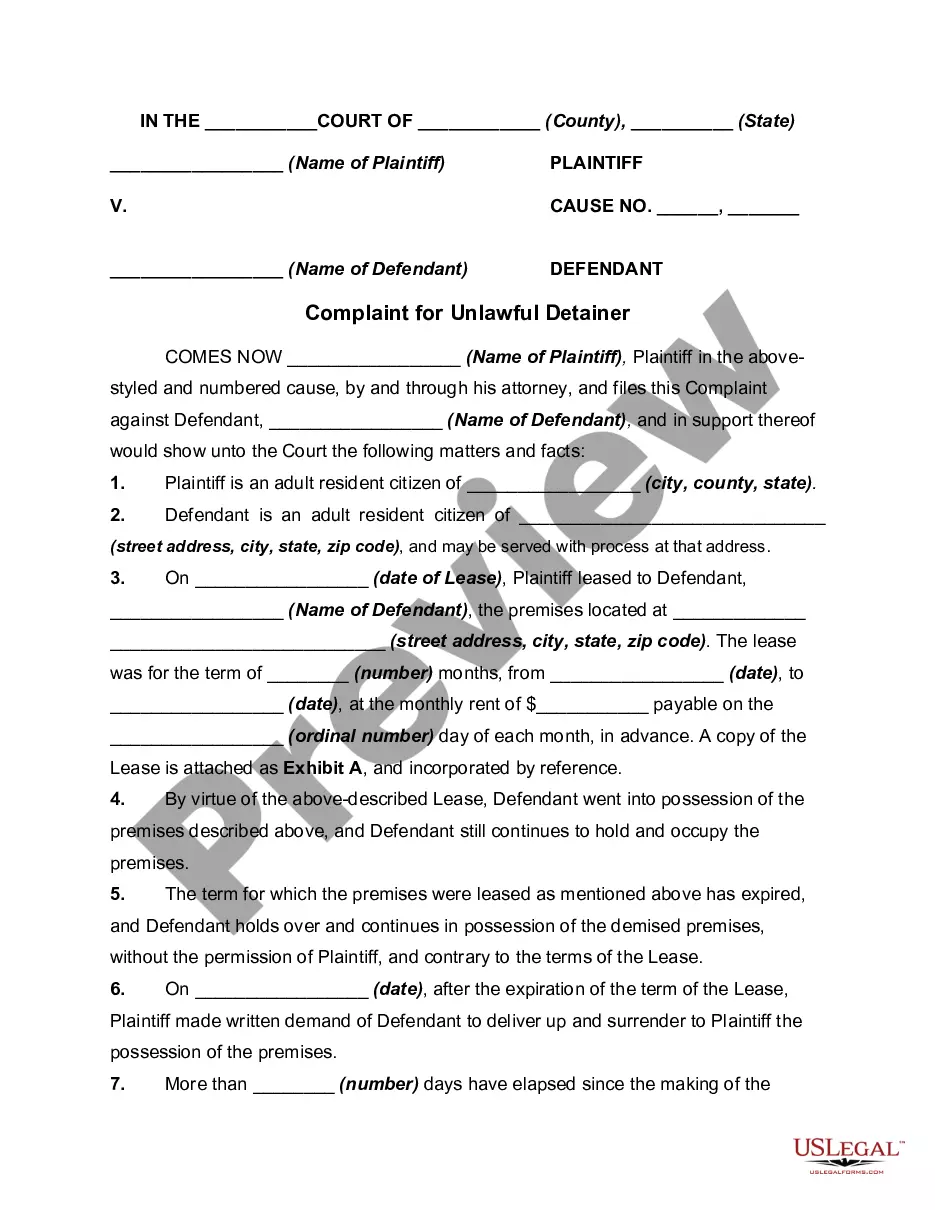



Form popularity
FAQ
If the vessel is a non-titled watercraft, a Boat Bill of Sale will be required. Complete the Watercraft Title and Registration Application with the seller (both parties must sign). If the vessel is a non-titled watercraft, the universal registration form should be completed.
Here are the types of boats exempt from titling: Boats 16 feet or less in length. Boats that are currently registered with another state and will only be operated on Minnesota waters for up to 90 consecutive days.
And it's much better for a world Cruiser. It was a super straightforward. Process all we needed wasMoreAnd it's much better for a world Cruiser. It was a super straightforward. Process all we needed was a documentation agent. And that was it. But with the new boat.
Specific requirements vary from state to state, but over 70% of the U.S. requires boaters who meet certain criteria to take a safety education course. The resulting accreditation is called a certificate, not a license, because it is good for life and doesn't expire.