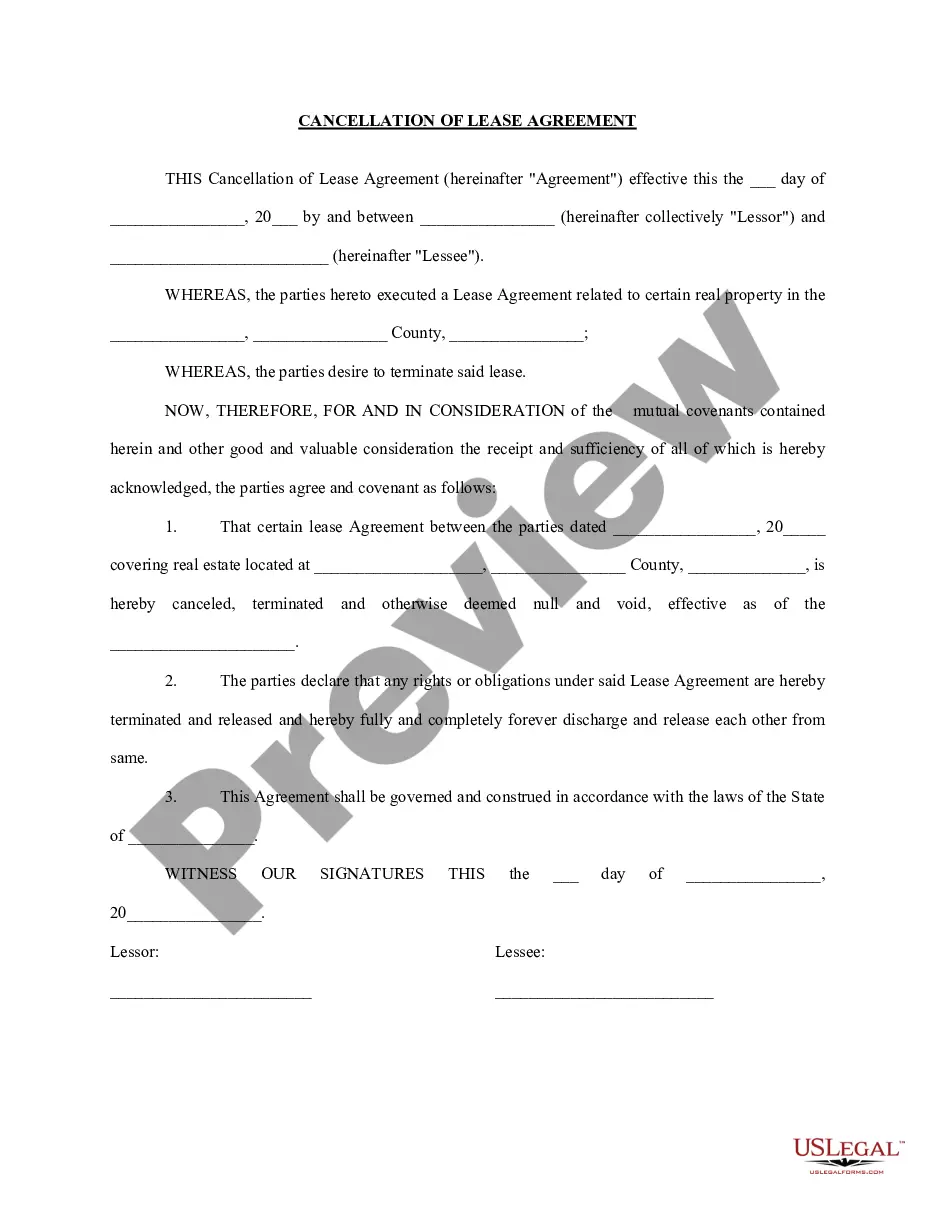
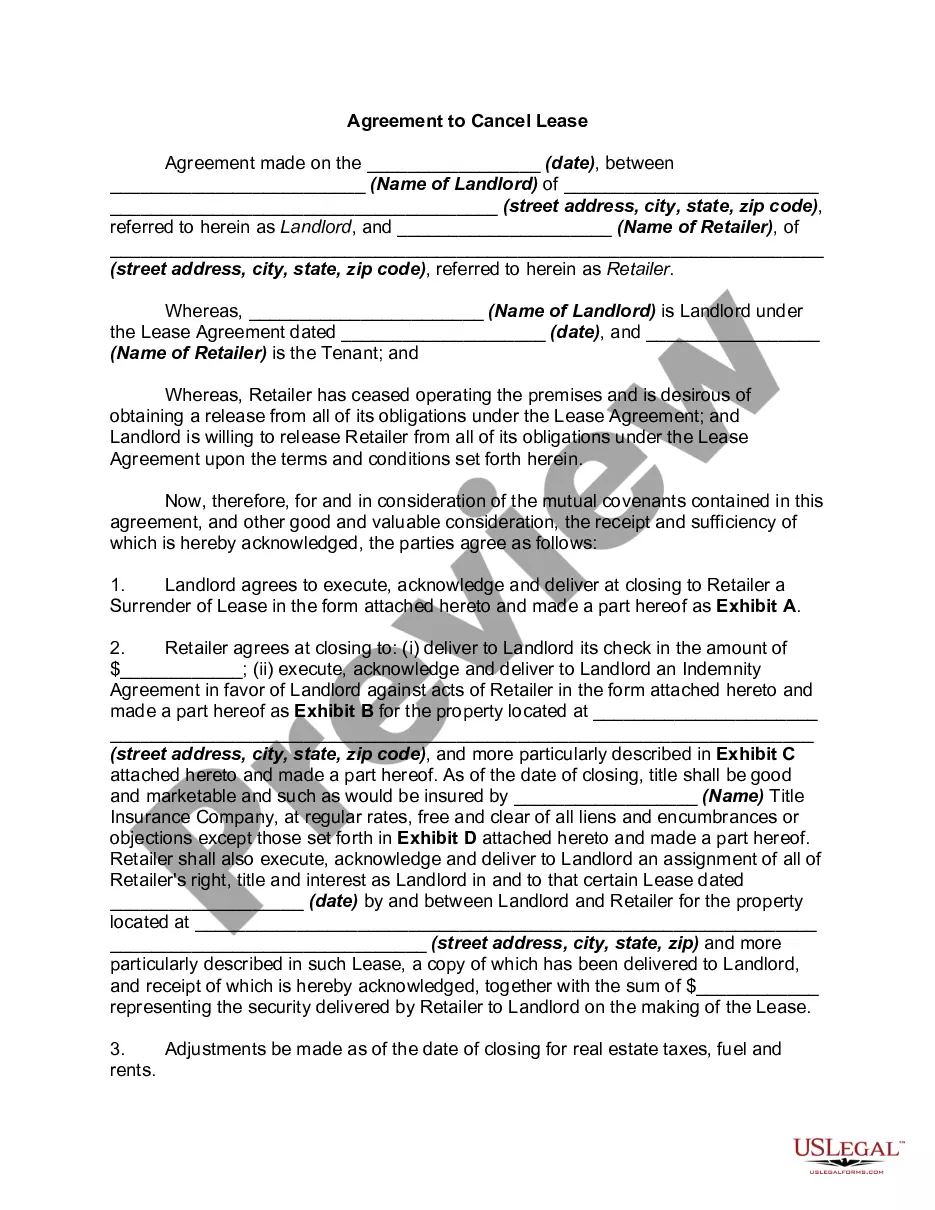
Cancelling Lease Template With Sprint In Santa Clara
Description
Get your form ready online
Our built-in tools help you complete, sign, share, and store your documents in one place.
Make edits, fill in missing information, and update formatting in US Legal Forms—just like you would in MS Word.
Download a copy, print it, send it by email, or mail it via USPS—whatever works best for your next step.
Sign and collect signatures with our SignNow integration. Send to multiple recipients, set reminders, and more. Go Premium to unlock E-Sign.
If this form requires notarization, complete it online through a secure video call—no need to meet a notary in person or wait for an appointment.
We protect your documents and personal data by following strict security and privacy standards.

Make edits, fill in missing information, and update formatting in US Legal Forms—just like you would in MS Word.

Download a copy, print it, send it by email, or mail it via USPS—whatever works best for your next step.

Sign and collect signatures with our SignNow integration. Send to multiple recipients, set reminders, and more. Go Premium to unlock E-Sign.

If this form requires notarization, complete it online through a secure video call—no need to meet a notary in person or wait for an appointment.

We protect your documents and personal data by following strict security and privacy standards.
Looking for another form?








Form popularity
FAQ
The eviction process can take 30 - 45 days, or longer. The time starts from when you have eviction court forms delivered to your tenant to the time they must move out. Choose any box, below, to learn more about the eviction process and get step-by-step instructions.
3 -day notices to quit don't need to be responded to specifically except to cure the defect. If there is no defect find out what they are claiming is the defect which should be stated. If not then you have a defense if they file an unlawful detainer.
Writing the Lease Termination Letter Addressing the Landlord or Management. Clear Statement of Termination. Reasons for Termination (If Any) ... Reference to Lease Clauses. Forwarding Address and Contact Information. Signature and Name.
California's Tenant Protection Act The Tenant Protection Act prohibits landlords from evicting most tenants without “just cause.” The law sets out two kinds of evictions: "at fault" evictions and "no fault" evictions. At fault evictions include: Nonpayment of rent. Breach of a material term of the lease.
If you are not behind in your rent but the landlord wants you to move out, they must give you a written notice. Only a 30-day notice is required if all tenants have lived there less than a year. A 60-day notice is required if all tenants have lived there a year or longer.
There are 3 ways to deliver a Notice Hand deliver the Notice. This is when you, or someone else 18 or older, hands the Notice to one of the tenants. Give the Notice to another adult in the home or where your tenant works and mail a copy to the tenant. Post and mail the Notice.
The Notice must be in writing and include: The date the tenancy will end ("be terminated") Detailed reason(s) for the eviction. That if the tenant doesn't move out within 90 days the owner may start a court case to evict them and that they can give their side of the story then.
At a glance: What a landlord cannot do in California in 2024 Landlords can't raise rent more than 10% total or 5% + CPI increase (whichever is lower) over a 12-month period. No-fault evictions are prohibited, so landlords can't evict a tenant without cause.
In California, tenants may be able to legally break their lease before its expiration date if they have a justified reason. Justified reasons for breaking a lease are typically related to issues that make the unit uninhabitable or create an unsafe or untenable living situation.
Yes, a landlord can evict a tenant without a written lease in California, but they must still follow the proper legal procedures. This includes providing adequate notice, filing an eviction lawsuit if the tenant fails to vacate, and obtaining a court judgment before physically removing the tenant from the property.
