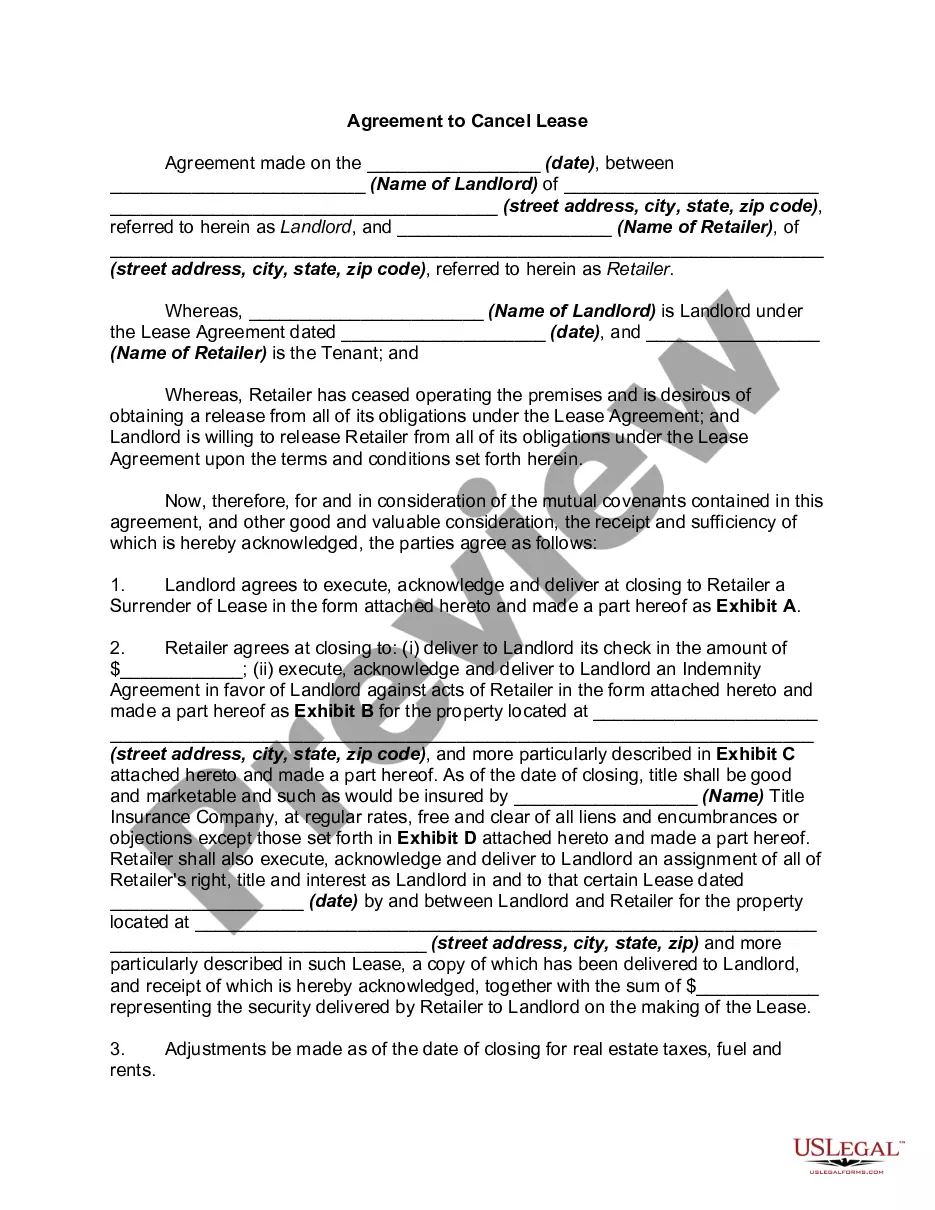
Cancelling Lease Template With Sprint In Contra Costa
Description

Get your form ready online
Our built-in tools help you complete, sign, share, and store your documents in one place.
Make edits, fill in missing information, and update formatting in US Legal Forms—just like you would in MS Word.
Download a copy, print it, send it by email, or mail it via USPS—whatever works best for your next step.
Sign and collect signatures with our SignNow integration. Send to multiple recipients, set reminders, and more. Go Premium to unlock E-Sign.
If this form requires notarization, complete it online through a secure video call—no need to meet a notary in person or wait for an appointment.
We protect your documents and personal data by following strict security and privacy standards.

Make edits, fill in missing information, and update formatting in US Legal Forms—just like you would in MS Word.

Download a copy, print it, send it by email, or mail it via USPS—whatever works best for your next step.

Sign and collect signatures with our SignNow integration. Send to multiple recipients, set reminders, and more. Go Premium to unlock E-Sign.

If this form requires notarization, complete it online through a secure video call—no need to meet a notary in person or wait for an appointment.

We protect your documents and personal data by following strict security and privacy standards.
Looking for another form?

Form popularity
FAQ
The Ellis Act is a California state law that gives landlords a legal opportunity to leave the rental market business and evict tenants. The ordinance was adopted in 1985 following the court case Nash v.
30-DAY, 60-DAY AND 90-DAY NOTICES TO MOVE If you are not behind in your rent but the landlord wants you to move out, they must give you a written notice. Only a 30-day notice is required if all tenants have lived there less than a year. A 60-day notice is required if all tenants have lived there a year or longer.
The Ellis Act is a 1985 California state law that allows landlords to evict residential tenants to “go out of the rental business.” In California, landlords (big and small) can choose to go out of the rental business and evict tenants.
The Ellis Act gives a landlord the absolute right to go out of the rental business. The landlord has the right to evict tenants on the basis that the building is being permanently withdrawn from the rental market. A tenant can possibly defeat an Ellis Act eviction by asserting a retaliatory eviction defense.
The new California law puts a statewide ceiling on rent hikes each year. So if inflation was 4% in your city last year, the maximum increase would be 9% for your unit. This provides an important check against runaway rent spikes every time a lease is renewed.
Ing to AB-1482, the Tenant Protection Act of 2019, landlords in California are only permitted to increase rent by 5% plus 10% or the annual inflation rate, whichever is lower.
The Notice must be in writing and include: The date the tenancy will end ("be terminated") Detailed reason(s) for the eviction. That if the tenant doesn't move out within 90 days the owner may start a court case to evict them and that they can give their side of the story then.
Yes, a landlord can evict a tenant without a written lease in California, but they must still follow the proper legal procedures. This includes providing adequate notice, filing an eviction lawsuit if the tenant fails to vacate, and obtaining a court judgment before physically removing the tenant from the property.
How to Write One Full names of the parties involved in the lease agreement. Termination date of the lease. Full address of the property. (If applicable) The reason why you chose to terminate the lease agreement. Landlord's signature and printed name. The current date and method of notice delivery.
Follow these simple steps when you write a lease termination letter. Date and Address. Salutation. Statement of Intent. Reason for Early Termination. Reference to Lease Agreement. Security Deposit Details. Proposed Termination Date. Offer to Assist With the Transition.
