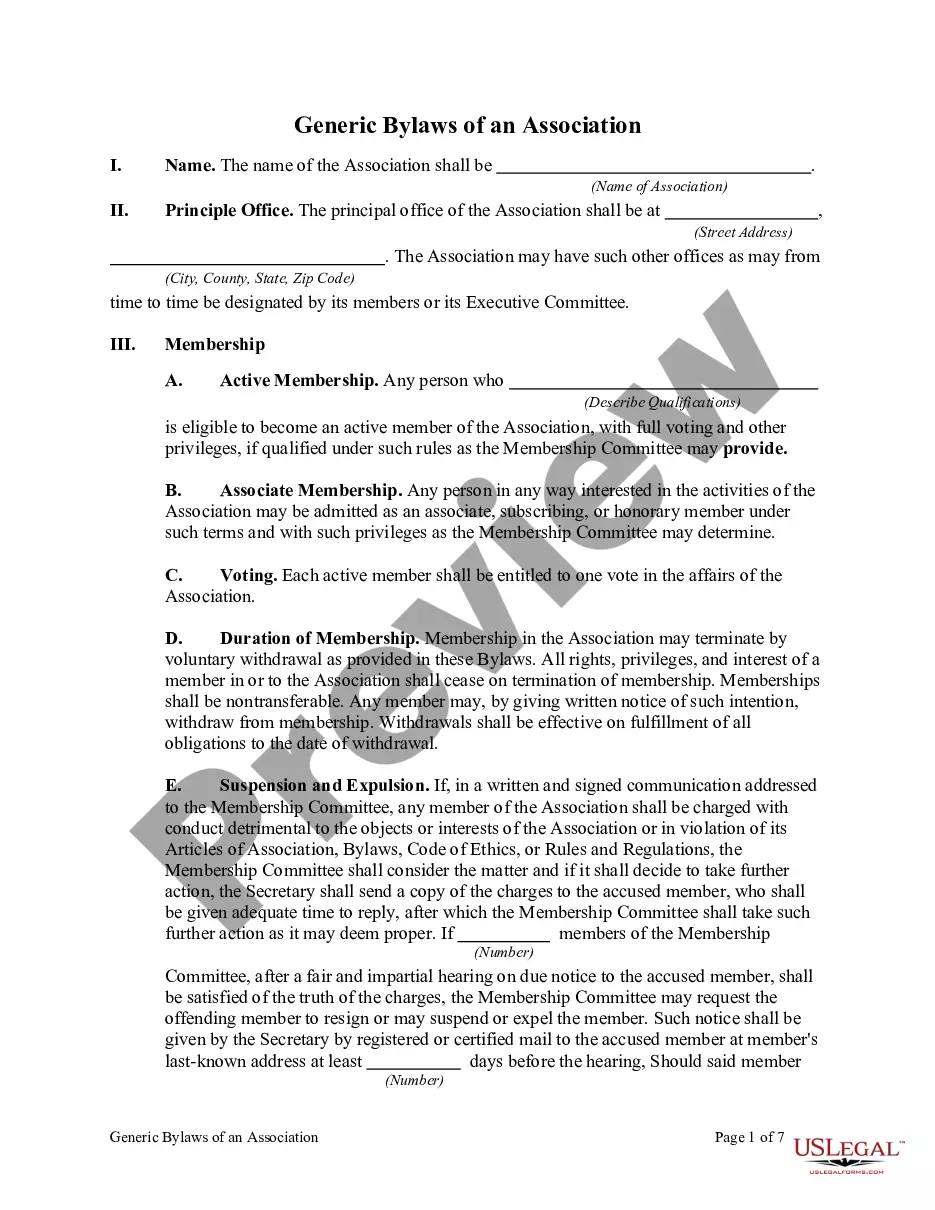
Hoa Bylaws In Florida In Santa Clara
Description


Get your form ready online
Our built-in tools help you complete, sign, share, and store your documents in one place.
Make edits, fill in missing information, and update formatting in US Legal Forms—just like you would in MS Word.
Download a copy, print it, send it by email, or mail it via USPS—whatever works best for your next step.
Sign and collect signatures with our SignNow integration. Send to multiple recipients, set reminders, and more. Go Premium to unlock E-Sign.
If this form requires notarization, complete it online through a secure video call—no need to meet a notary in person or wait for an appointment.
We protect your documents and personal data by following strict security and privacy standards.

Make edits, fill in missing information, and update formatting in US Legal Forms—just like you would in MS Word.

Download a copy, print it, send it by email, or mail it via USPS—whatever works best for your next step.

Sign and collect signatures with our SignNow integration. Send to multiple recipients, set reminders, and more. Go Premium to unlock E-Sign.

If this form requires notarization, complete it online through a secure video call—no need to meet a notary in person or wait for an appointment.

We protect your documents and personal data by following strict security and privacy standards.
Looking for another form?









Form popularity
FAQ
Once you buy a home that's part of an HOA, you automatically become a member of the HOA. HOA rules are legally binding, and you must adhere to all rules and regulations in the governing document. Yes, there are bylaws that you may not like, but there are no HOA loopholes.
The Florida Homeowners' Association Act, Chapter 720 of the Florida Statutes, states that amendments to “governing documents” for homeowners' associations are not effective until they are recorded in the public records of the county in which the community is located.
Chapter 720 of the Florida Statutes governs homeowners' associations (HOAs) in Florida. Unlike iniums or cooperatives, homeowners' associations typically govern single-family homes in a specific development or community.
Those changes include new educational requirements for community association managers and HOA directors, access to certain HOA records, prohibitions against a HOA limiting or placing requirements on the interior of a home, and prohibitions against a HOA from preventing a homeowner from installing or displaying a ...
Copies of the Articles of Incorporation and bylaws of the homeowners association can be obtained from the Florida Department of State, Division of Corporations. Copies of the governing documents may also be obtained directly from the homeowners association.
How do I find my HOA rules and regulations in Florida? Most of the time, you can find the bylaws, rules and regulations for your homeowner association on your county's clerk of courts website. The county your association is located in should have a record of your HOA's governing documents.
The Florida Homeowners' Association Act, Chapter 720 of the Florida Statutes, states that amendments to “governing documents” for homeowners' associations are not effective until they are recorded in the public records of the county in which the community is located.
Florida House Bill 1203 introduces substantial reforms aimed at increasing transparency and accountability within HOAs. This bill mandates the online posting of governing documents, including covenants, restrictions, and financial records, ensuring that you, as a homeowner, have easy access to critical information.
Certain states, including Florida, have adopted the 1956 Marketable Record Title Act, which says that deed restrictions expire within 30 years of inception. That means after 30 years, a homeowners' association is technically unable to enforce the rules and can no longer collect monthly dues from community homeowners.
One of the unintended consequences of the Act is that the Declarations of Covenants, Conditions and Restrictions recorded for HOAs may expire after 30 years of the date which they were recorded.
