Bylaws Draft With Nonprofit In Nassau
Description



Get your form ready online
Our built-in tools help you complete, sign, share, and store your documents in one place.
Make edits, fill in missing information, and update formatting in US Legal Forms—just like you would in MS Word.
Download a copy, print it, send it by email, or mail it via USPS—whatever works best for your next step.
Sign and collect signatures with our SignNow integration. Send to multiple recipients, set reminders, and more. Go Premium to unlock E-Sign.
If this form requires notarization, complete it online through a secure video call—no need to meet a notary in person or wait for an appointment.
We protect your documents and personal data by following strict security and privacy standards.

Make edits, fill in missing information, and update formatting in US Legal Forms—just like you would in MS Word.

Download a copy, print it, send it by email, or mail it via USPS—whatever works best for your next step.

Sign and collect signatures with our SignNow integration. Send to multiple recipients, set reminders, and more. Go Premium to unlock E-Sign.

If this form requires notarization, complete it online through a secure video call—no need to meet a notary in person or wait for an appointment.

We protect your documents and personal data by following strict security and privacy standards.
Looking for another form?






Form popularity
FAQ
Bylaws can be easy to write and even easier to change if you are well-organized and have a good plan in place for how to go about it.
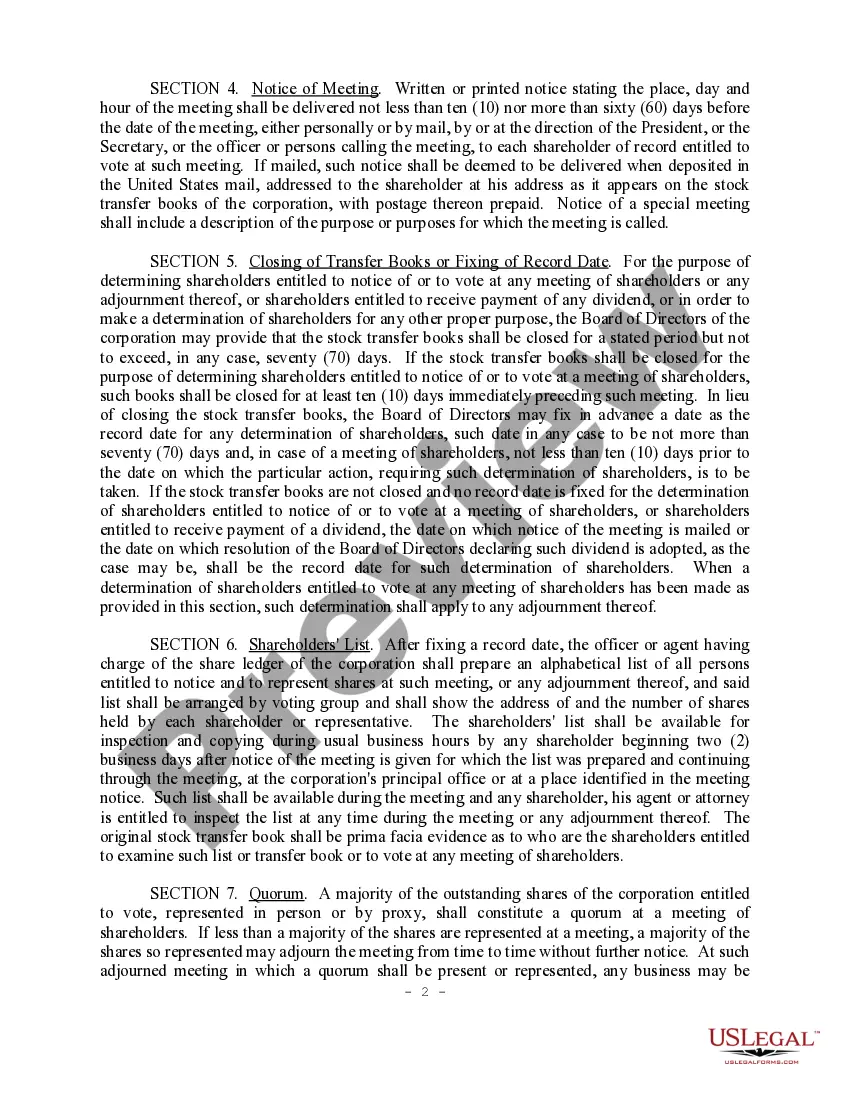
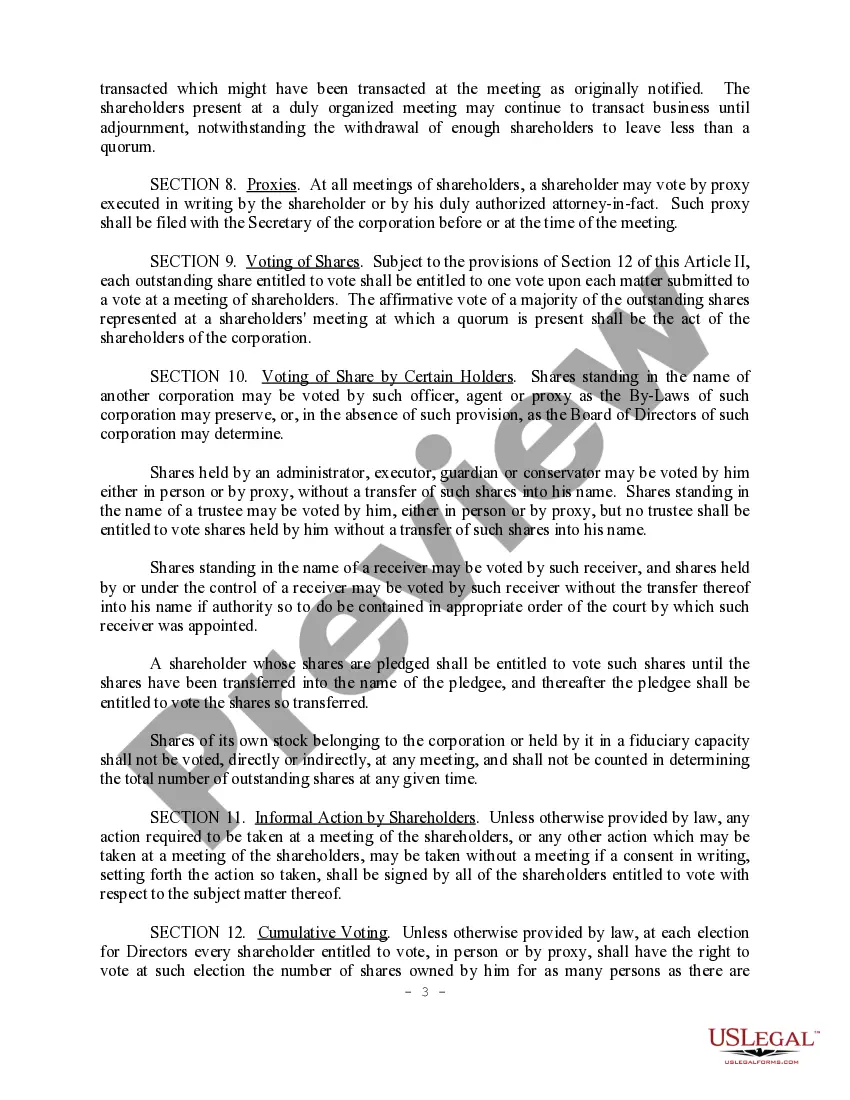
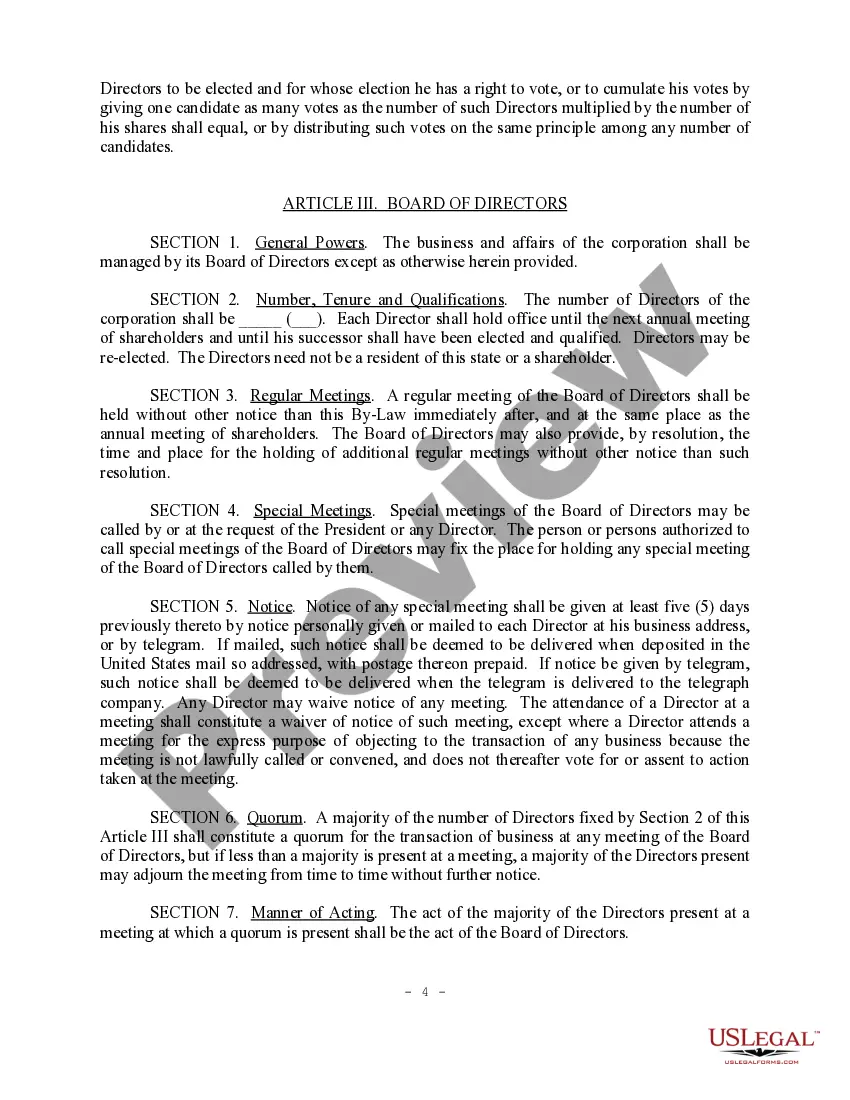
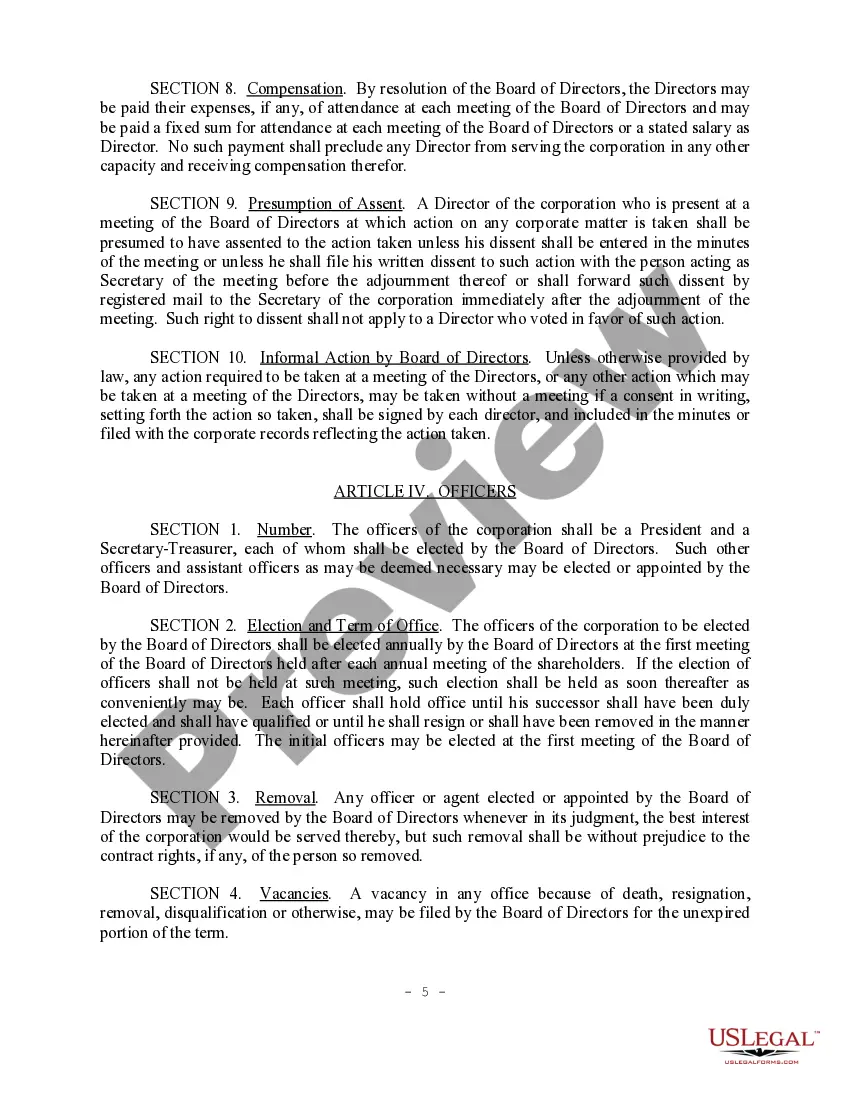
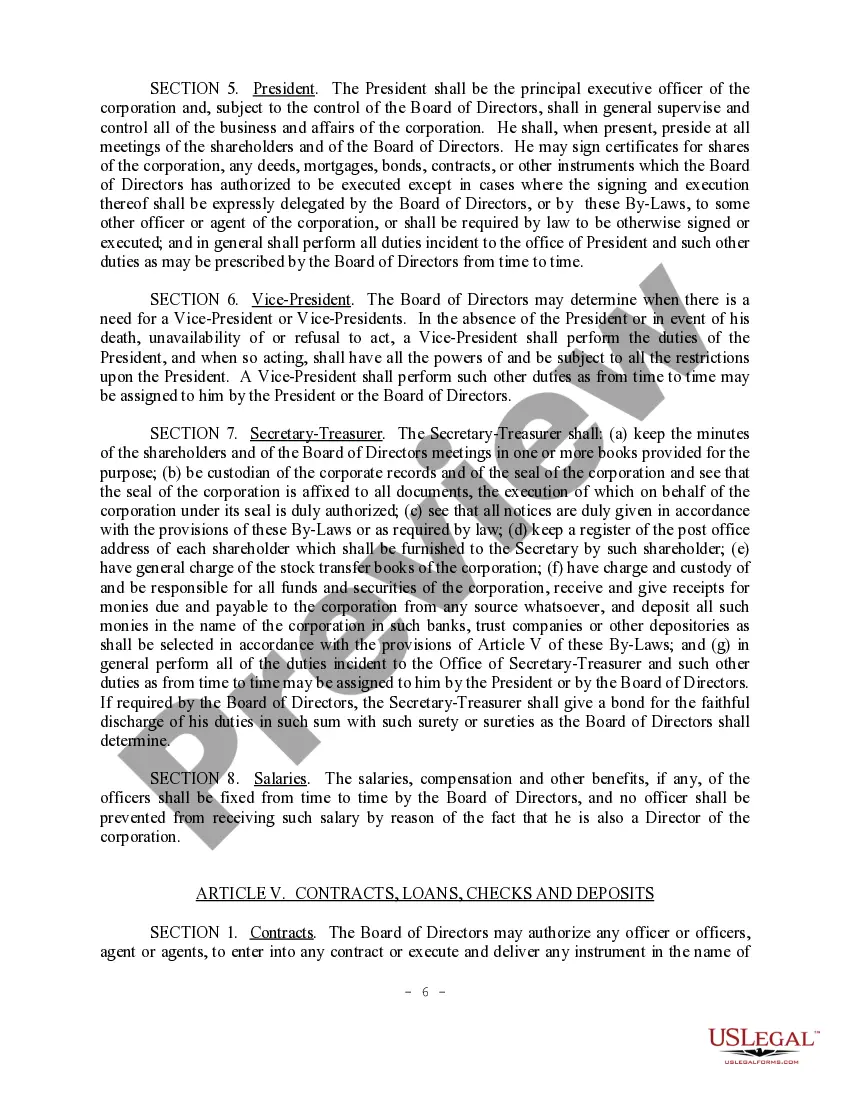
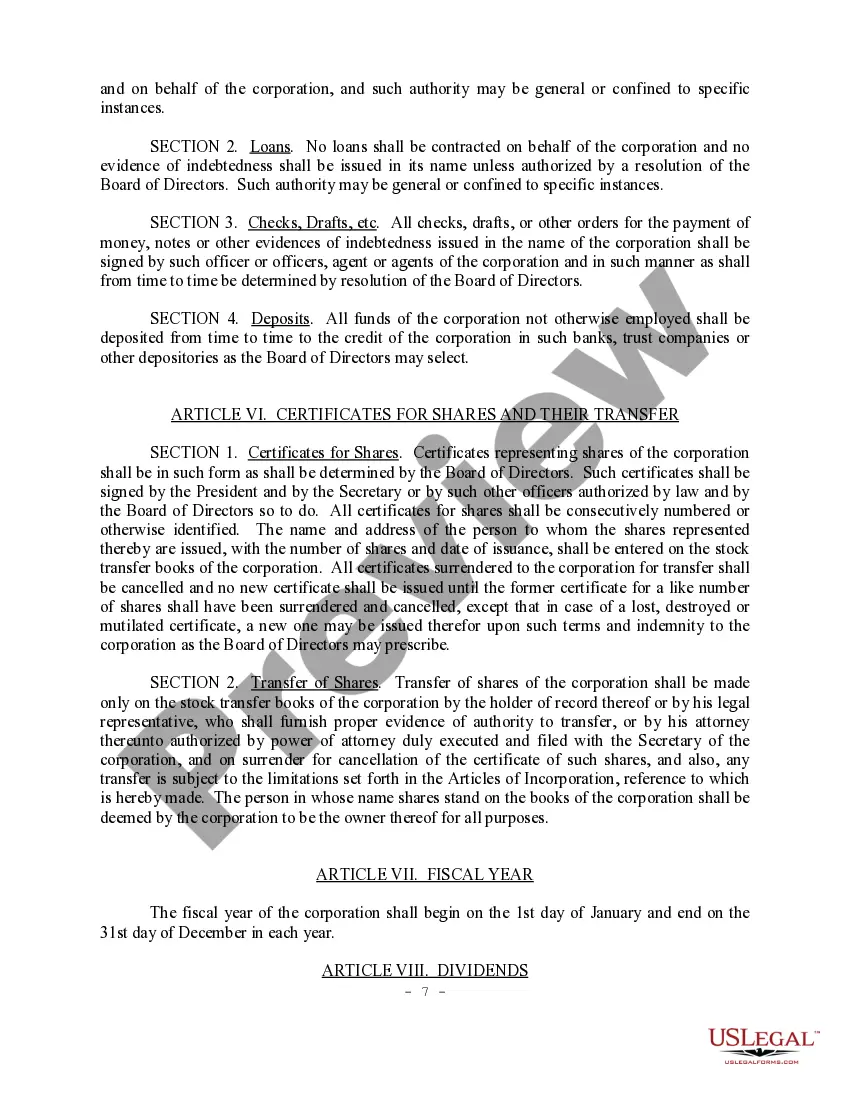
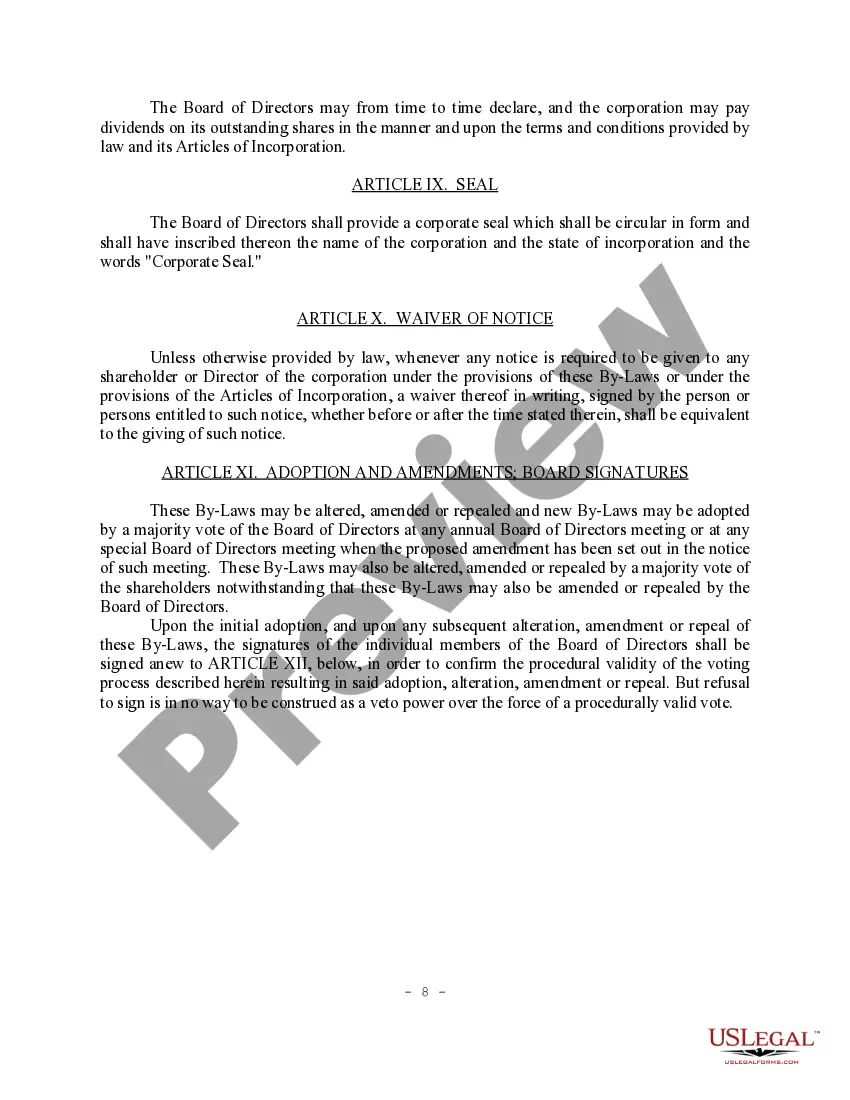
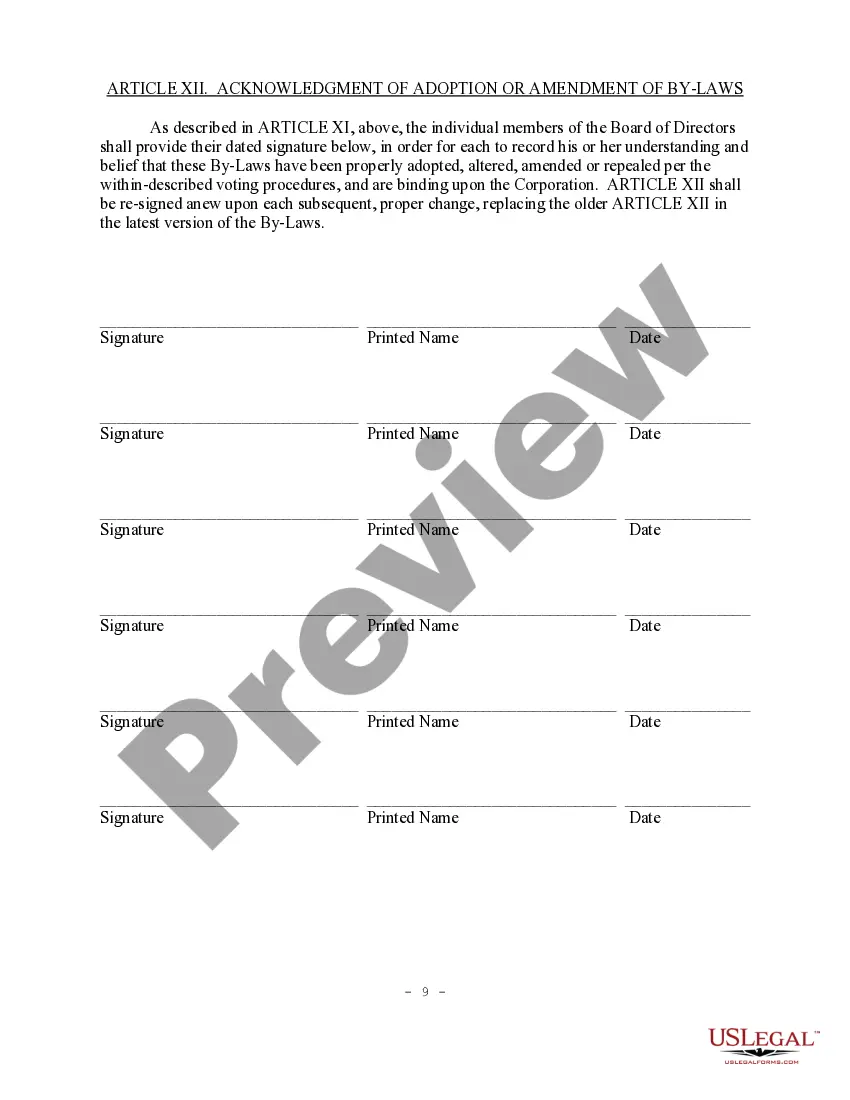
They contain the basic rules for the conduct of the corporation's business and affairs. The bylaws may contain any provision for managing the business and regulating the corporation's affairs that is not inconsistent with statutory law or the corporation's Articles of Incorporation.
Exemption requirements - 501(c)(3) organizations In addition, it may not be an action organization, i.e., it may not attempt to influence legislation as a substantial part of its activities and it may not participate in any campaign activity for or against political candidates.
10 steps for writing bylaws for an association Research. Form a committee. Create the structure. Outline your organization's key roles and responsibilities. Establish your meeting rules. Define your membership. Address finances. Outline the amendment process.
Like the Constitution, your bylaws should deal with only the highest level of governing issues such as: Organizational purpose, board structure, officer position descriptions and responsibilities, terms of board service, officer/board member succession and removal, official meeting requirements, membership provisions, ...
Organizational Policies and Procedures Your bylaws are not an employee handbook or policy manual designed to run the day-to-day operations of your nonprofit organization. For example, employee absences, vacation policies, and no-smoking policies have no place in an organization's bylaws.
You not only have a duty to understand your bylaws, you are legally accountable for following them. This is not optional. A court of law will side with your bylaws in any dispute brought by another board member, an employee, volunteer or recipient of services who may have a grievance.
Your bylaws are not an employee handbook or policy manual designed to run the day-to-day operations of your nonprofit organization. For example, employee absences, vacation policies, and no-smoking policies have no place in an organization's bylaws.
